You’re probably brewing your tea or coffee the same way every time, aren’t you? But here’s the thing—you might be completely missing out on what you’re supposed to be tasting. Temperature’s not just some random number on a kettle. It’s the difference between a delicate floral cup and bitter disappointment, between smooth coffee and a burnt-tasting mess. Turns out, getting it right matters way more than you’d think, and we’re about to show you exactly why.
Key Takeaways
- Black tea requires 200–212°F for robust flavor; green and white teas need 160–180°F to preserve delicate notes and prevent bitterness.
- Coffee extraction peaks at 195–205°F; hotter temperatures scorch grounds while cooler water yields weak, underwhelming flavor.
- Delicate flower infusions like chamomile and rose need 160–180°F; robust herbal blends with spices require full 212°F boil.
- Variable-temperature kettles with precise controls ensure consistent, beverage-specific brewing by matching water temperature to extraction chemistry needs.
- Built-in thermometers should be periodically calibrated with separate thermometers; regular descaling maintains heating element performance for reliable temperature accuracy.
Why Temperature Matters for Beverage Quality
If you’ve ever wondered why your tea tastes like disappointment or your coffee feels weirdly bitter, temperature’s probably the culprit. Getting the heat right transforms everything.
Think of it this way: water that’s too hot basically bullies delicate tea leaves, destroying their nuance and aroma preservation. Too cool, and you’ll get weak, underwhelming results that’ll make you question your choices. The sweet spot matters because it controls how flavors actually develop and dance around your palate.
Temperature also affects mouthfeel balance—that’s the overall texture and sensation in your mouth when you’re sipping. Hot water pulls out different compounds than lukewarm water does, changing the entire experience. Whether you’re brewing green tea, espresso, or hot chocolate, nailing the temperature means you’re setting yourself up for something genuinely delicious instead of just settling for whatever happens.
Many top electric kettles now include precise temperature settings so you can match your water temperature exactly to the needs of your favorite beverage, ensuring your results are consistently perfect every time.
The Science Behind Water Temperature and Flavor Extraction
Here’s where chemistry meets your morning cup. Water temperature directly affects how quickly flavors dissolve into your drink, thanks to molecular solubility. Hot water moves faster at the molecular level, breaking down tea leaves, coffee grounds, and herbs more efficiently than cooler water ever could.
Think of it like this: heat capacity determines how much energy your water holds, and that energy extracts those delicious compounds you’re after. Different beverages need different temps because they’ve got different extraction sweet spots.
| Beverage | Ideal Temp | Why |
|---|---|---|
| Black Tea | 200-212°F | Robust flavor needs aggressive extraction |
| Green Tea | 160-180°F | Delicate notes avoid bitter oversteeping |
| Coffee | 195-205°F | prime flavor without scorching |
| Herbal Tea | 212°F | Full-bodied taste development |
You’re basically playing molecular matchmaker with water and flavor. Using a kettle with precise temperature control ensures you hit the right extraction point for every drink.
Ideal Temperatures for Tea Varieties
Here’s where things get interesting, because different teas really do demand their own specific temperature sweet spot to taste their best. White tea’s delicate flavors actually prefer cooler water around 160-180°F, black tea thrives in the hotter range of 200-212°F, and green tea sits somewhere in the middle at about 160-180°F, though some varieties like it even gentler. Getting these temperatures right with your electric kettle means you’re not gonna end up with a bitter, over-extracted mess or a weak, underwhelming cup. If you’re also a coffee lover, remember that optimal water temperature for French press brewing is typically 195–205°F, which is close to the range needed for black tea.
White Tea Brewing Standards
Because white tea is delicate and subtle, you’ll want to treat it with a bit more care than you’d give to, say, a robust black tea. The ideal temperature sits between 160 and 180°F, which might seem surprisingly cool compared to other brews. Here’s why: white tea undergoes minimal leaf oxidation, meaning its delicate flavors haven’t developed the same resilience as darker teas. Boiling water’ll actually scald those tender leaves and destroy the nuanced taste you’re after.
Think of it like a tea ceremony for your taste buds. You’re honoring the tea’s natural subtlety rather than overpowering it. If you don’t have a thermometer, just let your kettle cool for about three to five minutes after boiling. Your patience pays off with a smooth, slightly sweet cup that’s totally worth the extra wait. Many premium electric kettles offer variable temperature controls, making it easy to select the perfect setting for delicate teas like white tea.
Black Tea Temperature Range
Black tea is basically the opposite of white tea when it comes to temperature, and that’s actually a good thing. You’ll want to crank up the heat for this bold brew because black tea can handle it. The higher temperatures help with oxidation control, ensuring you’re getting that rich, robust flavor you’re after. Here’s what you need to know:
- Boil water to 200-212°F for best results
- Steep for 3-5 minutes depending on preference
- Adjust steeping duration based on how strong you like it
- Let it cool slightly if you’re impatient
The beauty of black tea is its resilience. You won’t accidentally ruin it like you might with delicate whites. Your electric kettle’s preset should handle this perfectly, delivering consistent heat that brings out those wonderful, complex flavors you’re craving.
Green Tea Optimal Heat
Green tea demands a gentler touch than its bold black cousin, and that’s where most people go wrong. You’ll want to heat your water to about 160-180°F, which is notably cooler than black tea. Why? Because shade grown leaves are delicate. Too much heat and you’ll end up with a bitter, unpleasant brew that tastes nothing like it should.
Think of it like ceremony preparation—there’s a right way to do this. Let your kettle cool slightly after boiling, or use a thermometer if you’re serious about getting it perfect. Even just a few minutes of waiting makes a huge difference. The result? A smooth, grassy cup that’s actually enjoyable to drink. Your green tea deserves that respect. Using an electric kettle with variable temperature control ensures you consistently hit the ideal temperature for green tea and other delicate teas.
Perfect Heat Settings for Coffee Brewing
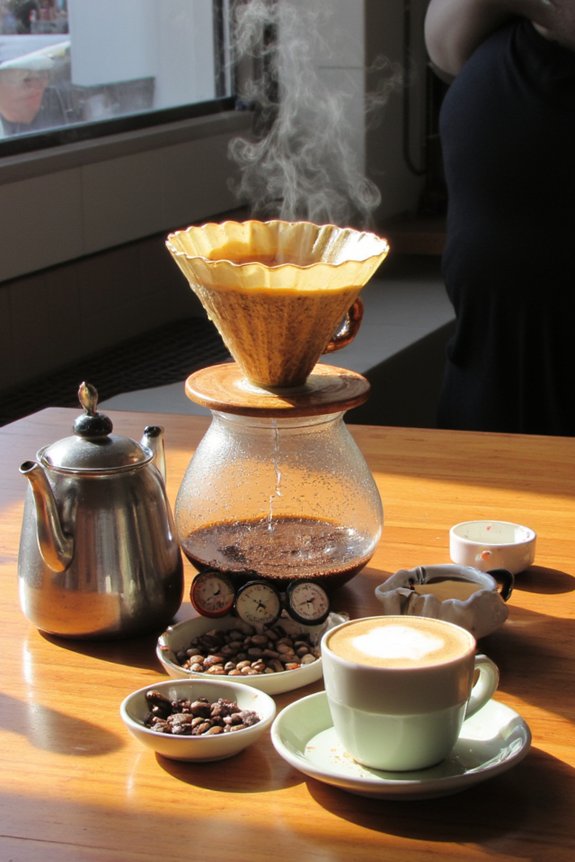
When you’re brewing coffee, getting the temperature just right can make or break your morning cup. You’ll want to nail down a few key factors to get that perfect brew every time.
- Aim for 195-205°F for ideal extraction without scorching your beans
- Match your pour over timing to your grind consistency for balanced flavor
- Use proper immersion ratios, typically one to two tablespoons per six ounces of water
- Master bloom techniques by pre-wetting grounds for thirty seconds before pouring
Here’s the thing: too hot and you’ll extract bitter compounds that’ll ruin everything. Too cool and your coffee tastes weak and underwhelming. Finding that sweet spot means you’re extracting all the good stuff your beans’ve got to offer. It’s honestly simpler than you’d think once you get the hang of it.
Temperature Guidelines for Herbal and Specialty Infusions
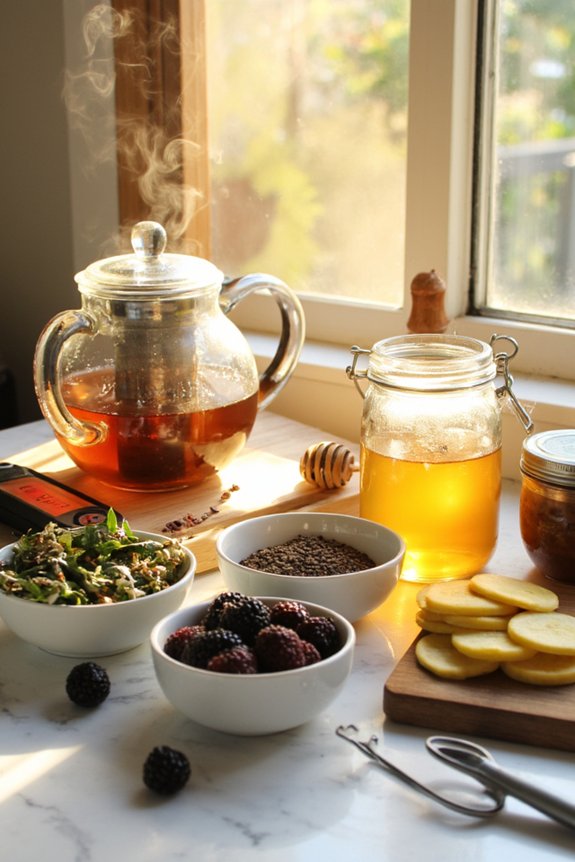
When you’re brewing delicate herbal infusions like chamomile or butterfly pea flower, you’ll want to keep your water around 160-180°F, since boiling water can actually scorch those gentle petals and turn your tea bitter. On the flip side, robust blends with hearty ingredients like ginger root, hibiscus, or strong spice mixes can totally handle the full 212°F boil and’ll actually benefit from that extra heat to really extract all their flavor and punch. It’s basically the difference between treating your tea like a delicate flower or giving it the aggressive heat treatment it’s craving.
Delicate Flowers Require Care
Delicate flowers and specialty infusions truly do demand a gentler touch than your standard black tea, and honestly, it’s way easier than you might think. You’re basically just being thoughtful about temperature and timing. These delicate blooms need gentle pruning of your brewing habits, really. Here’s what you’ll want to remember:
- Keep temperatures between 160-180°F for flower infusions
- Steep for just 3-5 minutes to preserve subtle scents
- Use fresh, high-quality blooms whenever possible
- Let water cool slightly after boiling before pouring
The key is respecting what you’re working with. Chamomile, rose petals, and hibiscus’ll reward you with vibrant colors and complex flavors when you don’t scald them. You’ve got this!
Robust Blends Need Heat
Turn up the heat for your robust blends, because these hardy herbs and bold infusions can actually handle it. You’ll want water temperatures around 200-212°F for robust extraction of all those intense flavors you’re after. Think black teas, strong herbal mixes, and spicy chai blends—these aren’t delicate flowers. They need real heat to show their full potential. When you’re brewing something with a bold body, don’t be shy about cranking your kettle to near-boiling temperatures. You want those robust flavors to really shine through, not hide in your cup. The hotter water pulls out more of what makes these blends special, giving you a richer, more satisfying cup. Go ahead and let it get hot.
Choosing the Right Premium Electric Kettle Features
You’ve got to narrow down what actually matters when you’re shopping for a premium electric kettle, because honestly, not every fancy feature deserves your money. Here’s what’ll actually make a difference in your daily routine:
- Cordless convenience – No tangled cords cluttering your counter space
- Variable spout – Precision pouring for delicate tea leaves without mess
- Quick boil technology – Water ready in minutes, not forever
- Safety locks – Prevents accidental spills and keeps kids protected
Look, you don’t need a kettle with fifty settings you’ll never use. Focus on features that genuinely improve your brewing experience and fit how you actually make tea or coffee. The best kettle isn’t the fanciest one, it’s the one you’ll actually enjoy using every single morning.
How to Measure and Maintain Precise Water Temperatures
Getting your water to the exact temperature you need is where premium kettles really prove their worth. Most quality models come with built-in thermometers, but don’t just trust them blindly. Do regular temperature calibration by using a separate thermometer to verify accuracy, especially if you’ve had your kettle for a while. It takes just a minute and keeps everything honest.
For kettle maintenance, descale every month or so depending on your water hardness. Mineral buildup actually throws off temperature readings, so that’s your main enemy here. Keep the heating element clean, and you’ll maintain consistent results. Store your kettle in a dry spot when not in use. These simple habits make certain your morning tea stays perfectly brewed, every single time.
Common Temperature Mistakes and How to Avoid Them
Even with a perfectly calibrated kettle and a descaling routine down pat, plenty of people still end up brewing their tea at the wrong temperature, and it’s usually because of a few sneaky habits they don’t even realize they’re doing.
- Ignoring boiling myths that assume hotter always means better
- Trusting broken temperature sensors without double-checking
- Skipping safety precautions like letting water cool slightly
- Overlooking taste balance by not matching temps to tea types
You’re probably guilty of at least one. Maybe you’ve assumed all tea needs a rolling boil or relied solely on your kettle’s display without verifying accuracy. Here’s the thing: precise temperatures actually matter for flavor. Taking a few extra seconds to confirm your sensor readings and respecting recommended temps for different brews? That’s how you nail it consistently.
Frequently Asked Questions
How Long Does a Premium Electric Kettle Take to Heat Water to Specific Temperatures?
Your premium kettle’s boil time depends on wattage and volume. Most reach 212°F in 5-7 minutes. You’ll notice temp curves vary—lower temperatures like 160°F arrive faster, typically in 2-3 minutes, allowing precise beverage brewing.
Are Premium Electric Kettles Energy Efficient Compared to Stovetop Kettles?
You’ll find premium electric kettles are more energy-efficient than stovetop models. They’ve got better insulation, reducing energy consumption and your carbon footprint. You’re heating water faster with less wasted heat compared to stovetop alternatives.
Can I Use Filtered or Distilled Water in My Premium Electric Kettle?
You can use filtered water, which offers filtered benefits by reducing minerals and impurities. However, you shouldn’t use distilled water regularly due to distilled risks—it lacks minerals that protect your kettle’s heating element from damage.
What’s the Warranty Coverage Typically Offered With Premium Electric Kettles?
Most premium electric kettles come with a limited warranty covering defects for one to three years. You can often purchase extended protection plans for additional coverage beyond the manufacturer’s standard limited warranty period.
How Do I Clean and Descale My Premium Electric Kettle Regularly?
You’ll want to establish a regular cleaning schedule, descaling monthly with vinegar-free methods like citric acid or commercial descaling solutions. Wipe the exterior weekly and empty remaining water daily to prevent buildup and maintain peak performance.
Conclusion
You’ve got this! Getting your water temperature right isn’t rocket science—it’s just about paying attention and giving your favorite drinks the heat they deserve. Invest in a decent variable-temperature kettle, check your temps occasionally, and you’ll notice the difference immediately. Your coffee’ll taste smoother, your tea’ll taste fresher, and honestly? You’ll wonder how you ever lived without it.


