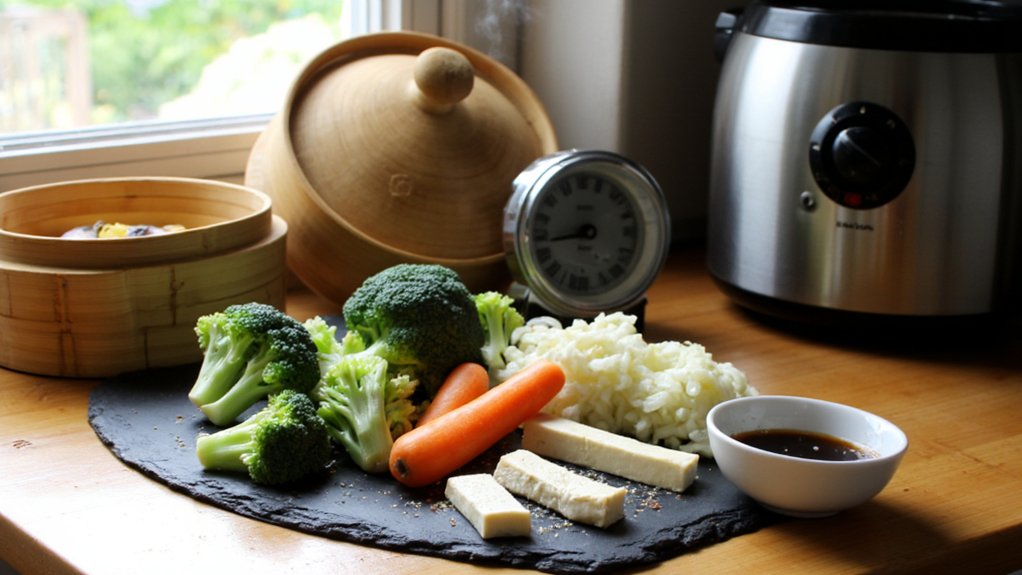
You’ve probably trusted your steamer’s timing chart like it’s gospel, right? Here’s the thing: it’s really just a starting point. Your water quality, altitude, how packed your basket is, and whether your machine’s seen better days all mess with those supposedly reliable numbers. Even the manufacturer knows this, but they can’t exactly print a chart for every possible scenario. So what actually works? Understanding why those times fail in real life and then building your own reference guide based on your specific setup.
Key Takeaways
- Manufacturer timing charts are starting points, not absolute rules—real-world variables like water quality and altitude significantly alter cooking times.
- Hard water mineral buildup on heating elements reduces efficiency, potentially extending cooking times by 20–30% compared to chart recommendations.
- Higher altitudes lower water’s boiling point, requiring 10–15% longer steaming times than manufacturer charts suggest for consistent results.
- Equipment age and calibration drift make original charts unreliable; older steamers often cook slower due to degraded heating elements.
- Building a personalized timing reference by tracking your machine’s actual performance across multiple runs beats relying solely on generic charts.

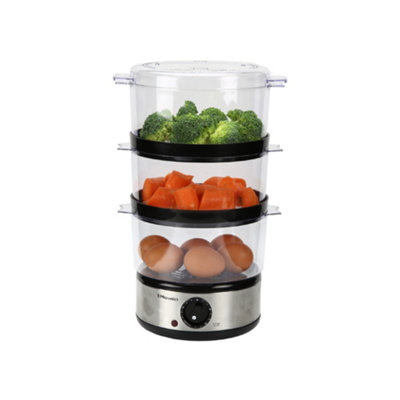
Why Manufacturer Timing Charts Are Fundamentally Flawed
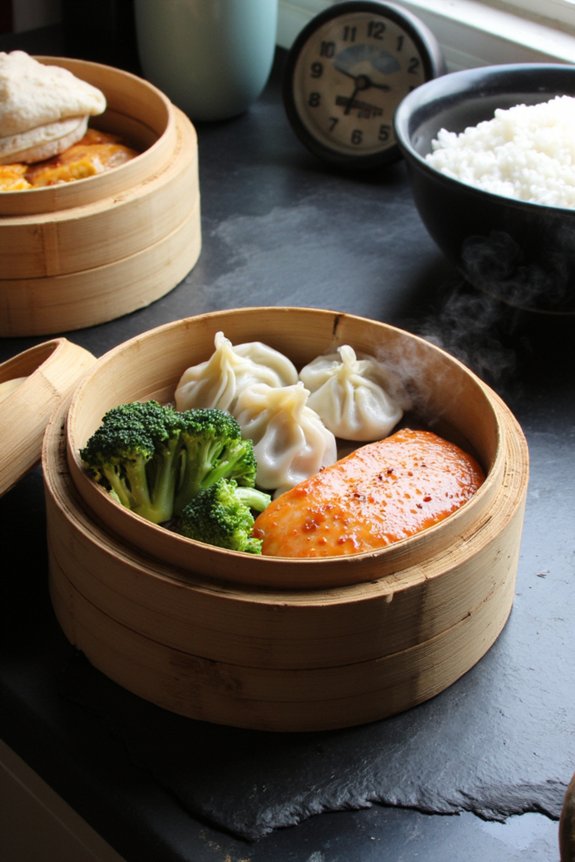
If you’ve ever followed a manufacturer’s timing chart for your electric steamer and ended up with either crunchy vegetables or sad mush, you’re not alone. Here’s the thing: those charts don’t account for real-world variables that actually matter. Your water quality, altitude, and even the specific model’s quirks all play a role that manufacturers conveniently ignore. They also rarely consider the scale factor between their test kitchen and your kitchen. Plus, probe placement in the steamer basket makes a huge difference—steam distributes unevenly, but the charts assume perfectly consistent heat everywhere. They’re giving you one-size-fits-all advice when your steamer’s personality is totally unique. Those generic guidelines? They’re a starting point at best, not gospel truth. For example, some electric steamers offer adjustable timers and delay start features, which can dramatically change how you approach timing and make the manufacturer’s basic charts even less reliable.
How Water Mineral Content Silently Alters Cooking Times
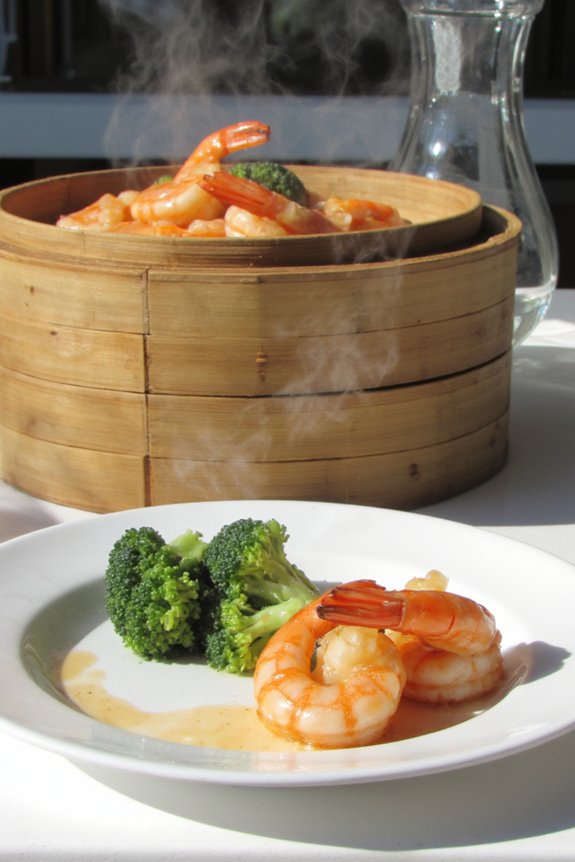
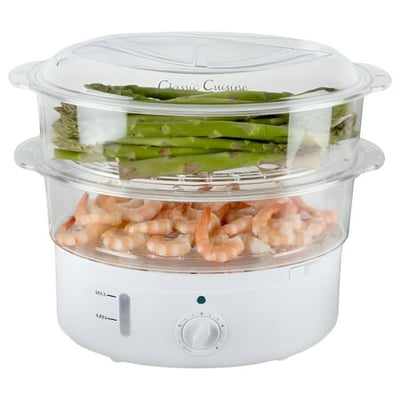
You probably don’t realize it, but your tap water’s mineral content is basically sabotaging your steamer’s timing without you even knowing it. Hard water with all that calcium and magnesium buildup creates a crusty layer inside your steamer that insulates everything, making heat transfer slower and your veggies take way longer to cook than those fancy charts promise. So if you’re following manufacturer times to the letter and wondering why your broccoli’s still crunchy, your water’s mineral situation might be the sneaky culprit messing with your results. If you’ve noticed a similar mineral buildup causing performance issues in countertop ice makers, regular cleaning cycles with vinegar or cleaning solutions are recommended to keep appliances running efficiently.
Mineral Buildup Effects
Most folks don’t realize that the water flowing into their steamer isn’t just plain H2O—it’s carrying along minerals like calcium and magnesium that gradually build up inside your machine. Over time, this creates serious problems that mess with your cooking times.
Here’s what happens:
- Scale buildup coats your heating element, making it work harder
- Element corrosion eats away at metal parts, reducing efficiency
- Pipe scaling narrows water passages, slowing steam production
- Limescale formation insulates heat sources, throwing off temperatures
Your steamer starts taking longer to heat up. Steam pressure drops. Suddenly that 15-minute timing chart doesn’t work anymore, and your veggies come out undercooked or mushy.
The frustrating part? You’re doing everything right, but your machine’s secretly struggling against mineral deposits. Regular maintenance and durability checks, like cleaning the interior and monitoring the heating element, can help restore proper timing and performance.

Hard Water Cooking Impact
Hard water doesn’t just create mineral buildup—it fundamentally changes how your steamer actually performs when you’re trying to cook. You see, the scale chemistry in hard water messes with heat transfer efficiency, meaning your cooking times get all wonky. Those minerals aren’t just sitting there looking pretty; they’re actively working against you.
What happens is mineral leaching occurs as steam interacts with water, creating a less efficient heating environment inside your steamer chamber. Your vegetables that should steam in eight minutes? They’re now taking ten or eleven. It’s frustrating because you’re following the timing chart perfectly, but results don’t match up.
The real kicker is that most folks never realize their water’s actually sabotaging their cooking. You’ll adjust recipes thinking you’re doing something wrong when really, it’s just hard water chemistry working behind the scenes.
Many electric pressure cookers can also develop mineral scale in the inner pot, which not only affects steam timing but may require extra cleaning and maintenance to keep them performing at their best.
The Altitude Factor Nobody Mentions in the Manual
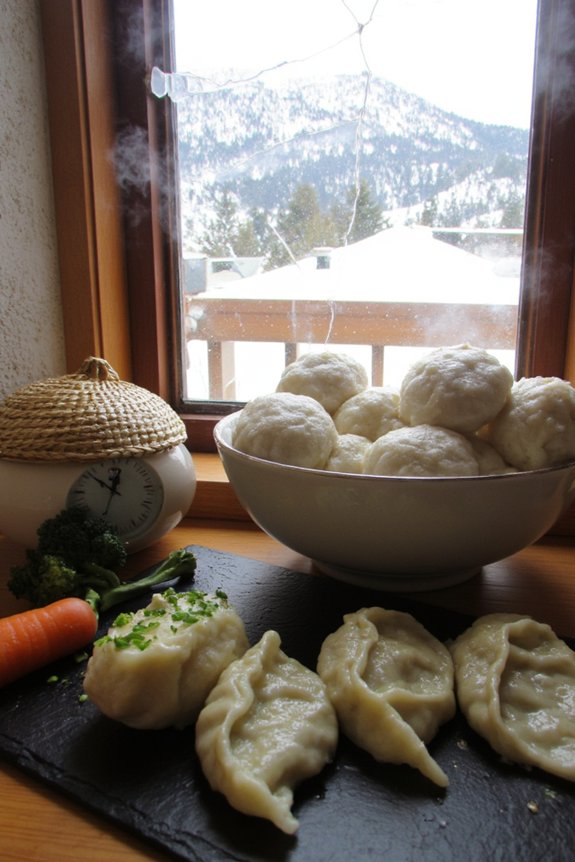
While most electric steamer manuals cover the basics pretty well, there’s one thing they almost always leave out—and it’s something that can totally mess with your cooking times if you live somewhere up in the mountains.
Here’s the deal: altitude affects air pressure, which directly impacts how your steamer actually works. You’re dealing with lower atmospheric pressure up there, and that creates a boiling delay you won’t find mentioned anywhere in your instruction booklet.
Consider these factors:
- Water boils at lower temperatures at higher elevations
- Steam takes longer to build up pressure in your chamber
- Your cooking times need significant adjustments, sometimes doubling
- Mountain living requires experimenting to dial in what works
Basket Crowding: The Hidden Variable That Ruins Dinner
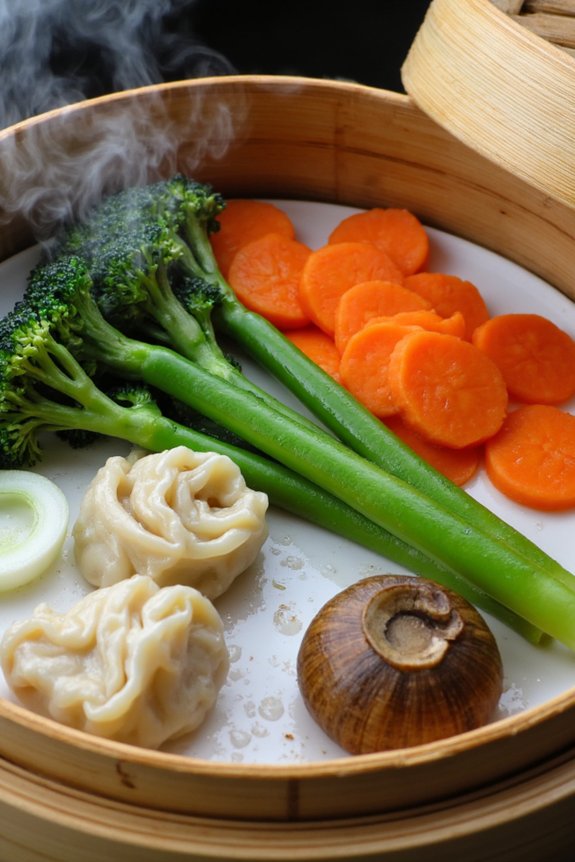
You’ve got your altitude dialed in, you’re feeling pretty confident about those adjusted cooking times, and then you open your steamer basket to find you’ve crammed in way more food than you probably should’ve. Yeah, that’s the moment everything falls apart.
Here’s the thing nobody mentions: overcrowding experiments teach us hard lessons. When you stuff that basket to the brim, you’re creating serious airflow obstruction. Steam can’t circulate properly, so some pieces cook while others stay stubbornly raw.
Think of your steamer like it needs breathing room. Leave gaps between items. Give that steam space to do its job. You might fit less food per batch, but everything’ll actually cook evenly.
It sounds simple, but that crowding impulse gets us every time.
For best results, remember that proper food volume capacity is just as important in steamers as in deep fryers—overcrowding can ruin both your timing and your texture.
Starting Temperature and Its Dramatic Impact on Results
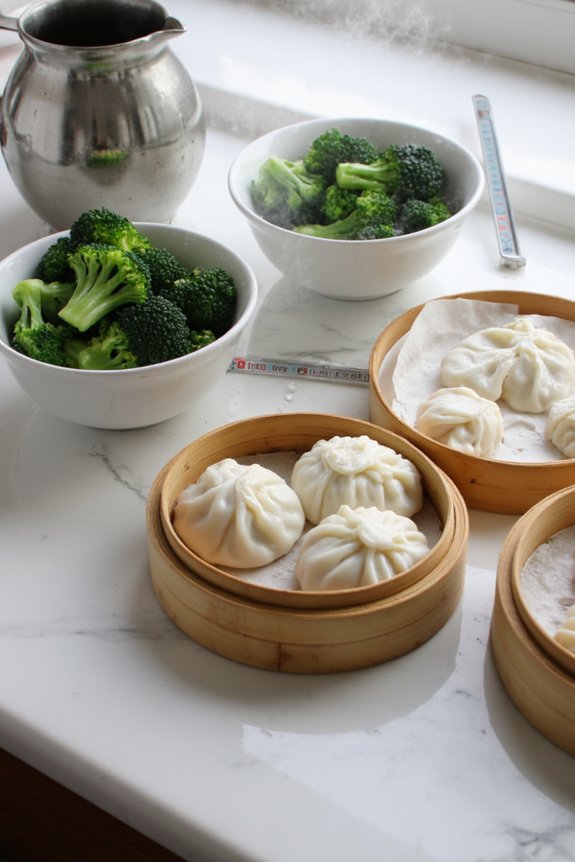
Most folks don’t realize that the temperature of your ingredients before they hit the steamer basket makes a huge difference in how everything cooks. You’ve probably never thought about it, but it’s actually pretty essential.
Here’s what you need to know:
- Room temperature vegetables take longer than cold ones
- Preheated water reduces overall cooking time markedly
- Frozen ingredients need extra minutes you might not account for
- Ingredient temperature affects how evenly things steam
Think about it this way: cold broccoli straight from the fridge behaves differently than room temperature broccoli. When you’re working with preheated water and room temperature produce, everything cooks more predictably. That’s why timing charts sometimes feel off—they’re assuming certain ingredient temperatures you might not be starting with. Pay attention to this detail and your results improve dramatically.
Equipment Age and Condition: When Your Steamer Stops Working as Designed
After a few years of regular use, your electric steamer isn’t quite the same machine it was when you first unboxed it. Components wear down. Elements lose efficiency. You’ll notice the heating takes longer, or maybe your food comes out unevenly cooked compared to those early days.
Old wiring can develop resistance over time, reducing power delivery to heating elements. Thermostats drift too, losing their calibration and throwing off your carefully planned cooking times. That chart you’ve relied on? It might not work anymore because your steamer’s actually running cooler than it should.
The fix isn’t always complicated. Sometimes you just need to add a few extra minutes to your cooking time, accounting for your steamer’s age. Other times, replacement parts or professional service become necessary if you want reliable results again.

The Real Adjustments You Need to Make for Consistent Results
You’ve probably noticed that your steamer doesn’t always follow those fancy timing charts you got with it, and there’s actually a reason for that beyond operator error. What nobody tells you is that altitude and water density play huge roles in how your steamer performs, which means you’re gonna need to make real adjustments to get consistent results instead of just crossing your fingers and hoping for the best. The good news is once you understand how these factors mess with your cooking times, you’ll stop blaming yourself and start getting perfectly steamed food every single time.
What Nobody Tells You About Electric Steamer Timing Charts
While standard electric steamer timing charts look neat and official, they’re basically suggesting you operate in a vacuum—which, spoiler alert, you’re not.
Real life is messier. Your kitchen’s humidity, altitude, and water quality all mess with those pretty numbers on the chart. Here’s what actually matters:
- Steam calibration differs between machine models and ages
- Pan fitment affects heat distribution and cooking times
- Altitude changes how water boils and steam pressure builds
- Your tap water’s mineral content impacts steam generation
You’ll notice that frozen veggies steam faster than fresh ones. Dense foods need longer than delicate stuff. Those timing charts? They’re starting points, not gospel. Test everything in your actual setup, adjusting as you go. Your results’ll be way more consistent once you stop blindly following the manual.
The Real Adjustments You Need to Make for Consistent Results
Once you accept that those timing charts are basically suggestions, you’re ready to actually dial in your steamer.
Here’s the thing: steam calibration isn’t some mysterious dark art. You’ll need to account for water quality, altitude, and how packed your food actually is. Start by doing a test run, then adjust from there. Seasonal adjustments matter too, especially during humid months when your steamer works harder.
| Factor | Winter | Summer |
|---|---|---|
| Water level | Higher | Lower |
| Steam time | Add 2 mins | Standard |
| Pressure check | Weekly | Twice weekly |
You’re basically becoming a steamer scientist. Keep notes on what works, tweak based on results, and pretty soon you’ll have your own personal timing system that actually works for your setup. That’s when things get real.
Altitude and Water Density
If you’re steaming at altitude or dealing with wonky water quality, your timing chart might as well be written in invisible ink.
Here’s the thing: water behaves differently depending on where you live. At high altitude, the boiling point drops, which means your water vapor forms faster but with less density variations, throwing off everything you’ve memorized. Your steamer’s struggling against physics itself.
Consider these game-changers:
- High altitude locations need 10-15% longer steaming times
- Water density variations affect heat distribution inside your steamer
- Mineral-heavy water creates buildup that insulates food from steam
- Soft water steams faster since it heats more efficiently
Test your local water quality first. Your timing chart ain’t universal, and that’s okay. Once you nail these adjustments, you’ll finally get consistent results.
Building Your Personal Steamer Timing Reference Guide
Every steamer’s got its quirks, and the best way to open up yours is by creating a personalized timing guide that actually reflects how your specific machine behaves. Start keeping a steam notebook where you log everything. Jot down what you’re cooking, how long it took, and whether the results were perfect or kinda off.
Recipe logging helps you spot patterns. Maybe your broccoli needs two extra minutes, or your dumplings cook faster than the manual suggests. Here’s a simple template to get you started:
| Food | Standard Time | Your Time | Notes |
|---|---|---|---|
| Broccoli | 5 min | 7 min | Softer texture |
| Dumplings | 8 min | 6 min | Faster cook |
| Carrots | 10 min | 12 min | Needs longer |
| Fish | 6 min | 6 min | Perfect as-is |
| Rice | 15 min | 16 min | Slight adjustment |
Over time, you’ll build confidence and stop guessing.
Frequently Asked Questions
Can I Use Distilled Water to Avoid Mineral Content Problems Affecting My Cooking Times?
You can use distilled water for distilled advantages and mineral avoidance in your steamer. It won’t affect your cooking times since minerals don’t materially impact steam generation or heat transfer rates during the steaming process.
How Does Humidity in My Kitchen Environment Affect Electric Steamer Performance and Timing?
Your kitchen’s air moisture directly impacts steamer efficiency—high humidity slows evaporation, extending cooking times. You’ll need better condensation control in damp environments by adjusting water levels and venting steam more frequently for consistent results.
Should I Preheat My Steamer Before Adding Food for Accurate Timing Chart Results?
You should preheat your steamer for accurate timing. Don’t fall for preheat myths—proper sensor calibration requires stabilized temperature before you add food, ensuring reliable chart results.
What Happens if I Stack Multiple Baskets Vertically Instead of Using Single Layers?
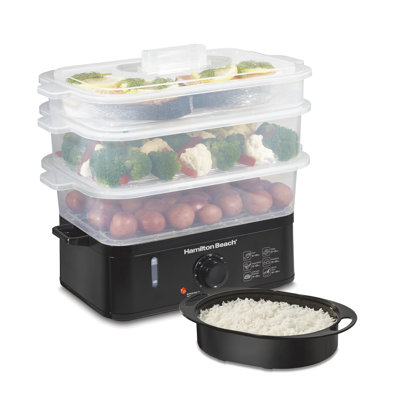
When you stack multiple baskets, you’ll encounter uneven steaming because heat layering reduces basket airflow to lower vegetables. Your stacked vegetables won’t cook uniformly; bottom layers steam faster while top layers lag markedly behind timing charts.
Does the Type of Food Packaging or Wrapping Affect Steaming Time Accuracy?
Yes, packaging matters markedly. You’ll find that vacuum-sealed foods steam faster than those in plastic wrap, which can trap moisture unevenly. Remove excess packaging before steaming for accurate, consistent timing results.
Conclusion
Your steamer’s not a mind reader, and neither’s the manual. You’ve gotta treat those timing charts like suggestions, not gospel. Keep notes on what actually works in your kitchen, clean your machine regularly, and don’t panic when things take longer than expected. Hard water, altitude, and that overflowing basket all matter way more than manufacturers admit. Once you dial in your unit’s personality, you’re golden.


