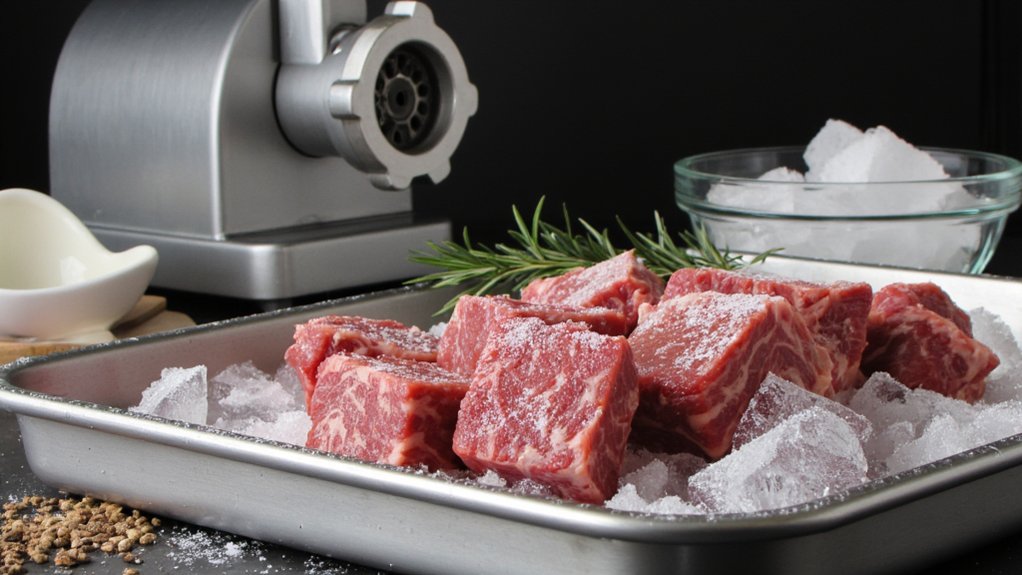
You’ve probably noticed your ground meat sometimes turns into a gluey mess instead of those nice, distinct particles you’re after. That’s where temperature control comes in. When you chill everything—your grinder, the meat, all of it—you’re basically keeping the fat firm enough to cut clean instead of smear. But here’s the thing: most folks don’t realize just how much this one step transforms the whole game. Let’s talk about what you’re actually doing wrong.
Key Takeaways
- Freeze grinder plates, die, and auger for at least two hours to improve grinding performance and texture quality.
- Keep meat chunks cold and feed them steadily through the grinder without forcing to prevent warming and smearing.
- Chilled equipment preserves fat as distinct particles rather than a paste, enhancing flavor and juiciness throughout the grind.
- Allow meat to rest between batches and refrigerate briefly after grinding to prevent fat from warming and blending.
- Add seasonings after grinding to avoid fat smearing, and maintain consistent cold temperatures throughout the entire process.
Why Temperature Control Matters in Meat Grinding
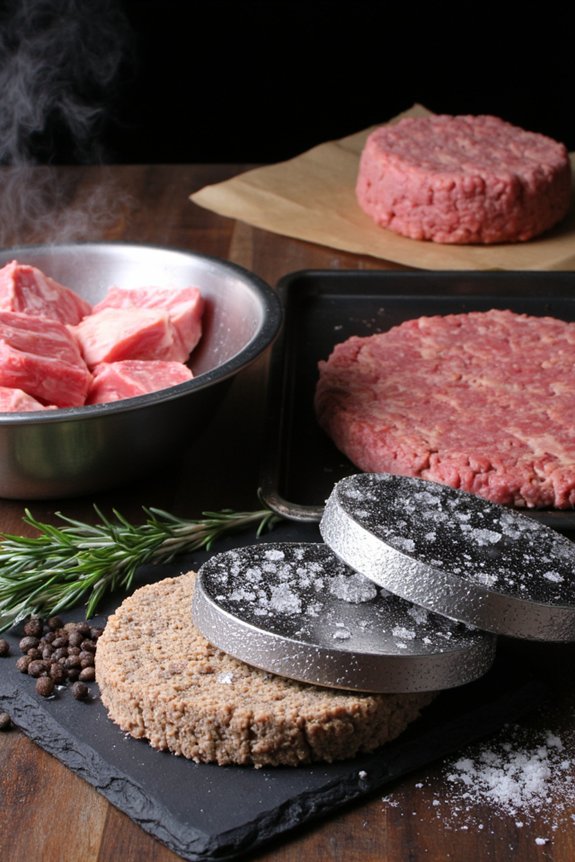
When you’re grinding meat, temperature’s honestly your best friend—or your worst enemy, depending on how you handle it. Here’s the deal: cold meat grinds smoothly and creates that desirable texture you’re after. Warm meat? It’ll turn into a mushy mess. When temperatures rise, you risk protein denaturation, which basically means the proteins break down and lose their structure, making everything fall apart. Plus, bacteria love warmth. Bacterial growth accelerates rapidly when meat sits around at room temperature, which is a food safety nightmare. Keep your grinder, bowl, and meat chilled before you start. Work quickly and efficiently. Your texture will thank you, and you’ll keep things safe too. For the best results, make sure your grinder components are properly chilled, as this is recommended for both texture and optimal grinding performance.
Essential Equipment to Freeze Before You Start
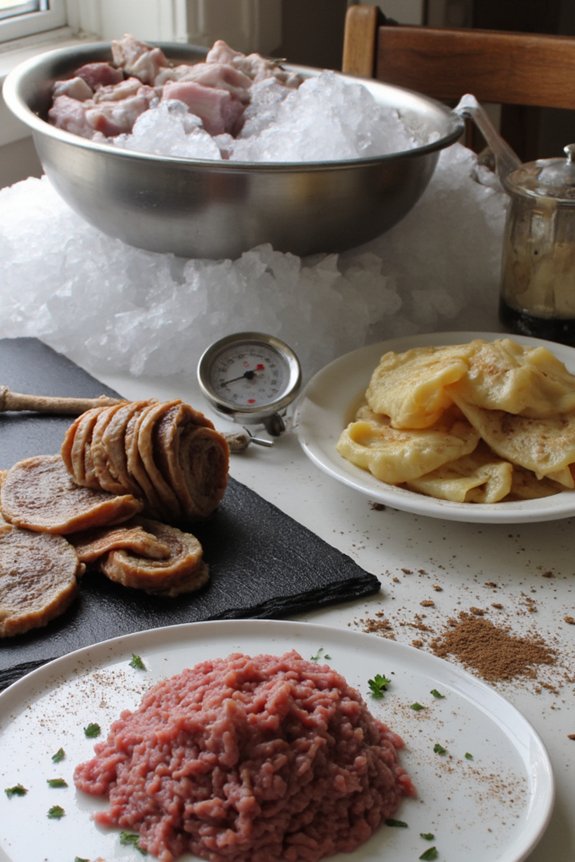
So you’ve got the temperature concept down—now let’s talk about making it actually happen. Before you even think about grinding, you’ll need to prep your equipment. Pop your grinder plates, die, and auger into the freezer at least two hours ahead of time. Some folks go overnight, which honestly isn’t a bad call. Cold metal makes all the difference. Don’t skip the freezer timing—it’s not just busywork. Your grinder parts should be properly chilled before they touch any meat. Also, pay attention to tool sanitation while everything’s cold. Wipe down those frozen parts with a clean cloth to remove any dust or debris. Clean equipment plus cold equipment equals perfectly textured ground meat. You’re basically setting yourself up for success. Investing in removable stainless steel blades and easy-to-clean components can further streamline your prep and ensure the highest standards of hygiene when working with cold equipment.
Step-by-Step Guide to the Chilling Technique
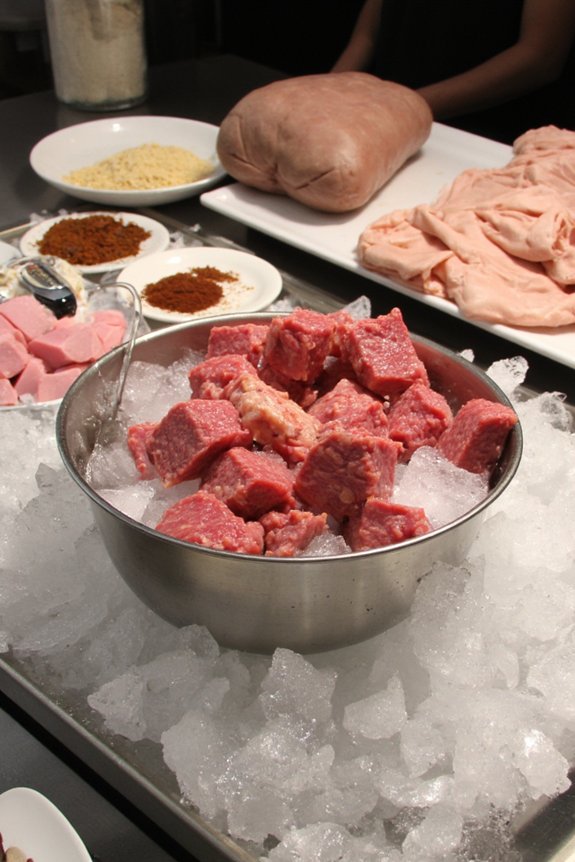
Starting your grind requires a bit of strategy, and you’re already halfway there with your chilled equipment sitting in the freezer. Now comes the fun part, where technique meets texture.
First, cut your meat into chunks that fit your grinder’s feed tube, keeping everything cold. Work quickly so nothing warms up. Push meat through slowly, letting the blade do the work without forcing it.
| Step | Action |
|---|---|
| 1 | Feed cold meat chunks steadily |
| 2 | Allow meat resting between batches |
| 3 | Add spice incorporation near the end |
Here’s the thing: you don’t want ground meat sitting around getting warm. After grinding, let your meat rest briefly in the fridge before mixing in seasonings. This prevents fat from smearing, keeping your texture light and fluffy instead of pasty. You’ve got this.
If you plan to cook your ground meat in a cast iron skillet, using pans known for exceptional heat retention will help preserve the texture and juiciness you achieved with this chilling technique.
How to Achieve the Perfect Ground Meat Texture
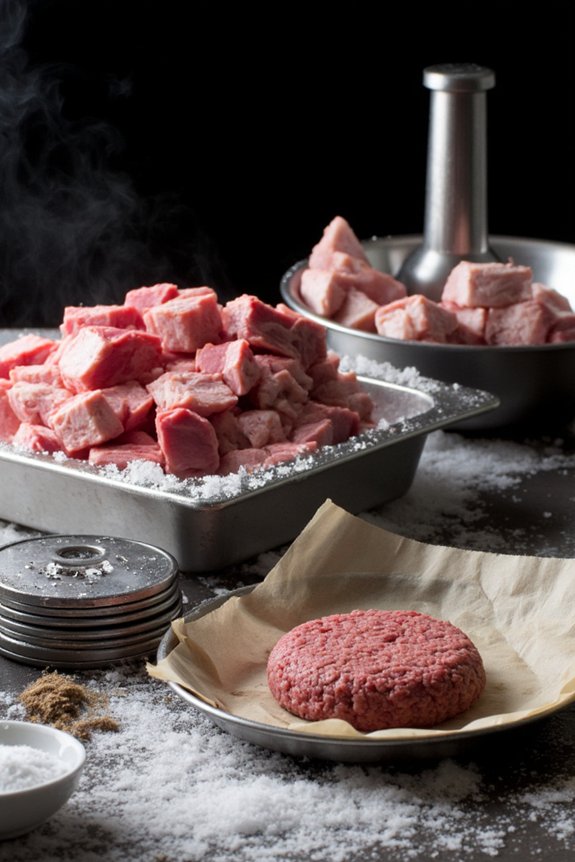
The real magic happens after you’ve got your technique down, because grinding meat is only half the battle. What really matters is nailing that texture when you’re actually grinding.
You’ll want to pay attention to two things: fat distribution and particle size. These are what separate mediocre ground meat from the stuff that’ll make your burgers sing. When your meat’s properly chilled, the fat stays intact instead of smearing everywhere, which means you get those beautiful little pockets of flavor throughout. Your particle size becomes more uniform too, giving you that consistent texture that cooks evenly.
It’s kinda like the difference between sand and gravel. You want those particles distinct and separate, not one mushy paste.
Common Mistakes to Avoid When Grinding Meat
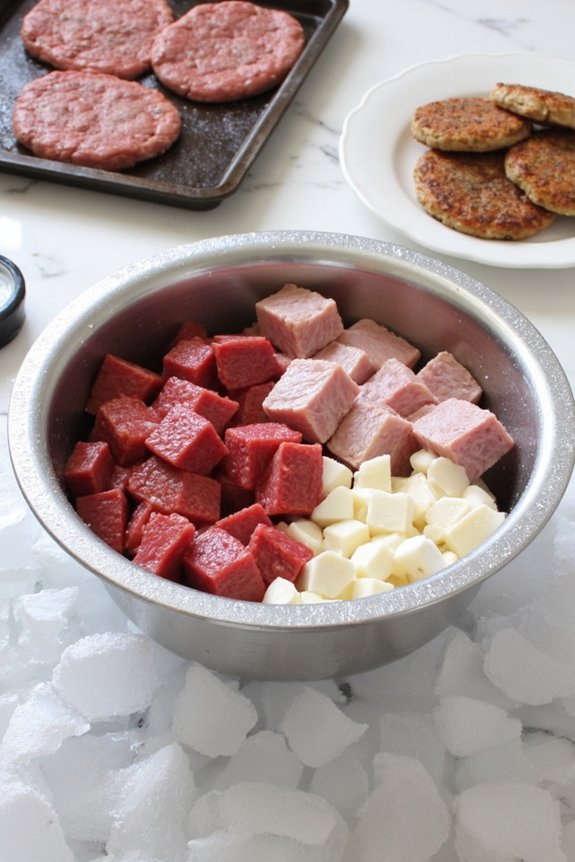
Once you understand the basics of proper grinding, it’s easy to slip into habits that’ll totally sabotage your results. First up: grinder cleanliness. Seriously. Old meat residue hanging around in your equipment’ll contaminate fresh batches and ruin texture faster than you’d think. Clean that thing thoroughly between uses.
Then there’s the overmixing myths floating around. You don’t need to process your meat forever. Over-working it makes everything mushy and dense, which is basically the opposite of what you’re after. Stop while you’re ahead.
Another killer? Not keeping everything cold enough. Warm meat turns into paste. Your grinder, bowl, and meat should all be chilled beforehand. Temperature matters way more than most folks realize. Stick to these basics and you’re golden. For even safer results and easier cleanup, consider using removable, dishwasher-safe parts in your equipment to prevent residue buildup.
Frequently Asked Questions
How Long Can I Store Pre-Chilled Meat Before Grinding It?
You can safely store pre-chilled meat for one to two days under proper storage conditions. Keep it at 40°F or below in your refrigerator, and you’ll maintain ideal texture for grinding.
Does Chilling Technique Work for All Meat Types Equally Well?
No, chilling doesn’t work equally for all meats. You’ll notice texture variation depends on fat content and enzyme activity. Fatty meats benefit more, while lean cuts show minimal improvement from the chilling technique.
Can I Use a Home Freezer Instead of Commercial Equipment?
You can absolutely use your home freezer instead of commercial equipment. Your domestic icebox works fine for chilling meat before grinding, though you’ll need more time since it’s less powerful than professional systems.
What’s the Ideal Thickness for Grinding Chilled Meat Safely?
You’ll want meat sliced between one-quarter and one-half inch thick before grinding. This slice thickness guarantees consistent particle size and prevents your grinder from clogging or overheating during processing.
How Does Chilling Affect the Nutritional Content of Ground Meat?
Chilling doesn’t markedly diminish your meat’s nutritional value. You’ll maintain vitamin retention and minimize lipid oxidation when you keep ground meat cold, preserving essential nutrients and preventing fat degradation during storage.
Conclusion
So here’s the thing: you’ve now got the secret to grinding meat like a pro. Keep everything cold, work fast, and you’ll get that perfect texture every single time. It’s really not complicated. Your burgers, sausages, and meatballs’ll taste noticeably better, and honestly, once you nail this technique, you won’t go back to room-temperature grinding. Your taste buds will thank you.


