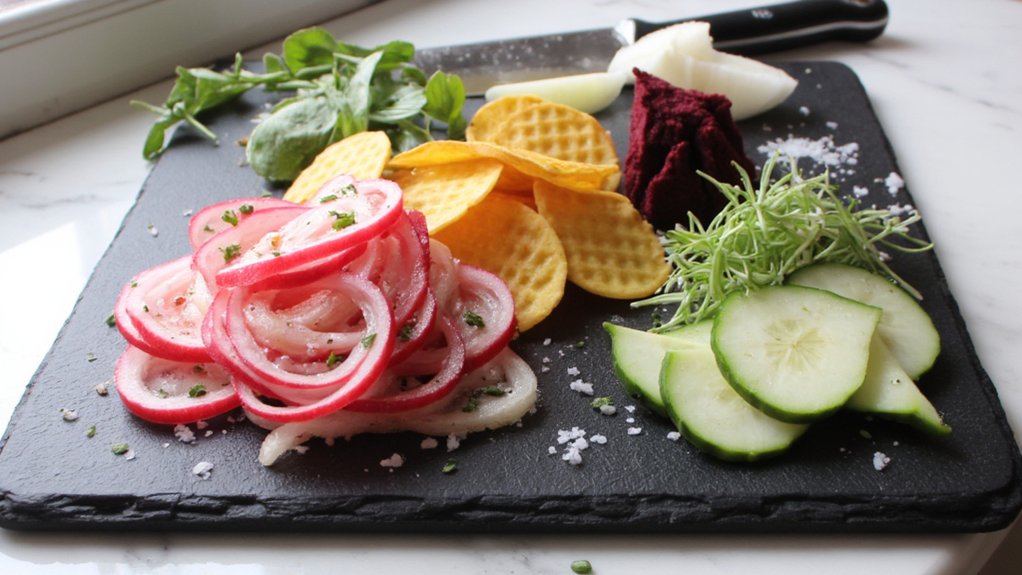
You’ve probably never considered that a mandoline isn’t just for thin slices—it’s basically a magic wand for plating. With the right blade and a little finesse, you can transform humble vegetables into architectural elements that’ll make your guests do a double-take. We’re talking delicate julienne nests, paper-thin fruit layers, and geometric waffle cuts that scream professional kitchen energy. But here’s the thing: knowing which cuts work and how to actually pull them off? That’s where the real magic happens.
Key Takeaways
- Julienned vegetable nests layer thin strands into intricate architectural bases perfect for elevated appetizer presentations.
- Paper-thin fruit arrangements use straight blades to create translucent citrus and stone fruit segments with visual contrast.
- Spiral and wavy specialty blades transform vegetables into noodle-like beds and layered towers for sophisticated plating.
- Waffle cuts achieve geometric precision through crosshatch slicing, producing professional-looking charcuterie board elements.
- Microplane finishing adds feathery zest, chocolate shavings, and cheese dustings that catch light and enhance presentations.
The Julienned Vegetable Nest: Creating Architectural Bases for Appetizers
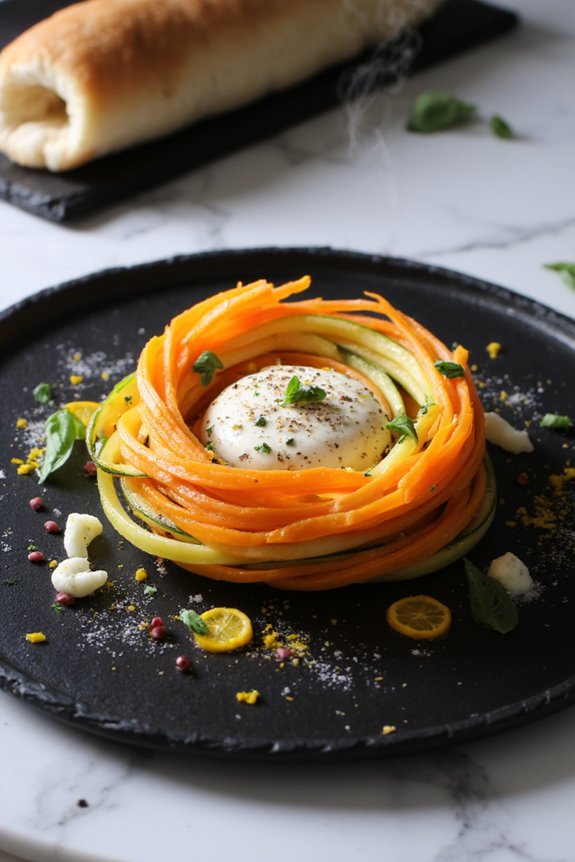
When you slice up a mandoline, you’re not just cutting vegetables—you’re building edible art. Your julienned strands become the foundation of something spectacular. Imagine this: you’re crafting a delicate vegetable lattice that’ll make your guests stop mid-chew and stare. Stack those thin carrot ribbons, beet strips, and zucchini threads into an intricate weave. It’s like culinary origami, except way tastier and less frustrating. The real magic? Layer in an herb infused strata with microgreens and edible flowers tucked between each level. Suddenly you’ve got an architectural masterpiece holding your appetizers aloft. This technique transforms basic veggies into an eye-catching presentation that screams “I actually know what I’m doing.” Your mandoline’s julienne blade becomes your secret weapon for creating those Instagram-worthy nests that’ll elevate any professional spread. Many mandoline slicers feature simple dial or lever thickness adjustment, letting you fine-tune the size of each julienned strand for even more striking designs.
Paper-Thin Fruit Arrangements: Layering Citrus and Stone Fruits for Visual Impact
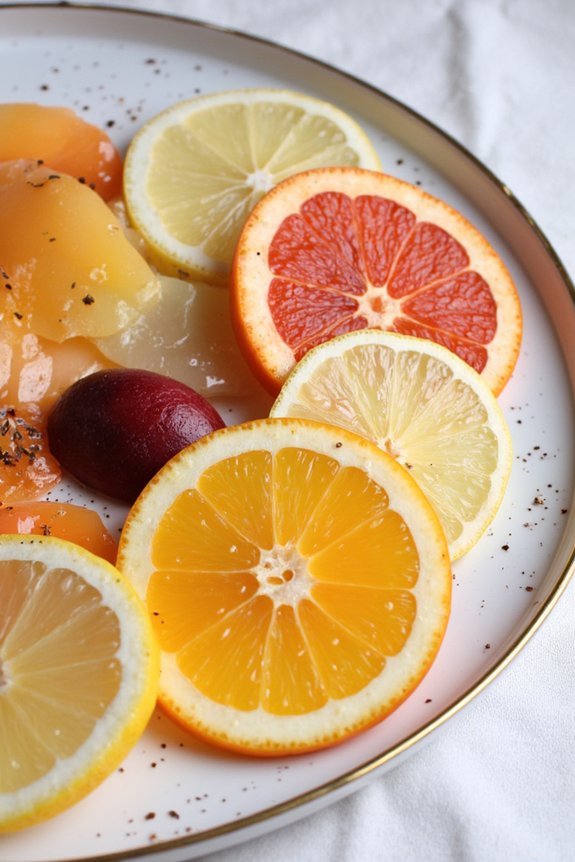
Your mandoline’s straight blade becomes pure magic the moment you start shaving fruit paper-thin. You’ll create translucent segments of citrus that practically glow under restaurant lighting. Layer those delicate orange and lemon slices in overlapping patterns, alternating with paper-thin peach or apricot rounds for maximum visual drama. The trick? Work slowly and let the blade do the work—no pressure needed.
Add candied peels between layers for texture and a sophisticated touch. Your guests won’t believe how elegant this looks, honestly. Stone fruits create softer, more romantic presentations, while citrus brings brightness and contrast. Stack everything at slight angles so light catches each translucent layer. It’s architectural design meets dessert. You’re basically composing an edible work of art that screams professional expertise. Simple? Absolutely. Impressive? Totally.
For a truly show-stopping finish, serve your fruit composition alongside coffee prepared with a multi-layer stainless mesh filter for a presentation that combines visual and flavor sophistication.
Decorative Ribbon Cuts: Mastering Spiral and Wavy Blade Techniques
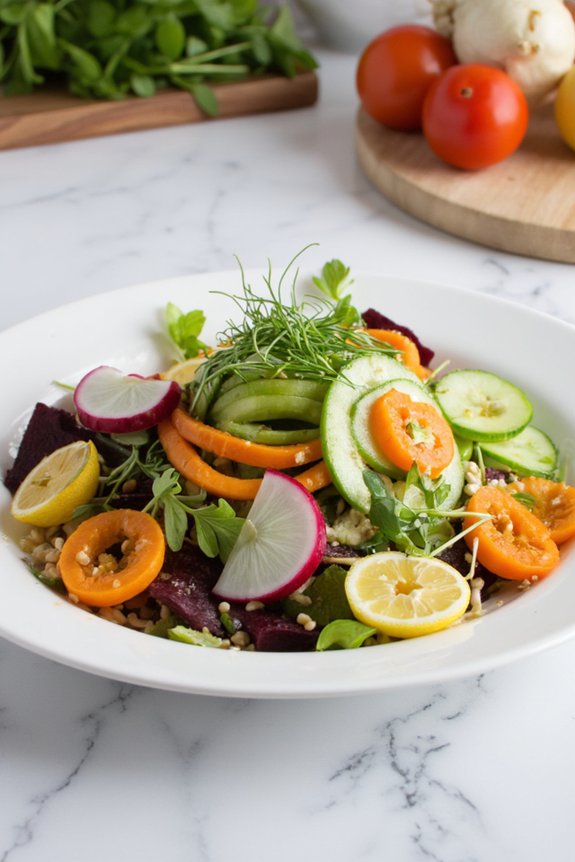
Once you’ve mastered the straight blade, it’s time to unleash the mandoline’s real superpowers—those specialty blades that transform ordinary vegetables into ribbons and spirals that’ll make your guests do a double-take. You’re about to enter fancy territory. Spiral ribbons create those Instagram-worthy curls that make zucchini look like fancy pasta. The wavy textures? They add visual pizzazz without extra effort.
| Blade Type | Best Vegetables | Presentation Use |
|---|---|---|
| Spiral | Zucchini, cucumber | Noodle beds |
| Wavy | Potatoes, beets | Layered towers |
| Ribbon | Carrots, squash | Garnish drapes |
Here’s the trick: let your vegetable’s firmness guide your pressure. Light, confident strokes beat aggressive hacking every time. These cuts elevate your plating from “homemade” to “professional,” transforming simple ingredients into edible art that’ll impress even the pickiest diners at your table. For extra flair, consider pairing your mandoline creations with cast iron skillet heat retention to keep vegetables warm and perfectly textured on the plate.
The Waffle Cut: Achieving Geometric Precision for Charcuterie Boards
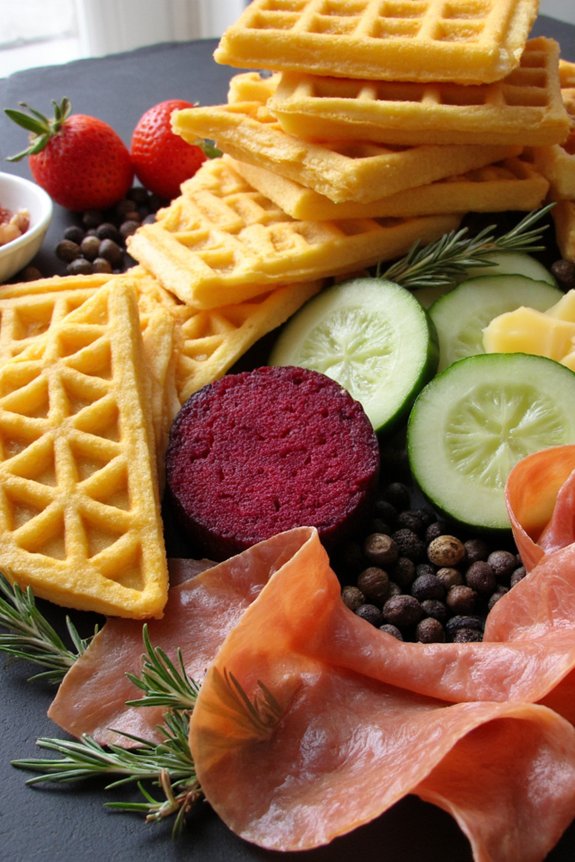
The waffle cut? You’re about to become a charcuterie board legend. This geometric beauty requires precision templates and careful angle calibration to nail those perfect crosshatch patterns. Here’s the thing: you’ll need your mandoline set at the right inclination, then slice your vegetable once in one direction. Rotate it ninety degrees—no guessing allowed—and slice again. The result? Those Instagram-worthy diamond shapes that’ll make your guests think you’ve got culinary superpowers. Start with firmer produce like potatoes or zucchini. They’re forgiving teachers. Your angle calibration matters more than you’d think because even slight variations mess up that satisfying geometric precision. Once you’ve mastered the technique, though? You’ll be slicing like a pro, creating stunning presentations that transform ordinary boards into extraordinary edible art. If you want to take your garnishes to the next level, consider pairing your mandoline skills with multi-blade assemblies for ultra-smooth purees or dips to complement your show-stopping waffle cuts.
Microplane Finishing: Adding Delicate Garnish Details That Elevate Presentation
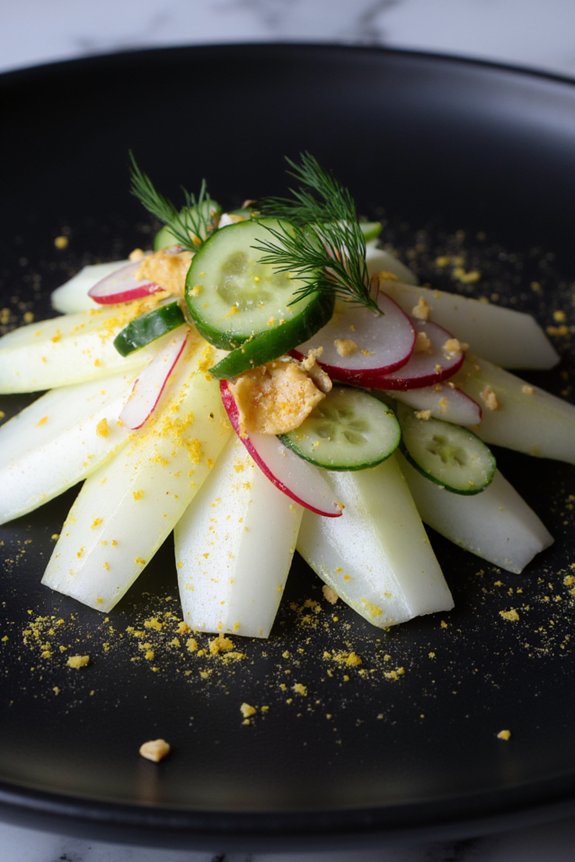
Now that you’ve mastered those perfectly geometric waffle cuts, it’s time to take your charcuterie board from “pretty good” to “did you go to culinary school?” with microplane finishing. This humble tool is your secret weapon for creating those Instagram-worthy presentations that’ll make your guests wonder if you’re secretly a chef. A microplane lets you add microplane textures that look impossible to achieve yet surprisingly simple to execute. You’ll create delicate zesting of citrus, chocolate shavings, or even hard cheeses that float across your board like edible clouds. The key? Light pressure and confident strokes. You’re not grating—you’re artfully dusting. Those feathery garnish details catch light, add visual drama, and honestly? They make everything taste better too. For an even more impressive result, consider how blade sharpness and versatility—as seen in top coffee and spice grinders—can influence the precision and ease of your microplane cuts, ensuring every garnish is as fine and consistent as possible.
Frequently Asked Questions
What Safety Precautions Should I Take When Using a Mandoline Slicer?
You’ve got to wear gloves to protect your fingers from sharp blades. Always secure the base firmly on your cutting surface so it won’t slip during use. Keep your hand steady and focused.
Which Mandoline Blade Types Work Best for Different Vegetable Textures?
You’ll find wavy julienne blades work best for softer vegetables like zucchini, while fine chiffonade blades excel with delicate greens and herbs. Match harder vegetables to straight blades for cleaner cuts.
How Do I Maintain and Sharpen Mandoline Blades for Optimal Performance?
You’ll think blade maintenance is tedious, but it’s essential. Hone your mandoline blades regularly using a honing steel, then sharpen them with a whetstone when they dull. You’ll maintain peak performance and longevity.
Can Mandoline Cuts Be Prepared in Advance for Events Without Wilting?
You can prepare mandoline cuts in advance by vacuum packing them to maintain crispness preservation and texture stability. This make ahead method keeps your vegetables fresh for professional events without wilting.
What Are the Most Common Mistakes Beginners Make With Mandoline Slicing?
You’re walking a tightrope between precision and danger. Your biggest pitfalls? Creating uneven thicknesses through inconsistent pressure and risking injury with improper grip. Master blade angle and hand positioning to transform your slicing technique.
Conclusion
You’ve now got the tools to transform your plate from boring to breathtaking. Those julienne nests? They’re not just pretty, they’re edible art. Waffle cuts bring the drama. Spiral ribbons? Chef’s kiss. The real magic happens when you combine these techniques, layering textures and colors into something that’ll make your guests do a double-take before they even taste it. Your mandoline’s about to become your new best friend.


