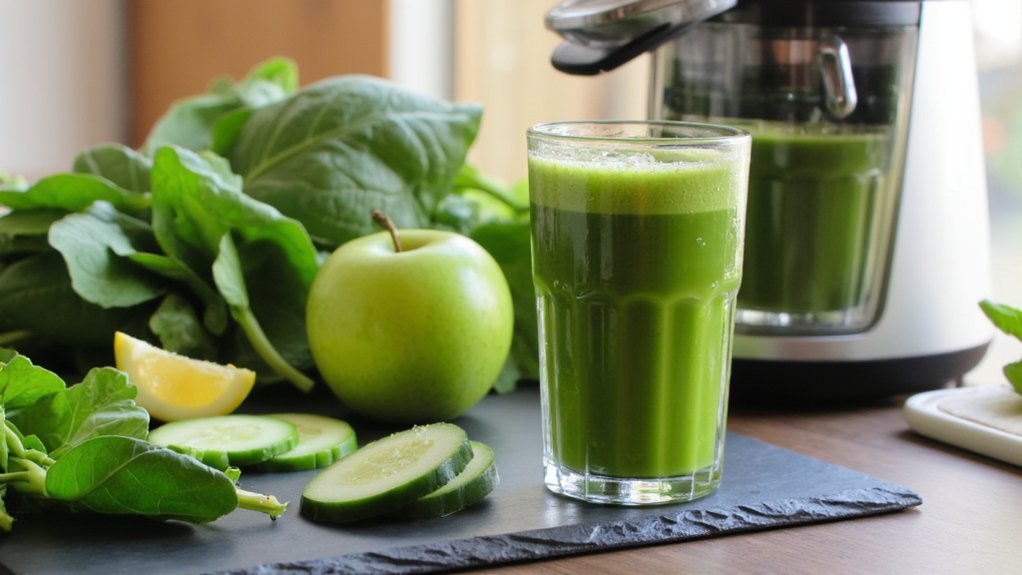
Did you know that enzymes start dying at just 118 degrees Fahrenheit? That’s probably lower than you’d think, which means your juicer’s speed matters way more than most folks realize. You’re about to discover why those fancy high-speed blenders might actually be destroying the very nutrients you’re trying to extract, and how a slower approach could transform what’s really in your glass.
Key Takeaways
- Masticating juicers operating at 43–80 RPM optimize enzyme preservation by minimizing heat and oxidation damage.
- Slower speeds produce drier pulp, indicating superior extraction efficiency and more complete nutrient preservation.
- Processing time should stay under 30–45 seconds per batch to prevent heat-induced enzyme destruction.
- Feed produce slowly without forcing to maximize extraction efficiency while protecting heat-sensitive enzymes.
- Immediate chilling after juicing minimizes room-temperature enzyme degradation and extends nutrient preservation.


Understanding Enzyme Sensitivity to Heat and Oxidation
When you’re shopping for a juicer, you’ve probably heard someone mention that enzymes are delicate little guys—and they’re not wrong. These proteins do amazing things for your body, but they’re also surprisingly fragile. Heat is basically their kryptonite. When temperatures rise above about 118°F, enzyme denaturation kicks in, meaning those helpful molecules lose their shape and stop working. That’s the whole reason masticating juicers matter. But here’s the thing—even without heat, you’ve got another enemy: air. Oxidative degradation happens when your juice sits around exposed to oxygen, slowly destroying those valuable nutrients. It’s like watching your liquid gold turn into regular juice right before your eyes. Slower juicing methods minimize both problems, keeping your enzymes intact and your juice genuinely beneficial. Masticating juicers operating at low RPM speeds—usually between 43 and 65 RPM—are proven to minimize heat buildup and protect nutrients better than faster, centrifugal models.
How RPM Affects Nutritional Content in Fresh Juice
You’ve got the heat problem solved with a masticating juicer, but there’s another sneaky variable lurking in your kitchen: speed. RPM matters way more than you’d think. Lower speeds—around 43-80 RPM—mean less oxidation and enzyme destruction. Your juice stays fresher, literally. When you crank up the speed, you’re basically heating things up without actually using fire. Cold filtration combined with slower masticating action preserves those precious nutrients you’re after.
| RPM Range | Enzyme Loss | Pulp Texture |
|---|---|---|
| 40-60 | Minimal | Smooth |
| 60-80 | Low | Creamy |
| 80-100 | Moderate | Thicker |
| 100+ | High | Watery |
Here’s the kicker: slower ain’t just better for nutrition—it’s better for your wallet too. You’ll extract more juice from less produce. That’s a win-win situation right there.
Some juicers, like those with dual-layer mesh strainers, are specifically designed to maximize juice yield and nutrient retention at lower speeds.
The Optimal Speed Range for Maximum Enzyme Preservation
Most masticating juicers hit their sweet spot somewhere in that 43-80 RPM range, and honestly, that’s where the magic really happens. You’re getting cold extraction without all that heat-generating friction that destroys your precious enzymes. Here’s the thing: go too slow, and you’re basically just sitting there watching paint dry. Go too fast, and you’ve defeated the whole purpose. That ideal speed range gives you enzyme stabilization while still actually, you know, getting juice out. It’s like Goldilocks but for your blender. The slower rotation means less oxidation, less friction, less enzyme damage. You want that gentle masticating action working its magic. Your body’ll thank you when you’re sipping juice that’s genuinely packed with living nutrients instead of heat-damaged goop.


Comparing Low-Speed vs. High-Speed Masticating Juicers
Now that you understand why 43-80 RPM is the sweet spot, it’s worth asking yourself: should you actually go for the slowest option available, or does that high-speed cousin sitting next to it on the shelf have something to offer?
Here’s the real deal:
- Low-speed juicers excel at cold extraction, gently coaxing juice from produce without generating heat that destroys those precious enzymes you’re after
- High-speed models work faster but sacrifice enzyme preservation through friction and oxidation, making them better suited for juice you’ll drink immediately
- Pulp management differs too—slower speeds produce drier pulp, meaning you’re extracting maximum nutrition from every fruit and vegetable
The choice really hinges on whether you’re prioritizing speed or enzyme retention. Yeah, high-speed juicers are quicker, but they’re basically the sprinters of the juice world. Low-speed? That’s your marathon runner, working patiently to keep those enzymes alive and kicking.
For those who value exceptional heat retention and gentle processing, low-speed juicers—much like premium cast iron cookware—deliver superior results and preserve more nutrients over time.
The Role of Processing Time in Nutrient Retention
You might think that slower processing times automatically mean better nutrient preservation, but here’s the thing—how long your juicer actually runs matters just as much as the speed itself, because extended processing can generate enough heat to damage those precious enzymes you’re trying to protect. The sweet spot? You’ll want to aim for processing durations that keep your produce moving through the system efficiently without letting friction and mechanical stress turn your juice into a nutrient-depleted smoothie, and that’s usually somewhere in the 30 to 45 second range depending on your juicer model and ingredient type. Think of it like cooking—you can ruin a delicate sauce by letting it sit on the heat too long, and your masticating juicer’s processing time works kinda the same way. Much like temperature precision and range in sous vide cooking, maintaining the right balance of time and mechanical action in juicing is key to preserving nutrients and achieving the best results.
Heat Generation and Enzyme Damage
While most juicers heat up like a forgotten pot on the stove, masticating models keep their cool—and that’s precisely where the enzyme magic happens. You’re probably wondering why temperature matters so much. Well, here’s the thing: enzymes have thermal thresholds, meaning they literally fall apart when things get too toasty.
Consider these heat-related benefits:
- Slower grinding speeds generate minimal friction, keeping temperatures below the danger zone where enzyme deactivation occurs
- Cold-pressed juice retains active enzymes that aid digestion and nutrient absorption in your body
- Lower processing temperatures preserve delicate vitamins that’d otherwise get zapped away
Traditional centrifugal juicers? They spin so fast they’re basically cooking your juice. Your masticating juicer, though, works methodically and calmly. It’s like the difference between a frantic chef and a zen master. You’re getting raw, living juice that actually does something beneficial.
Just as electric kettles with precise temperature control protect delicate tea flavors and nutrients by avoiding overheating, masticating juicers similarly safeguard enzymes by maintaining cool processing conditions.
Optimal Processing Duration Guidelines
Because your masticating juicer’s speed is only half the battle, it’s the processing time that really seals the deal on keeping those precious enzymes intact. You’ll want to keep juice sessions short and sweet, ideally under five minutes per batch. Longer processing times generate heat, which damages those delicate enzymes you’re trying to preserve. Think of it like cooking—the longer it sits on the stove, the worse it gets. Your batch size matters too. Smaller batches process faster, meaning less enzyme destruction and better nutrient retention. After juicing, store your liquid in cold storage immediately. Don’t let that fresh juice hang around at room temperature. The sooner you chill it, the better your enzymes survive.
Best Practices for Operating Your Masticating Juicer
Operating a masticating juicer isn’t rocket science, though it does require a bit more finesse than tossing produce into a centrifugal model and hoping for the best. You’ll want to establish solid routines that keep your machine humming and your enzymes thriving.
Here’s what’ll set you up for success:
- Follow cleaning routines immediately after juicing to prevent pulp buildup and bacterial growth
- Observe safety precautions by ensuring the hopper’s empty before disassembling any parts
- Feed produce slowly and deliberately, letting the auger do its thing without forcing anything
Take your time. Don’t rush the process. Your body—and your juicer—will thank you for the patience. These practices aren’t just about maintainence; they’re about maximizing every drop of nutritional goodness you’re extracting.


Measuring the Real Difference in Your Health Outcomes
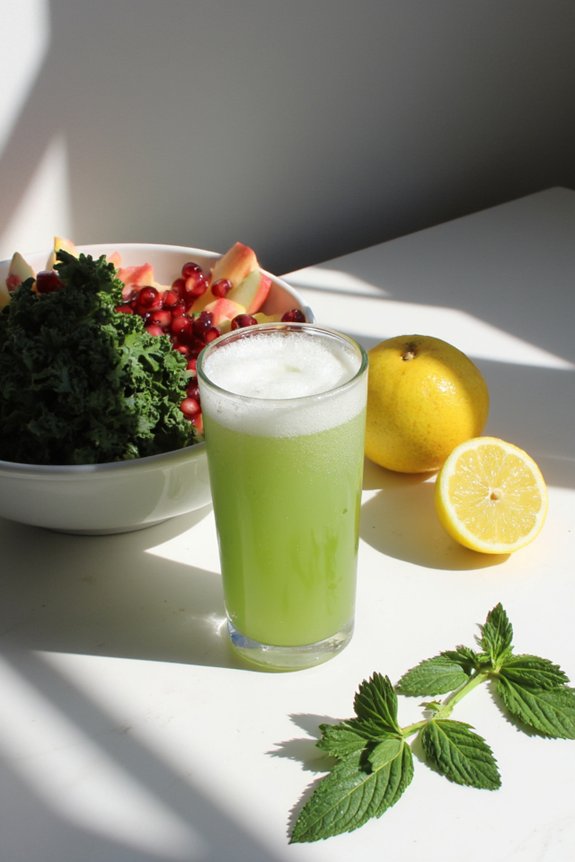
You’ve been juicing for weeks now, maybe even months, and you’re probably wondering: Is this actually doing anything? Good news—you can totally measure it. Start tracking your energy levels, digestion, and how you feel overall. Keep a simple journal. Notice if your gut microbiome’s doing better, like fewer bloating issues or more regular digestion. You might even consider getting bloodwork done to see nutrient levels improve.
While clinical trials show enzyme preservation at lower masticating speeds, your personal results matter most. Pay attention to your skin clarity, mental sharpness, and how you sleep. These aren’t imaginary benefits either. Your body’s gonna tell you when it’s getting better stuff. Don’t obsess over perfection, just notice the good changes happening. That’s the real proof.
Frequently Asked Questions
What Is the Ideal RPM Range for Masticating Juicers to Preserve Maximum Enzymes?
You’ll want your masticating juicer operating between 40-100 RPM for peak enzyme preservation. This low RPM range guarantees gentle extraction, minimizing heat generation that’d destroy those beneficial enzymes you’re seeking.
How Long Can Enzyme-Rich Juice Stay Fresh After Slow Juicing?
Your enzyme-rich juice lasts 72 hours refrigerated—like milk’s window before spoiling. You’ll maximize freshness through cold storage, though fermentation timing suggests consuming within 48 hours for peak enzyme activity.
Do Different Produce Types Require Different Juicer Speeds for Optimal Enzyme Retention?
Yes, you’ll want slower speeds for leafy greens to preserve delicate enzymes, while citrus peels tolerate slightly higher speeds without significant enzyme degradation. Adjust your juicer accordingly for maximum retention.
Can Enzyme Loss Be Reversed or Restored After Juice Oxidation Occurs?
Once your juice’s enzymes are gone, they’re water under the bridge. You can’t truly reverse oxidation, but you’ve got options: enzymatic supplementation or microbial intervention can restore some activity to your oxidized juice.
What Maintenance Practices Ensure My Masticating Juicer Operates at Enzyme-Preserving Speeds?
You’ll maintain enzyme-preserving speeds by regularly sharpening blades to reduce friction heat and replacing gaskets to prevent oxidation leaks. These practices keep your juicer operating efficiently.
Conclusion
So here’s the thing: you’ve probably wondered if that low-RPM setting actually matters. Spoiler alert—it totally does. Your 43–80 RPM juicer isn’t just a marketing gimmick; it’s genuinely preserving enzymes that high-speed machines demolish. You’re getting more nutrients, longer shelf life, and honestly, better-tasting juice. Slow and steady wins the enzyme race, my friend.


