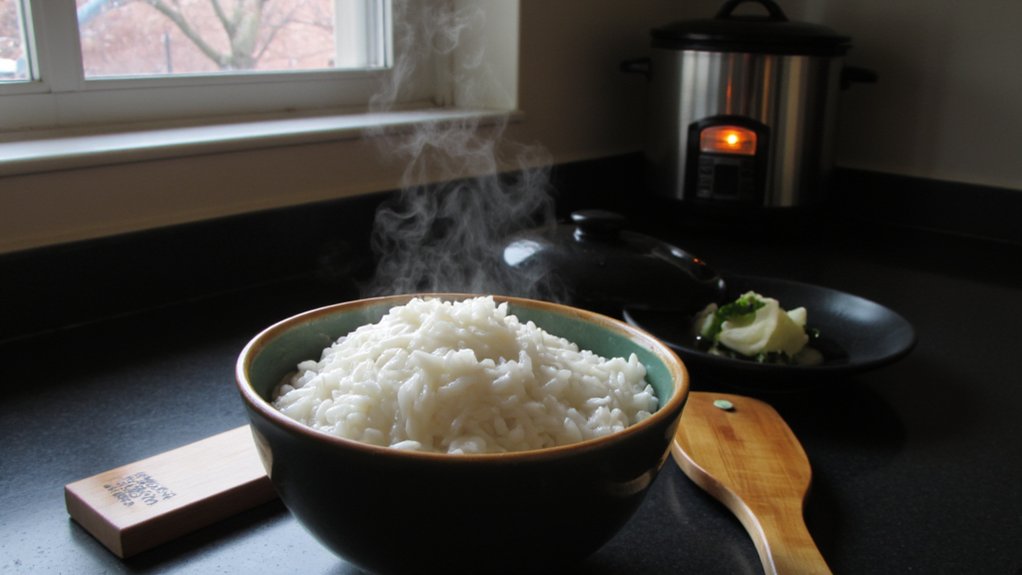
You’ve probably left rice warming in your cooker for hours, figuring it’s harmless convenience. But here’s what manufacturers won’t advertise: that warm setting’s quietly destroying your rice’s texture while potentially encouraging bacterial growth. Your “convenient” keep-warm function comes with hidden costs—both to your food’s quality and your electric bill. The truth? Most cookers aren’t actually designed the same way, and that matters way more than you’d think.
Key Takeaways
- Keep-warm cycles cause repeated moisture absorption and heat stress, progressively turning fluffy rice into sticky, gluey paste within hours.
- Warm temperatures (140–180°F) create ideal bacterial growth environments; spore-forming bacteria may survive cooking and reheating, posing food poisoning risks.
- Continuous heat triggers amylose leaching and enzyme activity, breaking down starches into simpler sugars and creating dense, gummy textures.
- Keep-warm functions consume standby power through constant cycling; energy costs accumulate significantly with prolonged use across different cooker models.
- Vacuum-sealed, refrigerated rice portions offer superior texture retention and flexible reheating compared to extended keep-warm storage with dried edges.


How Temperature Variations Affect Your Rice Quality
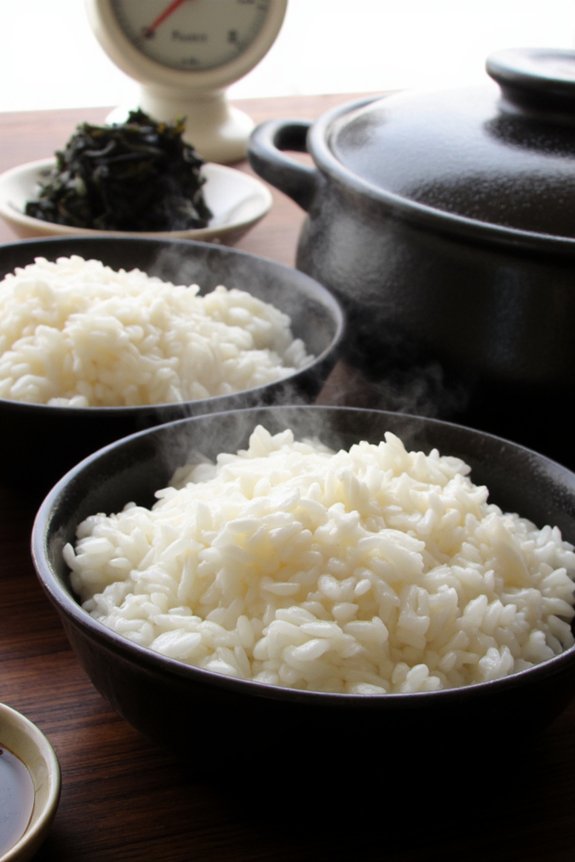
When you leave rice sitting on that keep-warm setting, here’s the thing—temperature matters way more than you’d think. You’re basically playing a delicate balancing act between keeping your rice warm and turning it into mush. See, those temperature fluctuations happening inside your cooker? They’ll mess with your grain resiliency faster than you can say “sticky situation.” The heat cycles on and off, and each time it does, your rice grains absorb more moisture, losing their structural integrity. What started as perfectly fluffy rice becomes this sad, gluey mess after a few hours. Your rice can only handle so much thermal stress before it surrenders completely. Pretty brutal, right? That’s why timing matters—get your rice off that warm setting sooner rather than later. Some fuzzy logic technology in advanced rice cookers can help better manage these temperature cycles, but even then, prolonged keep-warm periods will eventually compromise rice quality.
The Hidden Bacteria Risk Nobody Mentions
While you’re basking in the glory of that perfectly cooked rice, there’s something way less appetizing happening inside your cooker—bacteria is throwing a party. Here’s the thing: that warm setting you love? It’s basically a five-star resort for bacterial growth. Your rice sits between 140-180 degrees Fahrenheit, which is the sweet spot for nasty microorganisms to multiply like crazy.
But wait, there’s more. Some bacteria produce heat-resistant spores that survive your cooking process completely unscathed. They’re basically tiny ninjas, hiding in your rice. Even when you reheat leftovers, certain spore survival tricks mean they can bounce back and cause serious food poisoning. Pretty wild, right? That’s why food safety experts recommend not leaving rice on keep-warm for more than a few hours. Your future stomach will thank you.
Why Continuous Heat Degrades Texture Over Time
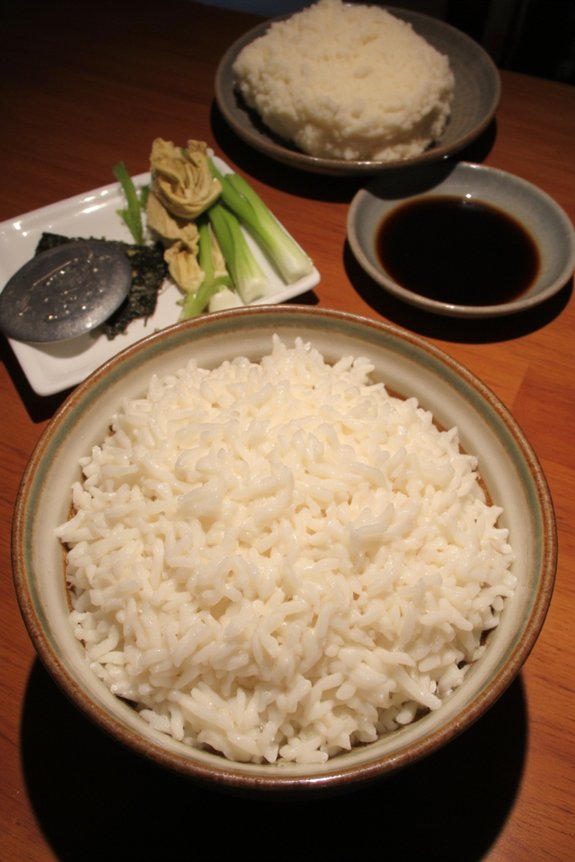
You’ve probably noticed that rice sitting in your cooker’s keep-warm mode starts turning into something that’d make a hockey puck jealous, and there’s actually some science behind why that happens. Here’s the thing: moisture’s constantly evaporating from those grains, leaving ’em drier and harder with every passing hour, while the heat’s also breaking down the starches that give rice its tender, fluffy personality in the first place. It’s like your cooker’s slowly turning dinner into a crunchy, disappointing memory. In fact, just like certain boil‑dry protection features in modern electric kettles can help prevent overheating and preserve quality, rice cookers without such safeguards can expose your rice to continuous heat that accelerates this texture loss.


Moisture Loss and Hardening
One of the less glamorous realities of the keep-warm function is that it’s basically slowly turning your perfectly cooked rice into something resembling a hockey puck. Here’s what’s actually happening: steam loss is real, and it’s relentless. As heat continues warming your rice, moisture escapes into the air, leaving behind drier and drier grains. You’ll notice surface crusting developing around the edges, where rice gets exposed to direct heat longest. That crusty layer? It’s not appetizing. The longer you leave it sitting there, the harder everything becomes. What started as fluffy, tender rice gradually transforms into this dense, chewy mess that’s honestly kinda depressing. Your rice didn’t deserve this fate, but that’s the keep-warm function for ya. If you want to avoid this, using auto shut-off and boil-dry protection—features found on many modern steamers—can help ensure your food retains moisture and stays at its best texture.
Starch Breakdown Mechanisms
As heat keeps hammering away at your rice, something pretty wild’s happening at the molecular level that’s got nothing to do with moisture loss. Your rice is undergoing starch breakdown. That prolonged warmth causes amylose leaching, where starches literally dissolve into the water surrounding each grain. It’s like your rice is slowly melting into mush. Meanwhile, enzyme activity kicks into overdrive, breaking down those carbohydrates into simpler sugars. Your once-fluffy grains transform into a gummy, almost paste-like consistency that’s honestly kind of gross. The longer you keep that heat on, the more this molecular demolition intensifies. What started as perfectly cooked rice becomes this weird texture that nobody actually wants to eat. Pretty depressing, right? Your keep-warm function’s basically turning dinner into rice pudding, whether you asked for it or not.
Energy Consumption You Didn’t Know You Were Paying For
While your rice cooker sits innocently on the counter keeping your rice warm, it’s quietly sipping electricity like it’s nursing a never-ending cup of coffee. You probably don’t realize you’re paying for this energy drain every single day. That keep-warm function? It’s running constantly, maintaining temperature through standby power that adds up faster than you’d think.
Here’s the thing: most people assume keeping rice warm costs practically nothing. Wrong. Your cooker’s heating element cycles on and off repeatedly, consuming watts you’re not even thinking about. Over a month, that’s real money vanishing from your wallet. It’s like leaving a light on in a room you’re not using, except it’s your lunch doing the financial damage. Pretty sneaky, right?
Many compact rice cookers are designed with keep-warm features that, while convenient, contribute to ongoing energy usage that can surprise even diligent home cooks.
Manufacturer Standards Are Surprisingly Inconsistent
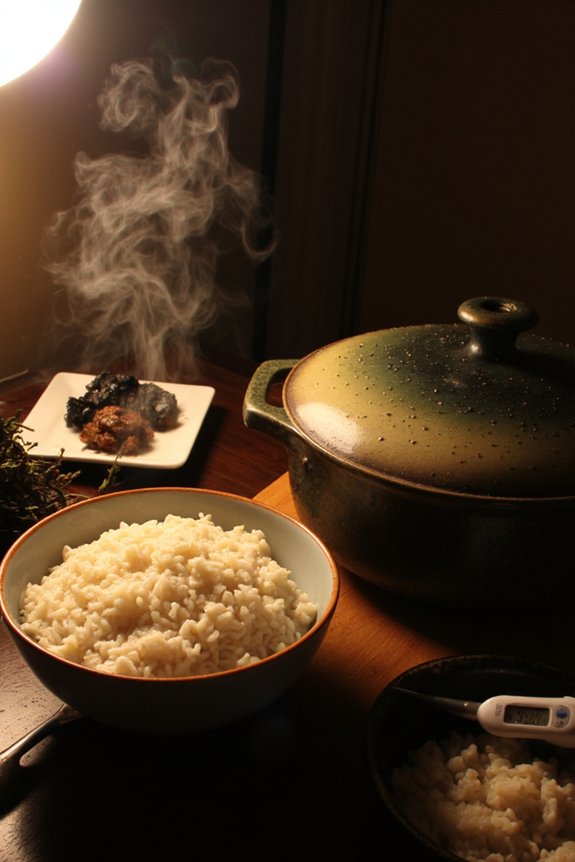
If you’ve ever compared two rice cookers from different brands, you’ve probably noticed they’re about as consistent as weather forecasts. One brand’s keep-warm function runs at 140°F, while another operates at 165°F. That’s manufacturer variability at its finest, and it creates real problems for your wallet and your warranty.
| Brand | Temp Range | Wattage | Duration |
|---|---|---|---|
| Brand A | 140-150°F | 15W | Unlimited |
| Brand B | 160-170°F | 25W | 12 hours |
| Brand C | 145-155°F | 20W | 24 hours |
| Brand D | 155-165°F | 18W | 8 hours |
| Brand E | 150-160°F | 22W | Unlimited |
You’re stuck decoding each manual like it’s ancient hieroglyphics. These inconsistencies mean warranty implications vary wildly too. One cooker might cover keep-warm malfunctions; another won’t. It’s frustratingly unpredictable. When it comes to heat retention and distribution, similar inconsistencies are seen in other kitchen appliances, with performance and standards differing dramatically between brands.
Better Storage Alternatives to Extended Keep-Warm Settings
Given the manufacturer chaos we just waded through, here’s the truth: your rice cooker’s keep-warm function isn’t your only option, and honestly, it might not even be your best one. Consider vacuum sealing your cooled rice into portions—it’s like putting your rice in suspended animation. Pop those sealed packets in the fridge, and you’ve got perfectly fresh rice ready to reheat whenever you want. No dried-out edges. No mystery odors creeping in after eight hours of heating. Refrigerated portions stay fresher longer and give you way more flexibility than that warm plate sitting there slowly evaporating your dinner. Plus, vacuum sealing takes maybe five minutes tops. Your future self will thank you when Tuesday’s leftovers taste like Tuesday, not last Thursday’s mistake.

Frequently Asked Questions
How Long Can Rice Safely Stay in Keep-Warm Mode Before Becoming Unsafe to Eat?
You shouldn’t keep rice in keep-warm mode longer than four hours. Beyond that, rice bacteria multiply rapidly, and starch retrogradation accelerates, making it unsafe to eat and potentially causing foodborne illness.
Does Keep-Warm Function Work the Same Across All Rice Cooker Brands and Models?
No, keep-warm functions don’t work identically across brands. You’ll find significant brand differences in sensor types—some use thermostats while others rely on timers, affecting how your rice stays warm and safe.
Can I Reheat Rice That’s Been Kept Warm for Extended Periods Without Health Risks?
You can safely reheat rice kept warm for extended periods, but you’ll notice leftover texture changes. Reheating with a splash of water helps restore flavor and moisture, making your rice palatable again.
What’s the Ideal Temperature Setting for Keep-Warm to Balance Safety and Texture Quality?
You’ll want your keep-warm setting around 140-150°F for optimum temp. This temperature balance prevents bacterial growth while maintaining moisture control and texture quality. Any lower risks spoilage; higher dries out your rice.
Will Using Keep-Warm Mode Significantly Increase My Monthly Electricity Bill Compared to Alternatives?
Your keep-warm mode won’t noticeably increase your bill. Its energy consumption is minimal compared to reheating rice repeatedly. Cost comparison shows you’ll save money using keep-warm versus alternatives like microwaving or stovetop reheating multiple times daily.
Conclusion
So here’s the thing: that convenient keep-warm function? It’s basically your rice’s worst enemy. You’re trading taste and safety for lazy convenience, honestly. Skip the prolonged warmth—your taste buds’ll thank you. Instead, cool it down, seal it up, and stash it in the fridge. Your rice’ll retain its righteous texture, you’ll dodge those sneaky bacterial nasties, and you’ll actually enjoy eating it tomorrow. Pretty simple solution, really.


