You’ve probably blamed your slow cooker when that pot roast turned to mush, but here’s the thing—you’re not fighting an appliance, you’re fighting chemistry. Most recipes treat HIGH and LOW like they’re just speed options, which is where you’re going wrong. The real difference? How your meat breaks down, how much moisture sticks around, and whether you’ll actually taste those complex flavors you’re after. There’s way more happening under that lid than you think.
Key Takeaways
- HIGH accelerates protein breakdown and collagen conversion faster, but risks mushy texture and moisture loss if uncontrolled.
- LOW preserves moisture through gradual denaturation, delivering tender results without the drying risks of high-heat cooking.
- Slow cookers cannot achieve Maillard reaction; browning meat beforehand significantly improves flavor depth and final dish quality.
- Lid condensation creates watery dishes; opening the lid during final 30 minutes reduces excess liquid effectively.
- Dairy separates on HIGH; use LOW setting for cream-based dishes to prevent curdling and texture breakdown.


The Temperature Difference Nobody Explains
While you’re staring at your slow cooker’s control panel trying to decide between HIGH and LOW, you’re probably wondering what’s actually happening inside that mysterious pot. Here’s the truth: HIGH typically reaches around 280°F while LOW simmers at roughly 190°F. That’s a massive difference. But here’s where it gets interesting—surface temps don’t tell the whole story. Your food’s actual temperature depends heavily on probe placement. If you’re measuring near the sides instead of the center, you’ll get completely different readings. LOW takes longer, allowing flavors to meld beautifully. HIGH speeds things up but risks drying out delicate meats. Neither setting’s “better”—they’re just different paths to deliciousness. Understanding this distinction transforms you from a slow cooker guesser into a confident, knowledgeable cook. For both slow cookers and electric pressure cookers, the actual temperature and moisture retention can vary depending on the appliance design and how full the pot is.
How High and Low Settings Change Protein Breakdown
When you crank that slow cooker to high, you’re basically speed-running the protein breakdown process, which means collagen transforms into gelatin faster and your meat gets tender quicker. Low settings? They’re the tortoise approach, gradually denaturing proteins at a more leisurely pace, which actually gives you finer control over texture and can result in that fall-apart-in-your-mouth tenderness that makes people think you’re some kind of culinary wizard. The key difference is that high heat gets aggressive with protein strands while low heat works its magic with patience, so you’ve gotta decide whether you want dinner in four hours or whether you can wait eight and basically turn your meat into butter. Choosing between high or low also affects how consistent heat regulation preserves the juiciness and texture of large cuts, especially in bigger slow cookers.
Temperature’s Effect on Collagen
You might actually overshoot the sweet spot and end up with meat that’s dried out instead of succulent. Here’s the thing: collagen solubility increases dramatically with heat, especially on high settings. When you crank up that temperature, collagen transforms into gelatin faster, which sounds great until it isn’t.
A hydroxyproline assay would show you that extended high heat doesn’t just break down collagen efficiently, it obliterates it. Your meat loses moisture and becomes stringy rather than tender. Low settings? They’re the patient artist. They allow collagen to dissolve gradually into that gorgeous, gelatinous sauce while keeping moisture locked inside. You’re basically giving your proteins time to transform gracefully instead of getting blasted into oblivion. It’s the difference between a slow waltz and a mosh pit. For best results, it’s wise to match your cooking temperature to the kind of protein and desired texture, much like you’d select the right motor power for a meat grinder to suit your specific needs.


Protein Denaturation Speed Differences
Proteins don’t all denature at the same speed, and that’s where your slow cooker settings really show their muscle. When you crank it to high, you’re basically hitting the turbo button on denaturation kinetics. Those protein molecules start unraveling faster, breaking down quicker into their component amino acids. Low settings? They’re the tortoise approach, allowing a slower, more controlled breakdown that keeps tougher cuts tender without turning everything into mush.
Here’s the kicker: enzyme inactivation happens at different rates too. High heat aggressively neutralizes enzymes that’d otherwise preserve texture. Low heat takes its sweet time, gently coaxing flavors out while maintaining better structural integrity. It’s like the difference between a sprint and a marathon for your meat. Choose high when you’re impatient. Pick low when you’ve got time and want genuinely succulent results that’ll make your dinner guests wonder what sorcery you’ve performed. For anyone who values even heat distribution, it’s worth noting that the principles behind slow cooker settings echo the benefits found in top electric steamers—where controlled temperatures and gentle cooking can preserve both texture and nutrients.
Meat Texture and Tenderness
Since collagen’s basically the scaffolding holding your meat together, how you cook it makes all the difference between fall-apart tender and shoe-leather tough. On high, you’re racing through protein breakdown in about four to six hours. Your muscle fiber tears down fast, yeah, but sometimes too fast. You might end up with mushy meat that’s lost its structure entirely.
Low settings? That’s where the magic happens. You’re giving those connective tissues time to transform into gelatin slowly, methodically, over eight to ten hours. Your cut selection matters here—tougher cuts with more collagen actually shine on low heat. The resting juice stays locked in, keeping everything juicy and tender without turning into sad, stringy fibers. It’s patience rewarded.
For best results with slow-cooked meats, using proper heat retention—like in double-wall insulated cookware—helps maintain steady temperatures that support even collagen breakdown for optimal tenderness.
Liquid Evaporation: Why Your Recipe Might Fail on the Wrong Setting
One of the trickiest culinary curveballs a slow cooker can throw at you? Liquid evaporation. Your recipe’s destiny hinges on understanding how heat levels affect water loss and steam dynamics. On HIGH, you’re basically running a mini sauna in there. On LOW, it’s more like a gentle simmer party.
Here’s what’s really hapening:
- HIGH settings cause rapid evaporation, reducing your sauce to a thick, sometimes burnt mess
- LOW settings promote better liquid retention and more controlled evaporation through steady steam dynamics
- Surface tension plays a role too, affecting how moisture escapes from your pot
The wrong setting doesn’t just change texture. It can completly wreck your dish’s flavor balance. Your soup becomes sludge. Your stew dries out. It’s why following the recipe’s suggested setting matters way more than you’d think.
The Maillard Reaction and Why You Can’t Replicate It in a Slow Cooker
You’ve probably noticed that slow cookers can’t create that gorgeous, caramelized crust that makes your mouth water, and there’s actually a pretty simple reason why: they just don’t get hot enough. Your slow cooker maxes out around 190-210°F on high, but the Maillard reaction—that magical browning process that creates all those delicious flavors and colors—needs temperatures above 300°F to really get going, which means you’re stuck choosing between steaming tender meat and actually developing that savory, complex taste that makes food worth eating. So yeah, you can’t have it both ways in a slow cooker, and that’s the annoying trade-off you’ll have to make every single time.
Heat Temperature Limitations
While slow cookers are absolute masters at making meat fall apart and infusing flavors into every fiber of your dish, there’s one culinary magic trick they just can’t pull off: the Maillard reaction. You see, your slow cooker’s temperature ceilings are its biggest limitation. Here’s why that matters:
- Low settings max out around 190°F, while high tops out near 300°F
- The Maillard reaction requires sustained heat above 300°F to truly occur
- These ambient limits mean browning simply won’t happen inside your pot
That gorgeous, caramelized crust you’re craving? Forget about it. Your slow cooker’s gentle, moist environment keeps temperatures too low. It’s like trying to bake bread in a sauna, you know? The moisture and modest heat work against you, preventing that delicious browning that makes food taste incredible.


Browning Versus Steaming Trade-offs
Imagine this: you’re standing in your kitchen, torn between two competing desires. You want that gorgeous, caramelized brown exterior on your meat. You also want the tenderness only slow cooking delivers. Here’s the thing: you can’t really have both, and it’s all about surface moisture and steam pockets.
See, slow cookers trap steam inside their lidded environment. That constant moisture prevents the Maillard reaction, the chemical magic that creates those delicious brown crusts. Your ingredients basically steam instead of sear. It’s like showing up to a party in a raincoat—you’re protected, but you’re not exactly turning heads.
You’ve got two choices: brown your meat in a skillet first, then transfer it to your slow cooker, or accept the pale, steamed result. Most folks choose option one. Your taste buds will thank you for that extra step.
Collagen Conversion: When Your Meat Gets Tender Versus When It Gets Mushy
The magic of slow cooking lies in collagen—that tough, stringy protein that transforms into gelatin when it meets heat and moisture over time. You’re basically turning muscle collagen and connective tissues into something absolutely delicious, but here’s the thing: timing is everything.
- Low setting (8-10 hours): Collagen breaks down gradually, creating that fall-apart tender meat you’re dreaming about
- High setting (4-6 hours): Gets you there faster, but you risk overshooting into mushy territory
- The sweet spot: Around 6-8 hours on low gives you maximum flavor without turning your brisket into baby food
You’ve gotta understand that collagen needs time to fully convert, not just heat. Rush it on high, and you’ll end up with meat that’s more texture-less than textured. Patience, my friend, is your secret weapon.
How Cooking Time Affects Flavor Development and Taste
Now that you’ve got the texture dialed in, let’s talk about what’s happening to your food’s actual flavor—because here’s the thing: time isn’t just softening your meat, it’s basically conducting a flavor symphony in that slow cooker.
During that slow burn, you’re getting serious flavor layering. Your aromatics development happens gradually, with onions, garlic, and spices melding into something way more complex than they started. Time entrainment—where all those ingredients sync up together—is the real magic happening inside. Low settings give you more time for this process, creating deeper, richer tastes. High settings rush things, sacrificing those nuanced flavors for speed.
Think of it like this: low is a jazz improvisation unfolding beautifully, while high is a hurried pop song. You’ll taste the difference, honestly.
The Hidden Impact of Altitude and Humidity on Your Slow Cooker
While you’ve been perfecting your slow cooker game based on time and temperature, there’s a sneaky variable you’ve probably never considered—and it’s literally in the air around you. Your altitude and humidity are quietly messing with your cooking results, and nobody talks about it.
Here’s what’s really happening:
- High-altitude cooking requires longer cooking times because water boils at lower temperatures up there
- Humidity calibration matters because moisture in the air affects how quickly your food loses water
- Altitude adjustments mean your liquid ratios might need tweaking for proper steam circulation
If you’re cooking in Denver versus Miami, you’re working with totally different conditions. The moisture content changes everything. Your casserole might come out dry in one place and soupy in another. It’s wild how much these invisible factors impact your meals. Who knew the weather was sabotaging your slow cooker?
Why Dairy, Vegetables, and Delicate Ingredients Demand Different Strategies
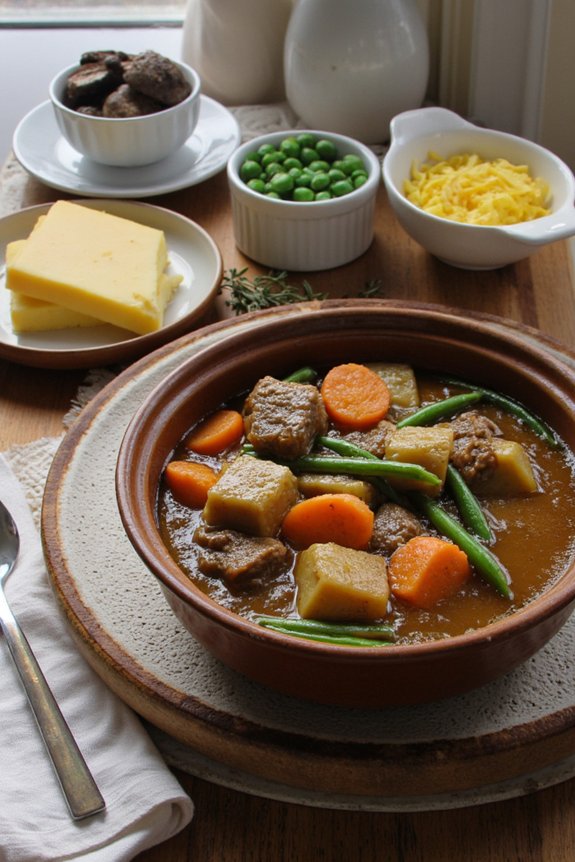
Once you’ve got altitude and humidity figured out, you’re ready for the real plot twist—because not everything belongs in your slow cooker the same way. Here’s the thing: dairy’s your enemy on high heat. You’ll watch cream and cheese separate into a sad, grainy mess if you’re not careful. Low settings? Much friendlier. Vegetables present a diferent problem altogether. Toss them in too early and you’re dealing with vegetable wilting that turns your carrots into mush. They need strategic timing. Delicate ingredients like fish or fresh herbs demand respect too. Add them near the end, not the beginning. Think of your slow cooker like conducting an orchestra—every ingredient needs its perfect moment to shine, not a full eight-hour performance that ruins everything.
Troubleshooting Common Problems by Understanding Your Slow Cooker’s Settings
Because slow cookers aren’t exactly one-size-fits-all machines, you’ve gotta know what’s actually going wrong before you can fix it. Sometimes your food comes out undercooked or overcooked, and you’re left scratching your head wondering why.
Here’s the thing: understanding your settings can solve most problems. Check these common issues:
- Food’s still raw after hours? Your temperature calibration might be off, or you’re using Low when High was needed
- Watery, bland meals? That lid condensation is drowning your dish, so crack it open during the last thirty minutes
- Burned edges but cold centers? Your slow cooker’s heating unevenly, requiring you to stir more often
Don’t just guess. Test your cooker’s actual temperature with a thermometer. You’ll reveal why some recipes work brilliantly while others flop. Knowledge is power, my friend.
Frequently Asked Questions
Can I Switch From High to Low Midway Through Cooking Without Affecting the Final Result?
Yes, you can switch from high to low midway through cooking. However, your switch timing affects texture differences markedly. Lower heat later in cooking may prevent proper tenderizing, so adjust expectations accordingly.
Does Slow Cooker Age or Wear Affect How High and Low Settings Perform Over Time?
Yes, your slow cooker’s performance degrades over time. You’ll notice heating element degradation and thermostat drift affecting both settings, causing uneven cooking temperatures and longer cooking times as your appliance ages.
What’s the Exact Wattage Difference Between High and Low on Most Standard Slow Cookers?
You’ll typically see a power draw difference of 300-400 watts between settings. High uses around 280-300 watts while low operates at roughly 150-200 watts, affecting your temperature range markedly across models.
How Do Slow Cooker Size and Fill Level Impact High Versus Low Setting Effectiveness?
Your cooker’s “thermal distribution challenges” depend on pot-to-pot variability and fill levels. When you’re operating on high versus low, liquid evaporation rates shift dramatically, affecting cooking times and texture outcomes across different vessel sizes.
Can I Use High Setting Safely for Raw Frozen Meat Without Bacterial Contamination Risks?
You shouldn’t use the high setting for frozen meat due to food safety concerns—bacteria won’t reach safe temperatures quickly enough. You’ll also get poor texture outcomes. Thaw your meat first for better results.
Conclusion
You’ve now got the secret sauce—literally. Your slow cooker’s not just a set-it-and-forget-it appliance; it’s a chemistry lab in disguise. HIGH and LOW aren’t just speed options, they’re flavor architects. Match the setting to your ingredients, respect the science, and you’ll stop wondering why your pot roast’s either rubber or mush. You’re basically a slow-cooking wizard now. Go forth and conquer that dinner table.


