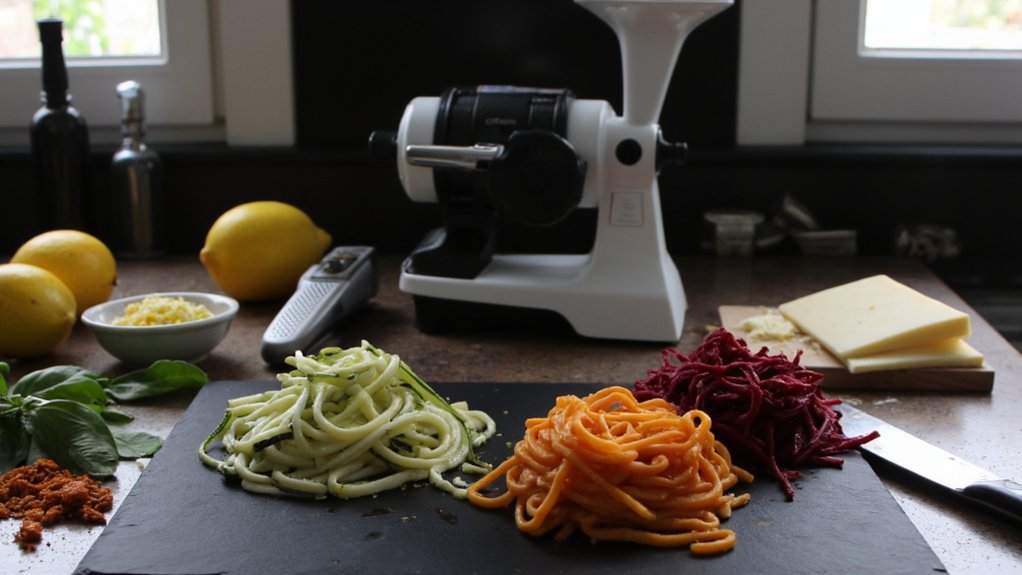
You’ve probably stared at those spiralizer blade options and thought, “Wait, what’s the difference?” Good news—you’re not alone, and honestly, picking the right blade isn’t rocket science. It’s actually kinda fun once you understand how each one transforms your veggies into completely different noodle shapes. Angel hair, fettuccine, curly spirals—they’re all waiting to revolutionize your meals. But here’s the thing: choose wrong, and you’ll end up with a mushy mess that’ll make you regret everything.
Key Takeaways
- Angel hair blades (0.5–0.8 mm) create ultra-fine noodles ideal for light broths and oil-based sauces.
- Fettuccine blades produce wide ribbons that catch and hold cream-based sauces for enhanced flavor distribution.
- Curly blades form spiral nests perfect for garnishes, Asian stir-fries, and summer salads with vinaigrettes.
- Match blade thickness to sauce weight: thin blades for oil-based sauces, thick blades for cream sauces.
- Select blade aggressiveness based on vegetable density—delicate zucchini need gentle blades; hard carrots need heavier-duty blades.
Understanding Spiralizer Blade Types and Their Functions

When you’re standing in front of your electric spiralizer for the first time, you might feel like you’re looking at a culinary spaceship with all those different blade options staring back at you. Don’t worry. You’ve got this. Each blade does something different, and understanding them transforms you into a noodle-making ninja. You’ll find stainless steel blades that handle tough veggies like champions. Then there’s the softer plastic options for delicate produce. The secret? Knowing which blade matches your ingredient. Regarding maintenance tips, always hand wash your blades immediately after use—trust me, dried zucchini stuck on metal is nobody’s friend. Store them seperately to avoid dulling. Blade materials determine durability and performance, so choose wisely and your spiralizer becomes your kitchen’s MVP. Look for spiralizers with multiple blade options to maximize your versatility and create everything from thick spirals to ultra-thin angel-hair noodles.
Angel Hair Blades: Creating Delicate, Thin Noodles
You’re about to discover that angel hair blades are basically the ninja stars of spiralizing—super thin, almost delicate, and capable of transforming your veggies into strands so fine they’ll make pasta jealous. We’ll walk you through the nitty-gritty of these blade specs and their sneaky design tricks, show you which vegetables actually play nice with them, and teach you the cooking techniques that’ll keep those wispy noodles from turning into sad, mushy disappointments. For the best results, remember that exceptional heat retention in your cookware helps maintain the perfect texture when quickly sautéing these ultra-thin noodles.
Blade Specifications and Design
If you’ve ever wondered how some spiralizers can produce those impossibly thin, delicate noodles that practically melt on your tongue, the magic lies in the angel hair blade. You’re looking at precision engineering here. The blade thickness determines everything—we’re talking razor-thin edges that slice through vegetables like butter. Edge geometry plays a huge role too, shaping how your zucchini or carrots transform into those wispy strands.
| Feature | Specification | Impact |
|---|---|---|
| Blade Thickness | 0.5-0.8mm | Creates ultra-fine noodles |
| Edge Geometry | V-shaped angle | Smooth, clean cuts |
| Material | Stainless steel | Durability and sharpness |
| Blade Diameter | 2-3 inches | Processing speed |
| Rotation Speed | 150-200 RPM | Consistent texture |
You’ll notice these blades require more precision manufacturing than standard ones. That’s why quality matters—cheaper spiralizers often skip proper edge geometry, resulting in crushed or uneven noodles instead of those gorgeous, restaurant-quality strands you’re craving. For optimal performance and longevity, stainless steel blades resist bending and corrosion, maintaining their sharpness for consistently fine cuts.
Optimal Vegetable Selection
Now that you’ve got the specs down on what makes those angel hair blades so special, let’s talk about picking the right veggies to get the best results. Summer squash like zucchini and yellow squash are your best friends here—they’re tender, they spiral like dreams, and they won’t fight back. Root vegetables? Well, they’re trickier. Carrots work decent if they’re not too thick, but beets and parsnips might give you grief with those delicate blades. Stick with softer options that won’t make your spiralizer work overtime. The key is choosing produce that’s firm enough to hold its shape but won’t require superhuman effort. You’ll know you’ve nailed it when those angel hair strands flow out like edible confetti. For even smoother prepping, choosing vegetables with even heat distribution can help prevent breakage and ensure your noodles stay intact during cooking.
Texture and Cooking Techniques
Creating those impossibly thin strands with your angel hair blade is where the real magic happens, and it’s honestly easier than you’d think. You’ll want to use softer veggies like zucchini or cucumber—they spiralize like butter. The key’s understanding that delicate mouthfeel pairing matters. Thin noodles work beautifully with light, broth-based sauces that won’t overwhelm them. Cook ’em quick. We’re talking just a minute or two in boiling water. This brief cooking triggers starch gelatinization, creating a slight bite while keeping that tender texture intact. Overcook? You’ll end up with mush, which honestly defeats the purpose. Pair your angel hair ribbons with olive oil, fresh herbs, and maybe some lemon—simple stuff that lets those delicate strands shine without competing for attention. If you’re troubleshooting sticking dough or struggling with delicate noodles clumping, dusting the strands with a bit of semolina or flour before cooking can help maintain their perfect texture.
Fettuccine Blades: Crafting Wide, Ribbon-Style Strands
Fettuccine blades transform your spiralizer into a ribbon-making machine, and they’re honestly one of the most satisfying attachments to use. You’ll get those gorgeous, wide strands that look like they came straight from an Italian restaurant. Here’s what makes them awesome:
- Pasta presentation gets instantly enhanced with those elegant, flowing ribbons
- Wide surfaces catch and hold sauce beautifully for better flavor distribution
- They’re perfect for delicate vegetables like zucchini and summer squash
- Vegetable density: Hard carrots need aggressive blades, while delicate zucchini prefer gentler options
- Blade ergonomics: Comfortable handles reduce hand fatigue during spiralizing sessions
- Material sustainability: Look for blades made from recycled or eco-friendly materials
- Asian dishes love thin, delicate strands that slide through broths and stir-fries effortlessly
- Italian-inspired meals call for thicker ribbons that trap creamy sauces in all the right spots
- Light summer salads benefit from curly spirals that hold vinaigrettes without getting soggy
The key to nailing fettuccine results? Don’t press too hard. Let the blade do its thing. Your zucchini should glide through smoothly, creating those satisfying ribbon cascades. For sauce pairing, light cream sauces and olive oil-based dressings work fantastically because they won’t weigh down those delicate strands. It’s honestly a game-changer.
Curly Blade Options: Making Decorative Spiral Nests

When you’re ready to dial up the drama and turn your spiralizer into an actual fancy-pants kitchen tool, curly blades are where the magic happens. These wavy wonders create gorgeous spiral nests that’ll make your dinner guests actually impressed. You’ll transform ordinary veggies into edible centerpieces that belong on party platters, not just your dinner plate.
| Feature | Best For | Wow Factor | Difficulty |
|---|---|---|---|
| Tight curls | Garnish presentation | High | Easy |
| Loose waves | Festive servings | Medium | Medium |
| Double spirals | Party platters | Very High | Medium |
| Chunky coils | Edible centerpieces | Maximum | Hard |
The curly blade isn’t just functional—it’s basically vegetable jewelry. Your zucchini becomes art. Your carrots become conversation starters. That’s the power of spiralized sophistication right there.
Choosing the Right Blade for Your Vegetables
How do you know which blade’s actually gonna work for your veggie of choice? It’s not just about grabbing whatever’s in the drawer. Different vegetables need different approaches, and here’s why it matters.
Consider these factors when selecting your blade:
Softer veggies like cucumbers and tomatos? They’ll appreciate the thinner, more delicate blades. Harder stuff like beets and sweet potatos? Go for the heavy-duty options. The ergonomics matter too—you don’t want your hand cramping halfway through dinner prep. Plus, choosing sustainable materials means you’re making smart choices for both your kitchen and the planet. Pretty cool, right?
Blade Maintenance and Safety Tips for Longevity

Your spiralizer blades are basically the hardworking heroes of your kitchen, so they deserve some serious TLC to keep performing their best. Clean ’em immediately after use—don’t let veggie residue dry and become your blade’s worst enemy. Hand wash them carefully, treating those sharp edges with the respect they demand.
For blade sterilization, soak your blades in hot soapy water or run them through the dishwasher if they’re dishwasher-safe. Store them in a dry location with proper storage ventilation to prevent moisture buildup and rust. Keep blades in a protective case or container so they won’t dulll or damage other items.
Always unplug your spiralizer before handling blades. That’s non-negotiable. These simple habits? They’ll keep your blades sharp, safe, and spiralizing like champions.
Pairing Noodle Shapes With Your Favorite Recipes
Now that you’ve got your spiralizer blades in tip-top shape, it’s time to put ’em to work matching the right noodle shapes to your favorite dishes. You’ll discover that thin, delicate strands work wonders with light Asian broths and olive oil-based sauces, while thicker, ribbony blades are your best friend for heartier Italian pastas and creamy sauces that cling and coat like they’re meant to be together. The secret? Pick your blade based on what you’re cooking, and you’ll transform ordinary vegetables into noodles that don’t just taste good—they’ll actually enhance the whole meal instead of getting lost in the shuffle.
Matching Shapes to Cuisines
Here’s how to match like a pro:
When you pair thoughtfully, you’re not just eating noodles. You’re honoring centuries of culinary wisdom. Your taste buds’ll thank you for respecting the craft. Trust us on this one.
Recipe-Specific Blade Selection
Once you’ve got the basics down, it’s time to get specifik about what blade actually works best for the dishes you’re cooking. Think about your sauce pairing first. Heavier, cream-based sauces? Go thick. Lighter, oil-based ones? Thinner noodles are your friend. Consider seasonal produce too. Summer tomatoes love delicate strands, while winter squash demands something heartier that won’t disappear into oblivion. Asian stir-fries pair beautifully with curly blades that catch all those savory flavors. Mediterranean pasta dishes? Flat ribbons work magic. The trick is matching noodle thickness and texture to what you’re actually eating. It’s not rocket science, but man, does choosing right make your meals sing. Your taste buds will thank you.
Frequently Asked Questions
Can Electric Spiralizers Handle Frozen Vegetables, or Must They Be Fresh?
You shouldn’t use frozen vegetables in your electric spiralizer. Frozen zucchini and ice crusted beets can damage the blades and motor. You’ll get better results with fresh produce that spiralizes smoothly without ice buildup complications.
What’s the Warranty Coverage for Electric Spiralizer Blade Replacements and Motor Damage?
Your electric spiralizer’s warranty duration typically covers blade replacements and motor damage for one to three years. You’ll need to follow the claim process by contacting customer service with your proof of purchase and documentation of the defect.
How Do I Remove Vegetable Debris Stuck Between Spiralizer Blades After Use?
You’ll think it’s tedious, but it’s quick. Rinse immediately under running water, using handwashing tips—gentle circular motions work best. For stubborn debris, apply blade alignment tricks by slightly repositioning blades before flushing thoroughly.
Are Electric Spiralizer Blades Compatible Across Different Brand Models and Manufacturers?
You’ll find that electric spiralizer blades aren’t universally compatible across brands due to interchangeability concerns and material compatibility differences. Most manufacturers design proprietary blade systems, so you’ll need brand-specific replacements for your model.
What’s the Optimal Storage Method to Prevent Blade Rust and Motor Corrosion?
You’ll want to keep your spiralizer’s delicate metal parts in a “moisture-free slumber” by storing them in airtight containers with silica packets. This prevents rust and motor corrosion effectively.
Conclusion
You’ve now got the keys to the spiralizer kingdom! With the right blade in your corner, you’re practically a vegetable noodle wizard. Angel hair, fettuccine, curly—pick your poison and watch your dishes transform. Remember to treat those blades right, keep ’em sharp and happy, and you’ll be cranking out delicious veggie noodles like you’re running your own fancy restaurant. Now go forth and spiral!


