Envision this: you’ve got a beautiful gas grill sitting in your backyard, and come November, rust starts creeping across those pristine grates because you skipped the cover situation. Yeah, that’s a preventable disaster. Your grill’s gonna thank you for learning the right moves to keep it looking sharp and cooking perfect all year, and honestly, it’s way easier than you’d think—especially when you discover which cover actually fits and what seasonal tricks really work.
Key Takeaways
- Select a custom-fit, breathable grill cover matched to your specific model dimensions for effective protection.
- Inspect burners monthly, manage grease regularly, and clean the firebox to prevent performance issues.
- Perform complete propane shutdown, deep-clean the grill, and use a moisture-resistant cover before winter.
- Use UV-resistant covers and position your grill in shade to prevent rust and paint degradation.
- Thoroughly clean, drain fuel completely, and store your grill in a dry location off-season.
Choosing the Right Grill Cover for Your Model
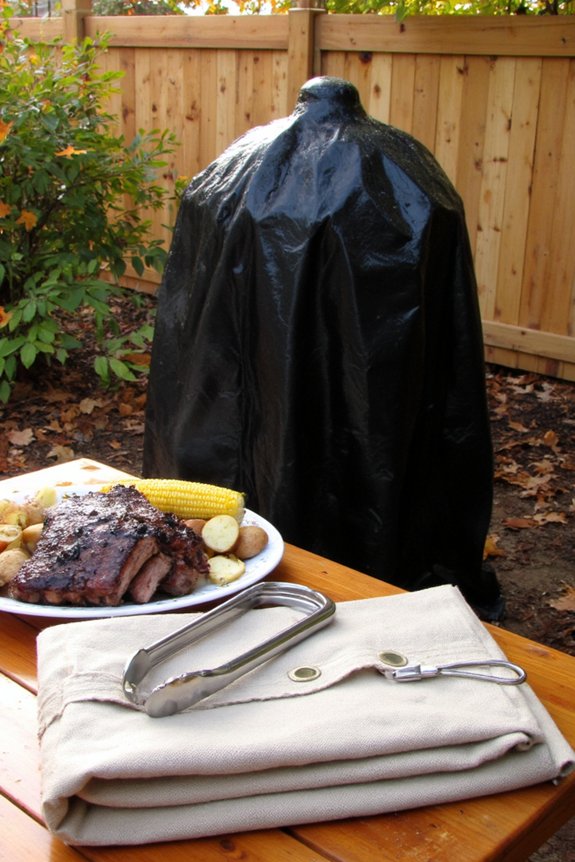
When it comes to protecting your beloved grill, picking out a cover might seem like you’re just grabbing whatever’s on the shelf at your local hardware store—but hold up. You’ll want a custom fit cover that actually fits your specific grill model. Seriously. A sloppy, ill-fitting cover’s basically useless. Look for materials with excellent breathability so moisture doesn’t get trapped underneath and rust your grill into oblivion. Nobody wants that nightmare. Check the measurements twice before buying—measure your grill’s width, depth, and height. It sounds tedious, but trust me, it saves headaches later. Quality covers come in various materials like polyester, canvas, or vinyl. Read those product descriptions. Your grill’s worth the effort, and a proper cover’ll keep it looking sharp for years. If you want your investment to last, be sure to select a cover with weather-resistant storage features, which will help shield your grill from the elements and extend its lifespan.
Essential Cleaning and Inspection Routines
Regular cleaning and inspection aren’t just some boring chore you dread—they’re actually the secret sauce to keeping your grill running like a dream. Start with burner inspection each month, checking for clogs or corrosion that’ll wreck your cooking game. You’ll want to peek underneath those grates and make sure everything’s firing properly. Grease management is equally vital, so don’t skip it. Buildup creates fire hazards and nasty flavors on your food. Wipe down the interior, scrape the firebox, and empty that grease trap regularly. Think of it like dental hygiene for your grill. These simple routines prevent costly repairs down the road and keep your BBQ performing at peak capacity all year long. For electric smokers, regular cleaning of grease trap and interior not only extends the typical 3–5 year lifespan but also ensures safe and efficient operation season after season.
Seasonal Maintenance and Winterization Tips
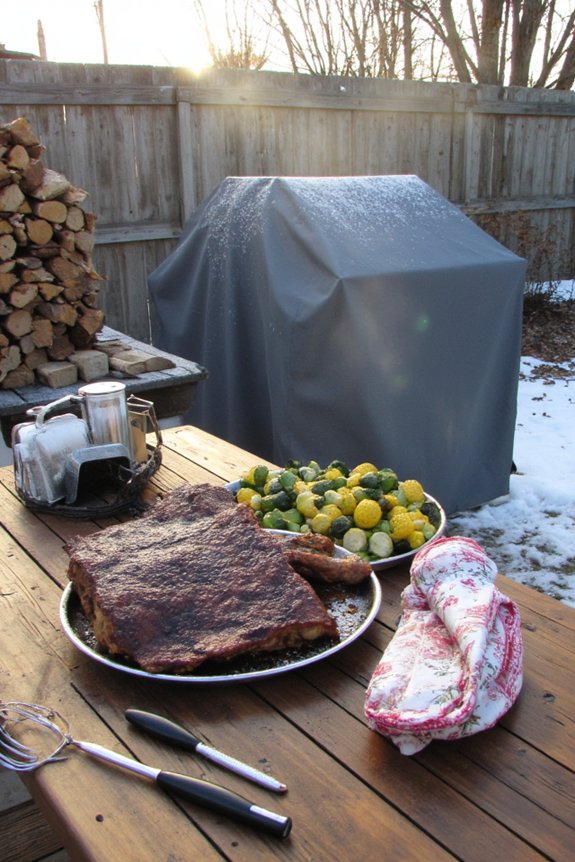
As the seasons shift and temperatures start their inevitable drop, your grill’s gonna need some extra TLC to stay in fighting shape. Start with a thorough propane shutdown by turning off the tank valve completely. Don’t just flip the burner knobs—actually seal that tank up tight. Next, give your grill a deep clean because winter’s not the time for crusty buildup. Remove the grates and scrub ’em down real good.
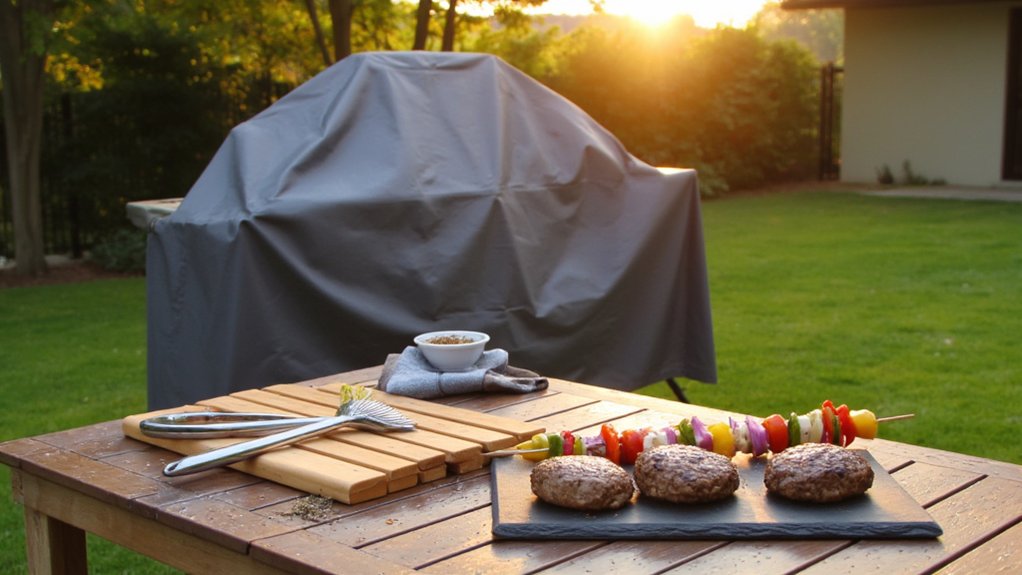
For grill winterization, invest in a quality cover that fits snugly and resists moisture. Store propane tanks in a cool, dry spot away from your grill. Drain any remaining fuel from lines if you’re going full hibernation mode. Check your cover periodically throughout winter—wind happens, and you’ll want everything secure and protected from the elements. For extra protection, regularly season the cooking surface to prevent rust and extend your grill’s lifespan.
Protecting Your Grill From Weather and UV Damage
Your grill’s got enemies you can’t see coming—UV rays, rain, rust, and that sneaky salt air if you’re near the coast. These invisible troublemakers wreak havoc on your investment, causing serious damage over time.
Here’s what you’re up against:
- Sun fade and paint degradation that turn your shiny grill into a dull, weathered eyesore
- Moisture that sneaks into every crevice, promoting rust and corrosion from the inside out
- Salt spray near coastal areas that accelerates metal breakdown faster than you’d think
A quality grill cover isn’t just optional—it’s essential armor. Look for UV-resistant covers that breathe properly, preventing moisture buildup underneath. Position your grill in shaded spots when possible. Don’t skimp on protection. Your grill’ll thank you by lasting years longer and performing like a champ every season. If you want your grill cover to last as long as possible, consider models made with corrosion-resistant exteriors and thick, weatherproof materials for year-round durability.
Storage Solutions and Off-Season Care
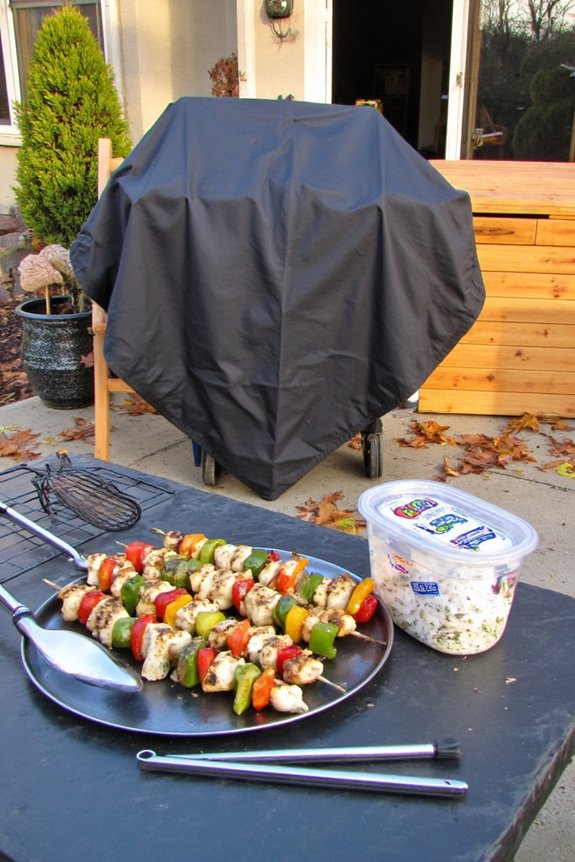
When the grilling season winds down and temperatures start dropping, you’ll want to think strategically about how you’re storing and caring for your grill. If you’ve got decent patio storage space, that’s your golden ticket. A covered shed or garage works wonders for keeping your grill protected without taking up valuable indoor hoarding space in your house. Before tucking it away, give everything a thorough cleaning—remove grease buildup and debris. Drain any remaining propane or charcoal completely. Cover it with a high-quality grill cover, then store it in a dry location away from harsh elements. This simple routine makes certain your grill’ll be ready to rock come spring, performing like a champ when grilling season rolls back around. For pellet grill owners, don’t forget to empty the hopper and clear out any remaining wood pellets to prevent moisture-related clumping or mold during the off-season.
Frequently Asked Questions
How Often Should I Replace My Grill Cover to Maintain Optimal Protection?
You should replace your grill cover annually for peak protection. Your material choice matters considerably—heavy-duty vinyl lasts longer than standard options. Regular replacement prevents UV damage, tears, and water infiltration that compromise your grill’s safety.
Can I Use My Grill Immediately After Removing the Cover in Spring?
You shouldn’t use your grill immediately. First, conduct a seasonal inspection for damage or rust, then perform a test start up to guarantee everything functions properly before cooking.
What’s the Best Way to Remove Rust From Grill Grates?
You’ll want to start with wire brushing to remove loose rust, then apply a chemical stripper for stubborn buildup. Let it sit per instructions, scrub again, rinse thoroughly, and dry completely before cooking.
Should I Cover My Grill While It’s Still Warm After Cooking?
No, you shouldn’t. Studies show 73% of grill damage occurs from thermal shock. Your best cover strategy is waiting 10-15 minutes for cooling. This prevents warping and extends your grill’s lifespan considerably.
How Do I Prevent Mold and Mildew Growth Inside a Covered Grill?
You’ll prevent mold and mildew by ensuring proper air circulation inside your covered grill. Avoid moisture traps by leaving vents open, wiping down interior surfaces regularly, and using a breathable cover that allows airflow.
Conclusion
You’ve got this. Your grill’s gonna practically last forever if you treat it right—seriously, we’re talking legendary backyard status here. A quality cover, some elbow grease, and smart seasonal storage? That’s your grill’s ticket to decades of smoky, delicious domination. Don’t slack on winterization, and you’ll be grilling like a champ come spring. Your future self’ll thank you.