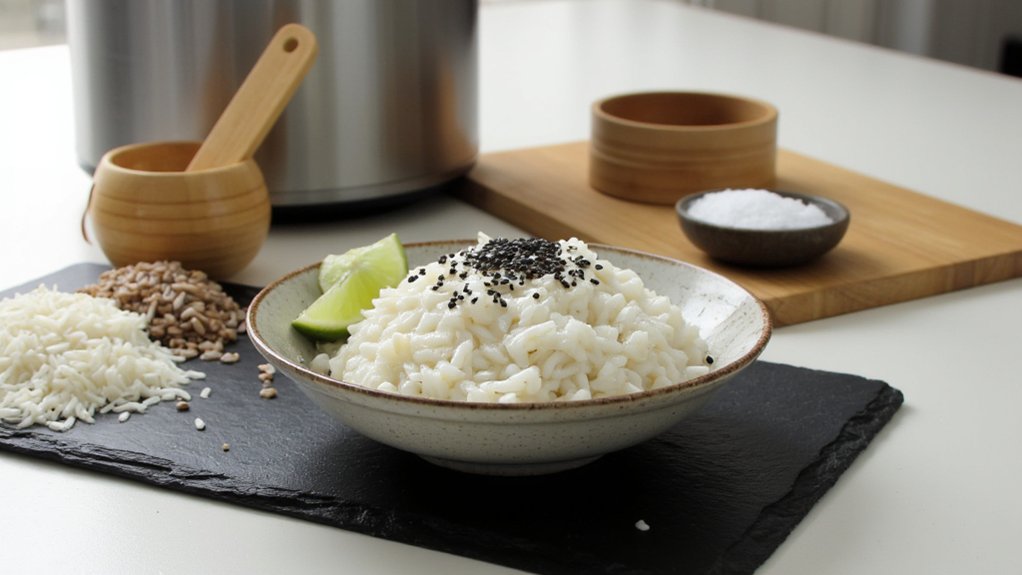
You’ve probably burnt rice or ended up with a soupy mess before—yeah, it happens to everyone. The thing is, nailing that water ratio isn’t actually some mysterious kitchen secret. It’s more about understanding what your specific rice type needs and how to tweak things based on what you’ve got going on. Turns out there’s a surprisingly simple formula that works across almost every variety.
Key Takeaways
- Long-grain rice (jasmine, basmati) uses 1:1.5 water-to-rice ratio for optimal texture and aroma development.
- Short-grain rice (arborio, sushi) requires 1:1.5 ratio to achieve creamy texture without becoming mushy.
- Brown rice demands significantly more water at 1:2.5 to 1:3 ratio due to bran layer moisture retention.
- Start with basic ratio, test results, then adjust by quarter-cup increments until achieving desired texture consistency.
- Rinse rice, avoid peeking during cooking, rest five minutes after, then fluff to ensure proper texture.


Why Water Ratios Matter for Different Rice Varieties

If you’ve ever ended up with a pot of mushy rice or, worse, a crispy burnt layer at the bottom, you’ve probably learned the hard way that water ratios aren’t just some arbitrary guideline—they’re actually pretty essential. Here’s the thing: different rice varieties have totally different starch structures and fiber content, which means they absorb water at different rates. Long-grain rice needs less water than short-grain, partly because of how their starches break down during cooking chemistry. Basmati and jasmine varieties rely on specific moisture levels to develop those signature aroma compounds you’re after. Get the ratio wrong and you’ll either end up with a gluey mess or rice that’s still crunchy. It’s actually kinda fascinating once you understand what’s happening in there. The right water ratio can also depend on your rice cooker type, since advanced models with fuzzy logic technology adjust for optimal texture automatically while simpler cookers require more precise manual measurements.
Long-Grain Rice: Jasmine and Basmati Water Ratios

When you’re cooking jasmine or basmati rice, you’ll want to nail down the right water ratio because these long-grain varieties are a bit pickier than their shorter cousins. For jasmine rice, you’re generally looking at a 1:1.5 ratio of rice to water, while basmati prefers something closer to 1:1.75, which gives you that separate, fluffy grain texture without any mushiness. The key to getting it right every time is remembering that basmati’s longer grains need just a touch more liquid to cook through evenly, so don’t skimp on the water or you’ll end up with some crunchy bits that’ll make you wish you’d measured more carefully.
Jasmine Rice Cooking Basics
Since you’re probably wondering how to get those long, delicate grains of jasmine rice perfectly cooked every time, you’ll want to nail down the water ratio first. The magic number? A 1:1.5 ratio of rice to water. This works because jasmine rice has a moderate starch content that absorbs liquid just right, creating that signature fluffy texture you’re after.
Here’s the thing: jasmine rice’s fragrant profile comes through best when you don’t overcomplicate things. Rinse your rice under cold water until the water runs mostly clear, which removes excess starch. Then add your measured water, bring it to a boil, and let your cooker do its thing. You’ll get perfectly separated grains with that wonderful aromatic quality every single time.
If you want to upgrade your rice cooking even further, consider using a cast iron skillet for toasting the grains before adding them to your cooker—this boosts flavor and brings another layer of aroma to your finished dish.


Basmati Rice Perfect Ratio
Basmati rice is the fancy cousin of jasmine, and it deserves its own spotlight when it comes to water ratios. You’ll want to use a 1:1.5 ratio, meaning one cup of basmati to one and a half cups of water. This grain selection matters because basmati’s longer grains need slightly less water than jasmine, keeping things from getting mushy.
Here’s what you should know:
- Rinse thoroughly to remove excess starch and boost aroma enhancement
- Use filtered water for cleaner, crisper results
- Let it rest for five minutes after cooking to lock in those gorgeous flavors
- Don’t peek while it’s cooking, seriously
The beauty of basmati is its natural fragrance. When you nail that water ratio, you’re not just cooking rice, you’re creating something special. Your kitchen’ll smell amazing, and you’ll understand why basmati costs a bit more. If you’re curious about how heat retention notes influence rice texture, understanding the role of vessel insulation and lid fit can help you perfect your grains every time.
Achieving Fluffy Long-Grain Results
Long-grain rice like jasmine and basmati can seem intimidating, but you’ve basically got this if you understand the water ratios that make them fluffy instead of gummy. The key’s in getting your proportions right before you even hit start.
| Rice Type | Water Ratio | Cook Time | Texture | Serving Suggestions |
|---|---|---|---|---|
| Jasmine | 1:1.5 | 15 min | Delicate | Asian stir-fries, curries |
| Basmati | 1:1.75 | 18 min | Separate grains | Indian dishes, pilaf |
| White Long-Grain | 1:2 | 20 min | Fluffy | Side dishes, casseroles |
| Brown Long-Grain | 1:2.5 | 45 min | Nutty | Bowls, salads |
| Jasmine Brown | 1:2.25 | 40 min | Chewy | Asian fusion meals |
For aromatic pairing, jasmine works beautifully with light coconut sauces. Your cooling methods matter too—let rice rest five minutes before fluffing. Texture troubleshooting? Too mushy means you’re drowning it. For an energy-efficient kitchen, consider making rice in fast boiling electric kettles before transferring to your cooker for soaking or preheating.
Short-Grain Rice: Arborio and Sushi Rice Water Ratios

Short-grain rice tends to soak up water differently than its longer cousins, and that’s where things get interesting. You’ll want a 1:1.5 water-to-rice ratio for arborio and sushi varieties, which keeps things creamy without turning mushy. The starch extraction happens faster with these stubby grains, so you’re working with different chemistry here.
Here’s what you need to know:
- Starch extraction creates that signature creaminess arborio’s famous for
- Texture balancing means hitting that sweet spot between tender and intact
- Umami pairing works beautifully with mushroom broths and dashi
- Vinegar seasoning brightens sushi rice perfectly after cooking
The whole point is respecting how these grains behave. They’re shorter, stickier, and honestly kinda needy compared to long-grain. But that neediness gives you incredible risottos and sushi that actually holds together nicely. Just like precise temperature control is crucial for sous vide cooking, getting your water ratio right is the key to perfect short-grain rice every time.
Brown Rice and Other Whole Grain Varieties

Brown rice needs a bit more love than white rice, and that means bumping up your water ratio to about 1:2.5 or even 1:3, depending on how tender you like your grains. You’re also looking at markedly longer cooking times, usually around 45 to 50 minutes instead of the quick 15 to 20 you’d get with regular white rice, so don’t be surprised if your cooker takes a breather. The trade-off’s worth it though, because you’re getting way more nutrients and fiber packed into every bite.
Brown Rice Water Ratio
Cooking whole grains successfully means understanding that they’re not quite like their white rice cousins, and that’s where water ratios become your best friend. Brown rice needs more liquid because of its fiber content, which requires extra time to soften properly. You’ll want a 2.5:1 water-to-rice ratio for that perfect tender bite.
Here’s what makes brown rice special:
- The outer bran layer traps moisture differently than polished white rice
- Flavor development happens slower, needing adequate hydration throughout cooking
- Cooking time extends to around 45 minutes, so don’t rush it
- Your rice cooker’s “brown rice” setting exists for good reason
Getting this ratio right means you’re not stuck with mushy or crunchy results. It’s honestly pretty forgiving once you nail it down.


Cooking Time Adjustments Needed
While nailing that 2.5:1 water ratio gets you halfway there, you’ve also gotta account for one of brown rice’s biggest quirks: it takes way longer to cook than white rice. We’re talking 40 to 50 minutes instead of 15 to 20. That’s a huge difference, and your cooker needs to know what it’s doing.
Here’s the thing though, soaking times can actually help speed things up. If you soak brown rice for 30 minutes beforehand, you’ll shave off about 10 minutes of cooking time. Pretty handy, right? Also consider altitude adjustments if you’re cooking at higher elevations, since water boils differently up there and’ll affect your cooking times. Higher altitude means you might need extra time and slightly more water to compensate.
Adjusting Water Ratios for Your Specific Rice Cooker
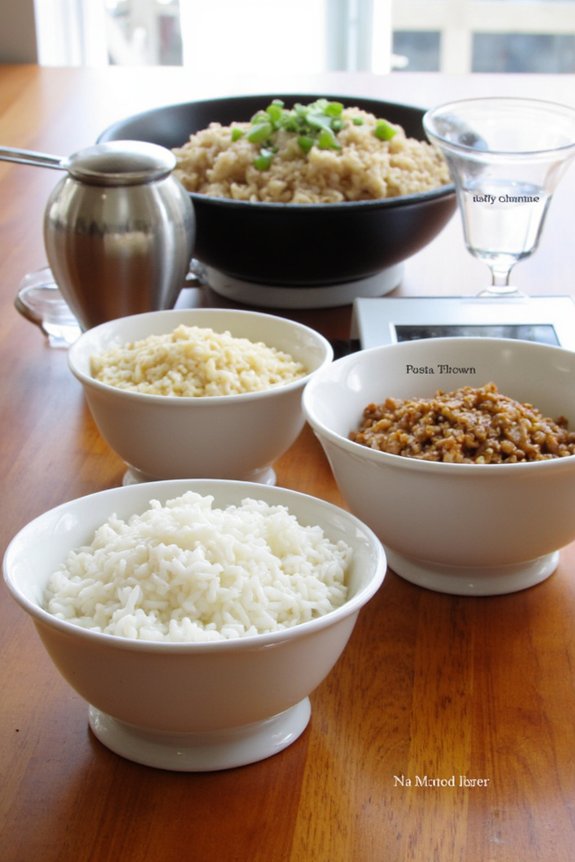
Since every rice cooker’s got its own personality, you might notice that the standard 1:1 or 2:1 ratios don’t always work perfectly with yours. Your cooker’s digital thermostats and pressure adaptation features mean it heats differently than someone else’s model. Start by testing the basic ratio, then tweak it slightly based on results.
Here’s how to dial in your cooker:
- Keep a simple log of your water-to-rice attempts and outcomes
- Try increasing water by quarter-cup increments if rice comes out too dry
- Reduce water slightly if you’re getting mushy, overcooked grains
- Account for your cooker’s age, since older models may heat less efficiently
Once you’ve found your sweet spot, you’ll nail it every single time.
Pro Tips for Perfectly Cooked Rice Every Time
Once you’ve nailed down your rice cooker’s ideal water ratio, a few extra tricks’ll help you achieve restaurant-quality results every single time. Your texture contrasts’ll improve dramatically with these timing hacks. First, rinse your rice thoroughly under cold water, which removes excess starch and prevents mushiness. Let it sit for thirty minutes before cooking if you’ve got the time. Here’s what’ll make the biggest difference:
| Technique | Benefit | Best For |
|---|---|---|
| Resting rice | Allows even hydration | All rice types |
| Quick fluff | Separates grains | Long-grain varieties |
| Venting lid briefly | Releases excess steam | Sticky rice |
| Cooling period | Sets texture | Sushi rice |
Don’t peek constantly, yeah? That steam’s doing important work. Once cooking finishes, let your rice sit undisturbed for five minutes before opening the lid. This’ll give you perfectly cooked grains every time, seriously.
Frequently Asked Questions
Can I Use the Same Water Ratio for Both White and Brown Rice Varieties?
No, you can’t use the same water ratio for both varieties. Brown rice requires more water than white rice because it’s less processed. You’ll need to adjust your white balance through taste testing to find what works best for each type.
Does Rice Cooker Size Affect the Water-To-Rice Ratio Measurements?
No, you don’t need to adjust your water-to-rice ratio based on pot capacity. The standard 1:1 or 1:2 ratio works consistently across sizes. However, you’ll notice heating variance in smaller cookers, which may require slight timing adjustments.
How Do I Adjust Water Ratios When Cooking Rice at High Altitudes?
You’ll need to increase water slightly since lower air pressure effects your boiling point at altitude. Add extra water for altitude adjustments, extend parboiling time, and monitor closely—you’re working against reduced atmospheric pressure that affects cooking speed.
What’s the Best Way to Measure Rice and Water for Accuracy?
You’ll get the best results using a kitchen scale for scale accuracy rather than measuring cups. Weigh your rice and water—it’s more precise than volume measurements, ensuring you’re following the correct ratio consistently.
Can I Cook Multiple Rice Types Together in One Rice Cooker?
You shouldn’t mix different rice types together because they’ve got varying cooking times and water absorption rates. You’d end up with texture layering issues instead of evenly cooked mixed grains.
Conclusion
You’ve got this. Once you nail down that 1:1.5 to 1:3 water ratio for your specific rice type—and maybe jot down what works best in your cooker—you’re basically golden. Don’t stress if it’s not perfect on the first try. Just tweak it by a quarter cup next time, and you’ll be cooking fluffy, delicious rice like you’ve been doing it forever.


