
You’re about to master the art of rotisserie cooking, but here’s the thing—getting it right means understanding the relationship between temperature, timing, and that perfectly crisp skin everyone craves. Whether you’re spinning chicken, beef, or something more adventurous, the stakes are real. Unbalanced spits cause uneven cooking, probe placement matters more than you’d think, and one mistake can turn dinner into a dry disappointment. So what’s actually separating amateurs from rotisserie pros?
Key Takeaways
- Rotisserie chicken requires 165°F internal temperature at 375°F oven; approximately 15 minutes per pound.
- Beef targets 130–135°F (medium-rare) at 325°F; cook about 15–20 minutes per pound.
- Pork reaches safe doneness at 145°F internal temperature; roast at 300°F for 15–20 minutes per pound.
- Lamb achieves medium at 160°F internal temperature; cook at 325°F approximately 15–20 minutes per pound.
- Insert thermometer probe in thickest meat section away from bone and fat for accurate readings.

Understanding Rotisserie Cooking Basics

When you’re ready to master the rotisserie, understanding the fundamentals makes all the difference. You’ll want to get familiar with your equipment basics first—knowing how your rotisserie heats, where the hot spots are, and how the spit rotates smoothly. It’s really that simple to start.
The beauty of rotisserie techniques is that they’re pretty forgiving once you nail the basics. You’re fundamentally letting heat and rotation do most of the work for you, which is honestly why so many people love this method. The key is positioning your protein correctly on the spit so it cooks evenly. Balance matters here. When your meat’s properly secured and spinning at a steady pace, you’re already halfway to delicious results.
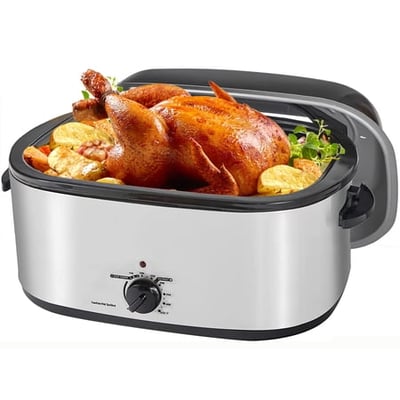
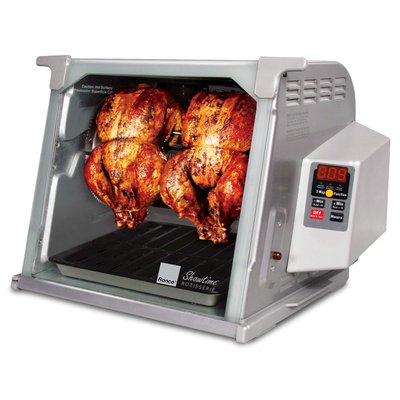
Many rotisserie ovens feature self-basting rotation to help lock in juices and ensure your meats come out moist and flavorful every time.
Rotisserie Chicken: Temperature and Timing

Since you’ve already nailed the basics, let’s talk about what’ll make your rotisserie chicken absolutely sing. You’re aiming for an internal temperature of 165°F at the thickest part of the thigh, which usually takes about 15 minutes per pound. Here’s the thing: brine techniques are your secret weapon for juicy results. Soak your bird for at least four hours, and you’ll notice the difference immediately. Get that oven heated to around 375°F, and you’ll nail crispy skin in about an hour and a half for a standard four-pounder. Don’t skip rotating it occasionally for even browning. The skin should crackle when you pull it out, golden and beautiful. That’s when you know you’ve nailed it. For best results, let your chicken rest in a cast iron skillet after roasting to keep it warm and maintain its juiciness.
Perfectly Cooked Rotisserie Beef

Beef’s a whole different beast than chicken, and your rotisserie game needs to shift gears accordingly. You’re looking at 325°F for medium-rare, and that’s gonna take about 15 to 20 minutes per pound. The key? Don’t rush it. A dry aging process beforehand really ups your flavor game, making everything more concentrated and delicious. Use a meat thermometer to hit that perfect 130-135°F internal temp. Let it rest for ten minutes before you slice, and here’s the thing: slice thickness matters big time. Go thin for tenderness, thick for those impressive, juicy bites. Your guests’ll be seriously impressed with this move. For even more consistent results, consider the advantages of precise temperature control as used in sous vide cooking to manage doneness edge-to-edge in your beef.

Rotisserie Pork: Achieving Juicy Results

Unlike beef, pork demands a gentler touch on the rotisserie—you’re gonna want to keep things around 300°F to avoid drying out that meat. Here’s the thing: pork’s leaner than beef, so it needs extra care. Start by preparing a pork brine with salt, sugar, and spices. Let your cut soak for a few hours before cooking. This keeps everything moist and flavorful.
Aim for about 15 to 20 minutes per pound at that temperature. You’ll know it’s done when the internal temp hits 145°F. Some folks swear by adding leaf lard under the skin for richness and protection. That fat layer basically acts like a shield, keeping the meat juicy throughout the cooking process. The result? Tender, succulent pork that’ll have everyone asking for seconds.
If you’re meal prepping for a crowd, remember that large-capacity cookers like 6–8 quart models are ideal for handling big pork roasts and keeping things juicy and effortless.
Lamb on the Rotisserie: A Complete Guide

When you’re ready to rotate some lamb, you’ve got one of the most forgiving meats to work with on the rotisserie. Start by prepping your cut—shoulder butterflying opens it up for even cooking, while leg trussing keeps everything compact and balanced. Garlic studding is your secret weapon here, pushing slivers deep into the meat for incredible flavor throughout. Don’t skip the herb crusting either. A generous coating of rosemary, thyme, and oregano creates that gorgeous crust you’re after.
Aim for 325°F and plan on about 15 to 20 minutes per pound, depending on your lamb’s thickness. You’ll know it’s done when the internal temp hits 160°F for medium. It’s honestly hard to mess this up, which is why lamb’s so great for rotisserie beginners. For the best results, choose a lamb cut with thick gauge metal skewers to ensure stability and even heat distribution during rotisserie cooking.
Duck and Poultry Beyond Chicken
Duck and poultry beyond chicken deserve way more respect on the rotisserie than they usually get. Turkey alternatives like guinea fowl and cornish game hens cook beautifully on the spit. You’ll want to aim for around 325°F and give your bird roughly 15 minutes per pound, though duck confit enthusiasts know that slower cooking at 275°F really brings out those rich, crispy flavors.
The key difference? Duck’s got way more fat than chicken, so you’re basically self-basting as it spins. That’s actually pretty cool. Just watch for flare-ups near the end. With turkey, you’re looking at similar temps but longer cooking times since they’re bigger birds. Pop a meat thermometer in the thickest part of the thigh, aiming for 165°F.
Rotisserie Vegetables and Plant-Based Options
Vegetables and plant-based proteins can absolutely hold their own on the rotisserie, and honestly, they’re way more forgiving than you might think. You’ll find that grilled tofu develops this amazing crispy exterior while staying tender inside, and stuffed peppers become absolutely delicious when they’re slowly rotated over heat. The key is choosing sturdy veggies that won’t fall apart, like bell peppers, zucchini, and eggplant.
| Vegetable | Temperature & Time |
|---|---|
| Bell Peppers | 400°F, 20-25 minutes |
| Grilled Tofu | 375°F, 15-20 minutes |
| Zucchini | 400°F, 15 minutes |
Your plant-based rotisserie game will seriously level up once you nail these temperatures. The charring adds incredible flavor that you won’t get anywhere else.
Essential Tips for Temperature Monitoring
Getting those temperatures right is only half the battle, though—you’ve actually gotta know what’s happening inside your oven while everything’s spinning away. Your probe placement matters way more than you’d think. Stick that thermometer in the thickest part of your meat, away from bone and fat, for accurate readings that won’t lie to you.
Don’t just set it and forget it. A regular calibration schedule keeps your equipment honest. Check your thermometer monthly by dunking it in boiling water—it should read 212°F. If it’s off, you’re cooking blind, and nobody wants that disaster.
Keep your probe steady throughout cooking. Wiggle it around and you’ll get wonky numbers that mess with your timing. Stay consistent, stay accurate, get perfect results.


Troubleshooting Common Rotisserie Cooking Problems
Even with perfect temperature monitoring, things can still go sideways on you when you’re working with a rotisserie. One common issue is uneven cooking, which often stems from motor alignment problems that throw off your rotation. Check that your spit’s spinning smoothly and isn’t wobbling. Another headache? Flare-ups from dripping fat. Manage this by positioning your drip pan correctly underneath the meat. You’ll want to catch those juices before they hit hot coals. If your chicken’s browning too fast on one side, you might need to reposition it or lower your heat slightly. Don’t ignore strange noises either, they’re usually telling you something’s off with your setup. Trust your instincts here.
Frequently Asked Questions
Can I Use a Rotisserie Oven for Cooking Frozen Proteins Without Thawing Them First?
You shouldn’t cook frozen poultry directly in a rotisserie oven. You’ll need thawing first. Try instant thawing techniques like cold water submersion or microwave defrosting to guarantee even cooking and food safety throughout your protein.
How Do I Clean and Maintain My Rotisserie Oven After Cooking?
You’ll want to establish a regular cleaning schedule by wiping down interior surfaces after each use. Don’t forget rubber gasket care—clean it gently with mild soap and water to prevent deterioration and maintain proper sealing functionality.
What’s the Ideal Distance Between the Heat Source and Rotating Protein?
You’ll want to position your protein 8-10 inches from the heat source. This distance optimizes airflow patterns around your meat while allowing heat reflection to cook it evenly without excessive charring or drying out the exterior.
Can Rotisserie Ovens Be Used for Baking Bread or Other Non-Protein Items?
You can use rotisserie ovens for artisan breads and baked desserts, though they’re not ideal. The rotating spit mechanism doesn’t suit stationary baking. You’d benefit from a traditional oven instead for consistent results.
How Do I Adapt Rotisserie Cooking Times at High Altitude Locations?
You’ll need to increase your cooking times by 15-25% at high altitudes due to air pressure effects. Make altitude adjustments by lowering temperature 25°F and monitoring doneness closely, as moisture evaporates faster.
Conclusion
You’ve now got all the tools to nail rotisserie cooking. Whether you’re spinning chicken, beef, pork, or lamb, you’ll know exactly what temp to hit and how long it’ll take. The key? Balance your spit, watch that probe, and don’t skip the rest. You’ll be impressing folks with perfectly crispy, juicy proteins in no time. Happy rotating!


