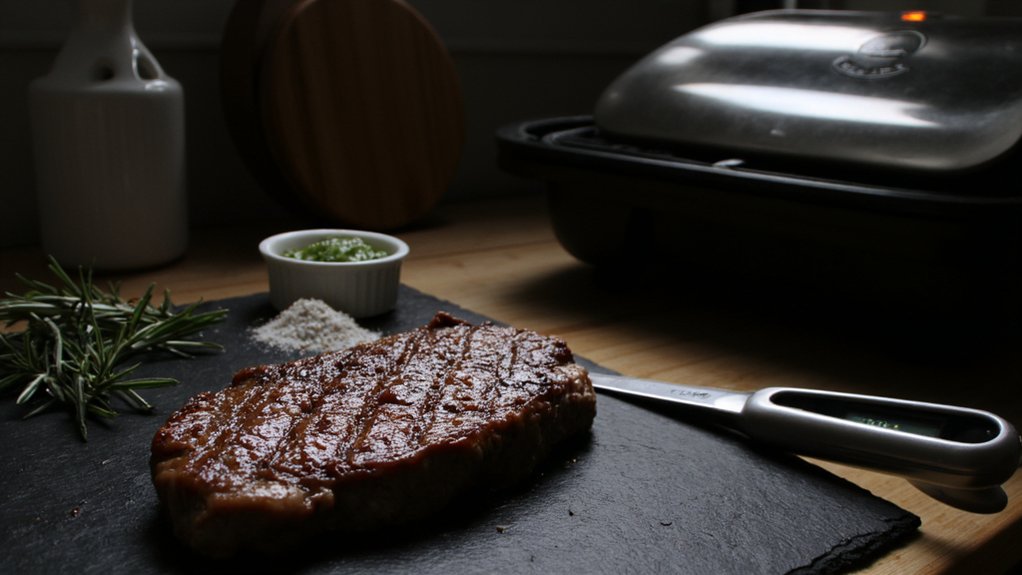
Your indoor electric grill’s temperature dial is basically a fiction writer—entertaining but not entirely truthful. You set it to 400 degrees, but the actual surface temp? That’s anybody’s guess. Hot spots lurk like hidden traps, sensor lag throws curveballs at your timing, and your kitchen’s humidity is secretly sabotaging everything. Here’s what separates charred disasters from perfectly cooked meals.
Key Takeaways
- Manufacturer dial calibration is often insufficient; verify actual temperature with an external thermometer for accuracy.
- Uneven heat distribution across the cooking surface is normal; map hot spots and rotate food strategically.
- Thermostat cycling causes temperature swings that produce inconsistent browning; sensor lag exacerbates this problem significantly.
- Humidity and condensation fool temperature sensors into misreading actual grill temperature by several degrees.
- Ambient conditions and seasonal changes require upward winter adjustments and downward summer calibration for consistency.

The Truth About Temperature Display Accuracy
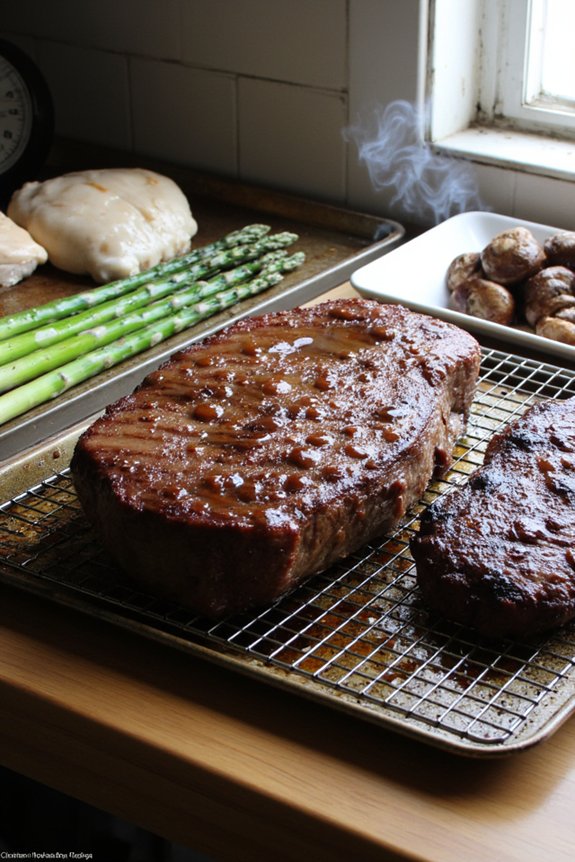
How accurate is that little digital readout on your indoor electric grill, really? Honestly? It’s probably lying to you. You see, most grills suffer from display drift, meaning that temperature reading creeps away from reality over time. It’s like your grill’s slowly forgetting how to tell the truth.
Then there’s probe lag. That sensor takes a beat to register actual temperature changes, so when you’re cooking, there’s a slight delay between what’s really happening and what the screen shows. You might think you’re at 400 degrees when you’re actually closer to 375.
Here’s the kicker: manufacturers don’t always calibrate these displays perfectly. They’re good enough for most folks, but they’re not restaurant-grade precise. Smart move? Grab an external thermometer and double-check things. Your food’ll thank you.
For even more reliable results, look for grills with precise, adjustable controls and a wide range of temperature settings up to 450°F, as these features can help you better manage the actual heat your food receives.
Understanding Hot Spots and Cold Zones on Your Grill Surface
your indoor electric grill probably isn’t heating evenly across that whole surface, and that’s totally normal. You’ve gotta learn to spot those hot zones where your food’ll char faster and those cooler corners where things barely cook, because once you map out your grill’s quirky personality, you can work around it like a pro and actually get the results you want instead of playing temperature roulette with every meal. Just like with outdoor grills, factors such as cast iron grates or porcelain coatings can impact how heat is distributed and where those hot and cold zones form on your electric grill.
Identifying Hot Spot Patterns
Once you’ve fired up your indoor electric grill a few times, you’ll start noticing something kinda interesting—it doesn’t heat evenly everywhere. One side might be blazing while the other’s practically chilling. Welcome to grill mapping, my friend. Start doing some probe testing with a meat thermometer across different zones. Check the corners. Test the center. Even those edges that look promising? Yeah, check those too. You’ll discover patterns pretty quick. Maybe the left side runs hot. Perhaps the back corner’s your cold zone. Some grills have a hot strip right down the middle. Others create random hot pockets that’ll surprise you every time. Understanding your grill’s personality takes a little investigation, but it’s worth the effort. If you want more consistent results, pay attention to your grill’s temperature control features since precise adjustment and stable heat can help minimize these hot and cold zones.


Compensating for Uneven Heat
Now that you’ve got your grill’s hot spot personality figured out, it’s time to work with it instead of against it. You’re basically playing culinary chess with your cooking surface, and honestly, it’s pretty fun once you get the hang of it.
Here’s your game plan for mastering uneven heat:
- Use rotating cooking techniques to move food between hot and cold zones strategically
- Reposition your adjustable drip tray to redirect heat flow more evenly across the surface
- Move delicate items like fish toward cooler zones while keeping steaks in the heat hotspots
- Rotate your meat halfway through cooking to guarantee even browning and consistent doneness
You’ll nail this. It’s all about working smarter, not harder, and letting your grill’s quirks become your secret weapon. If you’re curious how quartz heating elements in convection toaster ovens help distribute heat more evenly, consider how similar technology could inspire creative solutions for managing hot spots on your grill.
How Ambient Room Temperature Affects Preheat Time
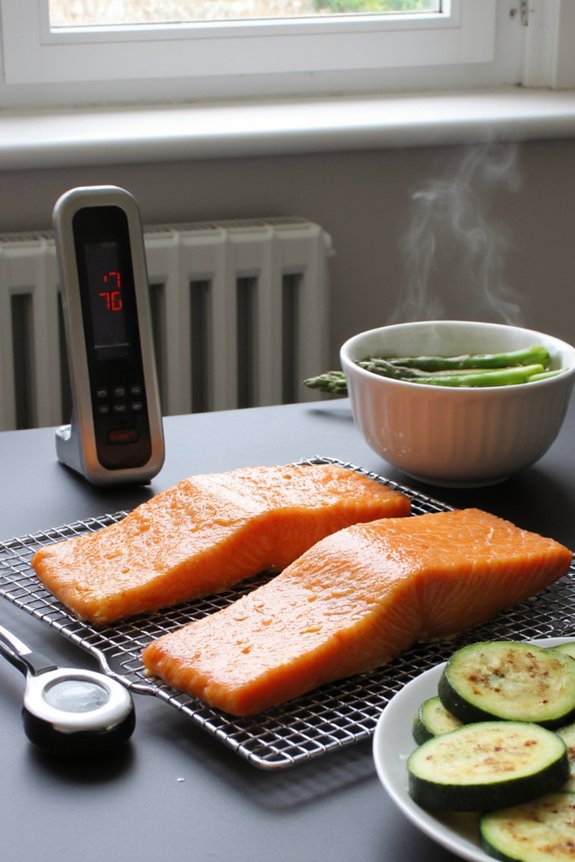
The temperature of the room where you’re grilling can actually throw a wrench into your preheat timeline—and it’s something most people don’t even think about. Here’s the thing: if you’re cooking in a chilly kitchen or near cold drafts, your grill’s gonna work overtime reaching that perfect temperature. We’re talking an extra five to ten minutes, easy. Location matters too. Position your grill away from heater proximity if possible, since fluctuating air currents mess with consistent heating. A toasty room? Your preheat time shrinks considerably. Winter cooking sessions are basically playing temperature roulette with your indoor setup. Pro tip: let your space warm up first, or at least close those windows and seal drafty areas. Your grill—and your patience—will thank you. Just like outdoor griddles require extra preheating time in cold weather, your indoor grill will also need longer to reach the right temperature if your kitchen is chilly.
The Thermostat Cycling Problem and What It Means for Your Cooking
If you’ve ever watched your indoor grill’s temperature gauge bounce around like it’s got a mind of its own, you’re witnessing the thermostat cycling problem in action. Here’s what’s really happening under the hood:
- Your sensor lags behind actual surface temps, creating a delay in readings
- The heating element powers on and off repeatedly, chasing that perfect temperature
- You’re cooking on a surface that’s constantly fluctuating between too hot and too cool
- Power cycling causes uneven browning and inconsistent results on your food
The truth? That bouncing needle means your grill’s fighting itself. Sensor lag combined with aggressive power cycling creates temperature swings that’ll drive you nuts. Your chicken might sear perfectly in one spot while staying pale inches away. Understanding this quirk helps you adapt your cooking technique and stop blaming yourself for mediocre results.
Why Food Density and Placement Impact Heat Distribution

You’ve probably noticed that your indoor grill doesn’t heat up evenly across its entire surface, and here’s the thing—it’s not just that thermostat cycling problem we talked about earlier. Your placement strategy matters way more than you’d think. Dense foods like chicken breasts or thick steaks actually absorb heat differently than thinner cuts, creating what we’ll call density mapping across your cooking surface. When you plop a frozen burger next to a thin fish filet, you’re basically asking your grill to do the impossible. The burger’s gonna steal all the heat like it’s hogging the blanket on a cold night. Smart placement—keeping similar density items together—helps your grill distribute heat way more evenly. It’s like arranging your guests by appetite at dinner.
Humidity’s Hidden Role in Temperature Inconsistency
You might not realize it, but the moisture hanging in your kitchen’s air is secretly sabotaging your grill’s temperature consistency, making it way harder to nail that perfect sear. When humidity creeps up, your food absorbs extra moisture, which means it’ll take longer to heat through and can mess with how evenly your grill distributes temperature, while condensation builds up on the heating elements themselves, creating cold spots that’d make any cook pull their hair out. The good news? Once you understand how moisture absorption and condensation work together, you’ll be able to adjust your technique and settings to outsmart the humidity and finally get those restaurant-quality results you’ve been chasing.

Moisture Absorption Effects
Absorbing moisture like a kitchen sponge, your indoor electric grill’s heating elements can throw off temperature readings faster than you’d think. You’re dealing with a sneaky culprit that nobody really talks about.
- Moisture wicking draws water into heating coils, creating uneven heat distribution across your cooking surface
- Fabric saturation from steam buildup causes sensors to misread actual temperatures by several degrees
- Condensation pools beneath the grill, affecting how quickly elements reach target heat
- Humidity-laden air interferes with thermal sensors, making your grill think it’s hotter or colder than reality
Here’s the thing: your grill can’t tell the difference between steam and actual temperature changes. So when you’re trying to nail that perfect sear, you’re basically flying blind. It’s frustrating, but understanding this moisture absorption issue? That’s your secret weapon for consistent cooking.
Condensation’s Impact Control
While moisture absorption messes with your heating elements, there’s another sneaky troublemaker lurking in your kitchen: condensation. You’re basically creating a sauna on your countertop, and that steam accumulation? It’s wreaking havoc on your temperature readings. Here’s the thing: when moisture builds up on your grill’s surface, it creates a barrier that messes with heat distribution. Your thermostat gets confused. It thinks you’ve reached your target temp when you’re actually nowhere close.
But wait, there’s more. That persistent dampness causes surface corrosion on your grill’s internal components. Rust starts forming. Your heating elements deteriorate faster than they should. To fight back, you’ll want to wipe down your grill regularly and make sure proper ventilation around it. Don’t let condensation win this temperature battle.
Ventilation Issues That Manufacturers Never Mention
Most indoor electric grill manufacturers are oddly quiet about one of the biggest headaches you’ll face: ventilation. They’ll happily tout temperature control and nonstick surfaces, but mention smoke buildup? Crickets.
Here’s what they don’t tell you:
- Airflow patterns around your grill determine whether smoke disperses or lingers in your kitchen like an unwanted houseguest
- Exhaust placement matters way more than anyone admits, especially if your grill sits against a wall instead of center stage
- Your kitchen’s existing ventilation probably isn’t strong enough to handle continuous grilling sessions without triggering smoke alarms
- Proximity to air vents and windows affects how effectively you’ll manage fumes and odors
The truth? You’ll need external solutions. A good exhaust fan becomes your secret weapon. Your smoke-free kitchen depends on it.
Calibrating Your Grill for Real-World Cooking Results
Forget what that temperature dial tells you—it’s basically a suggestion, not a promise. You’ve gotta actually calibrate your grill if you want real-world cooking results that don’t disappoint. Start with probe calibration by testing your thermometer against boiling water and ice baths. It’s not fancy, but it works. Next comes sensor alignment, which means making sure your internal temperature sensor isn’t sitting in a dead zone where heat pools unevenly. Move it around. Take readings from different spots on the cooking surface. You’ll discover your grill’s got hot zones and cold zones, just like reality intended. Once you know the actual temperature patterns, you can cook confidently. That dial might say 400 degrees, but now you’ll know if you’re really getting there.
Seasonal Variations and How Weather Affects Performance
Now that you’ve figured out what your grill’s actually doing on a calm summer day, here’s the thing—your indoor electric grill doesn’t exist in a vacuum. Seasonal calibration matters way more than most folks realize. Your grill’s performance shifts with the seasons, and it’s not just your imagination playing tricks.
Here’s what happens throughout the year:
- Winter months require recalibrating your temperature settings upward since heating elements work harder in cold environments
- Summer heat can make your grill overshoot temperatures, demanding downward adjustments for precision cooking
- Humidity fluctuations in spring and fall affect how quickly your grill reaches target temps
- Weatherproofing accessories like protective covers help maintain consistent performance year-round
Don’t ignore these seasonal swings. Your steaks’ll thank you.
Professional Techniques for Achieving Temperature Consistency
Once you’ve mastered the seasonal dance your grill does, it’s time to level up and steal some tricks from the pros. Professional grill masters swear by using a probe thermocouple for accurate temperature readings—forget relying on that built-in dial that’s basically a suggestion. Here’s the real magic: PID tuning. It sounds fancy, but it’s just adjusting your heating cycles so your grill doesn’t swing wildly between too hot and too cold. You’re basically teaching your grill to chill out, literally. Start by making small adjustments to your power settings and observing how your grill responds. Document everything. Patience pays off when you’re hunting for that sweet spot where temperature stays rock solid, and your food cooks evenly every single time.
Frequently Asked Questions
Can I Use an Indoor Electric Grill Safely in a Small Apartment Without Proper Ventilation?
You shouldn’t use an indoor electric grill in a small apartment without proper ventilation. You’ll risk triggering smoke alarms and compromising your apartment layout’s air quality. You need adequate ventilation systems for safe operation.
How Often Should I Replace Heating Elements for Optimal Temperature Consistency?
You’re probably noticing temperature inconsistencies just when you’ve perfected your grilling technique. Most heating elements last 2-3 years depending on usage frequency. Replace them when you’ll notice your element lifespan declining for optimal, consistent heat performance.
Does Grill Size Affect How Accurately the Thermostat Maintains Desired Cooking Temperatures?
Yes, your grill’s size markedly impacts thermostat accuracy. Larger grill surfaces experience greater thermostat hysteresis, meaning your temperature swings wider before the element cycles. You’ll notice less precise control on bigger units.
What’s the Best Way to Clean Heating Elements Without Damaging Temperature Sensors?
You’ll want to avoid abrasives when cleaning your heating elements. Use soft cloths and mild soapy water instead. Consider removing sensor covers first to protect temperature sensors from moisture and debris during cleaning.
Can Power Fluctuations in My Home Affect the Grill’s Temperature Stability?
Yes, power fluctuations markedly impact your grill’s temperature stability. Voltage sag and poor grid harmonics cause your heating elements to underperform, resulting in inconsistent cooking temperatures you’ll struggle to control.
Conclusion
You’ve now got the secret sauce for indoor grill mastery. Stop blaming yourself when things don’t cook evenly—your grill’s basically lying to you with that dial. Map those hot spots, calibrate regularly, and you’ll unseal temperatures so perfectly consistent they’re practically impossible. Your food’s about to taste a million times better. You’re welcome.


