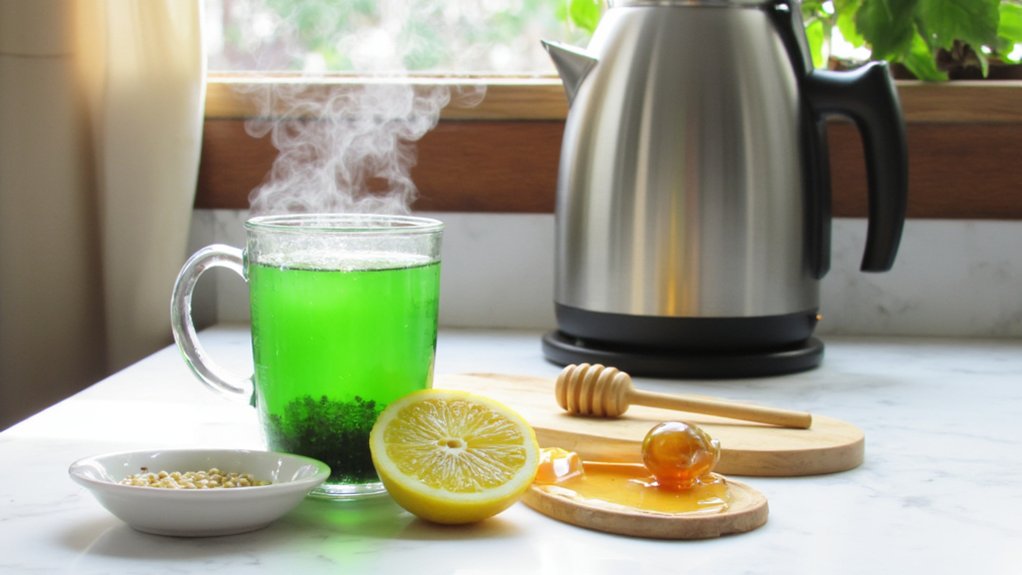
You’ve probably noticed that fancy electric kettle sitting on your counter, its keep-warm function gleaming like a promise of convenience. But here’s what the marketing folks don’t mention: that constant heating cycle is quietly eating your electricity bill, gunking up your kettle with mineral deposits, and honestly? It’s making your tea taste worse. The real kicker is what’s happening to the water itself while it’s just sitting there, waiting to be used.
Key Takeaways
- Keep-warm functions cycle constantly, consuming electricity repeatedly to reheat the same water and raising monthly bills.
- Prolonged heating concentrates minerals, degrades water taste, and causes oxygen loss, resulting in flat or stale brews.
- Continuous reheating accelerates scale buildup inside kettles, requiring frequent descaling with vinegar or citric acid.
- Thermostat and heating-element stress from constant on/off cycling shortens appliance lifespan and causes component corrosion.
- Manual reheating uses less energy, preserves water freshness, and maintains brewing quality better than extended keep-warm settings.


The Hidden Energy Cost of Continuous Heating Cycles
While keep-warm functions seem like a convenient way to have hot water whenever you want it, they’re quietly draining your wallet in ways you might not realize. That kettle sitting on your counter, maintaining temperature all day? It’s consuming way more electricity than you’d think. These devices cycle on and off constantly to keep water hot, creating continuous waste through standby losses that add up fast. You’re basically paying to reheat the same water over and over again. Here’s the kicker: most people leave them running for hours, even when they’re not actively using them. It’s like keeping your car idling in the driveway all afternoon. That convenience comes with a real price tag on your electric bill, month after month. Some models, like the 30‑minute keep warm function on premium kettles, are specifically designed for this feature—which can intensify their impact on your household energy consumption if left on longer than necessary.
How Repeated Reheating Degrades Water Quality Over Time

Every time that keep-warm function cycles back on to reheat your water, you’re not just burning electricity—you’re actually degrading the quality of what you’re drinking. Here’s what’s really happening:
- Minerals concentrate as water evaporates, leaving behind reheated minerals that taste increasingly flat and stale
- Oxygen escapes with each heating cycle, making your water feel lifeless on your tongue
- That oxidative taste develops from repeated temperature fluctuations breaking down water molecules
Your water doesn’t improve sitting there getting reheated over and over. Instead, it develops a weirdly metallic, off flavor that you probably can’t quite identify but definitely notice. The longer that keep-warm function runs, the worse it gets. Fresh water tastes better, honestly. Just brew what you need.
When choosing a kettle, features like auto shut-off safety not only prevent overheating but also help reduce unnecessary reheating cycles, preserving water quality over time.
Mineral Buildup and Scale Accumulation Accelerated by Keep-Warm Features
your kettle’s keep-warm feature might be convenient, but it’s basically a mineral magnet that speeds up scale buildup way faster than regular boiling ever would. The constant reheating cycles create the perfect conditions for calcium and magnesium deposits to settle in and stick around, which is why you’ll notice that crusty white stuff accumulating quicker than you’d expect. Lucky for you, there’s straightforward stuff you can do—like using filtered water, descaling regularly with vinegar or citric acid, and maybe giving your kettle a little break between heating cycles to prevent that mineral parade from taking over. Just like with stainless-steel inner pots in premium pressure cookers, regular maintenance and cleaning can make a big difference in prolonging your kettle’s life and keeping it performing its best.


Why Scale Forms Faster
Because you’re keeping that water hot all day long, you’re basically creating the perfect environment for mineral buildup. Here’s what’s actually happening:
- Heat cycles repeatedly concentrate minerals instead of diluting them, causing rapid scaling that builds faster than traditional kettles
- Water that stays warm allows minerals to settle and bond to surfaces more aggressively
- Uneven concentration develops as some areas get hotter than others, accelerating deposits in specific spots
Think of it like leaving a wet glass on your counter for weeks versus just a few hours. The longer it sits, the gnarlier that mineral ring gets. Your keep-warm feature’s basically doing the same thing to your kettle’s interior. That constant heat doesn’t give minerals a chance to cool down and behave, so they just keep sticking around and piling up.
If you want to avoid such buildup, choosing appliances with easy-cleaning features and maintaining regular descaling routines can make a big difference in how long your kettle lasts.
Mineral Deposit Prevention Methods
If you’ve got a keep-warm kettle, the mineral problem’s not inevitable—it’s just something you’ll need to stay on top of. Here’s the thing: calcium inhibition actually works pretty well when you’re proactive about it. Install a quality filter at the spout or use filter placement inside the kettle itself, and you’ll catch a ton of buildup before it settles in. Think of it like a bouncer at a club, keeping the troublemakers out. Regular descaling every couple weeks keeps deposits from getting comfortable and permanent. You could also use filtered water instead of tap water, which honestly saves you tons of hassle down the line. The key? Don’t wait til your kettle looks like a science experiment. Using self-cleaning cycles, as recommended for countertop ice makers, can also help prevent stubborn mineral accumulation in your kettle.
The Impact on Delicate Tea Flavors and Brewing Precision
When you’re brewing a delicate white tea or a fragrant oolong, those keep-warm functions on premium electric kettles can be a double-edged sword. You’ve got temperature stability working in your favor, but here’s where things get tricky. The prolonged heat affects your brew’s delicate qualities in ways you might not expect.
Consider these impacts:
- Aroma preservation suffers as volatile compounds escape during extended warming cycles
- Over-steeping occurs gradually, making your tea taste flat and bitter instead of nuanced
- Leaf integrity degrades, releasing unwanted tannins that throw off the brewing precision you’re after
The thing is, those keep-warm features are designed for convenience, not for honoring your tea’s complexity. You’re basically asking your kettle to maintain conditions that work against subtle flavor development. Sometimes, honestly, letting your tea cool naturally is the smarter move.
Stainless Steel Degradation From Prolonged Heat Exposure
While those keep-warm functions seem like a dream feature, they’re quietly putting your kettle’s stainless steel through some serious stress. You see, constant heating cycles create metal fatigue in the interior walls, especially where the heating element connects to the steel body. This repeated expansion and contraction weakens the material over time.
Then there’s thermal oxidation. When you keep that water heated continuously, the steel’s surface undergoes chemical changes that degrade its protective layer. You’re basically cooking the steel itself, not just the water inside. This process accelerates corrosion and can eventually lead to tiny cracks forming.
The result? Your premium kettle might start leaking or developing rust spots after just a few years of heavy keep-warm usage. Not exactly what you paid for.
Thermostat Cycling and Its Effect on Kettle Longevity
Beyond the surface-level damage we’ve covered, your kettle’s thermostat is actually working overtime and slowly wearing itself out. Here’s what’s really happening inside that fancy machine:
- Heat pulses trigger constant on-off cycles, creating electrical wear that compounds over time
- Thermostat cycling forces the heating element to experience repeated stress from temperature fluctuations
- Component stress accumulates as your kettle maintains that “perfect” warmth you’re paying premium prices for
See, every time the thermostat detects temperature dropping, it kicks back on. This happens dozens of times daily. Your kettle’s fundamentally doing micro-workouts all day long, and like any muscle, it eventually gets tired. The contacts inside that thermostat gradually corrode from switching duty, and eventually they’ll fail. That’s when your keep-warm function stops keeping warm, and you’re left with an expensive paperweight.


When Keep-Warm Functions Actually Work Against You
Most premium kettles with keep-warm functions actually create problems they’re supposed to solve. You think you’re getting convenience, but here’s the thing: that constant heat cycling causes constant oxidation of your water. It breaks down minerals and degrades quality over time, which means your tea or coffee tastes flat. Flavor staleness creeps in when water sits at lower temperatures for extended periods. Your fancy kettle’s trying to maintain that perfect drinking temp, but it’s actually working against taste quality. The repeated heating and cooling stresses the heating element too, ironically shortening the kettle’s lifespan. Sometimes the simplest approach wins. Boil fresh water when you need it, and you’ll actually get better results than relying on that keep-warm function doing its thing all day long.
Making the Right Choice: Keep-Warm or Manual Reheating
So here’s the real question: should you actually use that keep-warm function, or just reheat when you need it? It really depends on your lifestyle and priorities. Here’s what matters most:
- Energy efficiency takes a hit when you’re constantly maintaining heat, so your electricity bills creep up over time
- User convenience means you’ve got hot water ready instantly without waiting for the kettle to boil again
- Water quality actually suffers because prolonged heating can affect taste and mineral content
Think about how you actually use your kettle. If you’re grabbing multiple cups throughout the day, keep-warm’s your friend. But if you brew once and you’re done? Skip it. Manual reheating uses less energy and keeps your water fresher. You’re not missing out either way, just picking what works best for you.
Frequently Asked Questions
Can I Use Keep-Warm Function Safely With Filtered or Distilled Water?
Yes, you can safely use your kettle’s keep-warm function with filtered water or distilled water. Both are compatible with most premium kettles and won’t damage heating elements or affect performance.
Does Keep-Warm Feature Work Differently on Cordless Versus Corded Kettles?
Yes, cordless kettles work differently. Your cordless pairing and base mechanics create a less consistent heat distribution than corded models. You’ll notice cordless units cycle on-and-off more frequently to maintain temperature.
What Temperature Setting Is Best for Keeping Water Without Degradation?
You’ll want to keep your water at 160-170°F for peak temp and flavor preservation. This range prevents mineral degradation and keeps your water fresh without overheating, ensuring you’re not compromising taste quality.
Are Premium Kettles’ Keep-Warm Functions Worth the Extra Cost Long-Term?
You’ll find premium kettles’ keep-warm functions worthwhile if you value energy efficiency and long-term reliability. They’re built better, use less power maintaining temperature, and typically last years longer than budget models, justifying their upfront investment.
How Often Should I Descale a Kettle Used With Keep-Warm Daily?
You should descale monthly with daily keep-warm use. Frequent heating cycles accelerate mineral buildup markedly. Monitor your filter maintenance closely and track energy monitoring to catch efficiency drops indicating descaling’s needed.
Conclusion
You’ve got choices to make with your kettle, and honestly, it ain’t always about having the fanciest features. Sure, keep-warm sounds convenient, but you’re paying for it—literally and literally. Your electricity bill climbs, your tea tastes off, and that kettle’s gonna wear out faster. Sometimes the old-fashioned way wins. Heat what you need, enjoy it fresh, and save yourself some cash and hassle.


