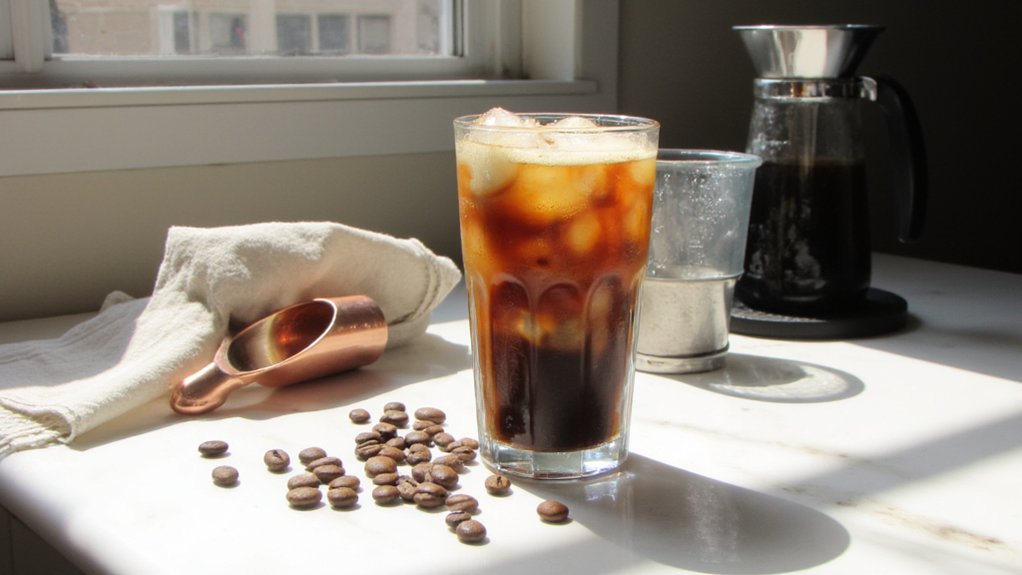
You’re probably dropping serious cash at coffee shops without realizing it. Those daily trips add up fast, and that’s before you even think about fancy add-ons or subscription fees. A cold brew maker could flip that whole situation around, but here’s the thing—the savings go way deeper than just cheaper beans. We’re talking about multiple angles that’ll have you wondering why you didn’t make this switch sooner.
Key Takeaways
- Bulk buying and batch brewing reduce per-serving costs by 30–40% compared to daily coffee shop purchases.
- Eliminating daily cafe visits saves $150–$210 monthly by avoiding impulse purchases and add-on charges.
- Home brewing avoids subscription fees, loyalty program pressures, and automatic renewal charges tied to cafe memberships.
- A $30–$50 cold brew maker pays for itself within weeks through redirected daily coffee shop spending.
- Proper storage and batch brewing extend freshness to two weeks, minimizing waste and maximizing value per batch.
Bulk Buying Coffee Beans at Lower Prices
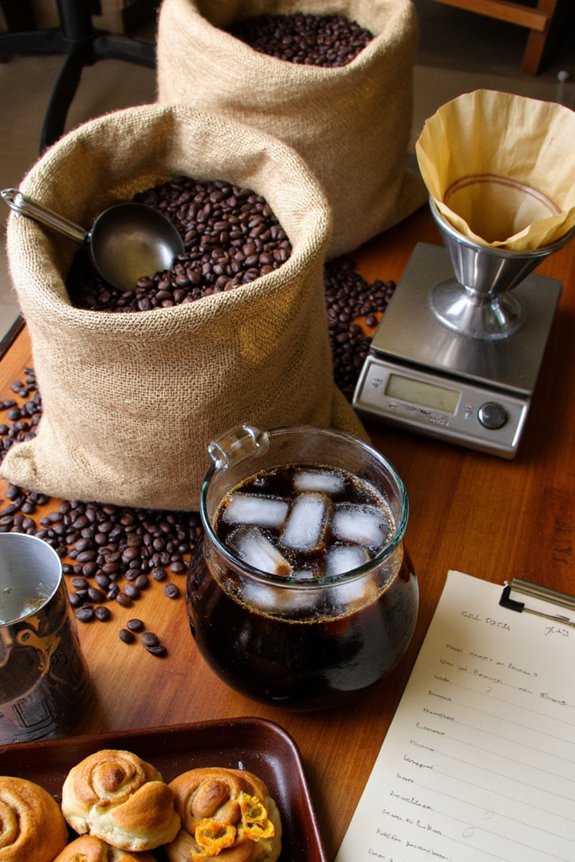
Most coffee lovers don’t realize how much they’re overpaying when they buy beans in small quantities at regular grocery stores. You’re basically paying premium prices for convenience, which ain’t ideal when you’ve got a cold brew maker waiting at home.
Here’s the thing: buying bulk roasts from wholesale sources changes the game entirely. You’ll snag beans at fraction of what you’d normally spend, sometimes 30-40% cheaper depending on the supplier. Coffee roasters and online wholesalers offer bulk options that make serious sense for regular brewers.
When you buy in bulk, you’re not just saving money per pound, you’re committing to your cold brew lifestyle. Stock up every couple months, store beans properly in airtight containers, and you’ve basically got an endless supply of affordable coffee.
Plus, using a cold brew maker with a removable fine-mesh filter makes it easy to brew large batches from your bulk coffee stash and clean up quickly, so you spend less time and money on maintenance.
2. Eliminating Daily Coffee Shop Visits
Once you’ve got your cold brew setup dialed in and a steady supply of affordable beans, the next logical step is breaking free from the coffee shop habit. Think about it: that daily visit costs you more than just the drink itself. You’re losing commute time, burning gas, and let’s be honest, those impulse purchases add up fast. A muffin here, a pastry there, maybe some fancy syrup you didn’t even plan to buy.
With cold brew at home, you’re eliminating those temptations entirely. You’ll save time getting ready in the morning, skip the drive altogether, and keep your wallet way healthier. That’s real money staying in your pocket instead of disappearing across a coffee counter. Plus, many home coffee makers feature removable water tanks and trays which make maintenance simple and help keep your brewing routine streamlined and efficient.
3. Reducing Expensive Add-Ons and Customizations
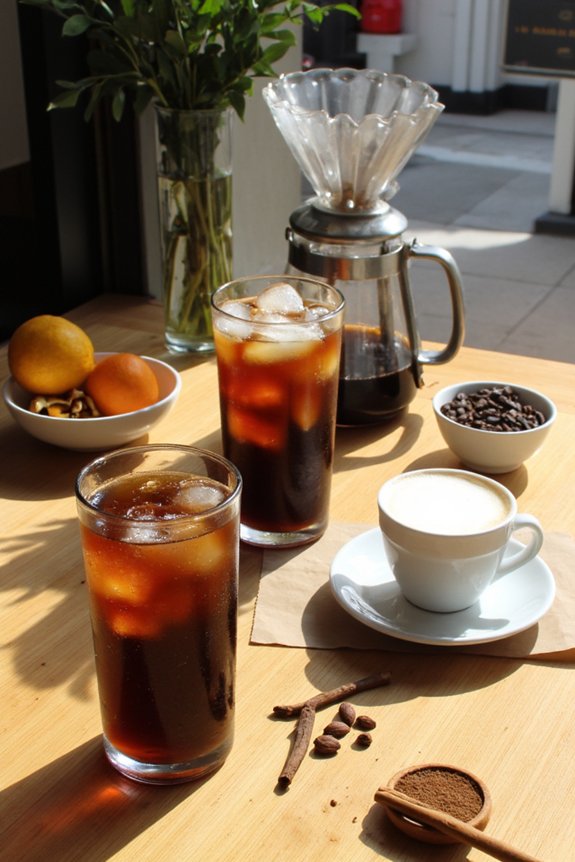
When you’re brewing at home, you’re not tempted to drop an extra five bucks on vanilla syrup, caramel drizzle, or that fancy oat milk upgrade that somehow costs more than the coffee itself. You’ll find that skipping those add-ons and customizations really adds up over time, especially when you realize you’re saving probably ten to twenty bucks a week just by keeping things simple. Plus, homemade cold brew tastes pretty darn good on its own, so you’re not really missing out on much besides the hit to your wallet. Many coffee makers with insulated design keep your brew cold and fresh for hours, reducing the temptation to buy pricier, freshly made drinks while out and about.
Syrups and Flavor Shots
If you’ve ever watched your coffee bill pile up at a café, you know how those fancy syrups and flavor shots add up faster than you’d think. A single pump of vanilla or caramel can cost an extra dollar or two per drink, and that’s before you even consider seasonal flavors.
With a cold brew maker at home, you’re in control. You can experiment with flavored concentrates and DIY bitters without breaking the bank. Here’s what you’ll save on:
- Premium syrup pumps at coffee shops
- Seasonal limited-edition flavor charges
- Multiple shots adding up daily
- Branded flavoring upcharges
- Specialty ingredient markups
Making your own flavored cold brew costs pennies compared to café prices. Mix in your preferred syrups, and you’ve got customized coffee that actually fits your budget. If you want to take your homemade cold brew to the next level, consider using powerful kitchen blenders to blend in fresh ingredients, nuts, or ice for even more café-style drinks at home.
Dairy Alternatives and Extras
Another place your wallet takes a hit at coffee shops is the dairy aisle—or rather, the alternatives to it. Those plant based milks like oat, almond, and coconut? They’ll cost you an extra dollar or two per drink. Flavored creamers add up quick too. When you’re making cold brew at home, you’ve got total control over what goes in your cup without the premium pricing. Buy a carton of your favorite plant based milk at the grocery store, and you’re set for weeks. Same goes for flavored creamers—grab what you like and skip the upcharge. You’ll notice the difference in your bank account, especially if you’re a daily coffee drinker who typically customizes every single order. If you want to further optimize your savings and convenience, consider using rapid boiling electric kettles to heat water for homemade syrups or to quickly prep your favorite dairy alternatives for your next cold brew.
4. Making Multiple Servings From One Batch
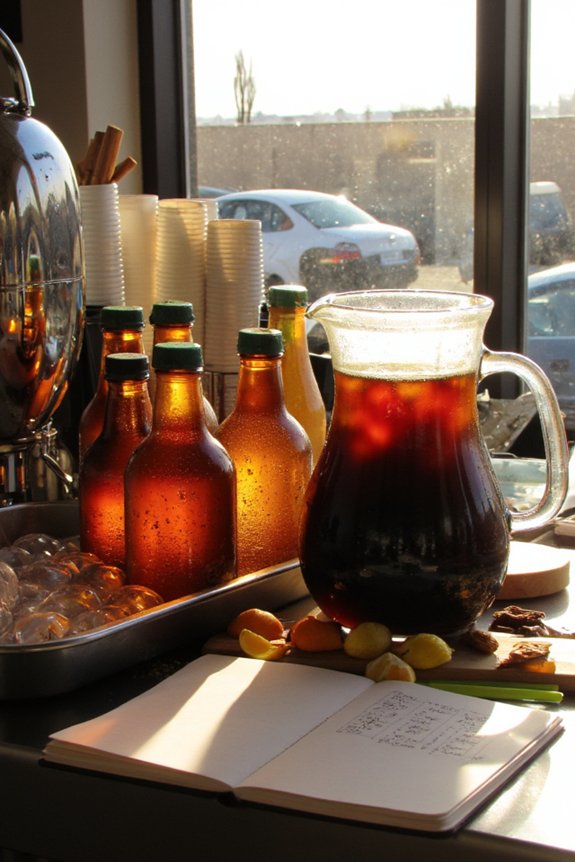
One of the best perks of cold brew is that you’re effectively getting bang for your buck with every batch you make. You’re not just making one cup, you’re creating multiple servings from a single brewing session. That’s where the real savings kick in.
When you prepare batch servings, you’re spreading your coffee grounds across several cups, which means less waste and more value. Here’s what makes shared brewing so economical:
- One batch typically yields 8-10 servings, cutting your per-cup cost dramatically
- You’ll brew less frequently, saving time and energy costs
- Batch servings reduce ground coffee needed compared to daily brewing
- Shared brewing with roommates splits expenses even further
- Extended shelf life means you’re always stocked without overbuying
That’s smart money management right there.
5. Extending Coffee Shelf Life and Reducing Waste
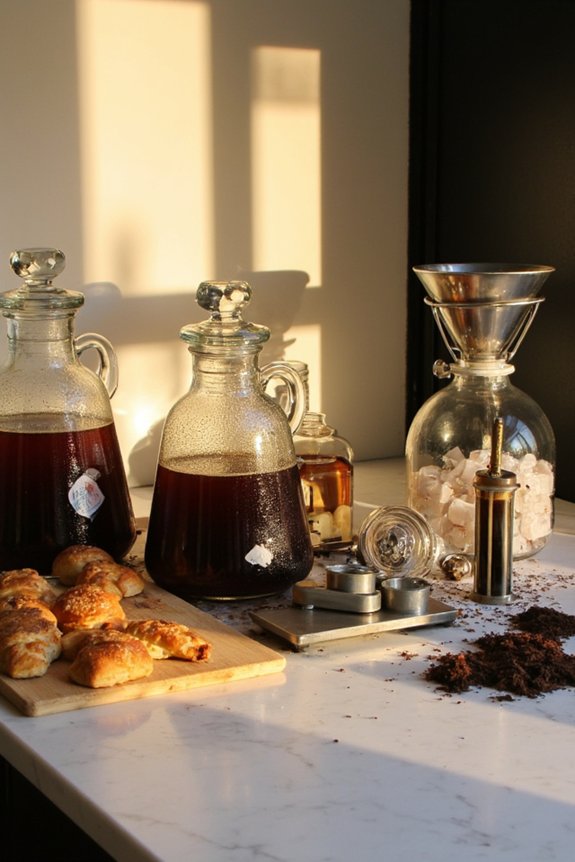
Keeping your cold brew fresh and drinkable for as long as possible is where you’ll really see the waste reduction pay off. Cold brew lasts way longer than regular coffee—we’re talking up to two weeks in your fridge versus just a few days. That’s some serious longer freshness working in your favor. You won’t watch half your batch go stale and end up dumped down the drain anymore. The reduced spoilage means you’re actually using what you make, not tossing money away literally. Store it in an airtight container, and you’ve basically got a coffee goldmine sitting there. No more buying fresh beans constantly because your old stuff’s already gone bad.
6. Breaking Free From Subscription and Membership Costs
If you’re someone who’s been paying for fancy coffee shop memberships or subscription services, making cold brew at home is basically your ticket to financial freedom. You’ll finally ditch those monthly charges that seemed so reasonable until you realize you’re spending way more than you actually want on coffee.
Think about what you’re really paying for:
- Monthly membership fees that lock you into overpriced drinks
- Cancel fees that make leaving feel impossible
- Loyalty programs rewarding you for spending more money
- Automatic renewals you forgot about ages ago
- Inflated prices justified by “exclusive” perks
Brewing at home means you’re in control. No contracts. No sneaky fees. Just you, some grounds, and delicious cold brew ready whenever you need it.
7. Calculating Your Savings Over Time
Now that you’ve decided to skip those membership fees and brewing your own cold brew at home, let’s talk about something really satisfying: watching your money add up.
Here’s the math. Most coffee shop visits run you five to seven bucks daily. That’s roughly $150 monthly or $1,800 yearly. Your home brewing setup? A decent cold brew maker costs maybe thirty to fifty dollars. Factor in equipment depreciation over time, and you’re looking at minimal ongoing costs beyond beans and water.
You’ll recoup that initial investment in just a few weeks. After that, you’re basically printing money, or at least keeping it in your pocket where it belongs. The savings pile up fast when you’re not funding someone else’s fancy espresso machine.
Frequently Asked Questions
What Is the Initial Investment Cost for a Quality Cold Brew Coffee Maker?
You’ll typically invest between $25 and $50 for a quality cold brew coffee maker. Higher-end models cost up to $100, but they’re worth it. Many come with warranty options protecting your initial cost investment for years.
How Long Does Cold Brew Concentrate Stay Fresh in the Refrigerator?
Your cold brew concentrate’ll stay fresh for up to two weeks when refrigerated properly. You’ll notice the storage life extends when you use airtight containers, maintaining excellent flavor stability throughout that period.
Can I Use Any Type of Coffee Beans for Cold Brew Making?
You can use most coffee beans for cold brew, but you’ll get better results with medium to coarse grind sizes. Bean origin matters too—darker roasts and single-origins typically produce smoother, less acidic cold brew than lighter roasts.
Does Cold Brew Contain More or Less Caffeine Than Hot Coffee?
You’ll find cold brew typically contains more caffeine than hot coffee. This caffeine comparison depends on brewing variables like steep time, bean-to-water ratio, and grind size. Your cold brew’s longer extraction pulls out more caffeine compounds.
What Equipment Besides a Maker Is Needed for Cold Brew Preparation?
You’ll need grinding tools to prepare your beans properly and filter options like cheesecloth or metal filters. A container for steeping, a stirring spoon, and measuring equipment also help you achieve consistent, quality cold brew results.
Conclusion
You’ve got this. A cold brew maker isn’t just another kitchen gadget—it’s your ticket to serious savings. You’re ditching those daily café trips, skipping the fancy add-ons, and brewing way more coffee for way less money. Within a few weeks, you’ll’ve recouped your initial investment. After that? It’s basically free coffee. Your wallet’ll thank you, and honestly, so will your sanity.


