So your spiralizer’s churning out soggy noodle mush instead of crispy strands? Yeah, that’s frustrating. The culprit’s usually a combo of wet produce and how you’re actually using the machine. Maybe you’re cranking the blade speed too high, pressing too hard, or your vegetables are sitting around getting sad. The good news? It’s totally fixable. Let’s figure out what’s going wrong.
Key Takeaways
- High blade speeds crush delicate vegetables, breaking cell walls and releasing moisture that causes mushiness.
- Excessive pressure on the spiralizer pulverizes produce instead of cleanly slicing, damaging cellular structure.
- Watery vegetables like tomatoes and cucumbers have high moisture content that creates soggy strands quickly.
- Spiralized noodles left sitting longer than five minutes weep moisture; serve within ten to fifteen minutes.
- Dull or misaligned blades require more motor torque, generating friction heat that thermally softens produce.

Choosing the Right Vegetables for Spiralizing
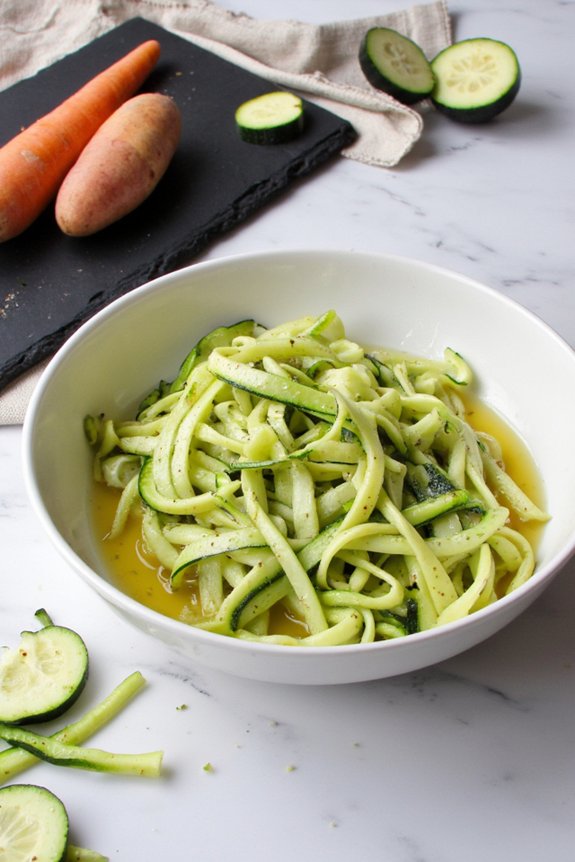
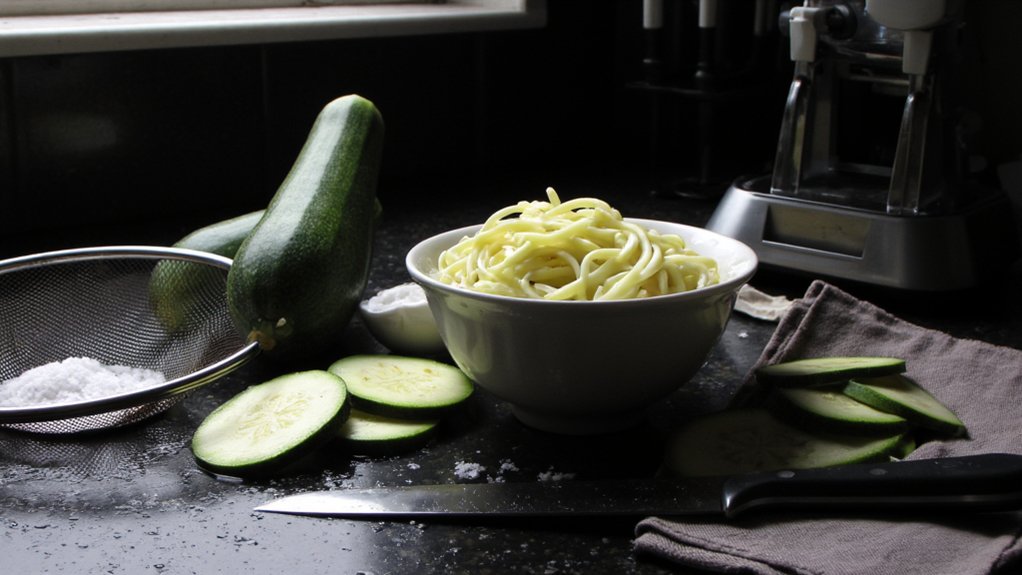
not all veggies are created equal. Zucchini and summer squash? Perfect candidates that’ll stay firm and delicious. Carrots work great too, especially when you pair them with seasonal pairings like fresh herbs in spring dishes. The real culprit behind mushy noodles is moisture content. Watery vegetables like tomatoes or cucumbers will turn into sad, soggy strands faster than you can say “spiralize.” For storage tips, keep your veggies cool and dry before spiralizing, ideally within a day of purchase. Firmer produce means better results, so choose wisely and you’ll nail those noodles. Choosing vegetables with low moisture content is key to avoiding soggy spiralized noodles and getting the best texture from your electric spiralizer.
Understanding Moisture Content and Its Impact
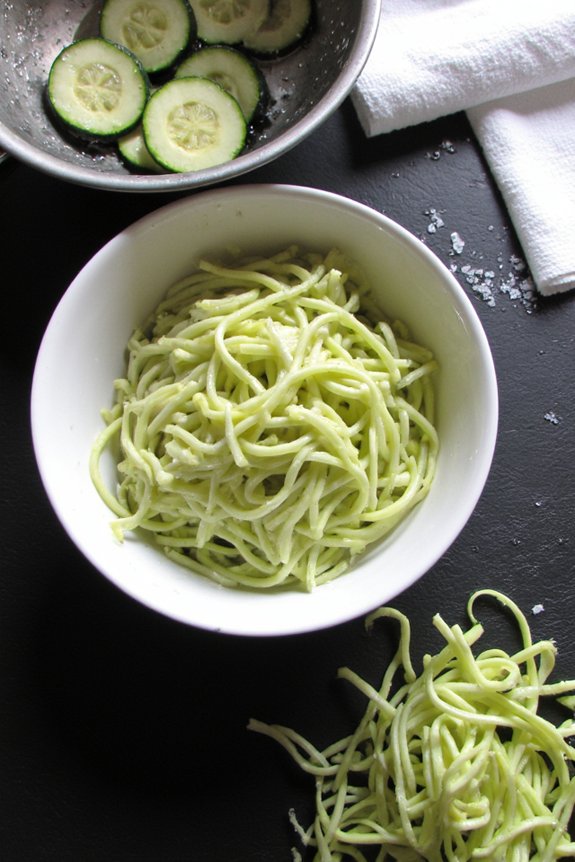
Here’s the thing about mushy noodles—they’re usually screaming for help with moisture management. Your vegetables are basically little water balloons, and if you don’t dry ’em out before spiralizing, you’re gonna end up with soggy strands instead of crispy, satisfying noodle-like texture. The good news is that understanding water content basics and using proper drying techniques can totally turn your spiralizer game around, giving you that perfect al dente bite you’re after. Using double-wall insulation in small appliances like electric kettles helps maintain temperature and reduce moisture loss, which is a principle you can borrow by managing the moisture in your veggies before spiralizing.
Water Content Basics
Before you even plug in your electric spiralizer, you’ve gotta understand that vegetables are basically little water balloons—and that’s where your mushy noodle problem starts. Most veggies you’re working with are packed with water content, sometimes up to 95 percent. That water’s held inside plant cells through something called cell turgor, which keeps everything firm and crisp. When you spiralize, you’re breaking open those cells and releasing moisture.
Here’s the thing: water activity in vegetables is what determines texture. High water content means more liquid gets released during cutting, and that’s basically a recipe for soggy noodles. The longer those zucchini or cucumber strands sit around, the more they’ll weep and wilt. It’s not your spiralizer’s fault—it’s just vegetable science working against you. If you want to better control texture, consider how heat retention and distribution in your cooking method can affect the final moisture level of your spiralized veggies.
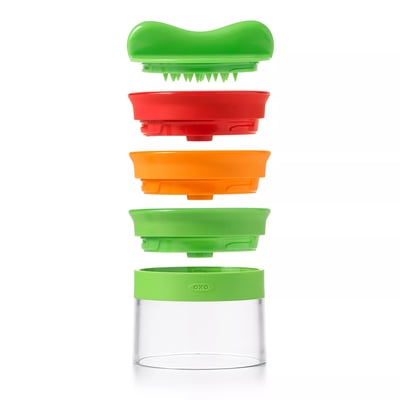
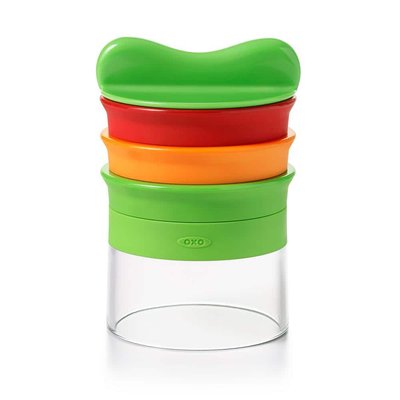
Drying Techniques Matter
So you’ve got all that water escaping from busted-open cells, and now you’re probably wondering what you can actually do about it—and that’s where drying techniques come into play. The secret? You gotta get those noodles dry fast before they turn into mush. Air drying methods work pretty well if you’ve got patience. Lay your spiralized veggies on a clean kitchen towel or paper towels and let them sit for a bit. Better yet, use humidity control to your advantage. A dehumidifier in your kitchen helps speed things along, or just crack open a window for some air circulation. Pat those noodles down gently before cooking too. The drier your raw noodles are, the better texture you’ll get when you heat them up. If you want to speed things up even more, consider using food dehydrators for quick and efficient moisture removal before cooking.
The Role of Vegetable Ripeness and Firmness
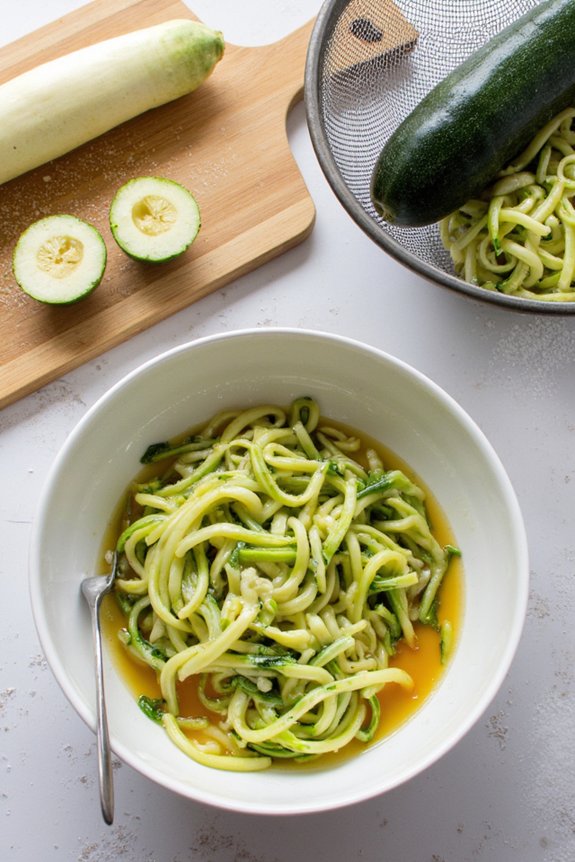
you’ve gotta start with vegetables that’re actually firm and at their peak, not ones that’ve been sitting in your crisper drawer for two weeks looking sad. Before you spiral anything, give your zucchini, carrots, or cucumber a gentle squeeze to make sure they’ve got that nice resistance, because mushy noodles usually start with choosing produce that’s already halfway to mush. Different veggies have different firmness sweet spots too, so a cucumber needs way more structure than, say, a softer squash variety, and knowing what you’re working with makes all the difference in avoiding that disappointing bowl of veggie paste. Using precisely sharpened blades can also help preserve the texture of your noodles, ensuring clean cuts without crushing your produce.
Choosing Peak Ripeness Vegetables
Firmness and ripeness are the unsung heroes of spiralizing success. You’ve probably noticed that some veggies turn to mush while others stay perfectly al dente. The secret? Timing’s everything.
Here’s what you need to know about picking the right vegetables:
- Choose vegetables at peak firmness, not overripe or soft to the touch
- Shop seasonally for sweeter, fresher produce with better texture
- Understand harvest timing in your region for prime vegetable quality
- Give your veggies a gentle squeeze test before spiralizing
Seasonal sweetness matters too. When you grab produce during its natural growing season, you’re getting vegetables at their prime. They’ve got better structure, more natural sugars, and they’ll hold up way better to spiralizing without turning into disappointing mush. Your noodles’ll thank you.
Firmness Testing Before Spiralizing
Now that you know what to look for at the store, it’s time to actually put your hands on those veggies and figure out if they’re ready for the spiralizer.
Give your vegetables a gentle squeeze. You’re looking for that sweet spot where they’ve got some give but aren’t mushy. A firm zucchini or cucumber should resist pressure without feeling rock hard. Think of it like testing a ripe avocado—there’s definitely a difference between perfect and overdone.
Before you start your texture calibration with your spiralizer, consider doing pre cutting trials. Slice off a small section and feel how it breaks apart. Does it crumble? That’s bad news. Does it hold together? You’re golden.
Trust your instincts here. Your hands know what firm feels like.
Variety-Specific Texture Considerations
Different vegetables have wildly different personalities when it comes to ripeness, and that’s actually essential for getting those perfect spiralized noodles instead of mush.
Here’s what you need to know about variety-specific texture considerations:
- Firmer cultivars like zucchini’s harder varieties hold their shape way better during spiralizing than softer types
- Cell structure varies dramatically between veggies, so a ripe cucumber’s watery cells will collapse differently than a firm carrot’s dense ones
- Overripe produce has weaker cell walls that break down easier under the spiralizer’s blades
- Cultivar selection matters more than you’d think, since heirloom varieties sometimes have different firmness levels than modern hybrid versions
You’ve gotta match your vegetable choice to your spiralizer’s speed. That firm zucchini won’t turn to mush, but a soft summer squash definitely will if you’re not careful with your settings.

Blade Speed Settings and Texture Quality
When you’re spiralizing vegetables, the speed at which those blades spin has a huge impact on whether you end up with perfect al dente noodles or a sad pile of mush. High blade speed settings can actually work against you, especially with delicate veggies like zucchini and cucumber. Your texture calibration matters more than you might think. Slower speeds give the blades time to cut cleanly without crushing or over-processing your vegetables. It’s kinda like the difference between slicing bread with a sharp knife versus squishing it. Most mushy noodle disasters happen because folks crank the speed to maximum, thinking faster means better. Try dialing it back to medium settings and see how much your results improve. You’ll be amazed at the difference.
How Pressure During Spiralizing Affects Results
You’d be surprised how much the force you apply actually changes what comes out the other end—too much pressure and you’re basically making vegetable mush instead of crispy noodles. There’s definitely a sweet spot, usually somewhere between gentle and firm contact with the blade, where you’re getting those perfect spirals without pulverizing your zucchini into oblivion, and different veggies need slightly different amounts of push since something like a sweet potato’s gonna resist more than a regular zucchini. The real trick is matching your pressure to what you’re spiralizing, keeping it consistent throughout, and remembering that sometimes less force actually gets you better results than going full throttle like you’re mad at the vegetable.
Blade Contact Force Matters
Pressing too hard on your spiralizer might seem like it’d get the job done faster, but here’s the thing: that extra force is actually one of the biggest culprits behind your mushy noodle problem.
When you apply excessive pressure, you’re basically crushing your vegetables instead of cleanly slicing them. This damages the cell structure and releases moisture, turning your fresh zucchini into sad, soggy strands. It’s all about finding that sweet spot with your blade contact force.
Here’s what you need to know:
- Check your blade alignment to make sure even pressure distribution
- Perform contact calibration on your machine for peak settings
- Use gentle, consistent pressure rather than forcing the vegetable through
- Let the spiralizer do the heavy lifting with minimal help from you
Your spiralizer’s designed to handle the work. Trust it.
Optimal Pressure Range Guidelines
Finding the right amount of pressure is honestly where most people go wrong with their electric spiralizer. You’re probably squeezing way too hard, thinking more force equals better results. That’s actually backwards.
Here’s the thing: your machine’s got ideal pressure ranges that work best for different veggie types. Light pressure on softer produce like zucchini prevents mushiness, while firmer vegetables need a bit more contact. Think of pressure calibration like tuning a guitar—too tight or too loose sounds terrible.
Pay attention to torque monitoring too. When your spiralizer starts working harder than it should, you’ve crossed into mushy territory. The sweet spot? Just enough pressure so the blade does its job without crushing everything. Let technology handle the heavy lifting, not your hands.
Material Resistance Affects Output
Different vegetables fight back differently when the blade tries to turn them into noodles, and that resistance directly shapes how your final product looks and feels. When you’re spiralizing, you’re dealing with varying tensile strength across different produce. Softer veggies like zucchini buckle under pressure way easier than firmer ones like carrots.
Here’s what’s really happening:
- Material fatigue occurs when repeated blade contact breaks down cellular structure too aggressively
- Thermal expansion happens as friction generates heat, softening the vegetable from the inside out
- Surface coating on your blade affects how smoothly it cuts through without crushing fibers
- Tensile strength determines whether your noodles stay intact or turn into mush
Understanding these factors helps you dial in the perfect pressure for whatever you’re spiralizing.
Proper Storage Before Spiralizing
Before you even think about plugging in your electric spiralizer, you’ve gotta get your vegetables in the right condition, or you’re basically guaranteed a mushy mess. Storage matters way more than most people realize.
Start by keeping your veggies in airtight containers inside your refrigerator crisper. This keeps ’em crisp and prevents moisture from building up, which is your enemy here. Don’t just toss zucchini or carrots loose in the fridge where they’ll get all soft and sad.
Pro tip: use them within a few days of buying them. Older vegetables contain more water, and that excess moisture turns into mush when the spiralizer does its thing. Fresh produce spiralizes cleanly and holds its texture way better than stuff that’s been sitting around forever.
Post-Spiralizing Handling Techniques
Once those noodles come out of your spiralizer, you’re not quite done yet—that’s actually when the real work begins. How you handle them next makes all the difference between crispy, delightful strands and a mushy mess.
- Spread them out on a clean paper towel or kitchen cloth to release excess moisture
- Let them sit at room temperature for just a few minutes, no longer than five
- Avoid stacking them on top of each other while they cool down
- Time your serving carefully, ideally within ten to fifteen minutes of spiralizing
See, those noodles are still releasing water even after they’ve left the machine. If you bunch ’em up or wait too long, you’ll trap all that moisture right where you don’t want it. Keep things loose and airy.
Common Mistakes That Lead to Mushy Noodles
Even though you’ve nailed the post-spiralizing technique, there’s still plenty of ways to mess things up and end up with a soggy disappointment on your plate. One major culprit? Pushing vegetables through too slowly, which forces your motor to work overtime. An overheating motor doesn’t just get angry, it actually heats up your produce, effectively cooking it before you even get it on the stove. You’re also likely dealing with uneven feed pressure. Jamming one side harder than the other creates inconsistent noodle thickness, meaning some strands get mangled while others stay firm. Plus, if you’re using already-soft vegetables or ones that’ve been sitting around too long, well, you’re basically guaranteed mushy results. Stick with fresh, firm produce and keep things moving at a steady pace.
Machine Maintenance and Blade Sharpness
Your spiralizer’s blades are kind of like the teeth on a saw—they work great when they’re sharp, but once they get dull, everything falls apart. When your blades lose their edge, they crush vegetables instead of slicing ’em cleanly, which creates that disappointing mushy texture you’re experiencing.
Here’s what you should do to keep things running smooth:
- Clean your blades immediately after each use to prevent buildup
- Check blade alignment monthly, ensuring they’re positioned correctly for peak cutting
- Sharpen or replace blades every few months depending on usage frequency
- Perform motor tuning adjustments if you notice unusual sounds or resistance
Regular maintenance isn’t just boring upkeep—it’s actually the secret sauce to getting those perfectly crisp veggie noodles you deserve. Don’t let laziness ruin your spiralizing game.
Best Practices for Achieving Perfect Texture
Beyond just keeping those blades in top shape, there’s actually an art to using your spiralizer the right way that’ll transform your noodle game entirely. First, dial in your texture calibration settings based on what you’re spiralizing. Softer veggies like zucchini need less pressure than firmer ones. Pay attention to motor vibration too—excessive shaking means your produce isn’t seated properly or you’re pushing too hard. Let the machine do the work instead of forcing things through. Speed matters as much as technique. Go moderate rather than maxing out that dial. Fast speeds create friction that breaks down cell walls, turning your noodles into sad mush. Process your veggies in small batches so they don’t get jammed up inside. Your patience pays off with perfectly al dente spirals every single time.
Frequently Asked Questions
Can I Spiralize Vegetables Straight From the Refrigerator, or Should I Let Them Warm up First?
You can spiralize cold vegetables directly from the refrigerator. Their cold firmness actually helps maintain structural integrity during spiralizing. However, allowing them to warm slightly reduces thermal contraction, preventing the noodles from shrinking excessively afterward.
Does the Brand or Model of Electric Spiralizer Affect How Mushy the Noodles Become?
Yes, your spiralizer’s brand and model markedly impact mushiness. Higher-quality blade sharpness and stronger motor power create cleaner cuts that release less vegetable liquid, resulting in firmer noodles with better texture.
How Long Can Spiralized Noodles Sit Before They Start Breaking Down and Becoming Mushy?
Your spiralized noodles’ll start degrading within 30 minutes. Storage time matters because cell breakdown and moisture migration accelerate texture changes. You’re best eating them immediately to prevent mushiness.
What’s the Best Way to Dry Spiralized Noodles After Washing Them to Prevent Mushiness?
You’ll want to gently press your spiralized noodles between paper towels to remove excess moisture, then air dry them on a clean surface for fifteen to twenty minutes before storing or cooking them.
Should I Spiralize Vegetables With the Skin on or Peel Them First for Better Texture?
You’ll get better texture keeping skins on most vegetables—they’re firmer and hold their shape better. Your peel preference depends on the vegetable; zucchini and cucumber skins work great, but you might prefer peeling harder varieties for smoother noodles.
Conclusion
So here’s the thing: you’ve got all the tools now to ditch those mushy noodles for good. Stick with firm veggies, go easy on the pressure, and keep your blades sharp. It’s really just about treating your spiralizer—and your produce—with a little respect. Follow these tips and you’ll be slurping perfectly textured veggie noodles in no time. Your spiralizer’s got this.