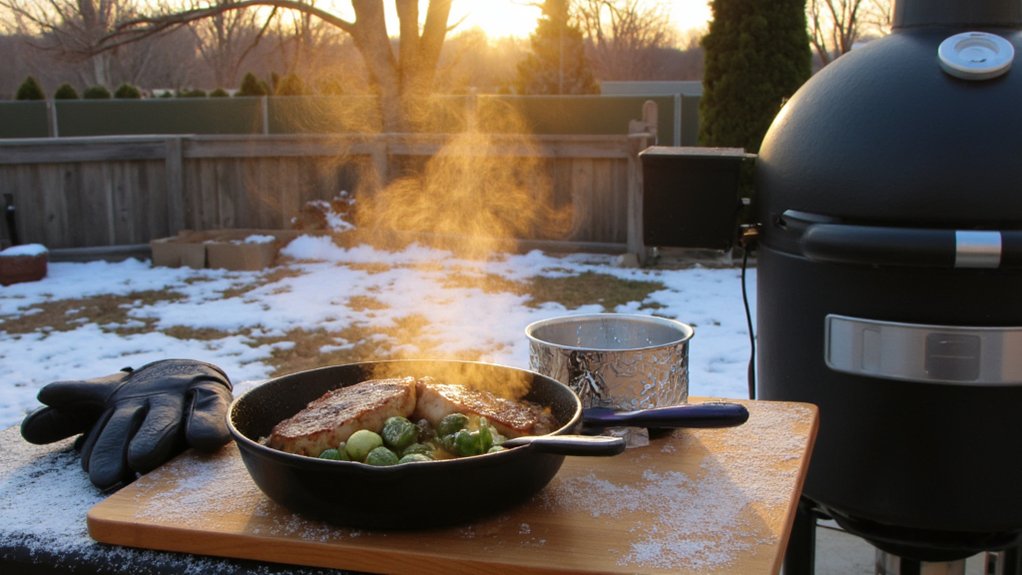
Winter’s coming, and your pellet grill’s about to face some serious cold. You’ve probably noticed how temperature swings mess with performance, and moisture creeps in when you’re not looking. The good news? Winterizing doesn’t require a PhD in grill maintenance. With a few smart adjustments—from insulation strategies to pellet storage tricks—you’ll keep your grill firing reliably all season. But here’s the thing: most folks miss one essential step that’ll save you from costly repairs down the line.
Key Takeaways
- Apply insulating jackets and heat-retaining mats to reduce pellet consumption and maintain consistent cooking temperatures throughout winter.
- Inspect and seal door frames, gaskets, and vents with weatherstripping tape to prevent heat and smoke loss from drafts.
- Store pellets in airtight containers below 15% humidity and maintain storage temperatures between 50–70°F for optimal burn quality.
- Clean the firebox, grates, and hopper thoroughly, then use rust inhibitors and protective covers to prevent moisture damage and corrosion.
- Adjust auger settings, preheat longer, and stock extra pellets since cold weather increases fuel consumption and requires higher temperatures.


Insulate Your Pellet Grill With Protective Blankets and Covers
When winter rolls around, your pellet grill’s going to face some serious weather—rain, snow, freezing temps, the whole nine yards. That’s where protective covers come in handy. An insulating jacket specifically designed for pellet grills will keep heat locked in while shielding your equipment from the elements. These jackets are game-changers for maintaining consistent temperatures during cold months.
Don’t overlook a heat retaining mat either. Placing one underneath your grill creates an extra barrier against ground moisture and cold surfaces. Together, these accessories work like a cozy blanket for your grill, reducing the strain on your heating system and helping fuel efficiency.
You’ll notice your pellet consumption drops noticeably when everything’s properly insulated. It’s a smart investment that keeps your grill running smoothly all winter long. For even greater durability and maintenance, regularly cleaning and covering your grill can significantly increase its lifespan through harsh winter conditions.
Seal Gaps and Openings to Prevent Cold Air Leaks
After you’ve wrapped your grill up like a present, it’s time to hunt down the sneaky little gaps that let cold air slip right through. Check around the door frame and lid edges carefully. You’d be surprised how much heat escapes through tiny cracks you might’ve missed. Look at your thermometer housing and any vents sticking out the sides too.
For your seal inspection, run your hand along seams feeling for drafts. If you spot problem areas, weatherstripping tape works great for quick fixes. Consider gasket replacement if your door seals look worn or cracked, since a damaged gasket’s basically like leaving a window open.
Don’t forget the pellet hopper opening either. These small details make a real difference in keeping your grill running efficiently during those harsh winter months ahead. Many high-quality pellet grills use robust welded seams and tight lid gaskets specifically to minimize heat and smoke loss in cold or challenging weather.
Store Your Pellets Properly to Maintain Quality and Performance
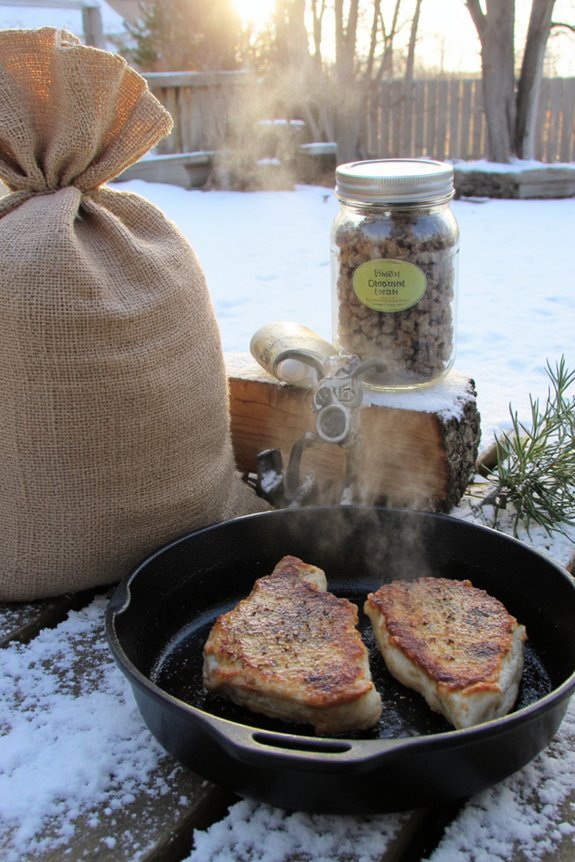
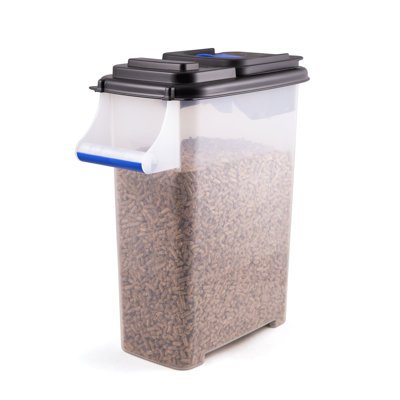
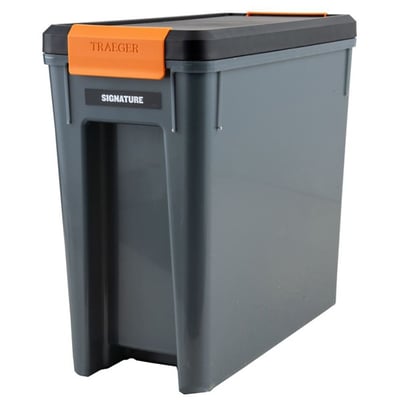
Your pellets are basically the lifeblood of your grill, so you’ll want to keep ’em in tip-top shape through the cold months. You’ve gotta protect them from moisture by storing them in a dry place, ideally in airtight containers or sealed bags away from humidity and rain, because damp pellets are about as useful as a chocolate teapot. Keep your storage area cool and consistent temperature-wise—think of it like Goldilocks’ porridge situation, where you’re avoiding extreme heat and cold swings that can mess with pellet quality and performance. For best results, take a cue from waterproof cover recommendations for smokers and ensure your pellet storage area is equally shielded from the elements.
Moisture Control Methods
Keeping your pellets dry is honestly one of the easiest ways to protect your investment and keep your grill running like a dream. You’ll want to grab a pellet hygrometer to monitor humidity levels inside your storage container, which honestly takes the guesswork out of things. Aim for humidity below 15 percent, and you’re golden. Toss in some moisture absorbers like silica gel packets or specialized pellet storage products to keep things nice and dry. Store everything in a cool, dry spot away from direct moisture and temperature swings. It’s really that simple—a little prep work now means your pellets won’t clump up or get all funky when you’re ready to cook later. Just like proper seasoning and maintenance can dramatically extend the life and performance of cast iron cookware, consistent moisture control for your pellets will ensure reliable grill performance all winter long.
Temperature Storage Guidelines
While keeping those pellets dry is half the battle, temperature plays just as big of a role in maintaining your pellet stash. You’ll want to store them in a cool place, ideally between 50 and 70 degrees Fahrenheit. Extreme heat can actually damage the pellets’ integrity, so your garage or shed works perfectly. Ambient monitoring helps you catch temperature swings before they wreck your inventory.
Proper pellet rotation keeps things fresh and guarantees consistent burn quality:
- Prevents moisture absorption in warmer conditions
- Maintains consistent combustion performance through winter
- Protects your investment from temperature damage
- Keeps you grilling confidently all season long
Store newer bags behind older ones for rotation. Check your storage area’s temperature regularly, especially during those unpredictable shoulder seasons. Your future self will thank you when spring arrives and your pellets still perform like champs. For best results, consider energy consumption and efficiency when choosing storage appliances or monitoring equipment, as this can help you maintain optimal pellet quality while keeping your utility bills in check.
Adjust Your Temperature Settings for Winter Conditions
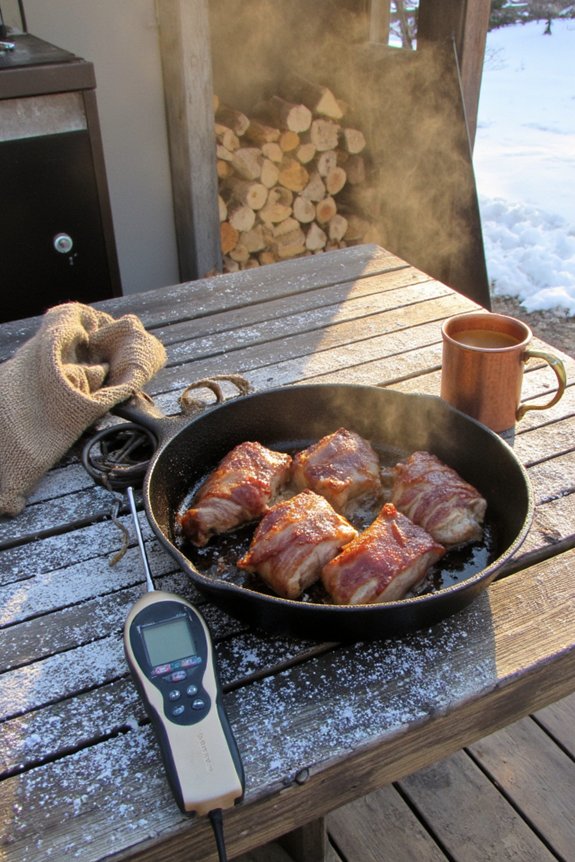
As temperatures drop and your grill’s working harder than usual, you’ll need to tweak your temperature settings to keep things running smooth. Cold weather affects how your pellet grill operates, so pellet calibration becomes essential for consistent results. You might notice your grill takes longer to reach target temps, which is totally normal.
Start by adjusting your auger settings slightly. Your grill’s draft management also plays a big role here—cold air can mess with airflow, so you may need to dial in your draft controls more carefully. Don’t be afraid to experiment with incremental adjustments to find what works best.
Keep notes on what settings produce your desired results. This way, you’ve got a handy reference for future winter cooking sessions. Small tweaks make a real difference when temps are frigid.
Clean and Maintain Your Grill’s Internal Components Before Winter
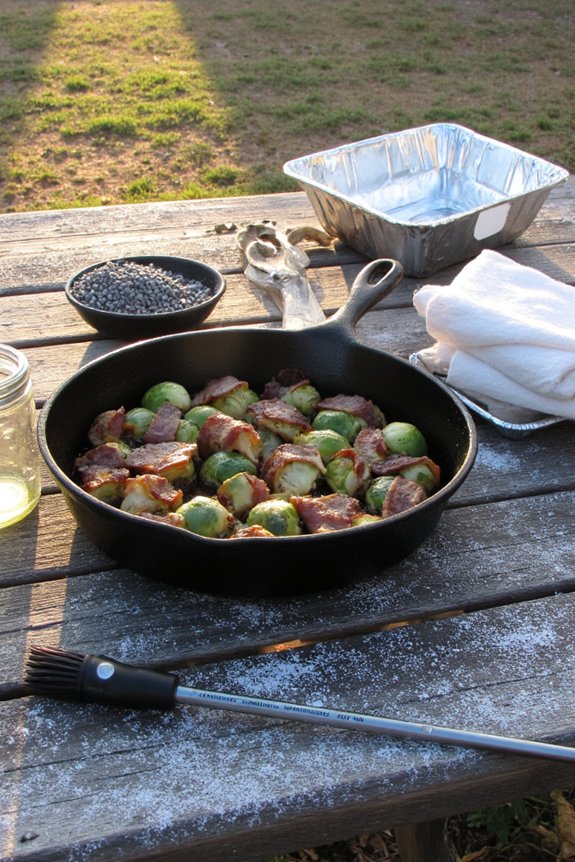
Before winter really digs in, get inside your pellet grill and give it some love. Your grill’s been working hard all season, and it deserves some attention before the cold months arrive.
Start with a thorough grate inspection to catch any rust or buildup that’s accumulated. Here’s what you’ll want to tackle:
- Remove grease and debris from the firebox and cooking chamber
- Check the heat deflector for cracks or warping issues
- Perform auger lubrication on moving parts to keep things running smooth
- Inspect the hopper for any moisture or pellet residue
Don’t skip these steps. A well-maintained grill performs better and lasts longer through those brutal freezing temperatures. You’ll be grateful come January when your setup fires up without a hitch.
Use a Windbreak or Shelter to Shield Your Grill
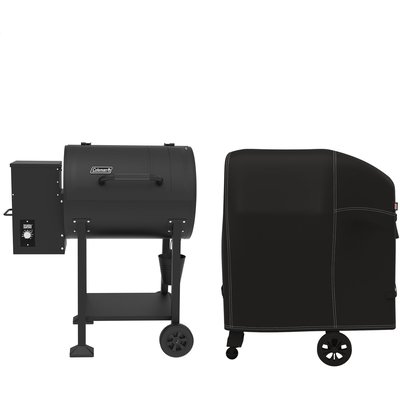
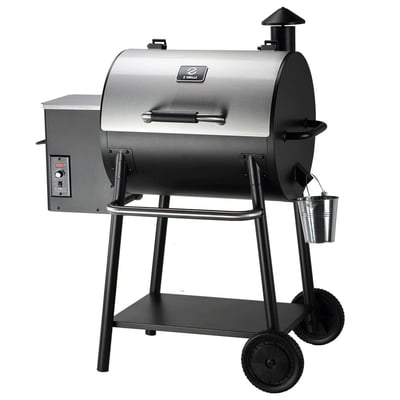
When winter winds start howling around your patio, you’ll want to give your grill some protection because exposure to harsh elements can really take a toll on performance. You’ve got solid options here: natural windbreaks like evergreen trees, fences, or even strategically placed landscaping can shield your pellet grill without much fuss, while portable shelter solutions such as grill covers, pop-up canopies, or dedicated grill gazebos offer flexibility if you move things around or need adjustable coverage depending on the weather. Either way, reducing wind exposure keeps your grill running more efficiently and helps prevent moisture buildup that’d otherwise wreak havoc on your equipment.
Natural Windbreak Options
Mother Nature’s got your back when it comes to shielding your pellet grill from harsh winter winds. You can use natural barriers and rock walls right in your yard to protect your setup. Here’s what’ll work best:
- Evergreen trees and shrubs create year-round windbreaks that keep those bitter gusts at bay
- Hedgerows and dense bushes provide flexible protection while adding greenery to your space
- Rock walls and stone structures offer solid, permanent defense against relentless winter weather
- Fallen branches and natural debris can be strategically arranged for quick, budget-friendly shielding
These natural options aren’t just practical. They blend seamlessly into your outdoor space, so your grill area still looks good. Plus, you’re working with what you’ve already got around your property. Nature’s windbreaks are free, effective, and honestly, they make your setup feel more integrated with the landscape. Your grill’ll thank you come January.
Portable Shelter Solutions
If natural windbreaks aren’t in the cards for your setup, portable shelter solutions are your next best friend. A portable canopy works wonders for deflecting wind and snow while you’re cooking up your winter masterpiece. You’ll find these pop-up options come in various sizes, so pick one that fits your grill without crowding it too much.
For serious cold-weather warriors, an insulated tent designed for grills offers next-level protection. These specialized shelters trap heat better than basic canopies, keeping your cooking zone warmer and more comfortable. Just make sure you’ve got proper ventilation so pellet smoke escapes safely.
Both options pack down easy for storage when spring rolls around. Sure, they’re not permanent structures, but they’re reliable, affordable, and honestly, they’ll transform your winter grilling experience into something actually enjoyable.
Monitor Moisture and Prevent Rust Buildup
Moisture and rust tend to become your pellet grill’s worst enemies once winter rolls around, so you’ll want to stay on top of things pretty regularly. Cold, damp weather creates the perfect storm for corrosion, but don’t worry—you’ve got options. Start by investing in rust inhibitors and moisture sensors to keep tabs on what’s happening inside your grill.
Here’s what you should focus on:
- Check your grill weekly for any signs of moisture buildup or rust spots
- Use rust inhibitors on metal surfaces to create a protective barrier against the elements
- Install moisture sensors to catch problems before they get outta hand
- Store your grill in a dry location whenever possible, or cover it with a quality tarp
Regular inspections’ll save you from expensive repairs down the road, keeping your grill ready for spring cooking season.
Modify Your Cooking Techniques for Cold Weather Success
Now that you’ve got your grill protected from the elements, it’s time to adjust how you actually cook on the thing. Cold weather demands different strategies than summer grilling. First, bump up your fuel management game. You’ll burn through pellets faster when temperatures drop, so stock extra supplies and check your hopper more frequently. Start your grill earlier to let it reach temp, which takes longer in freezing conditions. Consider cold smoke techniques for certain foods, since maintaining lower temps becomes easier outdoors. Keep your cooking sessions shorter when possible, reducing heat loss through the lid. Use a grill blanket or insulation jacket to retain warmth. Preheat everything thoroughly, and don’t be shy about running higher temps to compensate for the cold air stealing your heat away.
Frequently Asked Questions
What Type of Pellets Work Best for Winter Grilling?
You’ll want hardwood blends and moisture resistant mixes for winter grilling. These pellets burn hotter and won’t absorb moisture from cold, humid conditions. They’re your best choice for consistent performance in freezing temperatures.
How Often Should I Check My Grill During Cold Weather Cooking?
You should check your grill every 15-20 minutes during cold weather cooking. Frequent monitoring helps you catch temperature drift early, ensuring your pellet grill maintains consistent heat despite frigid conditions affecting performance.
Can I Leave My Pellet Grill Outside Year-Round?
Yes, you can leave your pellet grill outside year-round, but you’ll need proper cover protection to shield it from harsh weather. Without adequate protection, you’re risking warranty concerns and potential damage to your grill’s components.
Does Winter Affect Pellet Grill Cooking Time and Temperature?
Yes, winter markedly affects your pellet grill’s performance. You’ll experience cold starting delays and need to adjust your auger feedrate to maintain consistent temperatures. Expect longer cooking times in freezing conditions.
What Safety Precautions Should I Take When Grilling in Snow?
You’ll want to wear insulated gloves to protect your hands from extreme cold and metal burns. Clear snowpaths around your grill for safe footing, and keep a fire extinguisher nearby for emergencies.
Conclusion
You’ve got this. Winterizing your pellet grill doesn’t have to be complicated—just clean it up, protect it from the elements, and dial in those settings for cold weather. Keep your pellets dry, use windbreaks when you can, and don’t be shy about monitoring for rust. With these steps locked in, you’ll be smoking and grilling through the harshest winter months without breaking a sweat. Your taste buds’ll thank you.