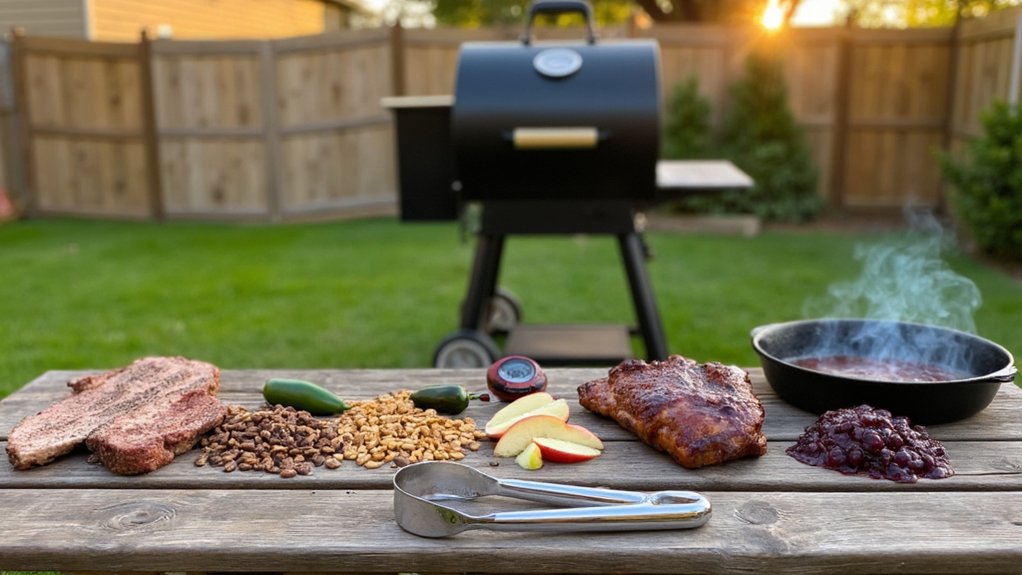
So you’ve got your pellet grill fired up, but you’re wondering why your brisket tastes kinda flat while your chicken’s coming out amazing. Here’s the thing—it’s probably your wood choice. Different pellets bring totally different vibes to the table, and matching the right smoke to your meat? That’s where the magic happens. We’re gonna walk through everything from bold hickory to subtle apple wood, and show you how to blend ’em like a pro.
Key Takeaways
- Hickory delivers bold, smoky flavor ideal for pork and beef; use aged pellets to avoid harshness and overpowering lighter meats.
- Fruitwoods (apple, cherry, pecan) provide mild, subtle sweetness; mix varieties to create nuanced profiles without intense smokiness.
- Oak and mesquite offer strong, robust tastes for red meat; mesquite requires careful temperature control and blending to prevent domination.
- Blend woods strategically using a 70/30 ratio of bold-to-mild woods; adjust ratios based on taste preferences for desired intensity.
- Match pellet types to protein fat content—bold woods suit fatty cuts like ribs and brisket; mild woods work for chicken and fish.


Understanding Wood Pellet Flavor Intensity
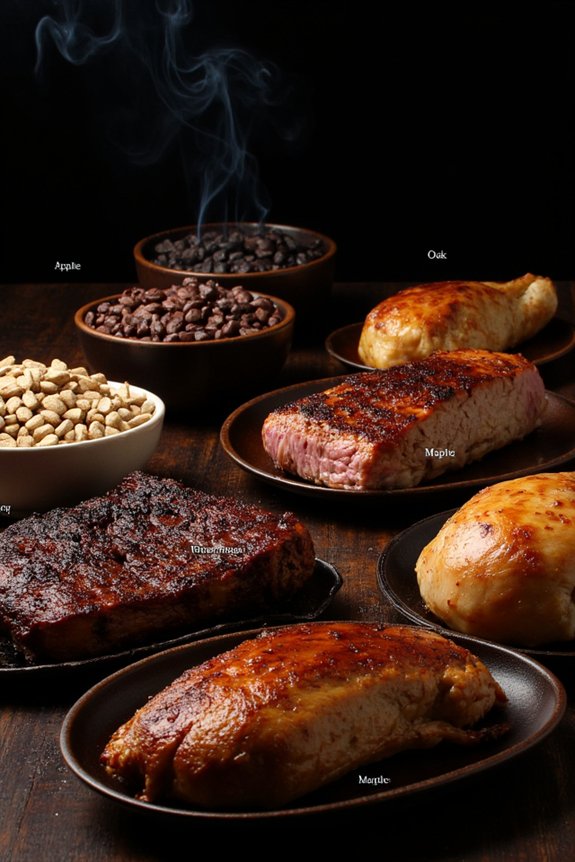
When you’re standing in front of your pellet grill trying to figure out which wood’ll give you the flavor you’re after, it helps to know that not all pellets are created equal. Smoke intensity varies wildly depending on the wood type you choose. Some pellets’ll produce a gentle whisper of flavor, while others’ll hit you like a flavor freight train. You’ll notice ring formation develops differently too, with stronger woods creating that beautiful pink smoke ring faster. Flavor longevity matters because nobody wants their meat tasting bland halfway through cooking. Check the ash content on your bags—lower ash means cleaner burning and better flavor. It’s basically the difference between a subtle suggestion and an all-out taste explosion. The smoke profile you experience can also be affected by digital or smart controllers, which precisely manage pellet feed and temperature for consistent flavor and intensity throughout your cook.
Hickory Pellets: The Bold Smoky Standard
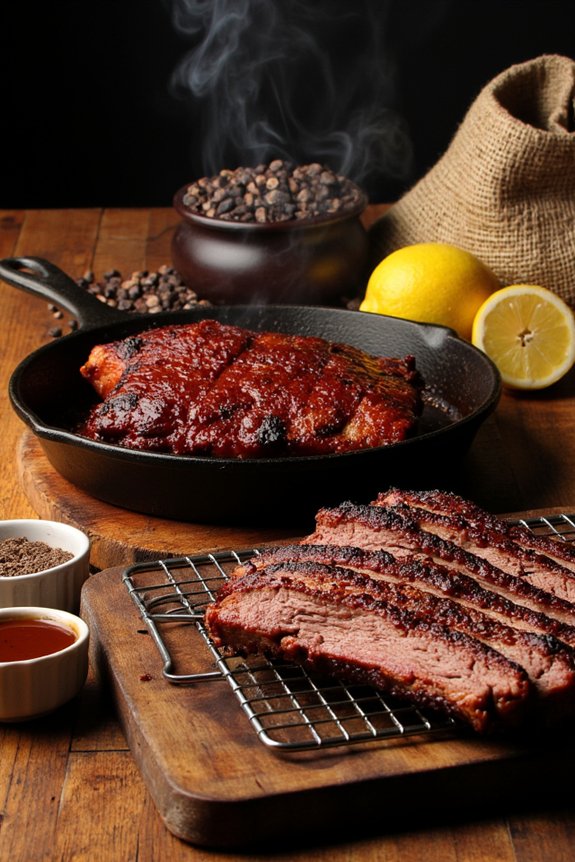
Hickory’s that bold, smoky wood that doesn’t mess around—it’ll punch you right in the taste buds with a flavor that’s strong enough to stand up to just about any meat you throw at it. You’ll find it pairs especially well with pork, beef, and poultry, though it’s honestly so assertive that some folks tone it down by blending hickory with milder woods like apple or cherry to dial back the intensity. If you’re new to hickory, start with a mix rather than going all-in, since its robust character can overpower lighter dishes if you’re not careful. For best results, consider using digital temperature control on your electric smoker to precisely manage hickory’s intense smoke, ensuring your food doesn’t become too overpowering.
Hickory’s Strong Smoky Taste
The bold smoky standard in the pellet grill world? That’s hickory, hands down. You’re getting serious smoke ring development and deep flavor chemistry that’ll make your meat sing. Hickory’s bark compounds create that characteristic sharp, almost peppery taste that BBQ purists crave. The aging wood in quality pellets matters too, honestly. Fresher hickory tends to be harsher, while properly aged wood delivers smoother complexity. You’ll notice hickory works best with pork and beef, though it can overpower poultry if you’re not careful. Start with shorter cook times and adjust based on what your taste buds tell you. The intensity here ain’t subtle, but that’s kinda the point. For the best results, pair hickory’s bold flavor with meats that can handle strong smoky profiles to avoid overpowering more delicate dishes.


Best Meat Pairing Options
Since hickory’s got that aggressive, peppery punch, you’ll want meats that can stand up to it without getting completely steamrolled. Beef brisket and pork shoulder are your best friends here. Their rich, fatty nature handles the bold flavors like a champ. Ribs work great too, especially if you’re doing some marinade experiments with bourbon or Worcestershire sauce to complement that smoky intensity.
For serving suggestions, pair hickory-smoked meats with hearty sides like baked beans or coleslaw. They’ll balance things out nicely. Chicken can work if you’re feeling adventurous, though lighter poultry tends to get overpowered. Turkey’s similar, so maybe skip it unless you’re really committed. Stick with the heavier proteins and you’ll nail it every time. When using strong-flavored pellets like hickory, consider cooking on a large, party-size griddle for even heat distribution and the capacity to handle big cuts of meat efficiently.
Blending With Other Pellets
If you’re looking to dial back hickory’s intensity without ditching it altogether, blending with other pellets is your secret weapon. You’ll discover that mixing hickory with milder woods like apple or cherry creates smoke layering that’s way more nuanced than going solo. Think of it like adding cream to strong coffee—you’re smoothing things out, not eliminating the flavor you love.
Seasonal pairings work great here too. Blend hickory with oak during fall for something hearty, or mix it with fruitwood during spring for lighter dishes. The beauty is you’re controlling the boldness yourself. Start with a 70/30 hickory ratio and adjust from there. Your taste buds will thank you for the flexibility. If you’re using a cast iron skillet, you’ll appreciate how the even heat distribution enhances the subtle flavors from your custom pellet blends.
Fruitwood Pellets: Apple, Cherry, and Pecan for Subtle Sweetness
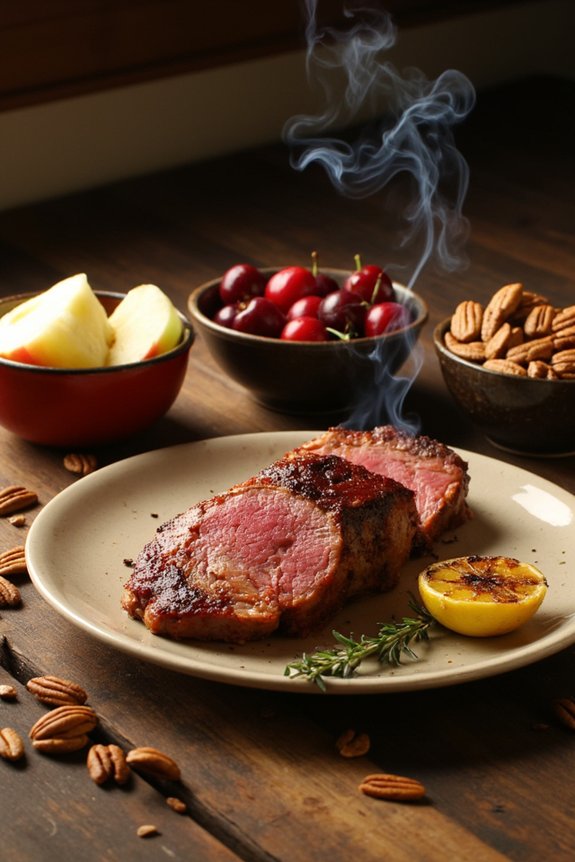
Many grillmasters swear by fruitwood pellets when they’re looking to add a touch of sweetness without overpowering their meat. Apple smoke brings a mild, crisp flavor that pairs beautifully with pork and poultry. Cherry aroma adds something a bit richer and deeper, making it perfect for beef brisket or ribs. Then there’s pecan sweetness, which gives you that buttery, slightly nutty undertone that’s just chef’s kiss.
The beauty of fruitwood pairing is how these pellets complement rather than dominate your food. You’re not getting hit with intense smoke like you would with hickory or mesquite. Instead, you get subtle layers of flavor that make people wonder what your secret is. Mix and match these three, and you’ve got yourself some seriously delicious results.
Oak and Mesquite: Strong Woods for Red Meat
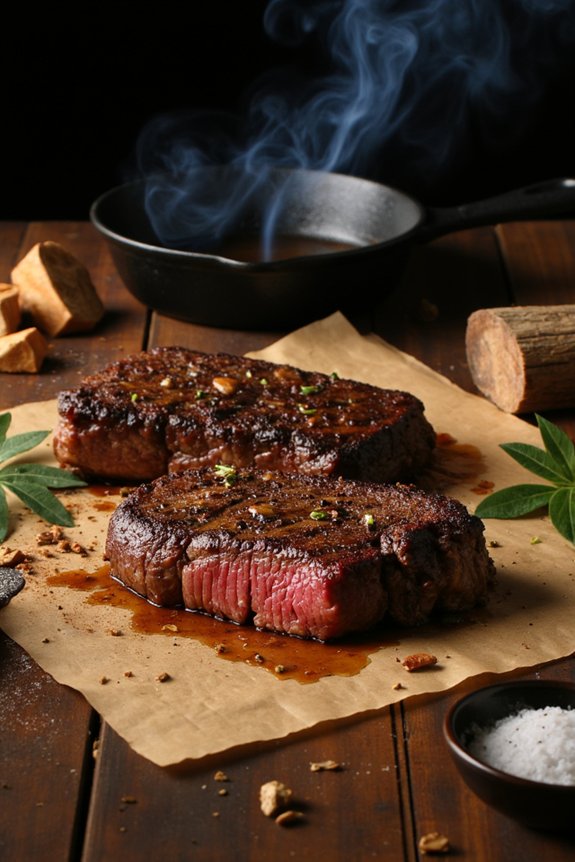
When you’re ready to step up from fruitwoods, oak and mesquite are your heavy hitters for beef, brisket, and ribs that demand some serious flavor muscle. Oak gives you that bold, robust taste without completely overpowering your meat, while mesquite brings the heat and intensity, though you’ll want to keep a closer eye on it so it doesn’t turn your dinner into a smoky wildfire situation. The trick is finding your sweet spot with mesquite’s stronger punch, maybe mixing it with milder woods if you’re just getting started with these powerhouse options.
Oak’s Bold Beef Pairing
For the serious beef lover, oak and mesquite are your secret weapons on the pellet grill. Oak’s bold character comes from oak tannins that infuse your meat with a sophisticated, smoky depth. You’re effectively getting a charcoal infusion that transforms ordinary steaks into something extraordinary.
| Cut | Temperature | Time |
|---|---|---|
| Ribeye | 225°F | 2-3 hrs |
| Brisket | 250°F | 8-12 hrs |
| NY Strip | 225°F | 1.5-2 hrs |
Oak pairs beautifully with marbled cuts that can handle its intensity. The smoke penetrates deep without overpowering, creating that perfect crust while keeping the inside juicy and tender. It’s not subtle, but that’s kinda the point. You’ll notice the difference immediately—that’s real flavor, not compromise.

))/4078395.json)
Mesquite Heat Intensity Control
Unlike oak’s more refined approach, mesquite demands respect on the pellet grill—it’s the aggressive sibling that’ll punch you in the mouth if you’re not careful. You’ve gotta dial in your grill temperature carefully because mesquite burns hot and fast. Start low, around 225 degrees, and let it settle before throwing on your brisket or ribs. The smoke intensity with mesquite is no joke either. Even a small amount creates bold, almost peppery flavors that’ll dominate your meat if you overdo it. Mix mesquite with milder woods like cherry or apple to tame that heat. Think of it like seasoning—a little goes a long way. Once you nail the balance between grill temperature and smoke intensity, you’ll unleash some seriously impressive results that’ll have folks asking for your secret.
Blending Woods: Creating Your Custom Flavor Profile
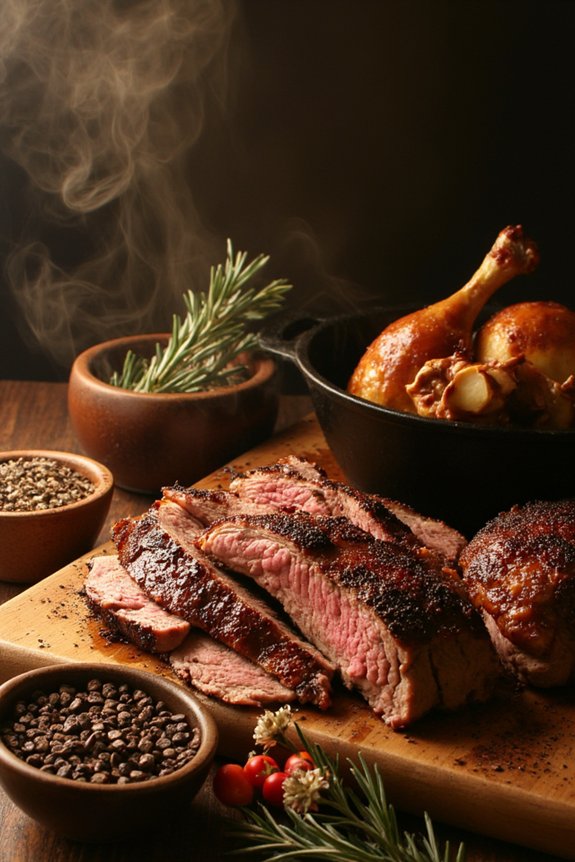
If you’ve been smoking with the same wood pellet flavor for months, you’re probably missing out on some seriously delicious possibilities. Blending woods is where things get fun and creative. You can mix regional varieties to craft unique flavor profiles that suit your taste perfectly. Try combining milder woods like apple with bolder options such as hickory. Start with a 70-30 split and adjust from there. Watch your pellet humidity levels since moisture affects burn rate and flavor intensity. A 10% humidity blend burns more consistently than drier pellets. Experiment with different ratios until you find your sweet spot. Maybe oak and cherry creates your perfect balance, or perhaps mesquite and pecan does the trick. There’s no wrong answer, just delicious discoveries waiting for you.
Matching Pellet Types to Your Proteins
Now that you’ve mastered blending woods, here’s where the real magic happens: matching your pellet choice to whatever’s sitting on your grill. Different proteins deserve different smoke profiles, and getting this right boosts your whole game. Lighter meats like chicken and fish? You’ll want milder pellet types such as apple or alder for a clean burn that won’t overpower delicate flavors. Beef and pork can handle bolder woods like hickory or oak, which create those gorgeous smoke rings everyone drools over. For indirect cooking, consider your protein’s fat content too. Fattier cuts handle aggressive smoke better, while leaner options need gentler treatment. Match thoughtfully, and you’re not just cooking, you’re crafting something memorable on every single cook.
Storage and Quality Tips for Maximum Flavor
Your pellet investment won’t mean squat if you’re not storing them right, because moisture is basically the enemy of everything good that happens on your grill. Keep your pellets in airtight storage containers, away from damp basements and garages where humidity control becomes your best friend.
Vacuum sealing smaller batches works great for maintaining pellet freshness over time. Store containers in a cool, dry place, ideally between 40 and 50 percent humidity. Check your pellets occasionally for clumping or weird smells, which means they’ve gone bad and shouldn’t touch your smoker.
Pro tip: use food-grade buckets with tight-fitting lids. Your taste buds will thank you when you’re grilling with fresh, quality pellets that actually deliver the flavor you’re chasing.
Frequently Asked Questions
Can I Use Pellets From Different Brands Together Without Affecting Flavor Quality?
You can mix different brands, but you’re risking inconsistent results. Brand mixing creates unpredictable flavor layering since pellet quality, density, and wood composition vary. You’ll likely compromise your grill’s performance and taste consistency markedly.
How Do Pellet Size and Density Impact Cooking Time and Smoke Production?
Your pellet size and density directly affect burn rate and heat transfer. Denser, more compact pellets burn slower, extending cooking time while producing consistent smoke chemistry. Larger pellets create varied combustion patterns.
What’s the Difference Between Food-Grade and Non-Food-Grade Wood Pellets for Grilling?
You’ll want food-grade pellets for grilling because they’ve undergone contaminant testing standards, ensuring they’re safe for cooking. Industrial-grade pellets lack this certification and may contain harmful additives or contaminants you shouldn’t ingest.
Do Newer Pellet Grills Require Different Wood Types Than Older Models?
No, you don’t need different wood types for newer models. However, your newer grill’s advanced controller compatibility and energy efficiency features work best with quality, consistent pellets that older grills couldn’t optimize.
Can Softwood Pellets Like Pine Be Safely Used in Pellet Grills?
You shouldn’t use softwood pellets like pine in your pellet grill. Pine safety is compromised by resin concerns—the high resin content creates excessive ash, buildup, and potential damage to your grill’s components.
Conclusion
You’ve got this. You’re basically a pellet grill master now, knowing which woods’ll make your meat sing. Start bold with hickory or mesquite for beef, then experiment with fruitwoods when you’re cooking chicken. Don’t be afraid to blend—that’s where the real magic happens. Store your pellets right, keep your temps steady, and you’ll nail incredible flavor every single time you fire up that grill.


