
So you’ve got a convection toaster oven sitting on your counter, and you’re wondering what all the fuss is about. Truth is, those swirling fans aren’t just for show—they’re about to transform how you cook. But here’s the thing: most people mess it up right away by ignoring one simple rule. Want crispy, evenly browned results that’ll make you wonder why you waited so long?
Key Takeaways
- Lower recipe temperatures by 25°F and monitor closely to prevent overcooking and burning in convection mode.
- Use the center rack for uniform heat circulation and leave two inches of space around all foods.
- Check food halfway through cooking since convection reduces cooking time by 20–30% compared to traditional ovens.
- Arrange dishes strategically: delicate items on upper racks, heartier foods on lower zones with staggered heights.
- Avoid crowding the oven and blocking vents; proper airflow circulation is essential for even, crispy results.


Understanding How Convection Technology Works
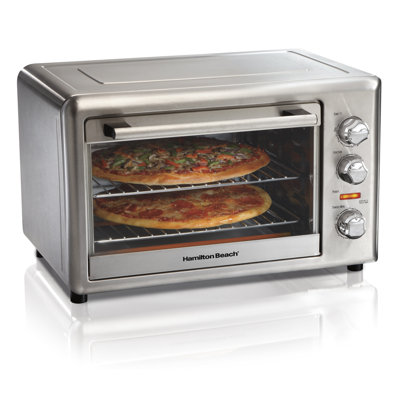
If you’ve ever wondered why your food cooks faster and more evenly in a convection toaster oven, well, you’re about to have a major “aha” moment. Here’s the magic: a built-in fan circulates hot air around your food instead of just letting it sit there getting lonely. This constant movement creates superior airflow patterns that cook everything from all angles. The fan placement, strategically positioned at the back or sides, guarantees no cold spots sneak into your meal. Think of it like giving your food a warm hug from every direction. Your chicken won’t dry out. Your cookies bake perfectly uniform. That’s because convection eliminates those annoying hot and cold zones that regular ovens have. Pretty clever, right? Some convection toaster ovens, such as those with super convection technology, can even cut cooking times by up to 30% while ensuring more consistent results.
Temperature Adjustments for Convection Cooking
Because that circulating fan works so hard to move heat around, you’ll need to adjust your temperature—and here’s the thing: you’ve gotta think differently about how hot your convection oven actually gets. The airflow dynamics created by fan placement mean your food cooks faster and more evenly than in traditional ovens. Most recipes? Yeah, you should lower the temp by about 25 degrees Fahrenheit. Sometimes even 50 degrees works better, depending on what you’re making.
| Food Type | Traditional Temp | Convection Temp |
|---|---|---|
| Cookies | 375°F | 350°F |
| Chicken | 425°F | 400°F |
| Vegetables | 450°F | 425°F |
| Pizza | 500°F | 475°F |
| Cake | 350°F | 325°F |
Trust me, this adjustment prevents your food from burning while keeping everything delicously golden.
For even better results, consider how quartz heating elements in higher-end toaster ovens help distribute heat more evenly, further improving your convection cooking outcomes.
Timing Changes and Cooking Speed Benefits

When you’re using convection in your toaster oven, you’ll notice something pretty awesome: your food cooks faster, sometimes 20 to 30 percent quicker than traditional heating methods. That’s because the circulating hot air moves around your pizza, cookies, or chicken more efficiently, eliminating those annoying cold spots and ensuring everything heats evenly without you having to rotate pans like some kind of short-order cook. So yeah, you’re basically getting restaurant-quality results with less time standing around waiting for dinner, which means you can actually enjoy your evening instead of staring at your oven like it owes you money. Many toaster ovens, like the BLACK+DECKER Crisp N Bake, use convection and air fry technology to deliver even cooking and crisp results without the need for extra oil.

Reduced Cooking Times
One of the best perks of convection cooking is how much faster everything cooks. You’ll notice the difference immediately. Those chicken breasts? They’re done in about 25 percent less time than your regular oven. The circulating hot air creates faster browning on the outside while keeping interiors juicy and tender.
Here’s the thing: you’ve gotta stay sharp with interval monitoring. Check your food halfway through, maybe earlier with delicate items. It’s like your oven suddenly got a caffeine boost and decided to work with turbocharged efficiency. Your cookies’ll be golden and crispy in no time flat. Roasted vegetables caramelize quicker too, developing that delicious, slightly charred exterior everyone craves. Less time hovering around your kitchen means more time doing literally anything else. That’s a win worth celebrating.
If you’re looking for similar time-saving benefits on the stovetop, electric griddles with quicker heat-up times can also speed up your meal prep and keep temperatures steady for even cooking.
Heat Distribution Efficiency
The magic behind that speed boost? It’s all about how evenly your oven distributes heat. You’re getting consistent temperatures throughout the cooking chamber, thanks to that constantly circulating air. It’s like having a tiny invisible chef spinning around, making sure nothing gets neglected or overcooked.
The fan patterns in convection ovens create these beautiful, invisible highways of hot air. They’ll bounce heat around corners and into crevices that traditional ovens totally miss. Combined with quality insulation materials keeping temps stable, you’ve got a seriously efficient cooking machine.
| Feature | Traditional Oven | Convection Oven |
|---|---|---|
| Heat Distribution | Uneven | Uniform |
| Air Circulation | Static | Dynamic |
| Insulation Effect | Basic | Superior |
| Cooking Speed | Slower | Faster |
That’s why your cookies bake evenly. No more burnt edges, pale centers. Just perfectly golden results, every time.
For similar heat distribution efficiency in compact cooking appliances, induction cooktops use dynamic temperature control and circulating magnetic energy for fast, even results.
Optimal Rack Placement and Food Arrangement
You’ve probably noticed that rack placement can make or break your convection cooking game, so let’s talk about where to actually put your food and how much breathing room it really needs. The center rack’s your best friend for even heat distribution, but here’s the thing—you’ll also want to leave enough space around each item so that hot air can actually circulate and work its magic instead of just bouncing around like it’s trapped in rush hour traffic. When you’re feeling ambitious and loading up multiple levels, think of it like arranging a concert stage where every performer gets their moment in the spotlight, because cramming everything in there willy-nilly is basically asking for cold spots and unevenly cooked disappointment.
Center Rack Positioning Guide
If you’ve ever wondered why your cookies bake unevenly or your chicken comes out dry on one side, the answer’s probably sitting right above or below where you placed your food. The center rack is your best friend in convection cooking. It’s where heat circulates most uniformly around your dishes. You’ll want to think about rack height carefully—it matters more than you’d think. Before positioning anything, check your oven calibration to make sure accurate temperatures. The middle spot gives you that sweet spot of air circulation without extreme hot spots. Place larger items like whole chickens here first. Smaller stuff? They’re more forgiving with positioning. This simple adjustment transforms your results dramatically, turning mediocre meals into kitchen victories that’ll impress everyone at your table.
Air Circulation Space Requirements
Now that you’ve got your food nestled on that sweet center rack, here’s where things get really intresting: making sure hot air can actually do its job. Your convection oven’s basically a tiny tornado, and you’ve gotta let it spin freely.
Think about airflow clearance like this:
- Leave at least two inches of space on all sides of your food
- Don’t cram multiple dishes together, even if you’re tempted
- Keep oven cavity spacing open—no foil tents blocking the vents
Here’s the thing: those circulating fans work overtime when you give them room to breathe. Crowding your food creates dead zones where heat just sits around doing nothing. It’s like inviting someone to dance and then boxing them in. Your convection cooking’ll suffer big time. Give that hot air permission to work it’s magic.


Multi-Level Loading Strategies
Most toaster ovens aren’t exactly mansion-sized, so stacking your racks strategically makes all the difference between a gourmet success and a culinary disaster. Here’s the thing: you’ll want to master stack rotation to make sure even cooking across all levels. Place delicate items on upper racks where heat’s gentler, while heartier dishes handle the intense lower zones. Use staggered heights—don’t just line everything up like soldiers. Stagger those trays so hot air actually circulates, not just bounces around uselessly. Position foods with space between ’em. You’re basically creating little air highways. When you’re thoughtful about your arrangement, you’re practically guaranteeing that everything finishes golden and perfect, not some sad, unevenly cooked mess.
Best Foods to Cook With Your Convection Setting
Your convection oven’s really where it shines when you’re cooking foods that benefit from that swirling, hot air circulation. You’ll get crispy, golden results that’ll make your regular oven jealous.
Here’s what you should absolutely throw in there:
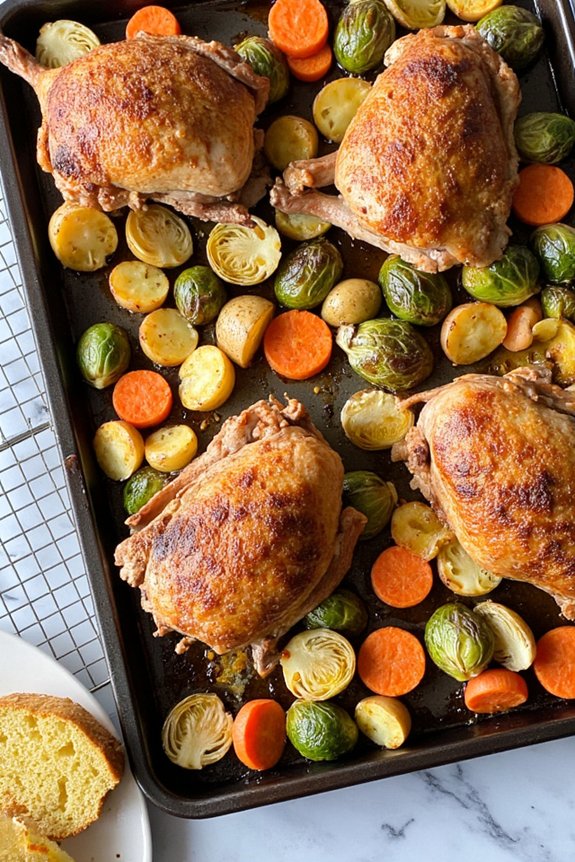
- Roasted vegetables like Brussels sprouts and broccoli turn into caramelized masterpieces with minimal effort
- Frozen fries become restaurant-quality crispy on the outside, fluffy inside—no thawing required
- Baked goods such as cookies and pastries brown evenly without those annoying burnt edges
The secret? Convection cooks faster and more evenly than traditional heat. Your chicken breasts cook through without drying out. Pizza crusts get that perfect crunch. Even reheating leftovers feels less tragic when you’re using this setting. You’re basically cheating the cooking system in the best way possible.
Common Mistakes to Avoid When Using Convection

Even though convection ovens are pretty forgiving, there’s a handful of rookie mistakes that’ll sabotage your results faster than you can say “burnt edges.” The most common culprit? Overcrowding pitfalls. You can’t just stuff your oven like it’s a clown car and expect magic to happen. Hot air needs to circulate freely around your food, or you’ll end up with unevenly cooked disasters.
Another biggie involves ignoring fan direction. Don’t assume your oven’s working at its best without checking how that fan’s positioned. Some models require adjustments depending on what you’re cooking.
Also, resist lowering temperatures without reason—convection already cooks faster. You’ll wreck your food by guessing. Finally, don’t skip preheating. Yeah, it seems tedious, but it’s kinda essential for nailing consistent results and avoiding those frustrating burnt bottoms.
Troubleshooting Tips for Even and Crispy Results
Once you’ve dodged those common pitfalls, it’s time to fine-tune your technique for restaurant-quality results. Getting that perfect balance between even cooking and crispy exteriors isn’t rocket science, but it does require some tweaking.
Here’s what you need to focus on:
- Crispness calibration by adjusting your temperature down 25 degrees from conventional recipes, then monitoring closely
- Fan balancing to make certain air circulates evenly, preventing hot spots that’ll burn your food
- Rotating your trays halfway through cooking for uniformity across all your dishes
Pay attention to your oven’s personality. Every machine’s got quirks. If one corner cooks faster, you’ve found your hot zone. Position delicate items away from it. Check your food earlier than you think necessary—you’ll catch problems before they become disasters. Trust your instincts and don’t fear experimenting.
Frequently Asked Questions
Can I Use Convection Cooking for All Recipes, or Are Some Unsuitable?
You can’t use convection for all recipes. Delicate custards won’t work well because the circulating air dries them out. Yeast breads need traditional heat to rise properly. Stick with convection for roasting and baking sturdy items.
How Do I Know if My Toaster Oven’s Convection Fan Is Working Properly?
You’ll know your convection fan’s working if you hear consistent fan noise and observe even airflow pattern around your food. Watch for uniform browning and check that hot air circulates throughout the oven cavity consistently.
Should I Preheat My Toaster Oven Differently When Using Convection Mode?
Yes, you’ll want to reduce your preheat time by about 25%. Imagine baking cookies—they’re ready faster with convection’s fan circulation. Slight preheat adjustment matters because the moving air accelerates heating throughout your toaster oven.
What’s the Difference Between Convection and Conventional Baking in Terms of Results?
You’ll notice browning differences with convection—your baked goods brown faster and more evenly. There’s also a texture contrast: you’ll get crispier exteriors and moister interiors compared to conventional baking’s slower, more uneven results.
Can I Convert Traditional Oven Recipes to Convection Cooking Without Modifications?
You’ll need modifications. Lower your temperature by 25°F and adjust rack placement for better air circulation. These temperature adjustments guarantee you’re not overcooking while achieving even results in your convection oven.
Conclusion
You’ve got this! Your convection toaster oven’s gonna revolutionize how you cook—seriously, studies show you’ll cut cooking time by nearly a third. That’s huge. Lower those temps, give your food breathing room, and watch magic happen. Sure, you’ll mess up a batch or two, but that’s how you learn your oven’s personality. Before long, you’ll be cranking out restaurant-quality roasted veggies and golden chicken like a total pro.


