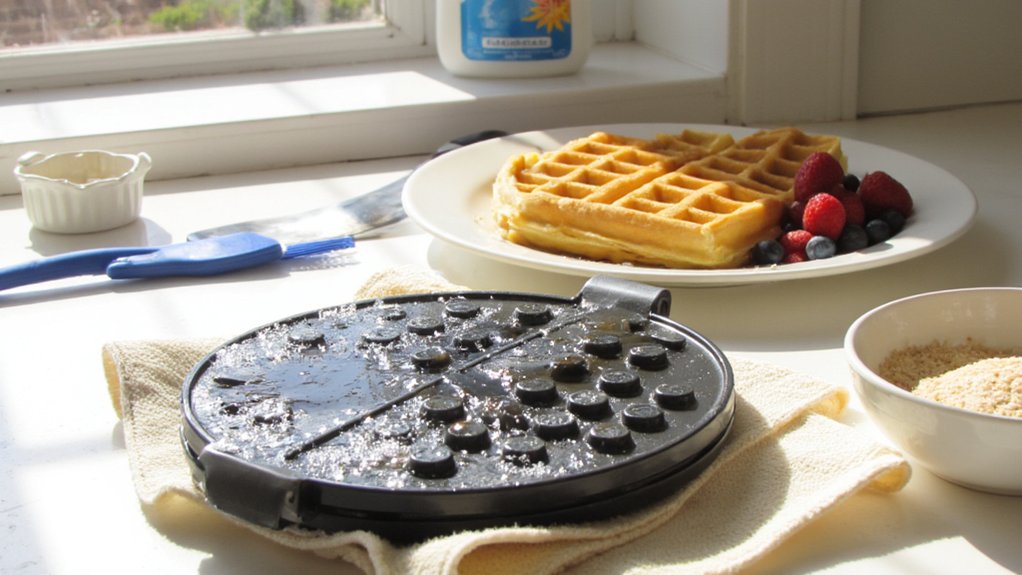
Your waffle maker’s nonstick coating is basically its superpower, right? But here’s the thing—one wrong move with steel wool or a metal spatula, and you’ve basically ruined it. You’re probably wondering how to actually clean those crusty plates without turning them into a scratched-up mess. The good news? It’s way easier than you’d think, and we’re about to spill all the secrets.
Key Takeaways
- Use soft brushes and damp cloths instead of metal scrapers, steel wool, or abrasive scouring pads.
- Soak plates in warm soapy water for 30 minutes to loosen baked-on batter enzymatically without scrubbing.
- Wipe plates warm after each use with a soft cloth to prevent stubborn buildup from forming.
- Avoid harsh chemicals and aggressive scrubbers that degrade the protective non-stick coating over time.
- Clean removable, dishwasher-safe plates regularly to maintain even cooking performance and extend appliance lifespan.


Why Non-Stick Coatings Matter
Because you’ve probably scraped a waffle off a poorly maintained griddle at least once in your life, you know exactly why that slippery coating on your waffle maker actually matters. That non-stick surface? It’s not just there to make your life easier, though it definitely does that. The coating durability determines how long your waffle maker’ll actually function without turning into a sticky nightmare. See, the surface chemistry of that slick layer prevents batter from bonding to the plates—which sounds simple but it’s pretty ingenius when you think about it. When you neglect proper cleaning, you’re basically destroying that protective barrier with every use. Abrasive scrubbers and harsh chemicals? They’re basically a coating’s worst enemy. Keep it gentle, and you’re golden. Mistreat it, and you’re back to scraping waffles like it’s 1952. Many modern waffle makers use PFOA-free nonstick surfaces to make cleanup easier and protect your appliance from wear over time.
Gentle Cleaning Methods That Work
Now that you understand why that non-stick coating deserves your respect, let’s talk about how to actually clean your waffle maker without turning it into a scratched-up relic. You’ve got options that won’t destroy your trusty kitchen gadget.
| Method | Best For | Time |
|---|---|---|
| Soft brushes | Dried batter bits | 2 minutes |
| Steam cleaning | Stubborn residue | 5 minutes |
| Damp cloth | Quick wipe-downs | 1 minute |
Start with soft brushes—they’re gentle warriors against stuck-on waffle debris. Steam cleaning works wonders for tougher gunk without any aggressive scrubbing. A simple damp cloth handles everyday messes beautifully. Never use steel wool or harsh scrubbers; they’re basically kryptonite to your non-stick surface. These methods keep your plates looking fresh and functioning perfectly for countless waffle mornings ahead. For best results, choose dishwasher-safe attachments and gentle cleaning materials to avoid damaging the surface and make cleanup even easier.
Tackling Stubborn Batter Buildup
Sometimes those gentle methods just aren’t enough—you’ll encounter batter that’s basically turned into concrete on your plates, and that’s when you’ve gotta bring out the big guns. For serious, crusty situations, an enzyme soak is your new best friend. Mix warm water with a bit of dish soap and let those plates soak for thirty minutes, maybe longer if the buildup’s really gnarly. Enzymes break down proteins naturally, doing the heavy lifting without you having to scrub like you’re training for the Olympics. After soaking, use a soft brush or cloth to gently nudge away the loosened bits. For deep cleaning that stubborn residue, you might repeat the soak. This method works wonders and keeps your plates safe from scratches while actually eliminating that baked-on nightmare. Many modern griddles and waffle makers feature removable, dishwasher-safe plates, which can make tackling stubborn batter buildup significantly easier.

Tools and Products to Avoid
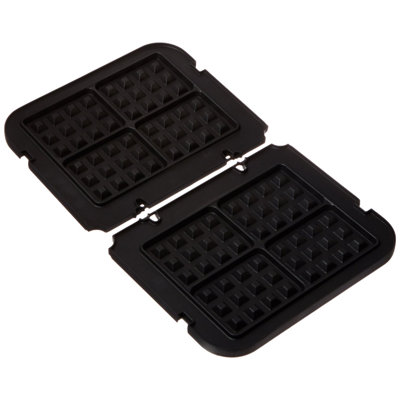
While your waffle maker’s non-stick coating might look indestructible, it’s actually pretty delicate, and you’d be shocked how quickly you can wreck it with the wrong cleaning approach. Skip the metal utensils entirely—those little scrapers might feel satisfying, but they’re basically tiny daggers aimed at your trusty appliance. Abrasive powders? Absolutely not. They’ll obliterate that protective layer faster than you can say “pancakes.” Harsh scouring pads, steel wool, and wire brushes are equally terrible choices. Even aggressive dish soaps can be problematic, so stick with gentle options instead. Think of your waffle maker’s surface like a really fancy haircut: one wrong move and you’ve got disaster on your hands. Keep it simple, keep it safe, and your plates’ll thank you. For best results, treat your waffle maker with the same care you would for PFOA-free nonstick coatings, which are designed to improve food release and simplify maintenance without harsh cleaning methods.
Prevention Tips for Easy Maintenance
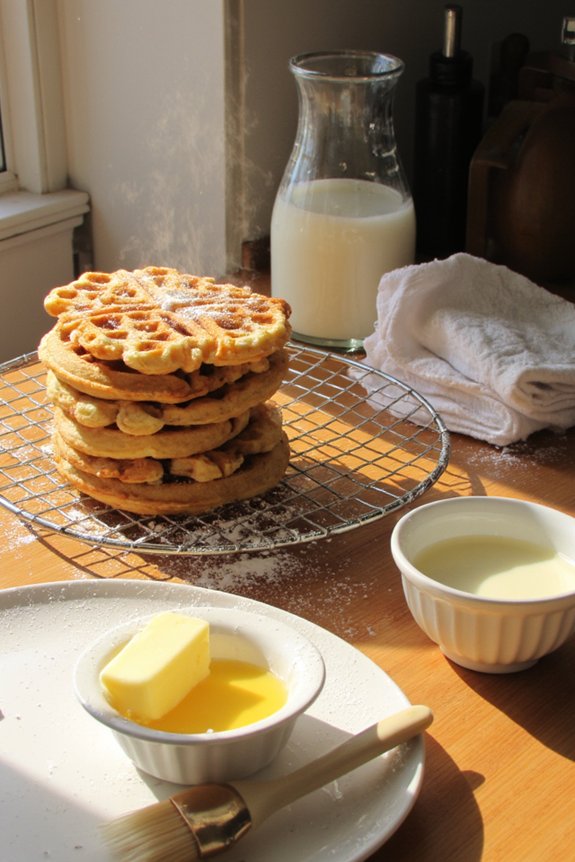
The best way to keep your waffle maker in tip-top shape? Prevention. You’ll save yourself tons of headaches by staying on top of maintenance now rather than dealing with crusty, stuck-on batter later.
Here’s your game plan:
- Wipe down plates while they’re still warm (not hot!) after each use
- Use regular brushing with a soft-bristled brush to remove crumbs before they harden
- Apply a thin layer of cooking spray between uses for non-stick protection
- Schedule a seasonal deep clean every few months for stubborn buildup
You’ll notice your waffles cook more evenly when plates stay clean. Plus, your waffle maker’ll last longer. It’s honestly the difference between a kitchen appliance that works beautifully and one that becomes a drawer nightmare. For extra peace of mind, consider how dishwasher-safe parts in other kitchen tools make regular cleaning fast and stress-free.
Frequently Asked Questions
How Often Should I Clean My Waffle Maker for Optimal Performance?
You’ll want to clean your waffle maker after every use for peak performance. Consider seasonal maintenance annually, adjusting your cleaning routine based on usage frequency. Regular upkeep prevents buildup and extends your appliance’s lifespan markedly.
Can I Use My Waffle Maker Immediately After Cleaning It?
No, you shouldn’t use it immediately. You’ll need to wait 10-15 minutes for a proper cool down period. Then preheat with caution before cooking—this guarantees food safety and prevents damage to your cleaned plates.
What Should I Do if My Non-Stick Coating Starts Peeling?
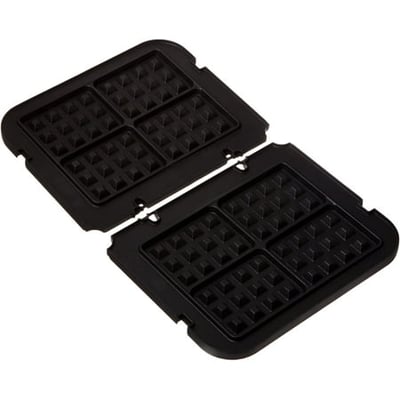
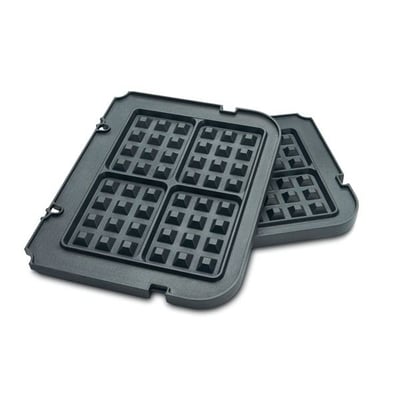
If your non-stick coating starts peeling, you shouldn’t continue using it. You’ll need to replace plates if they’re removable, or discard unit entirely if they’re permanent. Peeling coating can contaminate food.
Is It Safe to Submerge Waffle Maker Plates in Water?
You shouldn’t submerge your waffle maker plates in water, as you’ll risk damaging electrical components. Check your warranty concerns and dishwasher safety guidelines first. Most manufacturers don’t recommend full submersion for non-removable plates.
How Do I Remove Burnt-On Residue From Hard-To-Reach Crevices?
You’ll want to work with baking soda’s brilliant blend of gentle grit. Sprinkle it between metal pickets, add water to form paste, then use a soft brush to dislodge debris without damage.
Conclusion
You’ve now got the golden ticket to waffle-maker longevity! Stick with gentle methods, ditch those aggressive scrubbers, and you’re golden—your nonstick coating’ll thank you. A little prevention goes a long way, honestly. Keep those plates moisturized with proper care, and you’ll be flipping perfect waffles for years without worry. Simple habits today mean delicious breakfasts forever, my friend.


