Your spice grinder’s getting hot under the collar? Yeah, it happens more often than you’d think. That little motor’s working overtime, grinding away like it’s got something to prove, and pretty soon you’re smelling something that definitely isn’t cinnamon. The good news? You’ve got options. Simple tweaks can keep your grinder running cool and your spices perfectly ground—but first, you’ve gotta understand what’s actually causing the heat buildup.
Key Takeaways
- Stop immediately if you smell burning, notice slower grinding, or feel excessive heat on the housing exterior.
- Grind in short 10-15 second bursts with cooling breaks between batches to prevent motor thermal damage.
- Fill grinder to half capacity or less and match portion sizes to your specific model’s capacity.
- Use pulsed operation instead of continuous grinding, and avoid overloading with large spice quantities at once.
- Clean blades daily, inspect weekly for wear or blockages, and ensure adequate airflow around the unit.
Understanding the Heat Generation Problem
When you’re grinding spices, you might not realize that your little kitchen gadget is basically working like a tiny furnace. That motor’s spinning faster than you’d expect, and friction’s creating serious heat. The blade’s friction against the spices generates temperature that builds up inside that small chamber. Here’s the thing: if you don’t manage this heat properly, you’re risking thermal runaway, where the temperature spirals out of control and damages your grinder’s motor. The material conductivity of your grinder’s housing matters too. Metal conducts heat differently than plastic, affecting how quickly that thermal energy escapes. You might notice your grinder getting uncomfortably hot during longer grinding sessions. That’s not normal wear and tear, friend. It’s your machine screaming for a break before something goes kaput. For optimal performance and to prevent overheating risks, it’s important to understand how factors like motor power, blade design, and grind duration can affect the internal temperature of your electric spice grinder.
The Impact of Grinding Duration on Motor Temperature
As your spice grinder keeps spinning, the clock’s ticking on how long you can safely push it before things get dicey. Every second counts when you’re grinding spices because continuous operation builds heat that’ll fry your motor faster than you can say “cayenne pepper.” Your motor’s lifespan depends heavily on giving it breaks between batches.
| Grinding Time | Motor Temp Rise | Risk Level |
|---|---|---|
| 10 seconds | Low | Safe |
| 30 seconds | Moderate | Caution |
| 60 seconds | High | Dangerous |
| 90+ seconds | Critical | Risky |
| With breaks | optimal | Ideal |
Think of it like this: short bursts keep things cool. Temperature sensors built into quality grinders’ll help protect your investment, but you’ve gotta respect the limits. Don’t be that person who ignores warning signs and ends up with a smoking appliance. Work smart, not hard.
It’s also important to note that motor wattage affects how much heat builds up during prolonged grinding, so choosing a grinder with the right power for your needs can help prevent overheating.
Choosing the Right Grind Settings for Your Spices
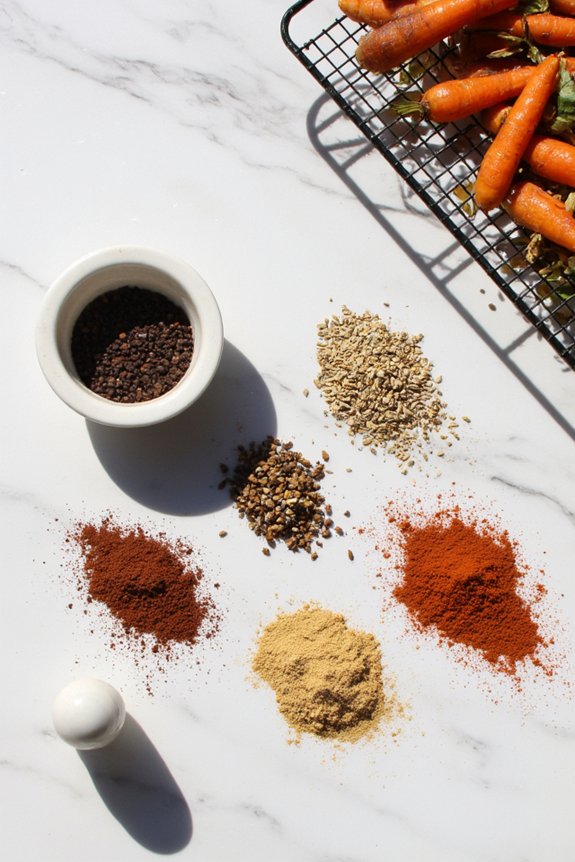
Now that you know how grinding time cranks up your motor’s temperature, it’s time to get smart about which settings actually work best for different spices and how they’ll affect your machine’s heat levels. You’ve gotta match each spice to its ideal grind setting—harder seeds like coriander need more power and shorter bursts, while delicate stuff like cinnamon prefers gentler, quicker pulses that keep things cool and give you that perfect texture without turning your grinder into a mini furnace. By pairing the right setting to each spice and using smart heat management techniques, you’ll nail consistent results every single time while keeping your grinder humming along happily instead of overheating and staging a dramatic meltdown in your kitchen. For best results and to further protect your grinder from overheating, consider the motor lifespan estimate when grinding tough or dense spices frequently.
Matching Spice to Setting
Different spices have wildly different personalities, and your grinder’s settings need to match that energy if you’re gonna get the best results. Here’s the thing: delicate spices like cinnamon and nutmeg actually prefer gentler settings, while tougher customers like peppercorns and cloves demand more power. Check your grinder’s setting labels carefully, because they’re telling you something important about what’s happening inside.
Fine grinding works best for aromatic stuff where flavor pairings matter most, like when you’re blending spice mixes. Medium settings handle your everyday heroes nicely. Coarse? Save that for when you want bold texture and punch. Match the spice to its ideal setting, and you’ll avoid that overheating nightmare while maximizing every bit of delicious flavor potential your grinder can deliver. Just like adjustable thickness settings on electric deli slicers help you customize slicing for different foods, matching your grinder’s settings to each spice ensures optimal performance and preserves both flavor and equipment longevity.
Heat Management Techniques
Once you’ve nailed down which setting works best for each spice, you’re ready to level up and think about what’s actually happening under the hood—because here’s where heat enters the chat. Your grinder’s motor generates serious friction, and that friction creates serious warmth. So here’s the thing: you want to use shorter grinding sessions. Pulse it. Don’t just hold down the button like you’re angry at the spice. Fan integration in modern grinders actually helps dissipate excess heat, which is pretty clever. Look for models with thermal insulation built into the chamber itself. These features work together to keep temperatures in check. Think of it like giving your grinder little breakes between rounds. Your spices stay fresher, and your machine stays happy. Win-win, really. You’ll find a similar principle in kitchen gadgets like energy-saving modes and automatic shut-off, which help prevent overheating and power waste.
Texture Consistency Guidelines
Getting the texture right is where your grinding skills really shine—because let’s face it, you can’t just smash every spice into oblivion and expect the same result. Different spices need different approaches. You’ll want to focus on grind size uniformity so you’re not ending up with some powdery bits and chunky surprises in your next curry. A particle distribution analysis helps you dial in exactly what you’re after. Coriander? Keep it coarser. Cumin? Go finer. The sweet spot matters because inconsistant textures affect flavor release and cooking time. Plus, finer grinds generate more heat friction, which circles back to our overheating problem. So take your time, pulse thoughtfully, and don’t rush the process. Your taste buds—and your grinder—will thank you.
Proper Batch Sizing to Prevent Overload
You’ve gotta know your grinder’s actual capacity, and honestly, it’s way easier than you’d think—just check that manual or do a quick test run with a small batch. Grinding in strategic portions means you’re not stuffing that poor machine like it’s a Thanksgiving turkey, which keeps it cool and happy instead of overheated and resentful. Think of it like this: smaller, consistent batches are your ticket to a grinder that’ll last years instead of becoming an expensive paperweight gathering dust in your kitchen cabinet.
Know Your Grinder’s Capacity
If you’ve ever watched your grinder start smoking like a tiny kitchen dragon, you know that one crucial factor—batch size—can make all the difference between perfectly ground spices and a burnt-out motor. Understanding your grinder’s capacity isn’t just smart; it’s essential. Check that manual you probably buried somewhere. Most grinders have specific spice limits clearly listed. Don’t ignore them. You’ll want to respect those boundaries because overloading creates friction, heat, and disaster. Work with smaller batches instead. Your grinder performs best when you’re not cramming it like a suitcase before vacation. Fill it halfway or less, and you’ll notice smoother grinding and cooler operation. It’s really that simple. Respecting your machine’s actual capacity? That’s how you keep it running strong for years.
Grinding in Strategic Portions
Strategic portion control is where the magic happens—and honestly, it’s the difference between a grinder that purrs like a kitten and one that sounds like it’s auditioning for a horror movie.
Here’s the thing: you don’t need to grind your entire spice collection at once. Your portion planning should match your grinder’s actual capacity, not your ambitions. Think about batch timing too. Smaller batches mean shorter run times, which keeps your motor cooler and happier.
| Spice Type | Ideal Portion | Grind Time |
|---|---|---|
| Cumin Seeds | 2 tablespoons | 15 sec |
| Coriander | 1 tablespoon | 12 sec |
| Peppercorns | 1.5 tablespoons | 10 sec |
| Cloves | 1 teaspoon | 8 sec |
| Cardamom | 1 tablespoon | 15 sec |
Work smarter. Grind less. Your spice grinder’ll thank you.
The Importance of Regular Cooling Breaks
Regular cooling breaks aren’t just a nice idea—they’re absolutely essential if you want your spice grinder to stick around for the long haul. Think of thermal pauses as your grinder’s personal spa days. When you’re crushing through batch after batch, that motor’s working overtime, building up heat like crazy. You’ve gotta let it breathe, seriously. Stop grinding every few minutes and give your machine some downtime. This motor cooldown period prevents burnout and keeps everything running smooth. It’s honestly pretty simple: grind, pause, let things chill out. Your grinder’ll thank you with years of reliable performance. Plus, you’ll get better texture consistency because the spices aren’t getting toasted from excessive heat. So show your trusty grinder some love and take those breaks. Your kitchen game stays strong.
Cleaning and Maintaining Your Grinding Blades
Your grinder’s blades are basically the hardworking MVPs of the whole operation, so they deserve some serious TLC. You’ll want to establish a daily cleaning routine that tackles residual spice buildup, inspect those blades for sharpness and wear, and keep everything in tip-top shape because dull blades work harder, generate more heat, and can turn your grinding session into an overheating disaster faster than you can say “cardamom catastrophe.”
Daily Blade Cleaning Routine
Keeping those grinding blades spotless isn’t just about making your spice grinder look pretty—it’s absolutely essential for preventing the heat buildup that’ll send your machine into meltdown mode.
Here’s your game plan. After each use, unplug that bad boy and let the blades cool for a minute. Use a soft brush or dry cloth to wipe away spice residue. Don’t forget slot cleaning between the blade edges where particles love to hide. Daily sharpening isn’t necessary, but weekly inspections keep everything running smooth.
| Task | Frequency | Time |
|---|---|---|
| Blade wiping | After each use | 2 min |
| Slot cleaning | Daily | 3 min |
| Deep inspection | Weekly | 5 min |
You’ll notice your grinder performs better, runs cooler, and lasts way longer. That’s the power of consistency, my friend!
Removing Residual Spice Buildup
Over time, spice particles don’t just disappear—they pile up in the nooks and crannies of your grinding chamber like tiny, aromatic squatters. You’ve gotta tackle this residual removal head-on, or you’re asking for trouble. Here’s the thing: old spice dust doesn’t just sit there looking innocent. It actually traps heat and reduces your grinder’s efficiency, which means overheating becomes way more likely.
Start by unplugging your machine, then use a dry brush or old toothbrush to scrub those hard-to-reach spots. Get aggressive with it. For stubborn buildup, try grinding uncooked rice—it’s weirdly effective and helps with aroma preservation too. Wipe everything down with a damp cloth afterward. Your grinder’ll thank you, running cooler and fresher than ever.
Blade Sharpness and Inspection
Dull blades are basically your grinder’s kryptonite, turning what should be a quick spin into a grinding marathon—and yeah, the irony isn’t lost on us. When your blades get dull, your motor works overtime, generating serious heat and strain. That’s why regular blade inspection is vital.
Check your blade alignment monthly. Misaligned blades create friction, which spells overheating trouble. You’ll want to look for chips or warping too. Edge polishing keeps things running smooth and efficient. A simple visual inspection takes seconds but saves your grinder from burnout.
If you notice your grinder struggling or getting hot, it’s probably time for maintenance. Don’t ignore these warning signs. Sharp, properly aligned blades mean faster grinding, cooler operation, and a grinder that’ll last for years.
Storing Your Spice Grinder in a Cool Environment
Since your spice grinder generates heat during operation, what you do with it afterward matters just as much as how you use it. After grinding, let that baby cool down before you stash it away. Find a spot with good ambient storage conditions—think cool, dry places like a pantry or cupboard away from sunlight. Your kitchen counter next to the stove? Yeah, that’s not it.
Humidity control is essential too. Moisture and spice grinders are like oil and water, except worse. Store yours in a location where humidity stays low, preventing rust and moisture buildup inside the motor. A sealed container or drawer works wonders. Basically, treat your grinder like it’s precious, because honestly, a well-maintained one’ll outlast your enthusiasm for cooking exotic cuisines. Keep it cool, keep it dry, and you’re golden.
Selecting a High-Quality Grinder With Better Heat Management
When you’re shopping for a spice grinder that won’t turn into a mini furnace in your kitchen, you’ll want to pay attention to the motor quality and build materials. Look for models with thermal shielding that’ll protect your hands and keep temps in check. Better grinders feature airflow optimization, which means they’re designed to let heat escape rather than trap it like a tiny sauna.
You’re basically investing in engineering that actually thinks ahead. Premium brands use sturdy construction and powerful motors that work efficently without straining. They’re built to handle heavy grinding sessions without throwing a tantrum. Sure, they’ll cost a bit more upfront, but you’ll avoid burnt spices and a kitchen that smells like a toasted disaster. Your taste buds deserve better!
Warning Signs Your Grinder Needs Immediate Attention
Your spice grinder’s starting to send you distress signals, and you’d better listen before it becomes a kitchen hazard. Pay attention when unusual smells waft from your machine, especially anything burning or acrid. That’s your warning bell. Notice if the motor’s sputtering or making weird grinding noises? That’s trouble brewing. Your grinder shouldn’t sound like it’s auditioning for a horror film. Check if the blade’s moving slower than usual or if the body feels hot to the touch. These’re red flags you can’t ignore. Also watch for excessive vibration or smoke sneaking out from the vents. Don’t just shrug and hope it fixes itself, because spoiler alert: it won’t. Address these signs immediately before your trusty spice companion becomes an actual fire hazard.
Long-Term Maintenance Strategies for Optimal Performance
Once you’ve caught those warning signs and kept your grinder from becoming a kitchen inferno, it’s time to think long-term. Schedule regular inspections every few months to catch potential problems before they spiral into disasters. You’ll want to look at the motor, blades, and housing for wear and tear. Component replacement shouldn’t be ignored either—if you notice fraying wires or dull blades, swap them out promptly. Keep your grinder clean and dry between uses, because moisture is basically the enemy. Store it in a cool, dry spot away from direct sunlight. Think of maintenance like brushing your teeth: a little prevention now saves you from major pain later. Your spice game will stay strong, and your grinder’ll stay cool.
Frequently Asked Questions
Can I Use Water to Cool Down an Overheating Spice Grinder Quickly?
You shouldn’t use water on your overheating spice grinder—it’ll damage electrical components. Instead, you should avoid water entirely and use airflow by letting it cool naturally or directing a fan toward it.
What’s the Warranty Coverage if My Grinder Overheats and Stops Working?
Your grinder’s still spinning while others have stopped—that’s where warranty coverage matters. Most manufacturers cover overheating defects under warranty terms, though you’ll need to follow their specific claim process within the designated timeframe.
Are Electric Grinders Safer Than Manual Grinders Regarding Heat Generation?
Electric grinders aren’t necessarily safer regarding heat generation. You’ll find manual grinders produce less heat since they don’t have motors. However, quality electric safety features and proper motor lifespan management can minimize overheating risks substantially.
How Often Should I Replace My Grinder’s Motor for Safety Reasons?
“An ounce of prevention’s worth a pound of cure.” You shouldn’t replace your grinder’s motor unless it’s damaged. With proper maintenance, your motor’s lifespan extends 5-10 years, making a replacement schedule unnecessary for most users.
Can Grinding Frozen Spices Reduce Heat Buildup in My Grinder?
Grinding frozen spices won’t reduce heat buildup. You’ll encounter frozen clumping issues instead, and you’ll risk flavor loss from moisture damage. Stick with room-temperature spices and use short grinding bursts for better results.
Conclusion
You’ve got this! Your spice grinder doesn’t have to be a ticking time bomb. Short pulses, small batches, cooling breaks—it’s really that simple. Think of your grinder like an athlete: push it too hard without rest, and you’re asking for trouble. Stay on top of maintenance, watch for warning signs, and you’ll keep that motor humming happily for years. Your spices’ll thank you!