You’ve got an electric griddle taking up precious cabinet space, but what if you could flip that problem on its head? Storing it vertically sounds risky—maybe even impossible—yet it’s actually your secret weapon for reclaiming kitchen real estate. Before you panic about toppling appliances and tangled cords, there’s a smart system that’ll keep everything stable and accessible. Curious how?
Key Takeaways
- Measure griddle dimensions and check weight distribution for safe vertical storage without toppling risks.
- Select a wall-mounted cabinet or deep shelf with adequate ventilation away from moisture sources.
- Install heavy-duty mounting brackets on wall studs and secure griddle with anti-sway straps for stability.
- Use cabinet dividers, felt pads, and vertical trays to prevent sliding and organize accessories neatly.
- Bundle cords with cable sleeves and clips, leaving six inches of breathing room around griddle.
Assess Your Griddle’s Size and Weight
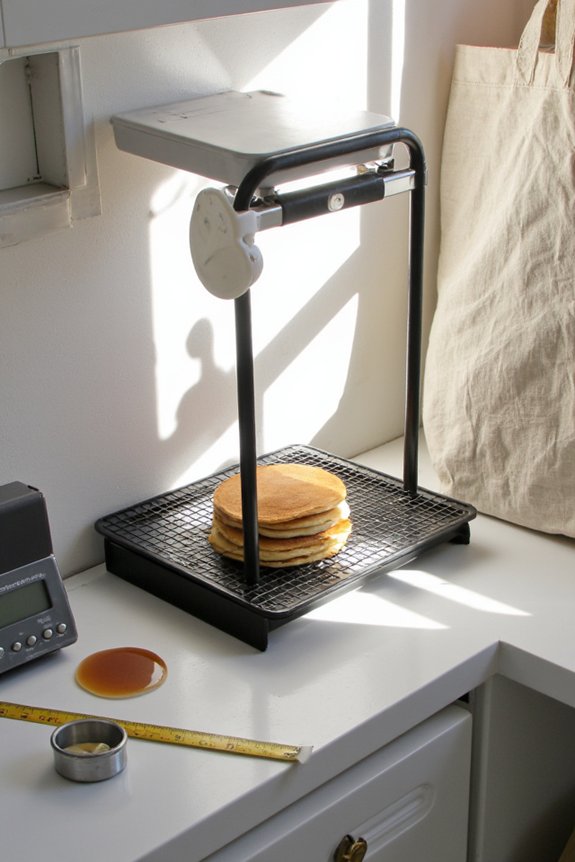
Before you even think about standing that griddle up like it’s posing for a portrait, you’ve gotta know what you’re actually working with. First, check the weight distribution. Is your griddle evenly balanced, or does it feel lopsided? That matters big time when you’re storing it vertically.
Next, measure those footprint dimensions. Whip out a tape measure and figure out how wide and deep your griddle actually is. You’ll need to know this before you find the perfect vertical spot in your cabinet or closet. A griddle that’s too heavy or too wide won’t work for upright storage, plain and simple. Think about your space realistically. Don’t force it into a spot where it’ll topple over. Safety first, my friend.
For easy vertical storage and transport, look for models with removable, dishwasher-safe parts since they often have improved portability and are simpler to handle when moving or storing upright.
Choose the Right Storage Location
Now that you’ve got a handle on your griddle’s dimensions, it’s time to find it a home that’ll actually work. You’ll want to scope out either a wall-mounted cabinet or some dedicated shelf space where your griddle can hang out vertically without cramping your kitchen style. The sweet spot? Somewhere accessible but out of the everyday hustle and bustle, like that one cabinet you never quite figured out what to do with anyway. When choosing a storage spot, be sure to keep adequate ventilation in mind to ensure safe and long-lasting storage of your electric griddle.
Choose the Right Storage Location
When it comes to stashing your electric griddle vertically, location is everything—and we’re not just talking about finding wall space in your kitchen.
You’ll want to pick a spot that checks all the boxes. Consider these essential factors:
- A dry area away from moisture that’ll rust your griddle faster than you can say “breakfast emergency”
- Adequate space lighting so you can actually see what you’re grabbing without playing hide-and-seek
- Climate-controlled zones with proper humidity control to keep your appliance in tip-top shape
- An accessible location that won’t require acrobatic skills or a step ladder every time you need it
Think about pantries, garage shelves, or kitchen cabinets with good airflow. Avoid basements and bathrooms where moisture lurks like an unwelcome guest. Your griddle deserves a cozy, stable home that’ll keep it ready for action whenever pancake cravings strike. For added safety and convenience, choose a location with stable, non-slip bases to prevent accidents when storing or retrieving your electric griddle.
Wall-Mounted Cabinet Space
Wall-mounted cabinets are your secret weapon for keeping that griddle out of sight without sacrificing accessibility. You’ll love how space saving cabinets transform cluttered countertops into sleek, organized zones. Here’s the thing: vertical shelving is a game-changer for griddle storage. Mount cabinets at eye level or slightly higher, ensuring you can grab your griddle without playing an awkward reaching game. The beauty? Your kitchen instantly looks bigger and way less chaotic. Consider deep cabinets that’ll cradle your griddle snugly, preventing it from sliding around like it owns the place. Add some felt pads to the bottom for extra protection and smooth sliding. You’re basically creating a dedicated griddle garage right there on your wall. Pretty genius, right? If you’re short on cabinet depth, look for adjustable rack positions to maximize vertical space and make sure your griddle fits securely.
Prepare Your Griddle for Vertical Storage
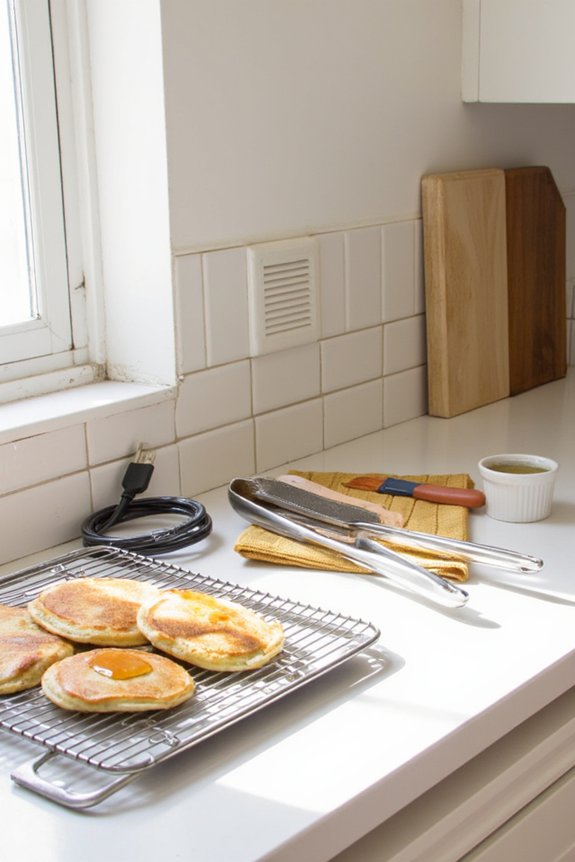
Before you stand that griddle up like a trophy on a shelf, you’ve gotta give it a proper cleaning and let it dry completely, because moisture and vertical storage are about as compatible as peanut butter and pickles. Pop off any detachable bits—handles, temperature dials, drip trays—so you’re working with a lighter, more manageable main unit that’ll be way easier to position without it toppling over or getting dinged up during the process. For the best results and to help your griddle last longer, consider regular maintenance and cleaning routines similar to those recommended for other kitchen appliances.
Clean and Dry Thoroughly
Keeping your griddle squeaky clean is absolutely essential before you stand it up vertically, because moisture and grease are basically the enemies of storage success. You’ve gotta take this seriously, my friend.
Here’s what you need to do to prep your cooking companion:
- Sanitize surface with hot soapy water and a soft cloth, banishing all food residue and gunk
- Moisture elimination using a clean, dry towel—don’t skimp on this step, seriously
- Let it air dry completely in a well-ventilated spot for extra assurance
- Inspect the cord and plug for any damage before storing away
Don’t rush through this process. A properly cleaned griddle stays rust-free and ready for action whenever you need it again. Your future self will thank you!
Remove Detachable Components
Once you’ve got your griddle looking pristine and completely dry, you’re ready to tackle the next phase: removing any parts that’ll get in the way of vertical storage. Start by unscrewing and removing knobs from the temperature controls and timers. These little guys stick out and’ll cause problems when you’re positioning your griddle upright. Next, detach handles if they’re removable—most modern griddles have clips or bolts holding them on. Store these components in a small box or container so nothing gets lost in the shuffle. Keep all hardware together using a ziplock bag. This prep work might seem tedious, but trust us, it’ll make the actual vertical storage process way smoother and safer. You’re almost there!
Install Wall Anchors and Mounting Hardware
Now that you’ve got your wall picked out, it’s time to get serious about making sure your griddle stays put—and doesn’t come crashing down on anyone’s foot. You’ll want to locate those wall studs first because they’re your best friend here. If studs aren’t conveniently placed, toggle bolts are your backup plan for hitting drywall securely.
Here’s what you need to do:
- Find studs with a stud finder (because eyeballing it is how accidents happen)
- Mark your drilling spots with a pencil so you don’t mess up
- Drill pilot holes carefully to avoid cracking the wall
- Install your mounting brackets with confidence, knowing your griddle’s got solid support
Use heavy-duty hardware rated for your griddle’s weight. Don’t skimp here. Tighten everything thoroughly, then give it a gentle tug. If it budges, tighten more.
Secure Your Griddle Against the Wall
Your mounting brackets are in place, so it’s time to make sure that griddle isn’t going anywhere—and we mean *anywhere*. First, add rubber padding between your griddle and the wall. This protects both your appliance and your drywall from damage, plus it prevents annoying vibrations when you’re cooking. Next, slide those anti sway straps through the designated loops on your griddle’s frame and secure them tightly to your wall anchors. Don’t skimp here; you want this baby locked down like it owes money. Gently tug on the griddle to test everything. If it budges even slightly, tighten those straps more. Your future self will thank you when your griddle stays put instead of playing gymnastics on your wall.
Organize Cable and Cord Management
With your griddle locked down tighter than a drum, it’s time to wrangle those cables and cords before they turn your kitchen wall into a spaghetti nightmare.
Nobody wants a tangled mess lurking behind their appliance. Here’s how to keep things neat:
- Grab cable sleeves to bundle everything together like you’re organizing your life
- Use cord clips to anchor wires securely and prevent that annoying drooping situation
- Label each cable so you’ll never wonder what goes where again
- Coil excess length neatly instead of letting it dangle like forgotten spaghetti
Start by gathering all the cables connected to your griddle. Slip them into cable sleeves for a clean, profesional appearance. Then strategically place cord clips along your wall, securing everything snugly. This setup keeps your vertical storage looking intentional, organized, and absolutly fantastic instead of chaotic and junky.
Use Cabinet Dividers for Upright Organization
Cabinet dividers’ll become your best friend once you realize how they transform that vertical griddle storage from “meh” into magnificently organized. These simple tools work wonders for keeping everything in its place without toppling over like dominoes.
| Divider Type | Best For |
|---|---|
| Adjustable plastic | Flexible spacing needs |
| Wooden separators | Sturdy, heavier griddles |
| Metal frames | Maximum durability |
| Bamboo organizers | Eco-friendly storage |
Think of vertical trays as your organizational backbone. They’ll cradle your griddle while keeping cords, instruction manuals, and accessories neatly seperated. You’ll love how cabinet dividers prevent that annoying sliding-around situation that drives everyone crazy. Position them snugly between shelves, and boom, instant stability. Your storage space transforms into an efficient, clutter-free zone that’d make any kitchen enthusiast proud.
Maintain Accessibility and Safety Standards
Once you’ve got your griddle nestled vertically between those dividers, it’s time to think smart about safety and access. You’re not just storing an appliance; you’re protecting your household.
- Keep the griddle away from curious little hands by placing it on higher shelves where child safety isn’t compromised
- Make certain proper ventilation clearance around your griddle so heat doesn’t build up and create fire hazards
- Make sure you can actually reach it without toppling other kitchen items like some kind of dangerous game of Jenga
- Label your storage spot so everyone knows what’s back there and doesn’t accidentally lean against it
Position your griddle where it’s easy to grab but impossible for kids to access unsupervised. Leave at least six inches of breathing room around all sides. Seriously, your future self will thank you for this smart thinking.
Frequently Asked Questions
Will Vertical Storage Damage My Electric Griddle’s Internal Components or Wiring?
You won’t experience damage from vertical storage if you’re careful. Avoid mounting stress by securing your griddle properly. Electrical degradation isn’t a concern with vertical positioning alone—just make sure you’re protecting it from moisture and extreme temperatures.
How Often Should I Inspect My Vertically Stored Griddle for Safety Issues?
You should inspect your vertically stored griddle monthly using a safety checklist. Create an inspection schedule checking the cord, plug, heating element, and storage position for damage or hazards before each use.
Can I Store My Griddle Vertically if It’s Still Under Warranty?
You’re holding your warranty card as you tilt your griddle upright—yes, you can store it vertically. Just keep claim documentation safe and verify the manufacturer doesn’t restrict vertical positioning, ensuring warranty transfer remains valid.
What Temperature and Humidity Conditions Are Ideal for Vertical Griddle Storage?
You’ll want to store your griddle in a moderate temperature environment between 50-85°F with ideal humidity levels around 30-50%. This prevents rust, electrical damage, and keeps your griddle in top condition.
Does Vertical Storage Affect the Griddle’s Heating Performance or Cooking Quality?
You’ll find that vertical storage doesn’t harm your griddle’s heating performance if you’ve maintained proper temperature and humidity. However, prolonged vertical positioning can cause surface warping, affecting heat distribution and cooking quality over time.
Conclusion
You’ve done it! Your griddle’s now standing tall, saving space, and looking pretty darn organized. You’ve measured, mounted, and managed that cord like a pro. You’ve created a storage setup that’s both practical and safe. So go ahead—reclaim that cabinet space, enjoy your newly organized kitchen, and feel that sweet satisfaction of a job well done. Your future self’ll thank you when you’re not tripping over kitchen clutter anymore.