Envision this: you’re biting into what should be a crispy, golden waffle, but instead your teeth sink into something that feels more like a damp sponge. Frustrating, right? You’re probably wondering what went wrong—and honestly, there’s more to it than just throwing batter on a hot iron. The culprit could be lurking in your ingredients, your technique, or even how you’re serving them up.
Key Takeaways
- Too much liquid in batter and overmixing develops gluten, creating dense, moisture-trapping waffles instead of light, fluffy ones.
- Waffle iron not properly preheated or temperature calibrated causes steaming instead of crisping; aim for 375°F with 5–10 minute preheat.
- Overfilling the waffle iron traps steam between plates, creating condensation and soggy centers with uneven heat distribution across surfaces.
- Waffles lose crispiness immediately after cooking due to released steam; serve immediately one or two at a time, never stacked.
- Improper storage exposes waffles to ambient moisture; freeze individually on flat sheets before packing to prevent steaming and sogginess.
Too Much Moisture in Your Batter
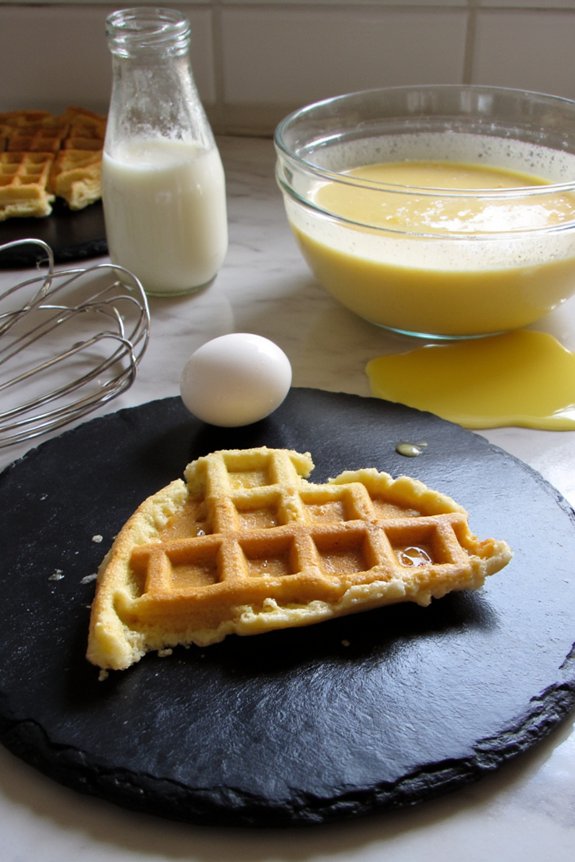
Imagine this: you pull your waffle out of the iron, keen to dig in, only to find it’s got the structural integrity of a wet sponge. What went wrong? You’ve probably got too much moisture in your batter. See, excess liquid is basically the enemy of crispy waffles. When you add too much milk or juice, your waffle becomes dense and soggy instead of light and fluffy.
Here’s the thing: overmixing batter compounds the problem even more. The more you stir, the more gluten develops, creating a tough, heavy texture that traps moisture. You’re not just adding liquid; you’re creating the perfect storm for sogginess.
The fix? Measure your ingredients carefully and mix just until combined. Don’t go full mad scientist with your whisk. Keep it simple, keep it dry, and you’ll finally get those crispy waffles you deserve.
If you’re still struggling, consider that nonstick surfaces and drip channels on modern waffle makers can also help reduce excess moisture buildup by ensuring even cooking and easier cleanup.
Waffle Iron Temperature Issues
Think your waffle iron’s doing its job? Think again. Your heating element might be betraying you. Temperature’s everything when you’re chasing that golden, crispy exterior, and if your waffle iron isn’t maintaining proper heat, you’re basically steaming bread in a press. Check your control knob—it’s not just for show. Thermostat drift happens more often than you’d think, especially with older irons. The device claims it’s at 400 degrees, but it’s really hanging out at 350. Cold spots develop unevenly across the cooking surface, creating soggy zones where heat can’t reach. Invest in a quality iron with reliable temperature control. Your waffles’ll thank you. Better yet, grab a kitchen thermometer and verify your iron’s actually hot before pouring batter. If you’re serious about crisp results, consider how quartz heating elements in countertop ovens distribute heat more evenly than basic coils—a similar upgrade in your waffle iron can make all the difference.
Overcrowding the Waffle Iron
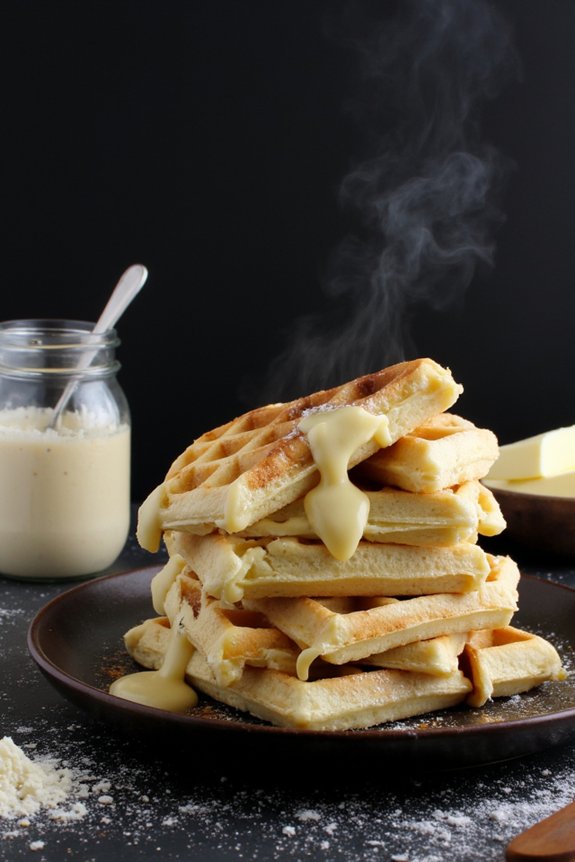
When you’re stuffing your waffle iron like you’re packing a suitcase for vacation, you’re actually trapping steam that’s got nowhere to go, and that moisture gets reabsorbed right back into your waffle, making it all soggy and sad. Plus, jamming too much batter in there creates uneven heat distribution, so you’ll end up with crispy edges that’re practically charcoal while the center stays gummy and undercooked. And let’s be real, overfilled irons lead to batter overflow that leaks onto your countertop, wastes precious dough, and creates a mess that’ll make you question all your life choices. For best results, be sure to avoid overcrowding and even heat distribution by following the manufacturer’s batter guidelines and using irons or griddles with reliable temperature control.
Steam Trapping Moisture Issue
If you’re stuffing your waffle iron like it’s a tiny kitchen Tardis, you’ve found your culprit. When you cram too much batter in there, something sneaky happens. The excess batter releases tons of steam that’s got nowhere to go. That trapped steam gets trapped between the waffle and the iron’s plates, creating condensation buildup that makes everything soggy. It’s like trapping moisture in a tiny, heated box. Your waffles practically become steam baths instead of crispy golden discs. The steam clings to the surface, turning that promise of crunch into disappointing mush. Here’s the fix: use less batter. Seriously, resist the urge to overfill. Follow your waffle iron’s fill line, and you’ll instantly notice the difference. Less batter means less steam production and way crispier results. Paying attention to capacity and fill limits—just like when choosing the right kitchen appliance—can make all the difference in achieving perfect, crispy waffles.
Uneven Heat Distribution Problems
Beyond just creating moisture nightmares, overstuffing your waffle iron messes with how heat actually reaches your batter. When you cram too much batter in there, you’re basically creating uneven heat zones across the plates. Some spots get scorching hot while others stay lukewarm. It’s chaos.
Here’s the thing: your waffle iron’s got limits. Push past ’em, and the plates actually warp from the pressure, which means your waffles cook unevenly, emerging soggy in certain spots and burnt in others. Nobody wants that sad situation.
The solution? Respect the fill line. Seriously. Give your batter room to expand and cook evenly. You’ll get consistent, golden-brown waffles every single time instead of playing roulette with moisture and heat distribution.
If you’re looking for an appliance that gives you precise heat control and even cooking, consider how induction cooktops offer detailed temperature settings for consistent results.
Batter Overflow and Leakage
Through the lens of a messy kitchen counter, you’ll quickly discover that overstuffing your waffle iron creates a whole different beast of a problem. When you pour too much batter, it’s gonna leak everywhere. Your poor waffle iron’s leaky seams become a fountain of frustration, spilling hot batter onto your stovetop and floor. It’s messy. It’s dangerous. It’s definitely not crispy.
The real issue? You’re not exercising proper pour control. You need restraint here, friend. Fill your iron only about two-thirds full, giving that batter room to expand without escaping through every available crack and crevice. This simple adjustment prevents overflow disasters and assures even cooking throughout. Your waffles’ll thank you with that golden, crispy exterior you’re desperately craving. No more soggy disappointments ruining your breakfast game!
Not Letting the Iron Heat Properly
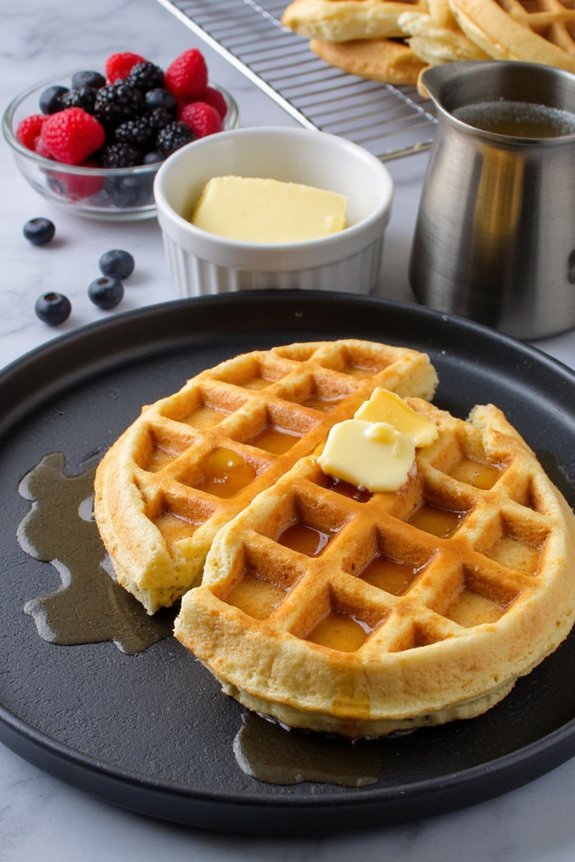
you’ve gotta let that waffle iron actually get hot before you start cooking, and it’s way more important than most people realize. Temperature calibration matters most because even a 50-degree difference can turn your crispy dreams into a soggy nightmare, and preheating time requirements aren’t just suggestions—they’re the difference between golden perfection and a rubbery disappointment that’ll make you wanna throw the whole thing out.
Temperature Calibration Matters Most
they’re basically temperamental divas that demand respect, and if you don’t give them time to properly heat up, they’ll sabotage your breakfast with soggy, undercooked disappointment. Here’s the thing: your waffle iron’s temperature calibration isn’t just a suggestion. It’s everything. Most folks don’t realize their iron’s displaying one temperature while actually running at another. That’s where oven accuracy comes in handy as a reference point. You’ve gotta let that baby preheat for a solid five to ten minutes. Don’t rush it. When you close the lid too early, you’re basically baking disappointment. The outside might look golden, but inside? Mushy regret. Trust the process. Wait for the steam to stop. That’s your signal that things are actually ready to rock, and you’re about to create waffle magic.
Preheating Time Requirements
If you’re skipping the preheat step because you’re hungry and impatient, well, that’s exactly how you end up with a waffle that’s crispy on the outside but fundamentally a soggy pancake on the inside. Most waffle irons need five to ten minutes minimum. Your preheat indicator light will tell you when it’s ready, but don’t trust it completely. Wait an extra minute or two for the heating element to reach full capacity.
| Stage | Temperature | Your Batter | Result |
|---|---|---|---|
| Cold Iron | 200°F | Room temperature batter | Soggy disaster |
| Warming Up | 300°F | Room temperature batter | Half-cooked mess |
| Properly Heated | 375°F | Room temperature batter | Golden crispy perfection |
| Overheated | 425°F | Room temperature batter | Burnt exterior |
That patience pays off. Seriously.
Improper Storage Methods
Once your waffles cool down, where you stash ’em makes all the difference between crispy perfection and a sad, limp disappointment. You’ve gotta use airtight containers if you’re storing them at room temperature. Seriously. Leaving ’em exposed to air? That’s basically asking for sogginess. The moisture in the air will attack your crispy exterior like it’s got a personal vendetta.
Now, if you’re thinking freezer, smart move. Just don’t stack ’em like pancakes in a desperate cafeteria line. That freezer stacking trick ruins everything—they’ll steam each other and turn into cardboard. Instead, lay ’em flat on a baking sheet first, freeze ’em individually, then pack ’em up.
Your waffles deserve better. Treat storage like the final boss of waffle perfection.
The Role of Your Ingredients
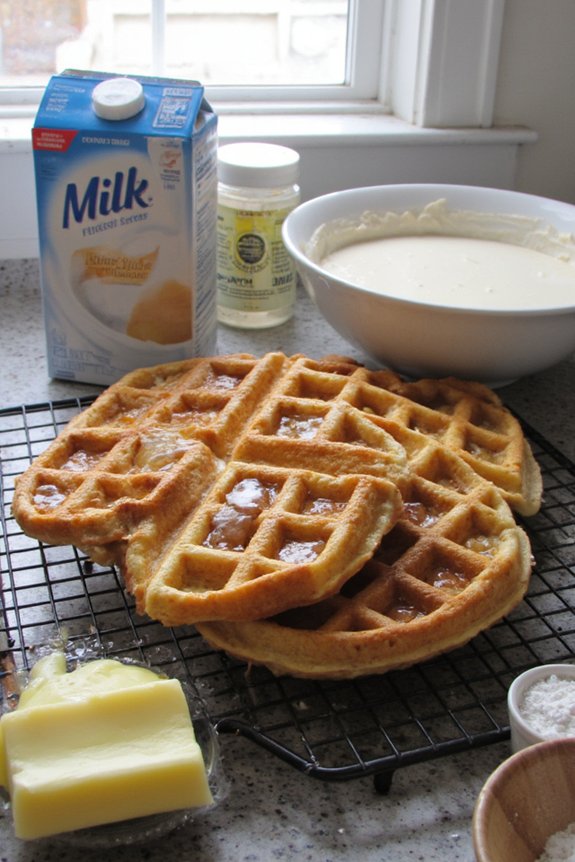
Your ingredients are basically the foundation of everything—mess those up, and you’re building your waffle on quicksand. You’ve gotta understand that different flour types behave differently. All-purpose flour? It’s reliable. Cake flour? Too soft. Bread flour? Way too dense. And here’s the thing: leavening balance is absolutely critical. Too much baking powder creates air pockets that trap moisture. Too little leaves you with a dense, soggy mess.
| Ingredient | Impact on Crispness |
|---|---|
| All-purpose flour | Balanced texture |
| Cake flour | Too tender |
| Baking powder (excess) | Traps steam |
| Buttermilk | Adds moisture |
| Melted butter | Creates crunch |
You can’t just wing it. Your wet-to-dry ratio matters. Your leavening balance determines everything. Get these right, and you’re already halfway to waffle perfection.
Timing and Serving Techniques
Even the best waffle batter can’t save you if you’re timing everything wrong. Here’s the thing: waffles start losing their crispiness the moment they leave your iron. That’s why you’ve gotta serve immediately—don’t let them sit around getting all sad and limp. Seriously. The steam they release? That’s your crispy exterior’s worst enemy.
If you’re making waffles for a crowd, stagger plating instead of cooking them all at once and stacking them into a tower of disappointment. Cook one or two, serve them hot. Then make the next batch. Yeah, it takes longer, but your guests get actual crispy waffles instead of chewy disappointment. Think of it like a restaurant kitchen—they don’t batch-cook everything simultaneously. Smart timing wins. Keep those waffles moving, and you’ll finally get the satisfying crunch you deserve.
Frequently Asked Questions
Can I Make Crispy Waffles Without a Waffle Iron at Home?
You can’t achieve true waffles without a waffle iron, but you’ll get crispy results using a cast iron skillet or oven griddle. They’re not identical, though they’re tasty alternatives.
Which Waffle Iron Brand Produces the Crispiest Waffles Consistently?
You’ll find that Cuisinart and All-Clad consistently produce the crispiest waffles. Their cast iron durability and superior nonstick coating guarantee even heat distribution, so you’re getting perfectly crispy exteriors every time you cook.
Does Waffle Batter Type Affect Crispiness More Than Cooking Method?
You’ll find that your batter composition matters equally to cooking method. Leavening agents like baking powder create airiness, but you’re not getting crispy results without proper heat and timing working together harmoniously.
How Long Do Crispy Waffles Stay Crispy After Cooking?
Your crispy waffles’ll stay crispy for about 5-10 minutes. For ideal serving timing, eat them immediately. Store leftovers in an airtight container, then reheat in your toaster to restore crispiness.
Are Belgian Waffles Inherently Crispier Than American-Style Waffles?
Don’t you wonder why you’re not getting that perfect crisp? Yes, Belgian waffles are inherently crispier because their yeast leavening creates an airier structure. You’ll notice the Belgian texture’s deeper pockets stay crunchier longer than American-style waffles.
Conclusion
you’re probably messing up one thing, not everything. Your waffle iron’s probably cold, your batter’s drowning in milk, or you’re stuffing it like a burrito. Fix any one of these, and boom—crispy magic happens. Seriously, it’s that simple. Stop overthinking it, nail the basics, and you’ll finally get those golden, crunchy waffles you deserve. Your breakfast game’s about to level up.