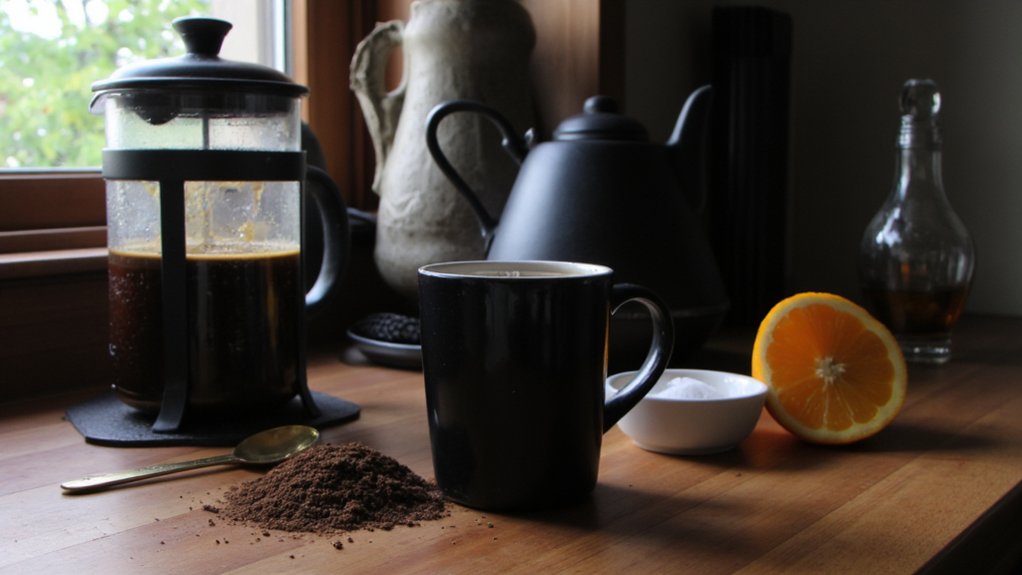
If your French press keeps going bitter, you’re not cursed—you’re just timing it wrong. You’ll bloom for 30–45 seconds with water just off boil, finish pouring by 45, then gently stir at 1:30 to pop that crust and release aroma. Skim at three minutes if you like, lower the plunger to hover, wait till four, then press slow for 15–20 seconds and pour right away. Want sweeter? Rest 30–60 seconds. Now here’s the why that matters…
Key Takeaways
- Bloom 30–45 seconds with ~200°F water to saturate grounds, releasing gases and reducing harsh early-channeling bitterness.
- Complete the pour by 0:45, then let it steep undisturbed to prevent fines agitation and over-extraction.
- At 1:30, give one or two gentle stirs to break the crust without suspending fines excessively.
- At 4:00, press slowly for 15–20 seconds, then pour immediately or wait 30–60 seconds for rounder sweetness.
- Use medium-coarse grind, 1:15 ratio, and clean separation from grounds to limit ongoing bitter extraction.

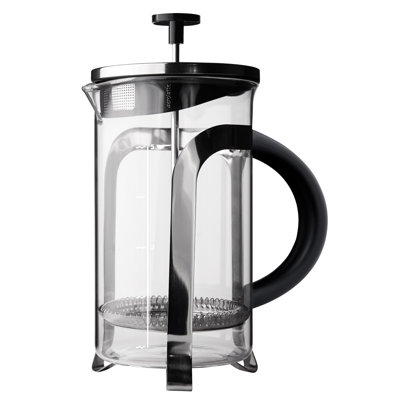
Why French Press Coffee Tastes Bitter
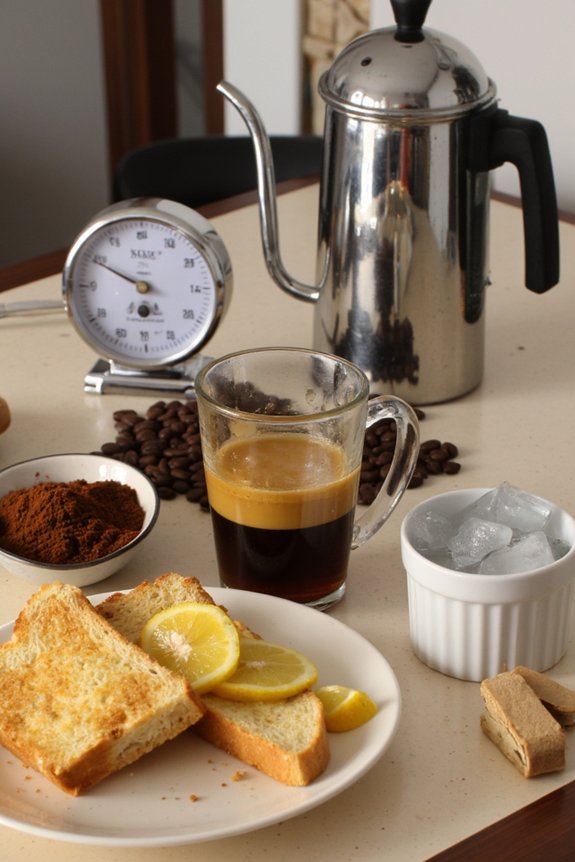
Even when you nail the beans and the water, French press coffee can still taste bitter because it’s basically a long, cozy soak with lots of tiny particles and oils hanging around. You’re steeping everything, not just the sweet stuff. That’s where over extraction harm sneaks in, pulling out harsh tannins and woody notes that hang on your tongue. If your grind’s too fine, it gets worse.
Water temperature matters, too. Too hot, and you scorch flavor, especially with darker roasts. Lighter beans bring roast forward acidity, which can taste sharp when pushed too long, turning bright into bitey. Stale beans? They brew flat, then bitter. Old coffee’s a grump. Use a coarser grind, fresh beans, and a gentle pour. You’ll taste the difference. Using coarse grounds helps prevent over-extraction and keeps your cup smooth instead of gritty.
The Science of Steeping and Separation
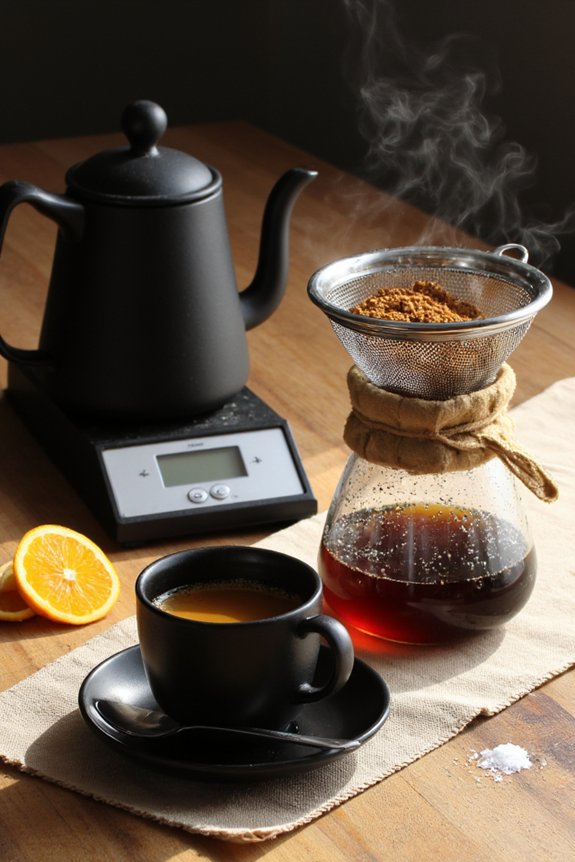
Bitter cups aren’t a mystery monster; they’re chemistry doing its thing. When grounds meet hot water, you kick off extraction dynamics. Fast stuff comes first, like acids and bright aromatics. Then sugars and body arrive, and finally the stubborn bitter compounds, which take their sweet time. Temperature and grind size steer the pace, but your timing and how you separate the brew matter just as much.
In a French press, tiny fines drift and keep extracting. That’s particle settling, and it’s sneaky. If those bits hang around in the liquor, bitterness creeps up while you sip. You want most flavor, not all of it, so you control contact. Let the heavier grounds sink, keep the liquid calm, then separate cleanly. Easy, right? Almost.
Some modern coffee machines solve similar problems with removable water tanks and brew components, allowing for cleaner separation and less over-extraction, which is why paying attention to both timing and physical separation in the French press pays off.
The Minute-by-Minute Brew Schedule
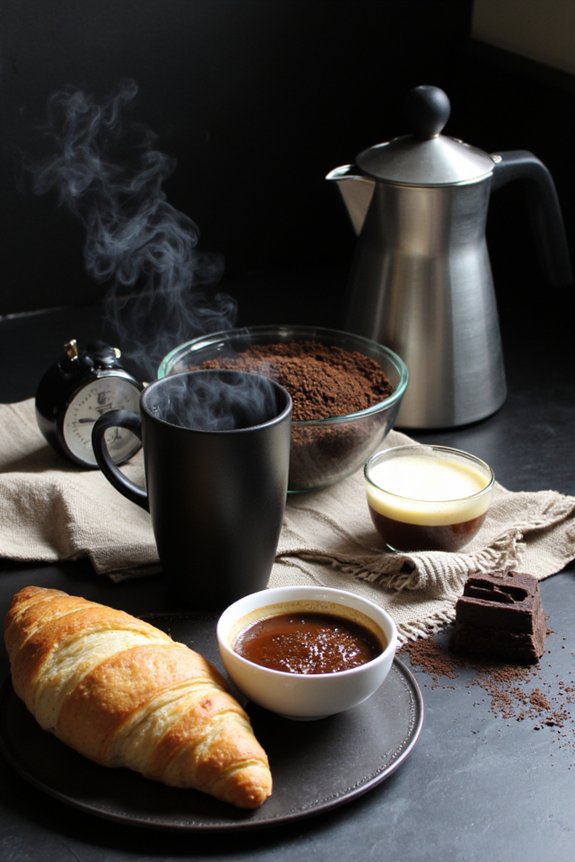
You’re about to lock in a simple minute-by-minute plan, starting with the ideal bloom window so the grounds wake up and smell the coffee, literally. At the right moment you’ll break the crust, give a gentle stir, then coast toward a clean plunge and a smooth pour, no rush, no drama. Miss a beat and it’s fine, but stick close to the timing and you’ll taste the payoff in every sip. If you’re brewing outdoors, don’t forget that heat retention capability is crucial to keep your coffee hot long after the plunge.

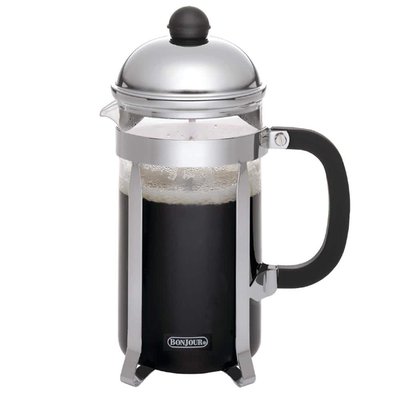
Optimal Bloom Window
Usually, the magic starts in the first 30 to 45 seconds, and that’s your bloom window—the moment hot water wakes up the grounds and lets trapped gas escape so the brew won’t taste flat or sour. You’re timing a tiny pre infusion window here, not a full soak, so pour just enough water to saturate all the coffee. Aim for water around 200°F. Stir gently. That’s your bloom agitation, a quick nudge to help bubbles rise and aromas pop.
Watch the surface. If it domes and hisses a bit, you’re on track. If it sits flat, give a light swirl. Don’t overdo it, or you’ll pull harsh stuff early. After about 30 to 45 seconds, top up to your target volume and settle the crust calmly. Nice and easy.
Plunge and Pour Timing
Start the clock as soon as you finish the bloom, because the next few minutes steer everything. At 0:45, resume your pour sequence, topping to your target weight with a calm spiral. Don’t rush. Give it a gentle stir, then let the crust settle. At 3:00, skim foam if you like cleaner cups. It’s optional, but kinda nice.
| Time | Action | Notes |
|---|---|---|
| 0:45 | Finish pour | Smooth spiral, no splashing |
| 1:30 | Quick stir | Just one or two turns |
| 3:00 | Skim top | Cleaner body, less grit |
| 4:00 | Plunge | Slow, steady pressure |
At 4:00, your plunge timing matters. Go slow, about 15 seconds, stopping above the grounds. Now pour immediately, or wait 30–60 seconds if you want rounder sweetness. Taste and tweak next time, you’ll nail it.
Grind Size, Ratio, and Water Temperature
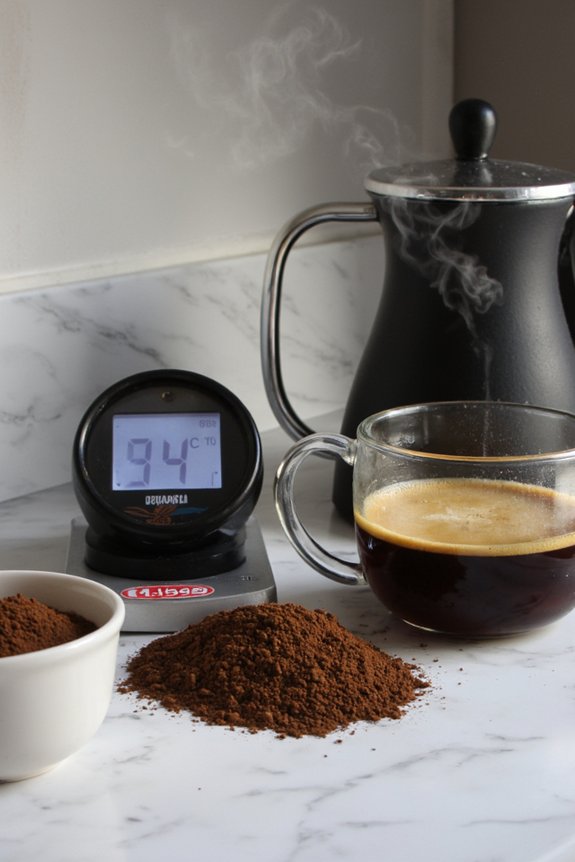
While timing gets the spotlight, the trio that quietly decides your French press flavor is grind size, coffee-to-water ratio, and water temp. Go medium coarse so the grounds don’t slip through the filter or over-extract into sludge. If it looks like sea salt, you’re close. Aim for a 1:15 ratio, about 30 grams coffee to 450 grams water, and tweak from there if you want bolder or lighter. Keep your water near boiling, around 200°F, so you pull sweetness and aromas without scorching the coffee.
If you don’t have a scale, use about 2 rounded tablespoons per 6 ounces water. Not perfect, but it works. Taste and adjust next time. Coffee’s a conversation, not a contract. And hey, no bitterness invited. For even smoother results, consider the blade quality and design of your grinder, as consistent particle size helps prevent over-extraction and bitterness.
Skimming, Plunging, and Pouring Techniques
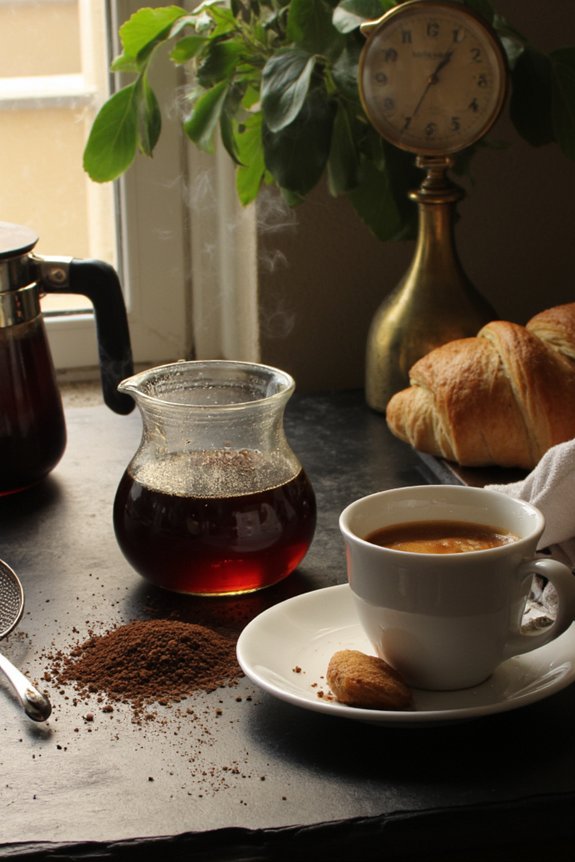
Ease into the finish by cracking the crust, giving it a gentle stir, then skimming off the foam and stray grounds with a spoon like you’re tidying up before guests arrive. That thin layer rides on surface tension, so scoop lightly and don’t dig deep. You’re clearing bitterness before it sneaks into the cup.
Now place the plunger just above the liquid and press slowly, about 15–20 seconds. Steady hands. No brute force. Think smooth, layered extraction, not a mudslide. If it fights back, pause, then continue.
For pouring, tip the spout gently and keep the press level. Fill cups in a steady stream, then rotate between mugs for even strength. Leave the last sip in the carafe. That’s the sandy stuff, nobody’s favorite surprise.
Troubleshooting and Flavor Tweaks
If your pour was smooth but the cup’s not singing, no worries, we can tune it. Start with brew calibration. If it’s bitter, grind a touch coarser and drop your steep by 15–20 seconds. If it’s thin, go slightly finer, or bump the dose a gram. Water just off boil helps, and don’t forget to stir gently, you’re not churning butter.
Try filter alternatives when grit sneaks in. A paper filter under the lid, or a fine metal disk, can clean the cup without muting too much body. Taste, adjust, repeat. Easy.
For consistently smooth brews, consider upgrading to a burr grinder for more even grounds and better flavor extraction.
| Issue | Quick Fix |
|---|---|
| Bitter bite | Coarser grind, shorter steep |
| Sour zing | Finer grind, slightly longer steep |
| Muddy cup | Paper add‑on filter |
| Flat flavor | Hotter water, fresher beans |
| Weak body | Higher dose, longer bloom |
Frequently Asked Questions
Can I Apply This Timing Method to Cold Brew French Press?
Yes, you can adapt it. For cold brew in a French press, you’ll use room temperature steeping for 12–18 hours, a longer grind (coarse), gentle agitation, and minimal plunging. Taste periodically, then decant to avoid over-extraction.
How Do Altitude and Barometric Pressure Affect Steep Timing?
They barely change steep timing. Altitude effects lower boiling temps, so extraction slows slightly; add 15–30 seconds. Pressure compensation isn’t needed for immersion brewing, but you’ll notice faster cooling; preheat gear, grind a touch finer, and taste-adjust.
What Materials Are Safest for High-Temperature French Press Brewing?
Stainless steel and Borosilicate glass are your safest picks. They resist thermal shock, don’t leach flavors, and handle boiling water. Choose BPA-free lids and plungers, silicone or metal filters, and avoid cheap plastic components near hot surfaces.
How Should I Clean Oils Without Leaving Detergent Flavors?
Rinse hot immediately, use coffee safe soap sparingly, scrub with a soft brush, then rinse thoroughly. Follow with diluted vinegar rinses to cut lingering oils. Air-dry disassembled. Avoid perfumed detergents; they’ll cling and add flavors to future brews.
Can Pre-Infusion Be Automated With Smart Kettles or Timers?
Yes—use automatic kettles with bloom modes or programmable timers to automate pre-infusion. You’ll set temperature, volume, and bloom duration, then let timed pours handle the rest. Pair scales and flow-control kettles for consistent, repeatable pre-infusion.
Conclusion
You’ve got this. Stick to the timing, keep the water just-off-boil, and don’t rush the press, and you’ll dodge that bitter bite every time. Bloom, stir, skim if you want, then press slow and pour right away. Simple moves, big payoff. If it’s still harsh, go coarser or drop the temp a notch. Want sweeter? Let it rest 30–60 seconds before sipping. Practice a couple times and, boom, your French press suddenly tastes like café-level magic.


