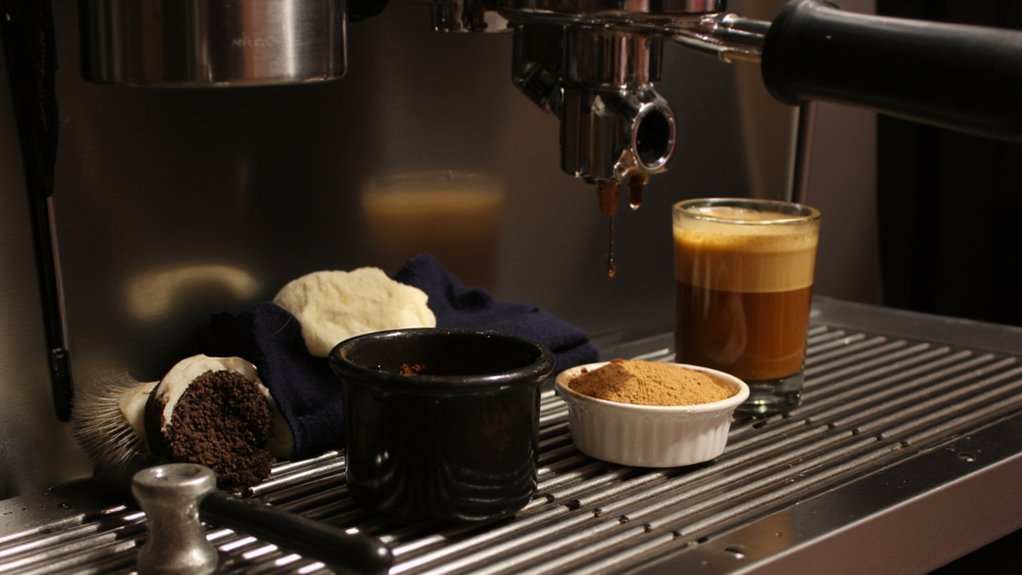
Your espresso machine’s been pulling shots like a champ, but here’s the thing—buildup’s creeping in where you can’t see it. Daily rinses? They’re just the warm-up act. Real baristas know that deep cleaning is where the magic happens, where stubborn oils and mineral deposits get evicted, and your machine gets restored to peak performance. You’re probably wondering what separates the pros from everyone else.
Key Takeaways
- Remove and soak shower screen, basket, and portafilter in espresso machine cleaner for 15-20 minutes.
- Use soft-bristle brushes and brass brushes to scrub components thoroughly, paying attention to basket holes.
- Backflush the group head with water and specialized powder to remove trapped grounds and buildup.
- Run descaling solution through the boiler, group head, and steam wand monthly to eliminate mineral deposits.
- Flush the entire system with fresh water multiple times until all cleaning residue is completely removed.
Why Deep Cleaning Your Espresso Machine Matters
Your espresso machine is basically the diva of your kitchen—beautiful, temperamental, and absolutely demanding when it comes to maintenance. Here’s the thing: you can’t just ignore it and expect magic to happen. Regular deep cleaning directly impacts your machine’s lifespan, keeping it running smoothly for years instead of months. Think of it like brushing your teeth—neglect it, and you’ll pay the price. Beyond longevity, flavor preservation is everything. Built-up oils, mineral deposits, and old coffee residue create a stale, bitter taste that’ll ruin even the finest beans. You’re basically drinking yesterday’s coffee layered with today’s brew. A thoroughly cleaned machine pulls shots that actually taste like they should: rich, complex, delicious. Your morning ritual deserves better than mediocre espresso, right? For best results, deep cleaning should include regular descale monthly routines and daily attention to the group head and portafilter to ensure your espresso always tastes fresh.
Essential Tools and Materials You’ll Need
Before you start scrubbing away like you’re training for the espresso Olympics, you’ll want to gather the right gear. You’re gonna need cleaning solutions and powders made specifically for espresso machines, some quality brushes and backflush tools to really get in there, plus towels, water filters, and descalers that’ll help you banish all that built-up gunk and keep your machine running smoother than a perfectly pulled shot. Don’t forget to check if your machine has removable drip trays and water tanks, since these components make deep cleaning and maintenance much easier.
Cleaning Solutions and Powders
Getting your espresso machine truly clean requires the right arsenal of cleaning products, and trust me, you’ll want to gather these tools before you start taking things apart. You’ve got options here, and some are seriously better than others.
| Product | Best For |
|---|---|
| Espresso machine cleaner | Group heads and baskets |
| Homemade cleaners (vinegar solution) | Budget-friendly deep cleans |
| Descaling powder | Removing mineral buildup |
| Eco powders | Enviornmentally conscious folks |
| Backflush powder | Internal pipe maintenance |
Commercial cleaners work fast, but honestly? Homemade cleaners punch above their weight. Mix vinegar and water, and you’ve basically got liquid gold. Eco powders are gentle yet effective, perfect if you’re worried about chemicals. Descaling powder tackles those stubborn mineral deposits that wreck performance. Stock up on everything before you begin—running mid-clean to grab supplies? That’s torture.
When selecting cleaning agents, consider how regular cleaning not only keeps your machine hygienic but also extends its lifespan and maintains optimal flavor extraction.
Brushes, Backflush Tools, Towels
Once you’ve got your cleaning solutions lined up, it’s time to arm yourself with the physical tools that’ll actually get the job done. Grab some soft bristle brushes—they’re your best friends for scrubbing without scratching delicate components. You’ll want a proper backflush tool to force water through the group head and blast out stubborn grounds that hide like tiny espresso ninjas. Trust me, this tool’s a game-changer. Stock up on microfibre towels because regular ones? They’ll leave lint everywhere. Microfibre towels are way better at absorbing moisture without leaving behind annoying fuzzies. Don’t skimp on quantity—you’ll go through several during a deep clean. Quality gear makes the whole process smoother, faster, and honestly, way less frustrating. Your machine’ll thank you. For even better results, choose cleaning tools specifically designed for semi-automatic operation, since many popular home espresso machines—like those from DeLonghi or CASABREWS—feature this system and benefit from targeted maintenance.
Water Filters and Descalers
Two critical components’ll make or break your deep cleaning mission: water filters and descalers. You’ll want quality filters because they’re your first line of defense against mineral buildup. Understanding filter placement in your machine is vital—it determines how effectively you’re protecting your precious espresso equipment.
| Component | Purpose |
|---|---|
| Water Filter | Removes impurities before they reach internals |
| Descaler Solution | Dissolves mineral deposits buildup |
| Mineral Testing Kit | Checks water hardness levels |
| Replacement Cartridges | Maintains filtration effectiveness |
| Cleaning Powder | Tackles stubborn scale deposits |
Before you start descaling, run mineral testing on your water. This’ll tell you exactly what you’re dealing with. Different machines need different descaling frequencies depending on your water’s mineral content. Stock up on descaler—trust us, you’ll use it regularly and your machine’ll thank you for the TLC. For best results and to protect your investment, choose products with a recommended warranty length that indicates durability and long-term performance.
Daily Maintenance vs. Deep Cleaning: Understanding the Difference
You’ve probably noticed that your daily espresso routine keeps your machine humming along nicely, but here’s the thing: those quick rinses and purges aren’t enough to banish the stubborn oil buildup and mineral deposits that lurk inside. Deep cleaning is like calling in the big guns, tackling the gunk that regular maintenance simply can’t reach and keeping your machine from turning into an espresso-flavored science experiment. Think of it this way—daily habits are your machine’s gym membership, but deep cleaning? That’s the annual checkup that keeps it performing like a champ for years to come.
Daily Habits Keep It Running
Every espresso machine needs a little TLC, and here’s the truth: daily maintenance and deep cleaning aren’t the same thing, though plenty of folks treat ’em like they are. Your daily habits are what keep your machine humming between those occasional deep cleans. Think of quick inspections as your first line of defense—wiping the group head, purging the portafilter, and checking for residue. You might even use habit trackers to stay accountable. These small actions prevent buildup and nasty surprises down the road. They’re like brushing your teeth versus a dental cleaning. Both matter, but one happens every single day. When you nail your daily routine, that espresso machine’ll reward you with consistently delicious shots and fewer headaches during maintenance season.
Deep Clean: When and Why
While your daily wipe-downs and purges are absolutely essential, they’re really just the appetizers before the main course—that’s where deep cleaning comes in. See, daily maintenance handles the surface stuff, but over time, grit buildup and microbial growth sneak into the nooks and crannies where your eyes can’t reach. That’s the nasty reality.
Here’s why you’ve gotta deep clean regularly:
- Eliminates stubborn grit buildup that regular purging misses
- Prevents microbial growth from creating weird flavors in your shots
- Extends your machine’s lifespan and keeps performance peak-sharp
You’re looking at deep cleaning every month or two, depending on usage. Think of it like brushing your teeth daily versus getting a professional cleaning—both matter, but they serve different purposes. Your espresso machine deserves that professional treatment, trust me.
Step-by-Step Guide to Cleaning the Group Head and Shower Screen
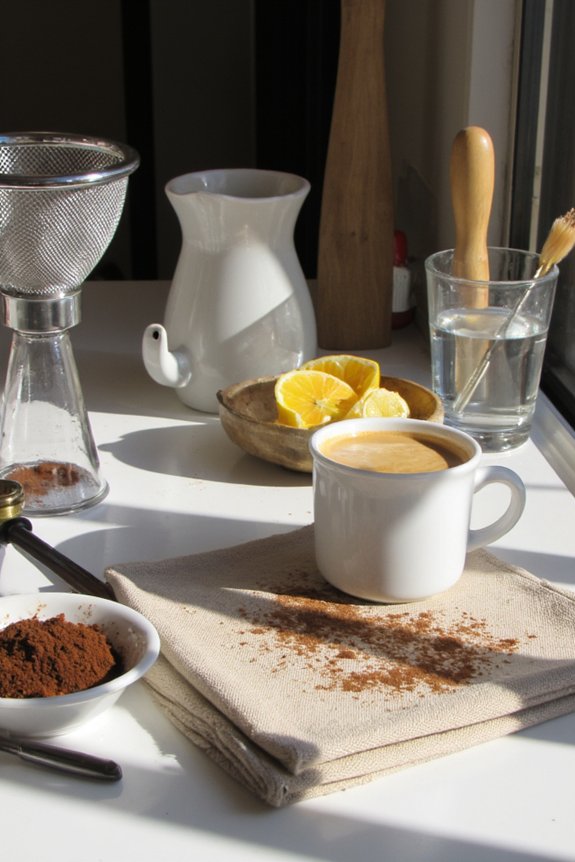
The group head and shower screen are where the magic happens, and honestly, they’re also where a lot of gunk decides to set up permanent residence. You’ll need to remove buildup that messes with pressure profiling and thermal stability—basically, the stuff that ruins your shots.
| Task | Tools | Time |
|---|---|---|
| Soak parts | Cleaning powder, hot water | 20 mins |
| Scrub screen | Brass brush, cloth | 10 mins |
| Rinse thoroughly | Hot water, pipe cleaner | 5 mins |
Start by removing the shower screen and group head basket. Soak ’em in espresso machine cleaner for about twenty minutes—this loosens that stubborn residue. Use a brass brush to gently scrub the screen; you’re not trying to destroy it, just evict the gunk. Rinse everything under hot water until it runs clear. Don’t skip this step, or you’ll regret every espresso.
Descaling Your Machine’s Internal Pipes and Boiler
Once you’ve got your group head sparkling like new, it’s time to tackle what’s lurking inside—the pipes and boiler that you can’t see but definitely feel in every shot. This is where mineral buildup throws a wrench in your espresso game.
- Use a commercial descaling solution designed for espresso machines, following the manufacturer’s instructions carefully for proper boiler flushing
- Run the solution through your group head and steam wand to make sure complete pipe integrity throughout the system
- Flush with fresh water multiple times until you’re certain all descaling residue is gone—no one wants chemical-tasting espresso
Think of it like giving your machine a spa day. Those hidden minerals are sneaky little saboteurs, clogging passages and ruining your extraction. Your future shots’ll taste noticeably better. Trust me on this one.
Restoring Your Portafilter, Basket, and Steam Wand
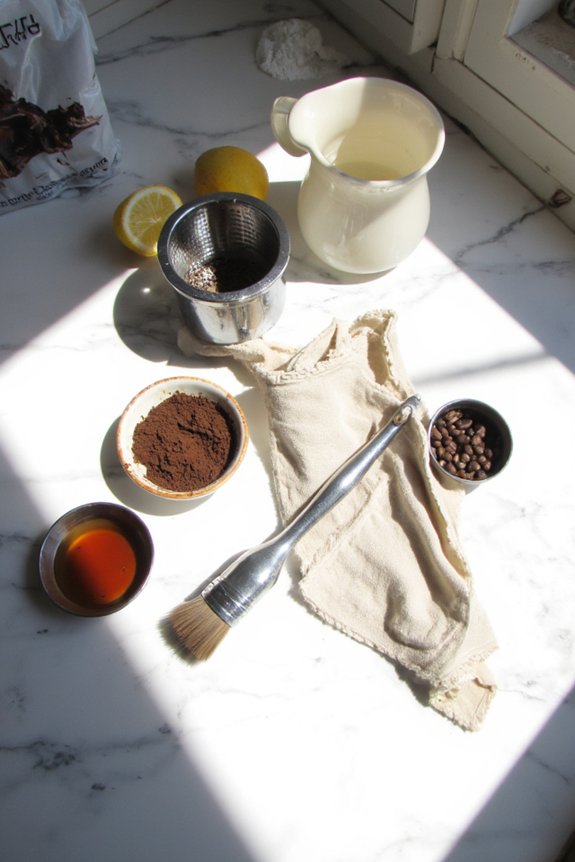
Now that you’ve flushed out those sneaky mineral deposits, it’s time to focus on the parts you actually hold in your hands—your portafilter, basket, and steam wand. These hardworking heroes deserve some love too. Soak your portafilter and basket in hot water mixed with espresso machine cleaner for fifteen minutes, then scrub away any stubborn residue with an old toothbrush. Don’t forget those tiny basket holes—they’re sneakier than they look. Your portafilter aesthetics will shine once they’re spotless, and you’ll feel like a true pro. For your steam wand, purge it immediately after steaming milk, then wipe it with a damp cloth. This prevents milk buildup that’ll wreck your pressure profiling and your workflow. Clean hands make happy espresso.
Creating a Deep Cleaning Schedule for Long-Term Machine Health
You’ve probably noticed that daily maintenance keeps your machine running smooth, but here’s the thing—your espresso machine’s got deeper needs that pop up on a longer timeline. Think of it like your car: you change the oil regularly, but you also need those bigger tune-ups.
Here’s your game plan for keeping everything pristine:
- Monthly preventive inspections of internal components and group head seals
- Quarterly deep flushes with specialized cleaning solutions to eliminate mineral buildup
- Annual professional servicing including software updates and pressure testing
Set phone reminders. Seriously. Your machine’ll thank you by pulling shots that taste absolutely incredible for years to come. Neglect this stuff, and you’re basically asking for trouble—expensive trouble. Stay on top of it, and you’ve got yourself a loyal espresso partner.
Frequently Asked Questions
How Often Should I Replace My Espresso Machine’s Gaskets and Seals?
You should replace your espresso machine’s gaskets and seals every 6-12 months, depending on replacement intervals and material compatibility. Regular inspection helps you catch wear early, ensuring peak performance and preventing leaks that’ll compromise your espresso quality.
Can I Use Vinegar Instead of Commercial Descaling Solution for Cleaning?
You shouldn’t use vinegar instead of commercial descaling solution. Vinegar drawbacks include leaving residue and affecting your espresso’s flavor impact. Commercial solutions are specifically formulated for espresso machines’ internal components.
What’s the Safest Way to Clean My Machine Without Damaging Internal Components?
You’ll want to use manufacturer-recommended descaling solutions instead of vinegar to protect internal seals. Backflush your portafilter basket regularly, and soak your steam wand separately. Never force any components during cleaning.
How Do I Know if My Espresso Machine Needs Professional Servicing?
You’ll need professional servicing if you’re noticing warning lights on your machine or a significant performance decline in espresso quality, pressure, or steam function that regular cleaning doesn’t fix.
Is It Safe to Deep Clean My Machine While It’s Still Warm?
No, you shouldn’t deep clean your warm machine. Hot surfaces can burn you, and pressure risks remain high. Always let it cool completely first, then disconnect power before starting your deep cleaning routine.
Conclusion
You’ve now got the recipe for espresso machine gold. Regular deep cleaning isn’t just maintenance, it’s your ticket to consistently delicious shots that’ll make you feel like a true barista. Your machine’s gonna thank you with better flavor, longer life, and way fewer frustrating breakdowns. Think of it this way: a clean machine is a happy machine, and a happy machine brews happy coffee. So grab that brush and get cleaning!


