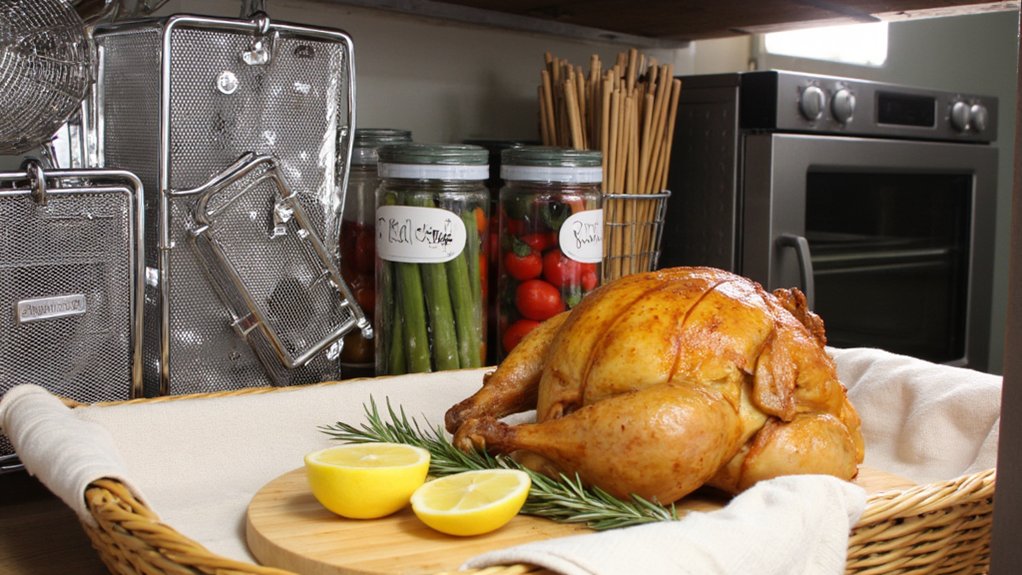
You’ve invested in a solid rotisserie setup, so it’d be a shame to watch your accessories rust away in a random cabinet. Here’s the thing: proper storage isn’t complicated, but it does matter. Whether you’re dealing with greasy baskets or metal skewers, knowing the right way to stash them means they’ll actually last. Let’s break down how you can keep everything in top shape.
Key Takeaways
- Clean and completely dry all accessories before storage to prevent rust, mold, and moisture damage.
- Apply thin oil coatings to metal parts and use silica packs to protect against corrosion.
- Use airtight containers with custom foam liners to shield items from dust, moisture, and pests.
- Store frequently used items at eye level and organize by type to maximize accessibility.
- Designate a specific storage location with labeling and inventory tracking for quick identification and maintenance.
Clean and Dry Your Accessories Before Storage
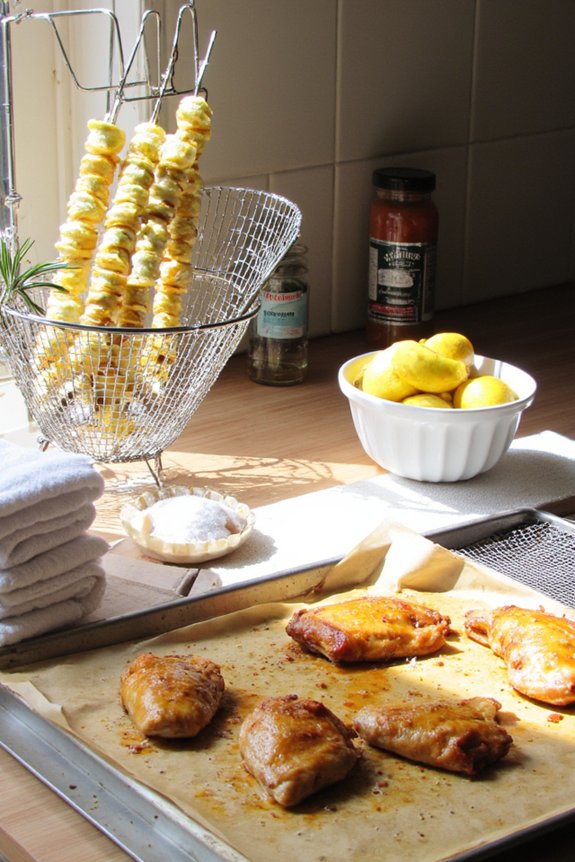
Before you tuck those accessories away for storage, you’ve got to make sure they’re clean and completely dry—trust me, nobody wants to open up their storage spot months later and find a science experiment growing on their favorite rotisserie skewers. Start by washing everything with hot soapy water, paying special attention to sanitize seams where grease and food particles like to hide. Rinse thoroughly and let your baskets and rods air dry rims completely on a clean towel or rack. Don’t just stash them away while slightly damp. Moisture is the enemy of long-term storage, creating the perfect breeding ground for mold and rust. Take your time here, and your accessories will thank you when next season rolls around. For best results, choose rotisserie ovens with dishwasher-safe removable parts to make cleaning and maintenance much easier.
Invest in Protective Storage Containers
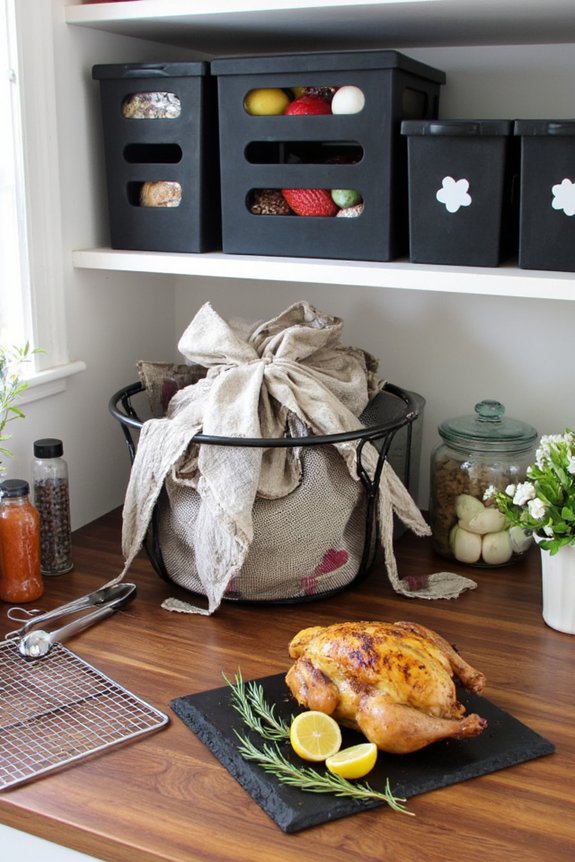
Once your accessories are sparkling clean and bone dry, it’s time to give them a proper home. Investing in quality protective storage containers makes a real difference in keeping your gear safe. Look for airtight cases that’ll shield your rotisserie accessories from dust, moisture, and unwanted pests. Custom foam liners are honestly a game-changer because they keep everything snug and organized in one spot. You won’t be digging through a jumbled mess searching for that one basket. These containers stack nicely too, so you’re not eating up all your storage space. Sure, they cost a bit upfront, but protecting your investment is totally worth it. Your accessories will thank you by lasting way longer. When choosing containers, it’s wise to consider space-saving designs to maximize your kitchen area, much like compact vacuum sealers that offer efficient storage without sacrificing functionality.
Organize by Frequency of Use
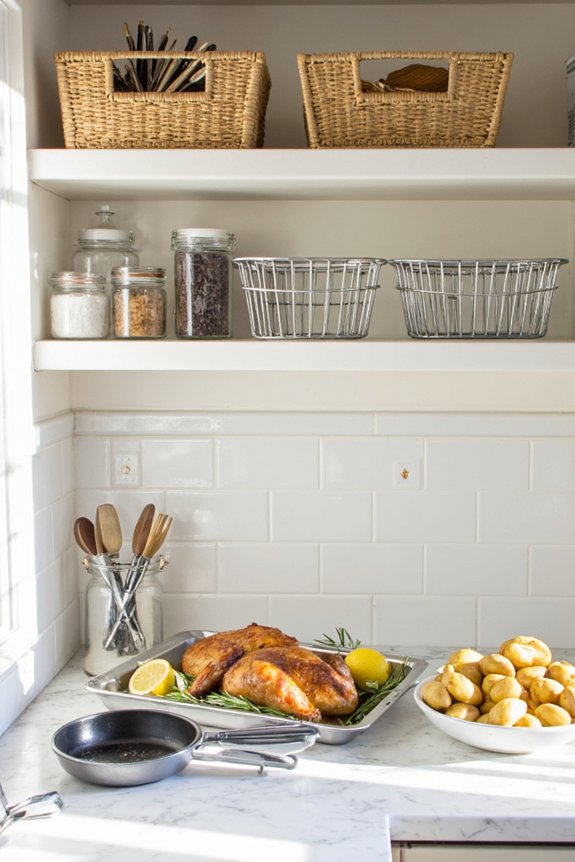
Now that your accessories are tucked away safely in their containers, think about how you’ll actually access them. You don’t want to dig through everything just to grab your daily rotation essentials. Keep the stuff you use constantly—like your spit rods and drip pans—in the most convenient spot. Maybe that’s a lower shelf or a cabinet right next to your oven. Your seasonal rotation items can hang out in less accessible areas since you’ll only need them occasionally. Think summer versus winter cooking patterns. Store your everyday go-to accessories at eye level where you can snag them without much fuss. It’s honestly that simple. Smart organization means less hunting around and more time actually cooking those delicious rotisserie meals you’re craving. Choosing storage locations with easy-to-access and replaceable parts can also simplify your routine and help maintain your accessories in top condition.
Protect Metal Items From Rust and Corrosion
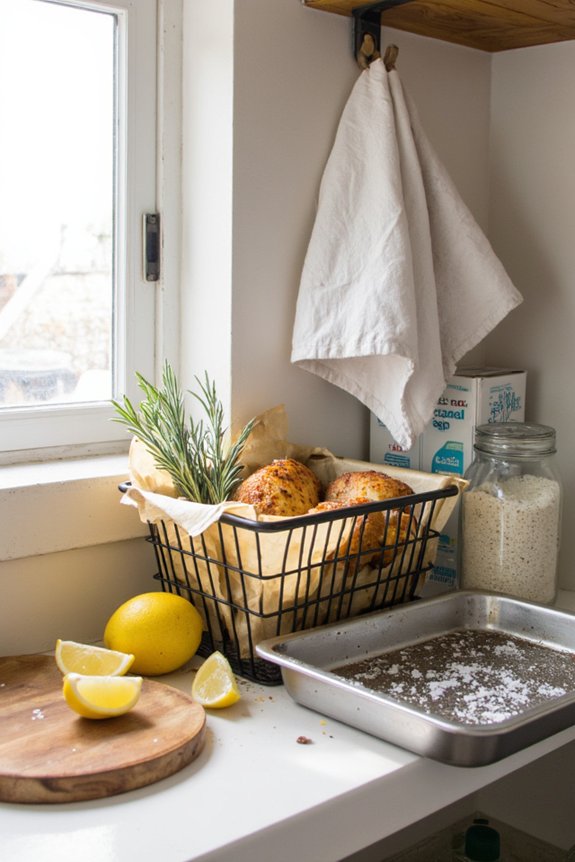
Since metal accessories are basically magnets for rust and corrosion, you’ll want to take some preventative steps to keep them looking good and functioning properly. The good news? It’s not rocket science. Here’s what you can do:
- Apply thin oil coatings to metal surfaces before storing them away for extended periods
- Store accessories in a dry location, keeping moisture at bay like it’s your worst enemy
- Include silica packs in your storage containers to absorb any sneaky humidity
- Wrap individual items in cloth or paper to create a protective barrier against the elements
For even longer-lasting protection, you can take inspiration from seasoning benefits and maintenance used on cast iron skillets to help prevent corrosion on metal surfaces. These simple moves’ll save you from dealing with frustrating rust spots down the road. Your rotisserie will thank you for the TLC.
Create a Dedicated Storage Space
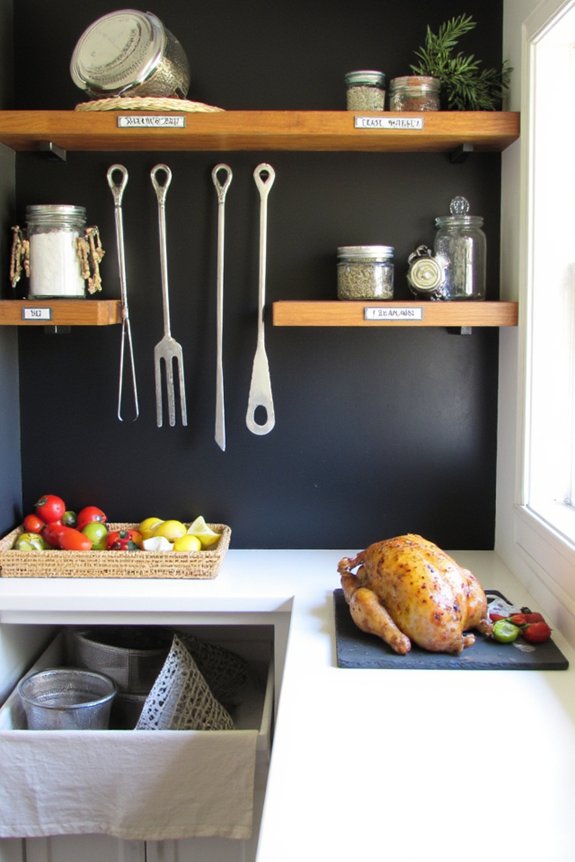
If you’ve got a bunch of rotisserie accessories scattered across your garage, shed, or kitchen cabinets, it’s time to fix that. Designating a specific spot for your equipment keeps everything organized and easy to find when you need it. Consider investing in custom shelving that fits your space perfectly, giving each item its own home. A wall mounted rack works great too, especially if you’re short on floor space. You could use a cabinet, closet corner, or even a pegboard setup. The key is keeping your rotisserie baskets, skewers, and other gear in one accessible location. This way, you’ll know exactly where everything is, and you won’t waste time hunting around when dinner’s calling. When planning your storage, think about dishwasher-safe accessories for easier maintenance and cleanup after each use.
Label and Inventory Your Equipment
Now that you’ve got your storage space sorted, it’s time to actually know what you’re storing—and that’s where labeling and taking inventory comes in handy. You’ll want to create a complete equipment list, maybe use a color-coding system so you can spot things faster, and keep track of maintenance schedules so nothing catches you off guard when you need it most. Getting organized this way might seem like extra work, but it’ll save you from the frustration of hunting through boxes or discovering a worn-out part right before service.
Creating Your Equipment Inventory
Labeling and cataloging your rotisserie oven accessories might sound like the opposite of fun, but it’s honestly one of the best moves you can make for keeping things organized. Start by creating an inventory checklist that captures everything you own. This’ll save you from buying duplicates or hunting frantically for that one missing skewer. Next, try storage mapping by noting where each item lives in your space.
Here’s what to track:
- Rotisserie baskets and their condition
- Skewers, forks, and metal rods
- Cleaning brushes and maintenance tools
- Replacement parts and hardware
Snap photos of your gear, too. Label containers with dates and contents so you’ll know exactly what’s stored where without guessing around.
Color-Coding System Organization
Once you’ve got your inventory list locked in, a color-coding system’ll take your organization to the next level. Here’s the deal: assign each type of accessory a specific color. Rotisserie baskets get red labels, skewers get blue, and so on. You’ll instantly know what’s what without squinting at tiny print.
Grab some color coded labels from any office supply store and stick ’em on your storage containers. Better yet, invest in matching accessory sleeves that correspond with your labeling scheme. It sounds a bit fancy, but trust me, you’ll love the simplicity when you’re prepping for service.
This system saves you serious time. No more digging through bins wondering where your basket went. Everything’s exactly where it should be, color-matched and ready to roll.
Tracking Maintenance and Replacements
Keep your accessories from becoming mystery items gathering dust in the back of your storage area by establishing a solid tracking system for maintenance and replacements.
You’ll want to create a simple log that tracks what needs attention and when. Here’s what you should monitor:
- Maintenance dates and what was serviced on each accessory
- Parts that’re wearing out and need replacing soon
- Replacement costs so you can budget accordingly
- Service schedule reminders for regular upkeep
Jot down notes whenever you perform maintenance or spot damage. This approach keeps your service schedule on track and prevents surprises when something fails mid-cooking. Your replacement tracking becomes way easier when you’ve got everything documented, making it simple to grab parts before they go missing or deteriorate further.
Frequently Asked Questions
How Long Can Rotisserie Oven Accessories Be Safely Stored Before Needing Replacement?
You can safely store rotisserie oven accessories for years, depending on their material lifespan and warranty coverage. Most quality accessories last 3-5 years with proper storage. Check your warranty for specific replacement timelines and manufacturer recommendations.
What Temperature and Humidity Levels Are Ideal for Accessory Storage?
You’ll want to store your accessories in a temperature range of 50-70°F with humidity control between 30-50%. This prevents rust, warping, and material degradation while keeping everything in ideal condition.
Can Accessories Be Stored Outdoors, or Must They Stay Indoors?
You shouldn’t store accessories outdoors due to weather exposure. Keep them indoors in a climate-controlled space. Outdoor storage exposes your items to moisture, temperature fluctuations, and rust, which’ll damage them substantially over time.
Should Stainless Steel and Cast Iron Accessories Be Stored Separately?
Yes, you should store them separately for surface protection. Cast iron’s moisture can damage stainless steel, and you’ll benefit from magnetic separation methods to keep your accessories organized and prevent corrosion.
How Often Should Stored Accessories Be Inspected for Damage or Deterioration?
You should perform a seasonal check on your stored accessories and conduct an annual inspection for any damage or deterioration. This guarantees you’ll catch rust, corrosion, or wear early before using them.
Conclusion
You’ve got this! Storing your rotisserie gear doesn’t have to be complicated. Just remember: clean thoroughly, protect from rust, and keep everything organized in a dedicated spot. Label your containers, toss in some silica packs, and you’re golden. Check on things occasionally to catch any issues early. Your accessories’ll thank you by sticking around for many delicious meals ahead.