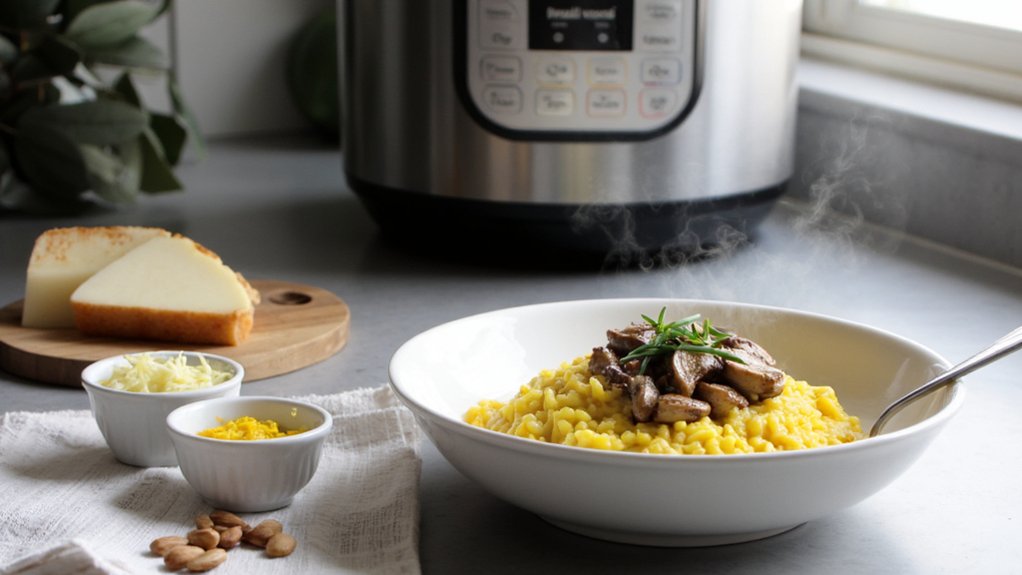
Imagine this: golden-brown onions releasing their sweet aroma, meat sizzling in its own juices, all happening right in your multi-cooker before you even hit pressure cook. Yeah, you’ve probably ignored that sauté button. But here’s the thing—it’s actually the difference between bland weeknight dinners and restaurant-quality meals that’ll make your family ask for seconds. So what’re you missing?
Key Takeaways
- The sauté function transforms weeknight dinners by browning aromatics and proteins in the same vessel, eliminating extra pans.
- Precision temperature control enables restaurant-quality searing and browning with consistent, repeatable results every single time.
- Sous-vide simulation on compatible models delivers restaurant-quality doneness without specialized equipment or additional gear.
- WiFi control and app features allow remote monitoring and temperature adjustments for hands-off cooking convenience.
- Oven-safe pots on select models enable stovetop searing followed by oven finishing for advanced techniques.
Understanding Your Multi-Cooker’s Full Feature Set
Before you dive headfirst into using your multi-cooker, you’ve gotta understand what you’re actually working with—because let’s face it, these machines come loaded with more buttons and settings than your first car’s dashboard. Most folks stick to pressure cooking and forget about everything else. Big mistake. You’re sitting on a goldmine of culinary possibilities. That low heat braising setting? Perfect for tenderizing tough cuts without turning them into mush. And don’t overlook those sauté alternatives—they let you brown meat and veggies right in the pot before slow cooking, building flavor layers that’ll make your taste buds sing. Take twenty minutes exploring your manual. Seriously. You’ll discover features you didn’t even know existed, transforming how you approach weeknight dinners and weekend meals alike. Many models also include multiple independent safeguards to keep operation safe and stress-free, so understanding these features boosts both your confidence and your results.
The Sauté Function: Your Secret Weapon
Reveal your multi-cooker’s true potential by mastering the sauté function—it’s honestly the difference between “meh” dinners and meals that’ll have your family asking for seconds. This feature’s your secret weapon for building flavor that pressure cooking alone just can’t achieve.
Here’s why you should embrace the sauté setting:
- Browning butter and aromatics creates a flavor foundation that transforms your entire dish
- Caramelizing onions develops deep, rich sweetness that makes everything taste restaurant-quality
- Searing meat locks in juices and adds complexity that’ll impress anyone at your table
You’re basically doing the best part of traditional cooking without the extra pans. That golden crust? That’s where all the delicious magic happens. Don’t skip it—your taste buds’ll thank you.
For even more versatility in the kitchen, consider how stand mixer attachments can expand your cooking options just like a multi-cooker’s sauté function does.
Why Professional Chefs Love This Setting

you’re getting precision temperature control that lets you nail that perfect sear every single time, no guessing, no crossed fingers hoping your chicken turns out golden instead of looking like it survived a minor fire. Professional chefs obsess over this setting because it delivers professional-grade consistency results—we’re talking restaurant-quality searing, browning, and flavor development that transforms your weeknight dinners into something that’d make your taste buds do a happy dance. Once you’ve got this down, you’ll realize you’ve basically revealed the secret handshake that seperates “meh, dinner again” from “wow, you cooked this?” For home cooks seeking even more versatility, some multi-cookers now feature oven-safe pots that let you sear on the stovetop and finish in the oven, streamlining your workflow and cleanup.

Precision Temperature Control
When it comes to cooking that actually matches what’s happening in fancy restaurant kitchens, precision temperature control is where the magic really happens. You’re probably still guessing at heat levels like it’s 1995, but here’s what you’re missing:
- Temperature calibration makes sure your cooker hits exact degrees every single time, not the “kinda warm” approximation you’ve been accepting
- Sous vide simulation lets you achieve restaurant-quality results without needing fancy equipment or a culinary degree
- Consistent doneness across every meal means no more overcooked chicken or undercooked centers
When you nail these settings, you’re basically holding a professional kitchen in your hands. The difference between mediocre and magnificent? Usually just a few degrees. Your taste buds—and your dinner guests—will definitely notice the upgrade. With some modern multi-cookers now offering WiFi control and app features, you can even monitor and adjust your precise cooking temperatures remotely for total confidence in every dish.
Professional-Grade Consistency Results
Because consistency is basically the holy grail of cooking, this is the setting that separates the pros from the “I hope this turns out okay” crowd. You’ll nail the same results every single time. That’s what professional chefs obsess over.
Here’s why they’re addicted to this feature:
| Result | Impact |
|---|---|
| Identical doneness | No more guessing games |
| Perfect service timing | Dishes arrive together |
| Mise en place efficiency | Prep stays organized |
| Temperature precision | Zero burnt edges |
When you’re cooking for paying customers, consistency isn’t optional—it’s survival. This setting eliminates variables that wreck service timing and reputation. Your mise en place stays perfectly coordinated. Every plate matches the last one. That’s not just cooking; that’s craftsmanship. You’re building trust with every meal.
Many professionals rely on multi-tier electric steamers to guarantee simultaneous, even cooking for diverse dishes—ensuring results that are repeatable down to the last detail.
How to Master One-Pot Meals From Start to Finish
Mastering one-pot meals is all about building flavor layers from the ground up, so you’ll want to start by sautéing your aromatics and spices to release their full potential before adding everything else. Timing’s your best friend here, and honestly, it’s not rocket science—you’re just strategically layering ingredients so each one gets its moment to shine and contribute to that rich, complex taste you’re after. Get this part right, and you’ll be turning out restaurant-quality dinners that’ll make your friends wonder what your secret is.
Building Flavor Layers
The secret to nailing one-pot meals lives in layering your flavors, and it’s way simpler than you’d think. You’re basically building a flavor symphony, one note at a time. Start with aromatic building—that’s your foundation. Then you’ll want to focus on umami layering, which transforms ordinary ingredients into something spectacular.
Here’s your game plan:
- Sauté your aromatics first (onions, garlic, ginger) to release their potencial
- Add spices and tomato paste for deep, complex umami
- Build with broth and acid to round everything out
The magic happens when you don’t rush. Let each layer settle in, develop, and mingle together. Your multi-cooker’s sauté setting? That’s your secret weapon for creating those rich, caramelized flavors before you seal everything down for the long cook.
Timing Your Ingredients
Now that you’ve built your flavor foundation, here’s where most home cooks stumble: they dump everything in at once and wonder why their masterpiece tastes like, well, mush. The secret? Master ingredient sequencing.
Think of your multi-cooker like a conductor leading an orchestra. Delicate herbs shouldn’t arrive with the potatoes. That’s where staggered additions come in—they’re your timing game changer.
Here’s your cook time mapping strategy: hardy vegetables go in first, then proteins, then the delicate stuff. Leafy greens? Last-minute players. This layered timing approach keeps everything from becoming an overcooked, indistinguishable blob.
You’re not just cooking; you’re choreographing. Each ingredient gets its moment. Your taste buds will thank you for the precision.

Common Mistakes That Hold You Back
If you’re not getting the results you want from your multi-cooker, there’s a pretty good chance you’re falling into one of the same traps that trip up most home cooks.
Here’s what’s probably going wrong:
- Overcrowded inserts – You’re jamming too much stuff in there, and honestly, your food’s suffocating. Give it breathing room.
- Ignored timings – You’re winging it instead of following recipes. That’s how you end up with mush or crunchy disasters.
- Wrong settings from the start – You’re using generic settings without adjusting for your specific ingredients and quantities.
The good news? These mistakes are totally fixable. Once you nail down proper spacing, respect the clock, and dial in your settings, you’ll wonder why you ever struggled.
Real-World Recipes That Showcase This Function
Once you’ve ditched those rookie mistakes, it’s time to put your multi-cooker to work with some seriously delicious recipes that’ll make you look like you actually know what you’re doing. Try slow braising a beef chuck roast with root vegetables and red wine. It’s basically impossible to mess up. For overnight stewing, throw chicken thighs, beans, and spices in before bed, and wake up to pure comfort food magic. There’s also a killer beef bourguignon that transforms tough cuts into fork-tender masterpieces. These recipes aren’t fancy or complicated, but they’re impressive enough to impress your friends, or at least your taste buds. Your multi-cooker’s really shining now, doing the heavy lifting while you’re practically a chef.
Comparing Results: Before and After Using This Setting

The difference between your first attempt at slow cooking and what you’re pulling out of that multi-cooker now? Night and day, my friend. You’ll notice dramatic improvements once you embrace this setting. Here’s what transforms:
- Texture contrast becomes your secret weapon—tender meat paired with vegetables that haven’t turned to mush
- Timing experiments finally pay off when you nail the exact duration for your favorite dishes
- Flavor depth intensifies as ingredients meld perfectly without overcooking
Your meat’s no longer falling apart into sad, stringy disappointment. Instead, you’ve got that coveted balance where everything’s cooked through but still maintains its integrity. The gravy’s richer. The vegetables pop with actual flavor instead of tasting like boiled sadness. You’re honestly gonna wonder how you survived without this knowledge for so long.
Taking Your Cooking to the Next Level
Now that you’ve mastered the basics, it’s time to push past “pretty good” and into “wow, I actually made this?” territory. Start by getting serious about ingredient sourcing. Hunt down quality proteins, fresh produce from farmers markets, whatever boosts your game. You’ll notice the diference immediately.
Next, focus on meal plating. Your multi-cooker’s doing the heavy lifting, sure, but presentation transforms everything. A sprinkle of fresh herbs, thoughtful arrangement, maybe a drizzle of something flavorful—suddenly you’re not just cooking, you’re creating restaurant-quality dishes at home. The magic isn’t complicated; it’s intentional. These small touches, combined with that perfect setting you’ve discovered, turn ordinary Tuesday dinners into “why didn’t I try this sooner” moments. Your kitchen’s about to get really fun.
Frequently Asked Questions
What Is the Warranty Coverage if My Multi-Cooker Malfunctions During the Sauté Setting?
Your multi-cooker’s warranty covers sauté setting malfunctions under standard manufacturer protection. You’ll want to check warranty transferability if you’ve purchased it secondhand. Typical repair turnaround time ranges from two to four weeks.
Can I Use Metal Utensils Safely With the Multi-Cooker’s Interior Coating?
No, you shouldn’t use metal utensils—they’ll open a can of worms with coating damage. Stick with silicone or wooden utensil alternatives to protect your nonstick lifespan and preserve that interior coating’s integrity.
How Long Does the Sauté Function Typically Take to Heat up to Temperature?
You’ll experience rapid preheat with your sauté function’s instant activation, typically reaching peak temperature in just 30 seconds to one minute, depending on your specific multi-cooker model and heat setting.
Is This Setting Energy-Efficient Compared to Traditional Stovetop Cooking Methods?
You’ll find your multi-cooker’s sauté function vastly outperforms medieval hearth cooking in energy efficiency. The energy comparison shows it uses 30-40% less electricity than stovetop methods, with lower lifecycle emissions overall.
What Safety Precautions Should I Take When Opening the Lid During Sautéing?
You shouldn’t open the lid during sautéing since it’ll release pressure and heat. Always keep children away from the cooker. If you must open it, do so slowly and carefully, stepping back to avoid steam burns.
Conclusion
You’ve been leaving flavor on the table, my friend. That sauté setting? It’s your golden ticket to dinners that taste like you’ve been cooking all day when you’ve barely lifted a finger. You’re literally building a flavor foundation brick by brick, layer by layer, transforming ordinary ingredients into something extraordinary. Stop sleeping on it. Your weeknight meals—and your dinner guests—will thank you.


