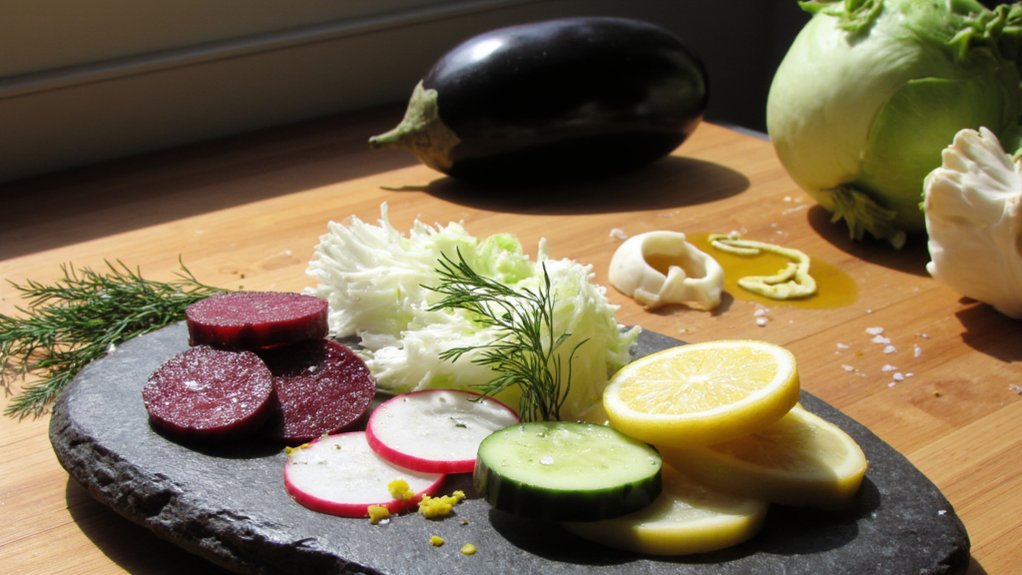
You know that feeling when produce becomes an afterthought? Well, discard everything you thought about boring veggie platters. A mandoline transforms humble vegetables into edible artwork that’ll make your guests do a double-take. We’re talking deep burgundy ribbons, rainbow hues, geometric patterns, and translucent slices that practically glow on the plate. But here’s the thing—some vegetables absolutely shine under the blade while others? They’re basically invisible. Discover which ten vegetables are total show-stoppers.
Key Takeaways
- Beets create deep burgundy ribbons with natural stripes; mandoline thin slicing reveals layered colors and curling visual appeal.
- Radishes, especially watermelon varieties, produce dramatic pink-and-white bull’s-eye rings when thinly sliced for striking garnish and board presentations.
- Translucent slices like cucumbers and fennel refract light when paper-thin, creating glass-like appearance and elegant shimmer on plates.
- Heirloom carrots display spectrum colors from orange to purple; thin ribbons and coins make salads and slaws visually pop.
- Red cabbage maintains jewel-toned purple and magenta translucent slices with pigment longevity, creating professional-quality plate presentations.


Beets: Deep Burgundy Ribbons With Natural Stripes
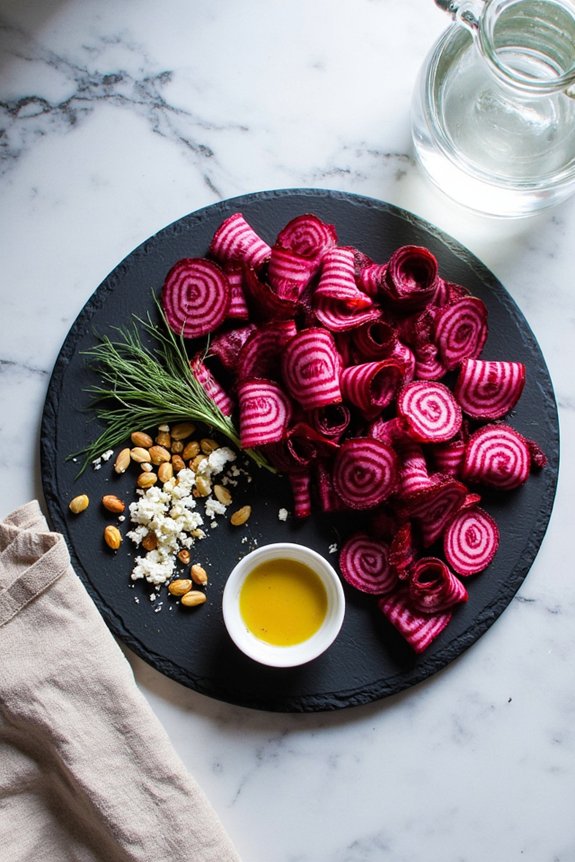
Beets are honestly one of those vegetables that’ll make you look like a culinary genius the moment you slice ’em on a mandoline. You’re gonna get these gorgeous deep burgundy ribbons that’ll seriously impress anyone watching. The natural stripes? That’s pure magic from soil terroir, where growing conditions create those stunning patterns. Here’s the thing: pigment chemistry does the heavy lifting here. Those rich, earthy tones come from betalains—compounds that form as the beet grows and develops. When you run your mandoline across a fresh beet, you’re revealing layers of color that practically glow on a plate. The thin, delicate ribbons curl slightly and catch light beautifully. Seriously, your salads and garnishes’ll look restaurant-quality instantly. Just watch your fingers! For the most vibrant results, use a well-seasoned cast iron skillet to roast your beet slices before serving to enhance both flavor and visual appeal.
Carrots: Rainbow Hues From Orange to Purple
You’ve probably only thought of carrots as that basic orange stick, but here’s the thing: they come in this gorgeous spectrum of colors like deep purples, sunny yellows, and even pale whites that’ll make your mandoline work feel like actual art. When you’re slicing these colorful beauties, you’ll want to go for thin ribbons lengthwise to show off those vibrant hues, or go crosswise if you’re after those satisfying coin-shaped rounds that catch the light just right and honestly make even a boring salad look Instagram-worthy. For the most precise and uniform carrot slices, using adjustable thickness dials on a quality mandoline ensures each piece looks as stunning as it tastes.
Variety in Carrot Colors
When you slice into a carrot on your mandoline, you might be surprised to discover that not every one’s gonna be that familiar bright orange. You’ve got heirloom varieties coming in wild colors—yellows, purples, reds, and whites—each one packed with different pigment chemistry that makes ’em visually stunning.
| Color | Pigment Type | Flavor Profile |
|---|---|---|
| Orange | Beta-carotene | Sweet, mild |
| Purple | Anthocyanins | Earthy, complex |
| Yellow | Lutein | Bright, slightly spicy |
| White | Minimal pigments | Delicate, subtle |
When you’re slicing these beauties thin on your mandoline, the colors really pop. Purple carrots’ll give you that dramatic contrast. Yellow ones? They’re like little edible sunshine rays on your plate. The pigment chemistry behind each hue ain’t just pretty—it tells you something’s different inside too. If you want those vibrant slices to really shine in salads or slaws, consider using a 3-inch wide chute juicer to prep other veggies just as quickly.

Slicing Techniques for Carrots
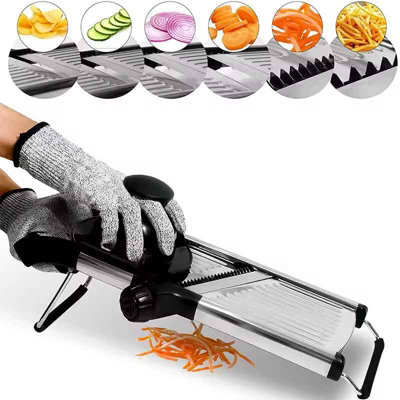
Mastering the mandoline with carrots—especially those gorgeous heirloom varieties—is all about technique and confidence. You’ll want to start by cutting your carrots lengthwise into manageable pieces, which prevents those pesky fingers from getting too close to the blade. The julienne technique creates those elegant, matchstick-thin strands that’ll make your dish look restaurant-quality. Try it. Seriously impressive.
For something chunkier, carrot batons are your best friend. They’re thicker than julienne cuts and way more forgiving when you’re learning. Hold that carrot steady with the guard, keep your fingers curled back like you’re making a claw, and let the mandoline do the heavy lifting. You’re not fighting it; you’re working with it. Start slow, build speed, and soon you’ll be slicing like a pro.
For even more precision and safety, investing in a quality mandoline slicer designed with a sturdy guard and non-slip feet will make these techniques easier and help you achieve consistently beautiful carrot slices every time.
Cucumbers: Translucent Green Medallions
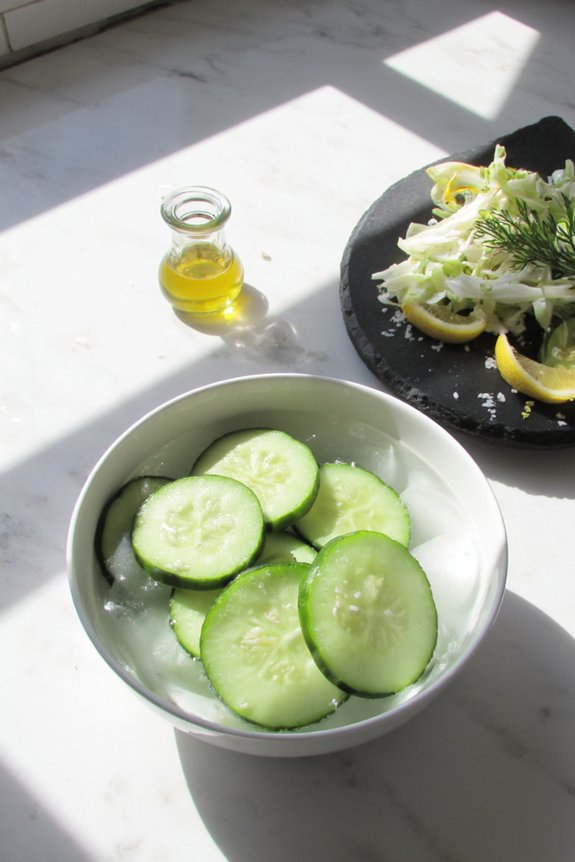
Cucumbers are pretty much the poster child of mandoline slicing, and honestly, there’s a good reason why. You’ll create absolutely gorgeous translucent medallions that look like they belong in a fancy restaurant. Here’s what makes cucumbers so spectacular on a mandoline:
- Their natural translucency creates that stunning glass-like appearance when sliced thin
- The seeds provide visual texture and interesting patterns throughout each slice
- They’re forgiving—even if you mess up, they still look impressive
The cucumber aesthetics are seriously next-level. When you run a crisp cucumber across the blade, you’re basically creating edible art. Those paper-thin rounds catch light beautifully, making salads and platters instantly more elegant. Plus, they’re super versatile. Layer them for presentations, pickle them, or stack them into towering arrangements. Your mandoline transforms ordinary cukes into something genuinely showstopping.
Zucchini: Delicate Ribbons and Thin Rounds
If cucumbers are the mandoline’s greatest hit, then zucchini? It’s the underrated B-side that deserves way more airtime. You’ll fall in love with how this veggie transforms under the blade—thin rounds that’re practically see-through, delicate ribbons that practically melt on your tongue. Here’s the thing: zucchini’s mild flavor means it won’t overpower your summer salads, and those beautiful green and white striped ribbons? They’re perfect for stuffed ribbons that’ll impress literally anyone at your table. The mandoline makes prep ridiculously easy, turning what’d normally take forever into a five-minute job. Just watch your fingers, seriously. One second you’re slicing like a pro, the next you’re nursing a minor mishap. But trust us, the stunning presentation’s totally worth the careful attention. If you’re looking to prep even more veggies for salads or smoothies, investing in dishwasher-safe kitchen tools can make cleanup just as effortless as slicing.
Radishes: Pink and White Contrast Slices
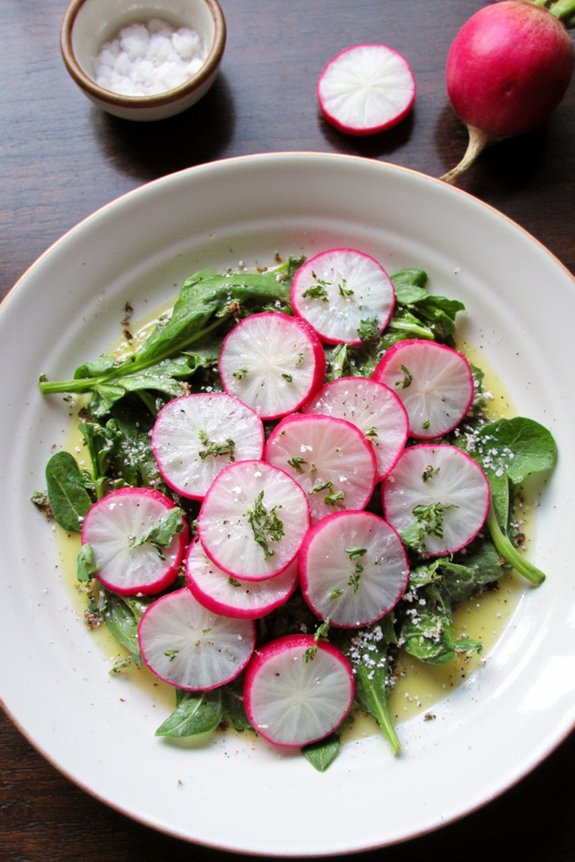
When you slice a radish on a mandoline, something almost magical happens—those crisp, peppery roots transform into these gorgeous pink and white coins that look like they belong in a high-end restaurant kitchen, not your Tuesday night dinner prep. You’ll discover that radishes aren’t just salad toppers anymore.
Here’s why you should get excited about radish garnishing:
- The natural color contrast creates visual drama on any plate without extra effort
- Paper-thin slices soften the peppery bite, making them more approachable for skeptics
- Pickled contrast slices develop complex flavors that lift simple dishes instantly
The mandoline does all the heavy lifting here. You’re basically creating edible art. Those delicate rounds catch light beautifully, adding sophistication to everything from soups to appetizers. Your guests won’t believe you made somthing this gorgeous look so effortless.
Fennel: Elegant White Layers With Subtle Sweetness
When you run fennel through your mandoline, you’ll discover that achieving those perfect paper-thin slices is all about keeping your blade sharp and your hand steady, usually around a quarter-inch thickness that’ll give you that gorgeous translucency. You’ve got this wonderfully subtle anise flavor that plays nice with citrus vinaigrettes, crisp apples, and even a little fresh herbs, making it way more versatile than folks realize. Plus, those delicate white layers practically glow on a plate—stack ’em up, fan ’em out, or arrange ’em in a salad and you’ll have your guests asking what fancy restaurant you’ve been training at.


Slicing Technique and Thickness
- Keep your hand placement steady by using the guard—seriously, your fingertips’ll thank you later
- Maintain knife maintenance by cleaning your blade between cuts to prevent browning and buildup
- Angle your slices slightly for that professional, translucent look that’ll impress anyone watching
Start at the fennel’s widest point and work down for maximum visual impact. The thinner you go, the more those stunning white layers shimmer and shine. You’ll create these almost-transparent slices that’re perfect for salads or garnishes. It’s honestly the difference between “nice” and “wow, that looks restaurant-quality.”
Flavor Profile and Pairings
Because fennel’s got this delicate licorice-meets-subtle-sweetness thing going on, you’ll want to pair it with ingredients that won’t completely overpower those elegant white layers you’ve worked so hard to slice. Think citrus. A squeeze of lemon or lime brings acid balance that actually makes fennel shine brighter. Your herb pairings should stay light and fresh—dill, tarragon, or parsley work beautifully without competing for attention. Here’s where it gets fun: combine your mandoline-sliced fennel with crisp apples, creamy goat cheese, and toasted almonds for a salad that’ll make your guests wonder how you’re such a culinary genius. Add a simple vinaigrette with Dijon mustard, and you’ve basically created edible art. That’s the fennel magic right there.
Visual Presentation Benefits
Now here’s where the mandoline really shows off—those paper-thin slices of fennel don’t just taste amazing, they look absolutly gorgeous on a plate. You’ll notice how the mandoline transforms ordinary fennel into something restaurant-worthy. Here’s why your presentation game gets a serious upgrade:
- Color Contrast – The pale, almost translucent white layers pop beautifully against darker greens and vibrant reds on your plate
- Plate Symmetry – Those uniform slices stack perfectly, creating professional-looking arrangements that feel intentional and polished
- Light Refraction – Thin fennel practically glows when light hits it, adding an elegant shimmer to your dish
You’re basically creating edible art here. The delicate layers catch everyone’s eye before they even taste anything. It’s the kind of detail that makes home cooking feel fancy without requiring a culinary degree.
Celery Root: Creamy White Geometric Patterns
If you’ve never seen celery root sliced thin on a mandoline, you’re in for a treat—it’s like discovering a whole new vegetable. The root architecture creates these gorgeous geometric patterns that look almost too perfect to be real. You’ll get these delicate, lacy circles with tiny chambers throughout—that’s the starch content doing its thing, creating natural compartments. When you slice it paper-thin, those creamy white rounds become totally translucent in spots, catching light like stained glass. It’s honestly mesmerizing. The mandoline makes quick work of what’d otherwise be tedious hand-slicing, and you get uniform thickness every single time. Whether you’re making a fancy gratin, layering it for a salad, or just admiring your handiwork, celery root’s geometric beauty steals the show. It’s the understated overachiever of root vegetables.
Red Cabbage: Jewel-Toned Sheer Slices
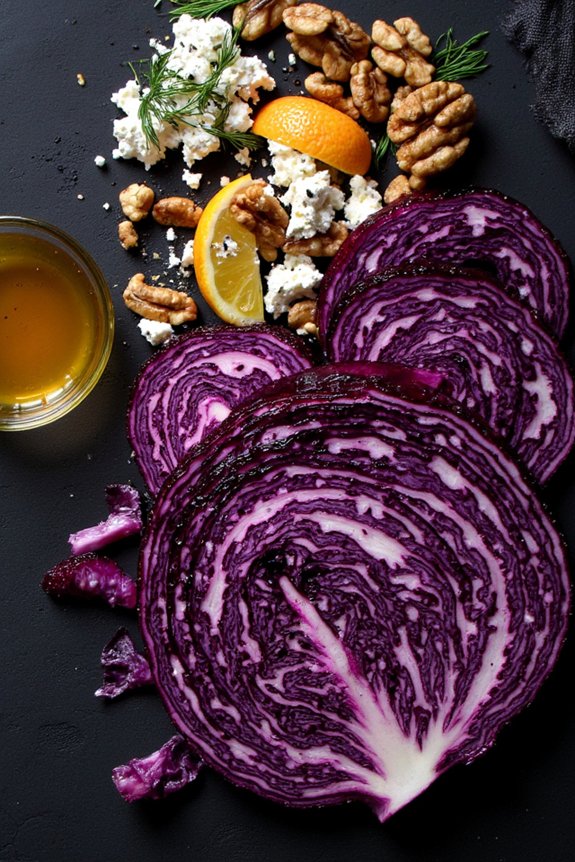
Red cabbage comes alive when you run it through a mandoline, transforming into these stunning jewel-toned slices that’d make any salad jealous. The sheer translucence of each paper-thin layer reveals nature’s beautiful color palette in deep purples and magentas. You’ll discover why this vegetable is a mandoline superstar:
- The jewel tones deepen when light passes through the translucent slices, creating an almost stained-glass effect on your plate
- Thinly sliced red cabbage stays crisp longer than chunked pieces, perfect for meal prep
- The delicate shear texture makes it ideal for raw preparations, slaws, and vibrant side dishes
What’s really cool? That gorgeous color won’t fade quickly. Red cabbage’s natural pigments hold strong, keeping your dishes looking restaurant-quality fresh for days.
Watermelon Radish: Stunning Pink and White Bull’s-Eye Design
When you slice into a watermelon radish, you’ll swear you’ve discovered some kind of culinary magic trick. That stunning pink and white bull’s-eye design? It’s totally real. You’ll be amazed at the dramatic color contrast that emerges with each thin slice. The pale white exterior gives way to shocking hot pink rings that look almost painted on. It’s like nature decided to show off. What makes these radishes truly special is their crisp texture paired with that gorgeous visual appeal. They’re perfect for garnishing salads, grain bowls, or charcuterie boards where you want to impress folks. Honestly, just slicing one is entertainment enough. Your mandolin will become your new favorite kitchen tool the moment you create those perfect, translucent rounds. These radishes prove that healthy eating doesn’t have to be boring or bland.
Daikon Radish: Crisp White Translucent Rounds
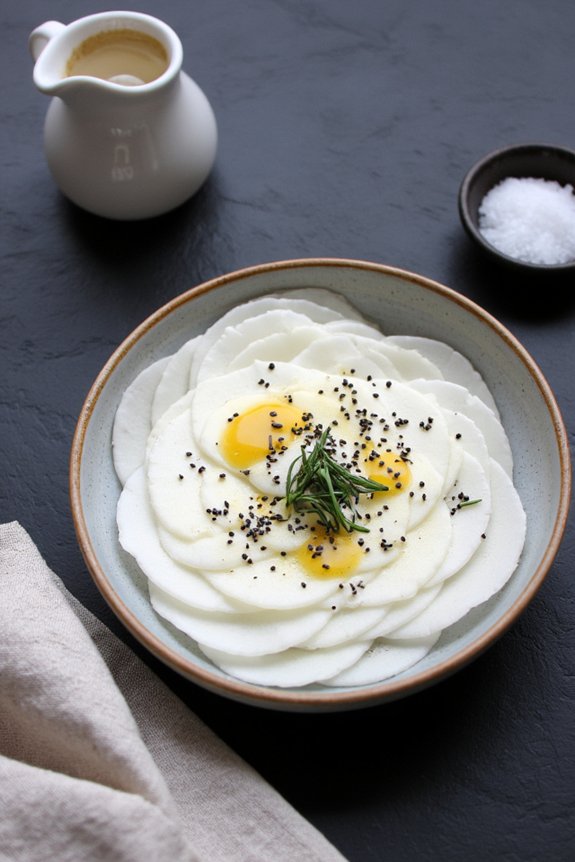
When you slice a daikon radish on your mandolin, you’ll reveal this vegetable’s hidden magic—those paper-thin rounds become almost translucent, creating these gorgeous white circles that’ll seriously lift your plating game. You’re working with a crisp, slightly peppery flavor that hits different when it’s sliced razor-thin, giving you that satisfying crunch that makes your guests actually *notice* what they’re eating, plus the delicate texture really shines when you nail those impossibly thin slices. It’s honestly the kind of vegetable that transforms from “meh, it’s a radish” to “wait, how’d they make this look so elegant” the moment you pull out that mandoline.
Razor-Thin Slicing Techniques
Once you’ve got your mandoline set to its thinnest setting, daikon radish becomes pure magic—you’ll slice through that pale root and out come these gossamer-thin rounds that’re almost translucent if you hold them up to the light. It’s genuinely mesmerizing.
Here’s what’ll make you a mandoline master:
- Keep your precision safety guard between your fingers and the blade—seriously, your knuckles’ll thank you later
- Maintain consistent pressure with steady strokes for uniform thickness across every single slice
- Clean your blade maintenance routine religiously; buildup dulls edges and ruins those delicate translucent effects
The thinner you go, the more elegant your results become. You’re basically creating edible glass here. Those wispy rounds’ll look absolutely stunning in salads, on platters, or layered in Asian dishes. Your guests won’t believe you made somethin’ this fancy.
Visual Appeal and Presentation
Why does daikon radish steal the show every single time you slice it? Those crisp white translucent rounds are basically nature’s way of showing off. When you lay them out on your plate, they create instant color contrast against darker foods like beets or purple cabbage. It’s honestly stunning.
The key to nailing plating symmetry is arranging those delicate slices in overlapping patterns, like you’re building an edible work of art. They’re so thin and nearly see-through that light practically glows through them. Stack ’em. Fan ’em. Go wild with it.
Your mandoline makes this ridiculously easy, turning every slice into a work of architectural brilliance. Daikon radish doesn’t just taste crisp and peppery, it looks like you actually know what you’re doing in the kitchen. Spoiler: it’s mostly just the vegetable being a total show-off.
Texture and Flavor Profile
Beyond those picture-perfect slices lies something equally impressive—daikon radish actually tastes as good as it looks. You’re getting way more than just eye candy here. The magic happens when you bite down:
- A crisp, snappy texture that practically sings between your teeth
- Subtle peppery notes with mild aromatic intensity that won’t overpower your palate
- Delicate sweetness underneath that balances the slight heat
The mouthfeel contrasts you’ll experience are genuinely addictive. That initial crunch gives way to a juicy tenderness that’s almost creamy. The flavors aren’t agressive—they’re sophisticated and understated, which honestly makes ’em perfect for salads, coleslaws, or even floating atop soups. Your guests won’t just admire those translucent rounds. They’ll actually enjoy eating them, appreciating how daikon brings both visual drama and culinary substance to every single dish.
Frequently Asked Questions
What Safety Precautions Should I Take When Using a Mandoline Slicer?
You’ll want to wear cut-resistant gloves and use finger guards to protect your hands. Keep your fingers curled away from the blade, maintain a firm grip on the vegetable holder, and never rush while slicing.
Which Mandoline Blade Thickness Works Best for Different Vegetables?
You’ll unleash culinary magic by matching blade thickness to each vegetable’s personality. Paper thin radishes shine at 1-2mm, while chunky potato rounds demand 3-4mm settings for that perfect crispy-tender balance.
Can I Mandoline Slice Vegetables in Advance or Do They Need Prep?
You can mandoline slice vegetables in advance, though slice timing matters. For best results, prep them just before serving to preserve crispness. If you’re planning flavor marination, slice beforehand so vegetables absorb seasonings effectively.
How Do I Store Mandoline-Sliced Vegetables to Maintain Their Freshness?
You’ll keep your mandoline-sliced vegetables fresh by storing them in airtight containers with paper towels to absorb moisture. For longer storage, try vacuum sealing or blanching strips first. This maintains crispness and prevents oxidation effectively.
What Dishes Benefit Most From Mandoline-Sliced Vegetable Presentations?
You’ll find mandoline slicing shines in salad platters, where uniform thin cuts create visual appeal and even texture. Gratins benefit tremendously too—those perfectly layered slices cook uniformly and stack beautifully for an impressive presentation.
Conclusion
You’ve got this! Grab your mandoline, slice with confidence, and watch ordinary veggies transform into edible art. Whether you’re layering beets, fanning cabbage, or creating radish bull’s-eyes, you’re not just cooking, you’re creating. Each translucent ribbon, each geometric pattern, each jewel-toned slice tells a story. Your plate becomes a canvas. Your dinner becomes dazzling. That’s the magic right there.


