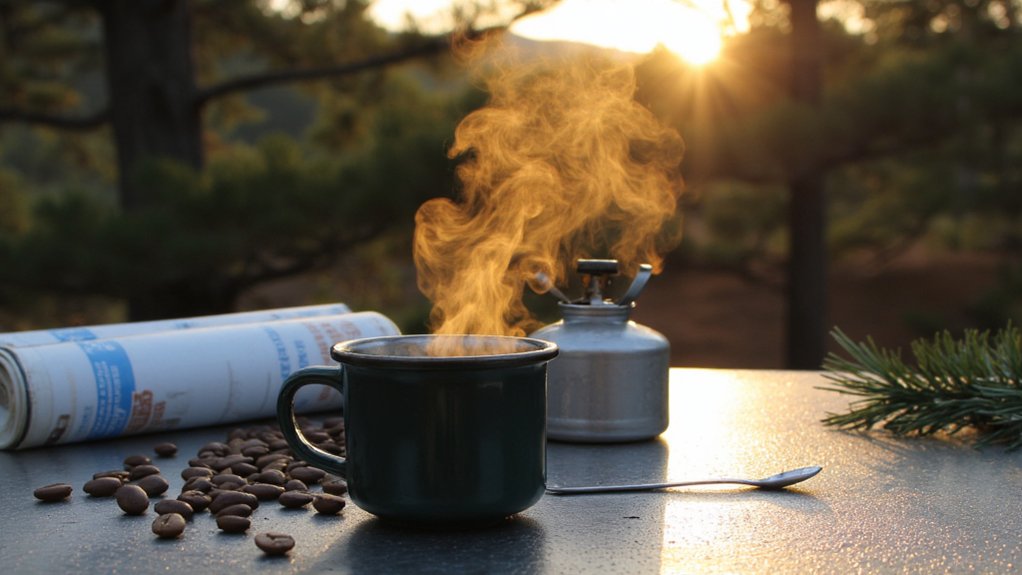
You’ve probably noticed that ultralight camping gear sounds perfect until you’re out there. That tiny dripper weighs almost nothing, sure, but one wrong move with your water temperature and you’re choking down bitter sludge. Meanwhile, heavier options like a compact French press sit in your pack, quietly delivering better coffee and fewer headaches. So what’s the real trade-off nobody mentions? It’s way more complicated than ounces and grams.
Key Takeaways
- Lightweight materials compromise durability; ultralight brewers often fail after one or two seasons of regular use.
- Small removable parts like filters and lids get lost easily outdoors; always pack extras in sealed bags.
- Ultralight brewers require precise timing and measurements; minor variations cause bitter or weak coffee consistently.
- Temperature control without electricity demands careful stovetop monitoring; insulated pour-overs help maintain consistent brew quality.
- Slightly heavier, durable brewers improve trip satisfaction more than ultralight models that produce mediocre coffee.
The Hidden Cost of Compact Design
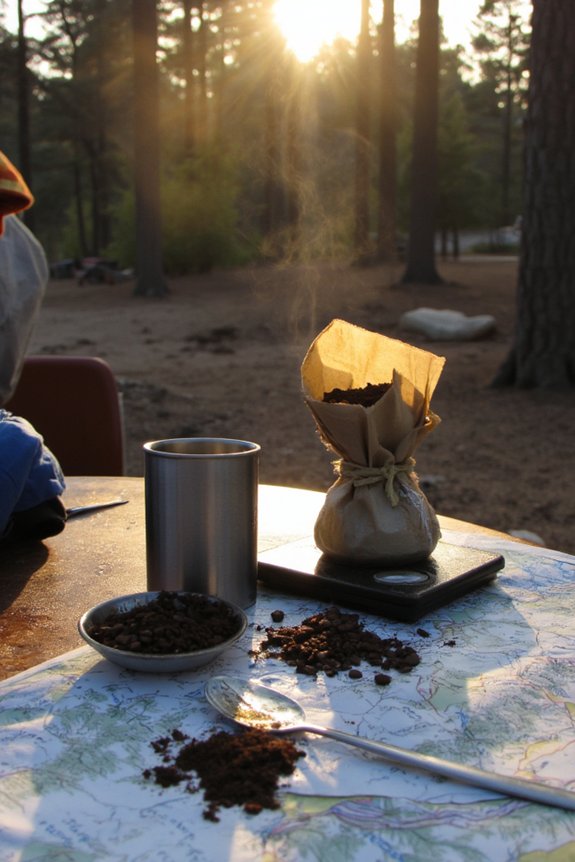
When you’re drawn to those adorable compact camping coffee makers, it’s easy to overlook what you’re actually trading away. You’re sacrificing materials durability for that lightweight appeal, which means your brewer might not survive more than a season or two of rough handling. Those tiny components wear out faster than their full-sized cousins, and replacements can be pricey. Then there’s the ergonomic tradeoffs you’ll face. Small handles become uncomfortable when you’re holding a hot pot with cold, tired hands at dawn. The brewing chamber’s cramped design makes cleaning a frustrating chore. You’ll also struggle pouring without spilling coffee everywhere. Sometimes that sleek, portable aesthetic just ain’t worth the practical headaches it creates out on the trail. For example, opting for ultra-lightweight materials can make your coffee maker easier to pack, but it may compromise durability on rugged trips compared to sturdier stainless steel models.
Temperature Control Without Electricity
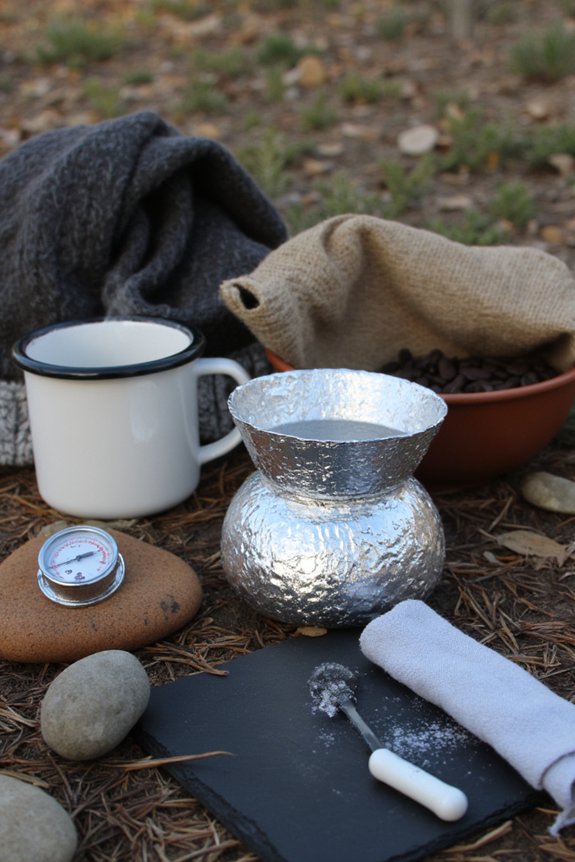
Keeping your coffee at the right temperature without plugging anything in might sound like a camping fantasy, but it’s actually pretty doable once you understand the basics. Your best friend here is an insulated pour over paired with a good stovetop kettle. Heat water on your camp stove until it’s steaming, then pour it through your grounds into an insulated carafe that’ll keep everything hot for hours.
The magic happens when you preheat your pour over with hot water first. This simple step makes a huge difference in maintaining temperature. Your stovetop kettle sits right on the flame, giving you complete control over heat without any batteries required. It’s low-tech, reliable, and honestly kind of satisfying. If you want the same level of temperature control as an electric kettle while camping, look for stovetop models that allow you to monitor water temperature closely to avoid overheating delicate brews.
Losing Components in the Great Outdoors
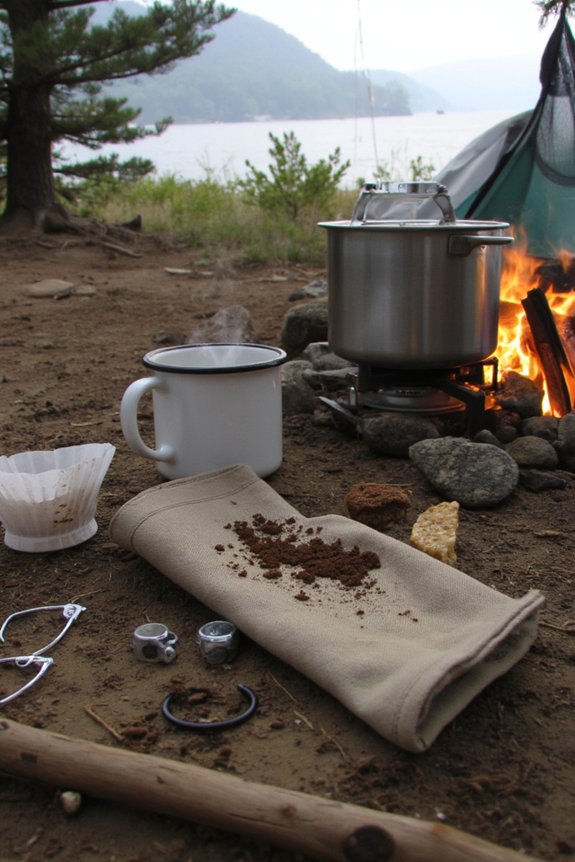
One wrong move and your favorite pour over filter basket disappears into the pine needles, never to be seen again. It’s a camping reality that nobody warns you about when you’re packing.
| Component | Loss Risk | Prevention |
|---|---|---|
| Filters | High | Keep extras in ziplock bags |
| Fallback lids | Medium | Attach to main container |
| Ground coffee | High | Use sealed containers |
You’ll forget filters at home, leave fallback lids behind at camp, and somehow lose tiny metal parts to the wilderness. Small pieces scatter during setup, wind carries things away, and your hands are cold and clumsy. That’s why you’ve gotta bring duplicates of everything important. Seriously, pack way more than you think you’ll need because losing components out here isn’t a maybe, it’s basically guaranteed. Some removable water tanks and trays on modern coffee makers can help reduce the chance of losing small parts, but in the wild, every detachable piece is a potential goner.
The Precision Problem With Ultralight Brewers
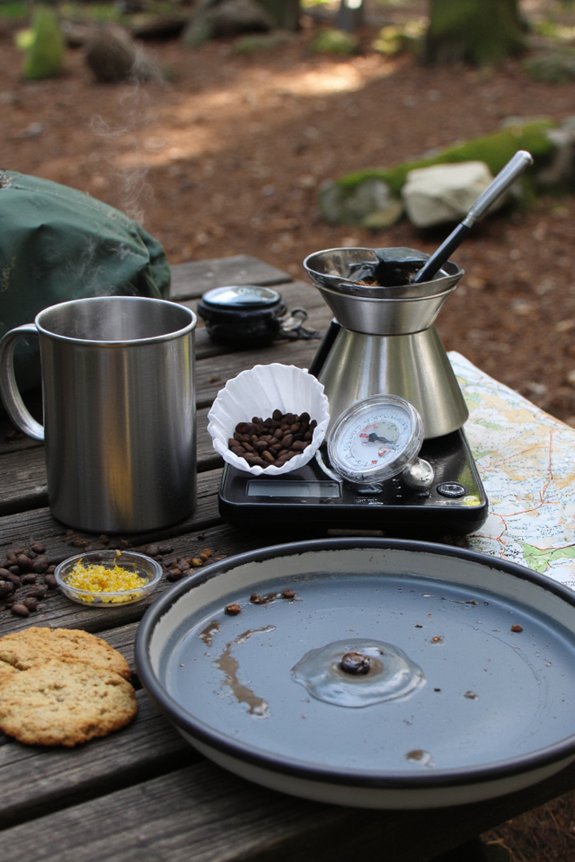
As your ultralight brewer gets smaller and lighter, it demands way more precision from you, and that’s where things get tricky. You’ll quickly discover that tiny changes matter a ton. A few extra seconds of brew time can make your coffee taste bitter or weak. Same goes for brew strength, which becomes way harder to dial in when you’re working with minimal equipment and no real measurements. There’s no room for guessing. You can’t just eyeball it like you might at home. Your water temperature, grind size, and steeping duration all need to be spot-on. It’s honestly the hidden cost of ultralight gear that nobody mentions. The portability comes with a learning curve that’ll test your patience. If you’re considering bringing an electric kettle with temperature control into the wild, remember that precise water temperature can make or break your camp coffee—just like it does at home.
Balancing Quality, Size, and Practicality
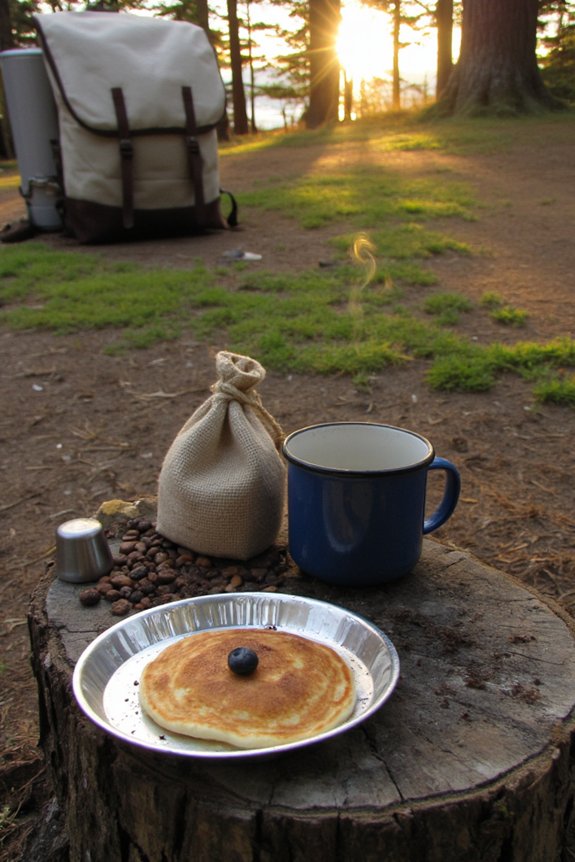
The real trick isn’t picking the tiniest, lightest brewer you can find, because honestly, that’s just setting yourself up for frustration in the field. You’re stuck balancing brew strength, weight tradeoff, and what you’ll actually use without cursing yourself three days into your trip.
| Brewer Type | Weight | Brew Quality |
|---|---|---|
| Ultralight Dripper | 1.2 oz | Good |
| French Press | 8 oz | Excellent |
| Moka Pot | 6 oz | Strong |
Here’s the thing: a two-ounce brewer that makes terrible coffee defeats the purpose. You’ll ditch it eventually. Pick something you genuinely enjoy using, even if it weighs slightly more. Your morning cup matters way more than shaving another ounce off your pack. Comfort wins trips. When considering your setup, remember that grind consistency from your coffee grinder can impact brewing quality just as much as your choice of brewer.
Frequently Asked Questions
How Do I Clean a Portable Camping Coffee Maker Without Running Water?
You’ll use the dry brush technique to remove grounds, then apply no rinse sanitizers for disinfection. Wipe everything down with a cloth afterward—you’re done without needing running water.
What’s the Best Way to Transport a Camping Coffee Maker Safely?
You’ll want to pack your camping coffee maker in a padded case to prevent damage during transport. If you’ve got a modular rack system, use it to organize components separately, keeping everything secure and preventing breakage while you’re traveling.
Can Portable Coffee Makers Handle High-Altitude Brewing Differences?
Yes, you can brew at high altitudes, but you’ll need to make altitude adjustments since water boils at lower temperatures. Most portable makers don’t have pressure compensation, so you’ll need longer brewing times.
How Long Does Coffee Stay Hot in Portable Camping Brewers?
Your coffee’ll stay hot 30-45 minutes depending on insulation materials and brewing volume. You’re fighting ambient temperature constantly, so double-wall construction helps considerably. Smaller batches cool faster than larger volumes.
Are Camping Coffee Makers Compatible With Different Water Types?
Your camping coffee maker’s filter compatibility matters most with different water types. You’ll find mineral sensitivity is essential—hard water can damage certain brewers, while soft water works universally better across most portable models.
Conclusion
Look, you’re gonna want to skip the ultralight trap and grab something that actually works. A compact French press or moka pot weighs a bit more, sure, but you won’t spend your mornings wrestling with finicky brewers or hunting for lost parts. Your coffee’ll taste better, you’ll stress less, and honestly, those extra ounces are worth the peace of mind on the trail.


