So your masticating juicer’s churning out something that looks more like fancy water than actual juice? That’s frustrating, especially when you’re expecting that rich, concentrated stuff. The good news is it’s usually fixable. Before you assume your machine’s broken, there’s a bunch of things going on—from what produce you’re using to how you’re actually feeding it through. Let’s figure out what’s going wrong.
Key Takeaways
- Use ripe, properly hydrated produce harvested at peak ripeness to maximize juice concentration and minimize water content.
- Feed produce slowly in small, uniform chunks while applying gentle pressure to allow thorough extraction without dilution.
- Chill ingredients beforehand and remove excess surface moisture before juicing to prevent watery results.
- Mix watery produce with fibrous varieties to balance juice thickness and improve overall consistency.
- Check for worn seals, screens, and auger components that reduce extraction efficiency and produce thinner juice.

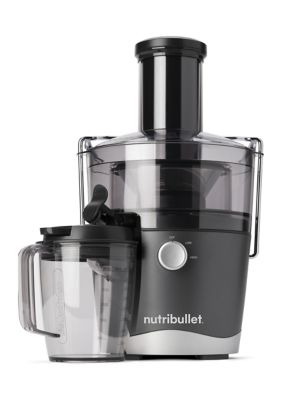
Understanding How Masticating Juicers Work
Let’s break down what makes these juicers tick. Masticating juicers work through slow rotation, using an auger that crushes and squeezes produce against a screen. Unlike centrifugal juicers that spin super fast, yours uses cold extraction, which means less heat and oxidation. This gentler approach preserves nutrients and enzymes better.
Here’s the thing though—that slow, methodical process can sometimes produce juice that feels thinner than expected. The auger grinds produce into smaller particles, which increases surface area and releases more liquid. You’re effectively getting every last drop, and sometimes that includes more water content from the fruit itself. It’s actually a good sign that your juicer’s working properly and extracting thoroughly, even if the result looks a bit underwhelming.
Some models, due to their low RPM operation, are specifically designed to maximize juice yield while minimizing nutrient loss and oxidation.
Selecting the Right Produce for Optimal Juice Consistency
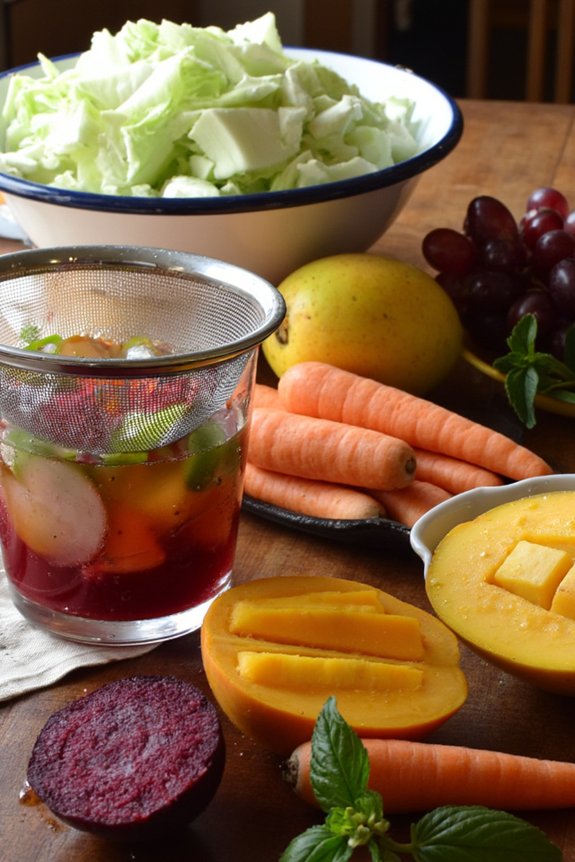
You’ll want to pay attention to ripeness since an overripe fruit or veggie tends to release way more water, while underripe produce might give you less yield altogether. Different fruits and vegetables bring their own water content to the party—think juicy oranges versus denser carrots—so knowing what you’re working with helps you mix and match for that perfect consistency you’re after. Timing matters too, and picking produce at its peak harvest window, rather than grabbing whatever’s been sitting around,’ll make a noticeable difference in how thick or thin your final juice turns out. Additionally, the extraction method differences between masticating and centrifugal juicers can impact juice consistency, with masticating models generally yielding thicker, less watery juice due to their slow, cold-press operation.
Ripeness Indicators Matter Most
When produce hits that sweet spot of ripeness, your masticating juicer practically does cartwheels, transforming firm fruits and vegetables into smooth, consistent juice instead of that watery disappointment that makes you question all your life choices. You’ve gotta know what you’re looking for though.
| Produce | Ripeness Indicator | Flavor Impact |
|---|---|---|
| Apples | Slight give when squeezed | Sweeter, more concentrated |
| Carrots | Firm with no soft spots | Earthier, less diluted |
| Oranges | Heavy for their size | Juicier, richer taste |
| Berries | Deep color, slight softness | Vibrant, less watery |
| Celery | Crisp and rigid stalks | Cleaner flavor profile |
Underripe produce yields thin, bland juice. Overripe stuff turns to mush. You want that goldilocks moment—firm enough to maintain structure yet ripe enough for maximum juice extraction and flavor concentration. Choosing produce with optimal texture and ripeness not only improves your juicer’s yield, but also results in a richer, less watery drink every time.


Water Content by Produce
Most produce isn’t created equal when it comes to water content, and that’s actually the secret sauce to nailing juice consistency in your masticating juicer. You’ll notice that leafy greens and cucumbers pack serious high water content but also low fiber, which means you’re getting thinner juice. Conversely, carrots and beets have denser cell structure with more natural sugars, producing thicker, richer results. Here’s the thing: understanding your produce’s makeup helps you strategize better blends. When you combine watery veggies with fibrous ones, you’re basically using juice binding principles without even thinking about it. Mix that cucumber with some carrot, and suddenly you’ve got balance. It’s like cooking, really—knowing your ingredients matters more than fancy equipment. Just as with coffee extraction, achieving the right juice consistency depends on the balance between water content and cell structure in your ingredients.
Optimal Harvest Timing Selection
Picking produce at peak ripeness is where the real magic happens for getting that perfect juice consistency. You’ll want to catch fruits and vegetables during their harvest window, that sweet spot when they’re bursting with juice and nutrients. Timing matters big time here. Produce picked too early tends toward watery results, while overripe stuff can get mushy and bland.
Pay attention to field moisture levels too. If you’re buying from farmers markets, chat with vendors about when items were harvested. Recently picked produce with ideal water content gives you thicker, more flavorful juice. Morning harvests often work better since plants are naturally hydrated from overnight dew, not from rain or irrigation.
Trust your instincts. A ripe apple feels heavier, a ripe carrot snaps crisply. Your masticating juicer deserves quality raw materials.
For the best juicing results, consider how harvest timing and moisture can impact juice consistency, much like choosing the right rice cooker capacity ensures optimal performance in your kitchen.
Adjusting Your Juicing Technique and Feeding Method
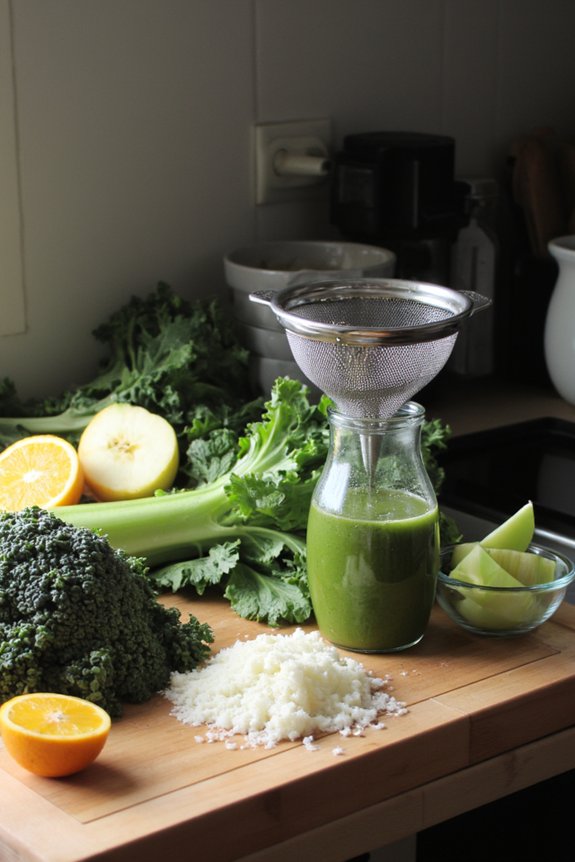
Since your masticating juicer’s performance really depends on how you’re using it, tweaking your technique can make a huge difference in juice quality and consistency. Try slow feeding instead of rushing produce through the chute. You’re not in a race here. Give that auger time to really work its magic on each piece.
Chunk size matters too. Cut your fruits and veggies into smaller, uniform pieces so they process evenly without creating air pockets that dilute your juice. Larger chunks sometimes slip through without proper extraction, leaving you with something that tastes more like flavored water than actual juice.
Press gently as you feed. Let the juicer do the heavy lifting rather than forcing everything through. These small adjustments often transform watery results into rich, concentrated juice you’ll actually enjoy drinking.
Checking Machine Settings and Pulp Adjustment
Your masticating juicer probably has a few settings you haven’t even looked at yet, and that’s where a lot of your watery juice problem might be hiding. Most models come with adjustable pressure controls that you can tweak to squeeze more liquid from your produce. Check your manual, seriously, because that little dial or lever can make a huge difference.
The pulp control setting is your secret weapon here. If it’s set too loose, you’re basically getting flavored water. Tighten it up a notch and suddenly you’ve got actual juice with body. Some juicers also have speed settings, and running at peak speed prevents over-processing your fruits and vegetables, which breaks down fiber and releases excess water. Play around with these settings and you’ll probably find your sweet spot pretty quick.
Cleaning and Maintaining Your Juicer Properly
You’ll want to make cleaning your juicer a regular habit right after you use it, because dried pulp gets stubborn and turns into basically concrete. Set up a simple preventive maintenance schedule—maybe weekly deep cleans and daily rinses—so you’re not battling buildup that could actually affect your juice quality and make everything taste a bit off. Staying on top of it takes just a few minutes but saves you from the headache of scrubbing for an hour later.


Regular Cleaning Best Practices
Regular cleaning is pretty much non-negotiable if you want your masticating juicer to keep doing its job well. You’ll want to make routine disassembly part of your weekly ritual. Pull apart those screens, augers, and baskets right after juicing while everything’s still fresh. It’s way easier than letting pulp dry and harden into stubborn crud.
Quick sanitization matters too. A hot water rinse followed by some vinegar works wonders for killing bacteria and mold that might be lurking in tight spaces. Don’t forget those hard-to-reach nooks between the auger and housing, where gunk loves to hide.
Dry everything completely before reassembling. Moisture hanging around can cause oxidation and funky smells that’ll mess with your juice quality. Stay consistent with this routine, and you’ll keep your juicer running smooth and your juice tasting fresh.
Preventive Maintenance Schedule Tips
Establishing a maintenance schedule keeps your masticating juicer from turning into a paperweight, and it doesn’t have to be complicated. You’ll want to do scheduled inspections monthly, checking seals and screens for wear or damage. This catches problems before they ruin your juice quality. Set a calendar reminder, honestly—you’ll forget otherwise.
Seasonal replacements matter too. Every six months, swap out worn gaskets and strainers before they start deteriorating. Your juicer’ll thank you with consistently thick, nutrient-rich juice instead of that watery disappointment you’ve been dealing with.
Keep a simple log of what you’ve checked and replaced. It sounds nerdy, but you’ll know exactly what’s been maintained and what’s coming up next. That’s how you avoid premature wear and keep everything running smoothly.
Identifying Wear and Tear on Internal Components
Over time, the internal gears and components of your masticating juicer will start showing signs of age, kind of like how your car needs an oil change eventually. You’ll want to keep an eye out for specific warning signs that indicate your machine’s getting tired.
Here’s what to watch for:
- Gear abrasion creating grinding noises during operation
- Seal degradation leading to leaks around the auger housing
- Visible cracks or chips in the auger or strainer basket
- Decreased juice yield even with fresh produce
- Unusual vibrations or wobbling during use
When you notice these issues, it’s time to assess replacement parts. Catching wear early prevents bigger problems down the road, saving you money and frustration. Your juicer’ll thank you for staying vigilant.
Maximizing Juice Yield Through Proper Preparation
Before you even turn on your juicer, you’re already setting yourself up for success or failure, and it all comes down to how you prep your produce. Start with batch sorting—separate your fruits and veggies by type and ripeness. This matters because softer items extract differently than harder ones. Wash everything thoroughly and remove any excess moisture with a paper towel. That’s key for cold extraction, which keeps nutrients intact while preventing dilution from surface water.
Cut produce into appropriate sizes for your machine. Smaller pieces feed more efficiently through the auger. Chill your ingredients beforehand if possible. Cold produce yields less watery juice and helps preserve enzymes that heat would destroy. You’ll notice the difference immediately.
Frequently Asked Questions
Can I Fix Watery Juice Without Purchasing Replacement Parts or a New Juicer?
Yes, you can fix watery juice by increasing your tamp pressure on produce and adjusting your pulp texture settings. You’ll notice improved juice consistency without needing new parts or equipment.
How Does Ambient Temperature Affect My Masticating Juicer’s Juice Consistency and Quality?
Your juicer’s ambient effects matter markedly. Higher temperatures cause your produce’s cellular breakdown, yielding thinner juice. Maintaining temperature stability—ideally 60-70°F—preserves pulp structure and delivers denser, richer juice consistency while improving overall quality.
Which Fruits and Vegetables Naturally Produce More Liquid Than Others When Juiced?
You’ll find that citrus yield is exceptionally high—oranges, lemons, and grapefruits produce abundant liquid. Melons with their melon moisture content like watermelons and cantaloupes also generate watery results in your masticating juicer.
Does Juice Oxidation or Separation Over Time Indicate a Juicer Malfunction?
No, oxidation and separation don’t indicate malfunction. You’re experiencing normal enzyme activity breaking down cell walls and altering pulp viscosity. These changes occur naturally over time as juice sits, regardless of your juicer’s performance.
How Can I Store Fresh Juice to Prevent It From Becoming Diluted?
You’ll want to store your fresh juice in airtight containers immediately after juicing. Keep them refrigerated to slow oxidation and separation. Cold filtration before storage also helps prevent dilution and extends your juice’s freshness markedly.
Conclusion
So here’s the thing: you’re probably gonna nail this watery juice problem once you dial in your produce choice, technique, and machine maintenance. Start with ripe, chilled ingredients and feed ’em slowly without forcing anything. Keep your juicer clean and check for worn parts regularly. It’s honestly not rocket science—just a few tweaks and you’ll be sipping noticeably better juice before you know it.