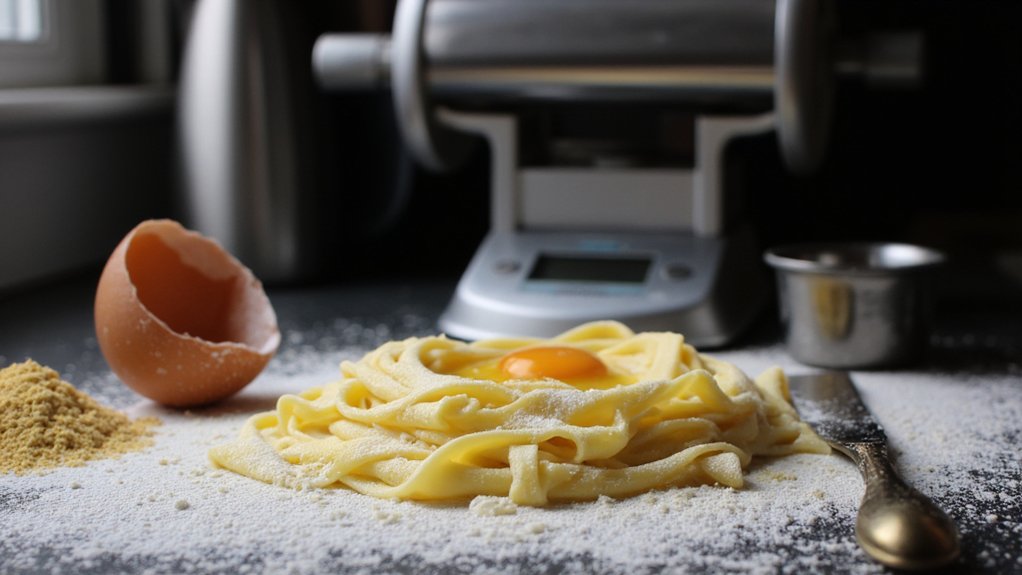
Nobody tells you your pasta maker cares about grams like a fussy cat, but it does—you tweak a gram of water or semolina and the dough’s chew, silkiness, and roller behavior shift fast. Blend 00 for tenderness with semolina for grip, and remember eggs change hydration math. Start dry, rest, then nudge wetter. Hand-crank or electric? Different needs. Humidity whispers too. Want sheets that don’t tear or gum up? Here’s where the quiet tricks start to matter.
Key Takeaways
- Protein percentage matters more than brand; blend 00 and semolina to tune bite: 70/30 for silky ribbons, 60/40 for stuffed, 50/50 for sauce grip.
- Hydration isn’t fixed; eggs and room conditions shift needs—adjust by teaspoons while kneading until dough is smooth, supple, and not sticky.
- Machine type changes ratios: hand-crank prefers slightly drier dough; electric rollers handle wetter dough for cleaner edges and elasticity.
- Resting evens hydration and relaxes gluten; tight, tearing dough needs longer rest, while slack dough benefits from shorter rests and occasional folds.
- Troubleshoot by feel: tearing or gummy sheets need flour or more kneading; crumbling or cracking edges need a splash of liquid or extra yolk.
The Real Role of Hydration in Dough Texture
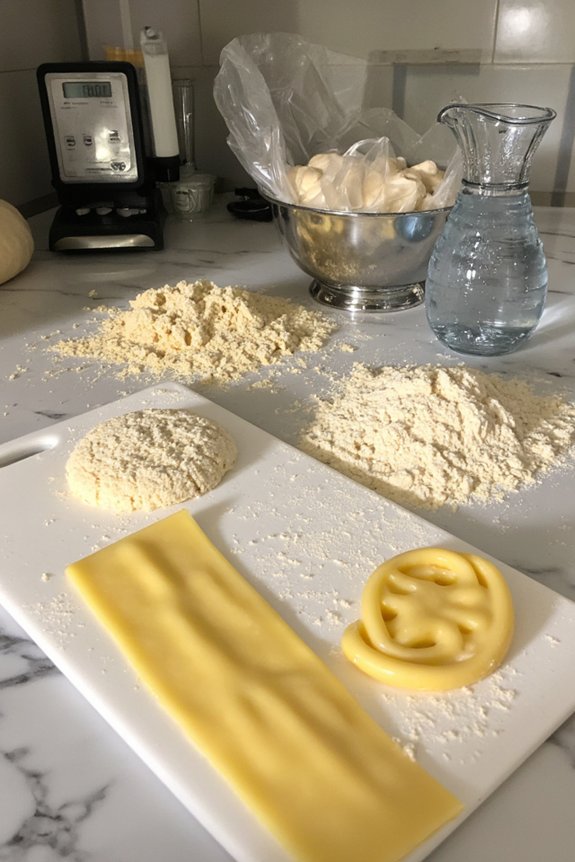
Staring down a bowl of flour and water, you might think hydration just makes dough wetter, but it’s doing way more behind the scenes. Water sneaks into starch and protein, sets off gluten formation, then nudges gluten relaxation so the dough stops fighting you. Give it time, and the network loosens a bit, letting you roll smoother sheets without tearing. You’ll also get hydration gradients at first, wetter pockets and drier bits, which is why resting matters. It evens things out. Knead enough to link proteins, but don’t go wild or you’ll build a rubber band army. Aim for a dough that feels supple, not sticky. If it clings, dust lightly. If it cracks, add sips of water. Tiny adjustments, big payoff.
Choosing and Blending Flours for Shape and Bite
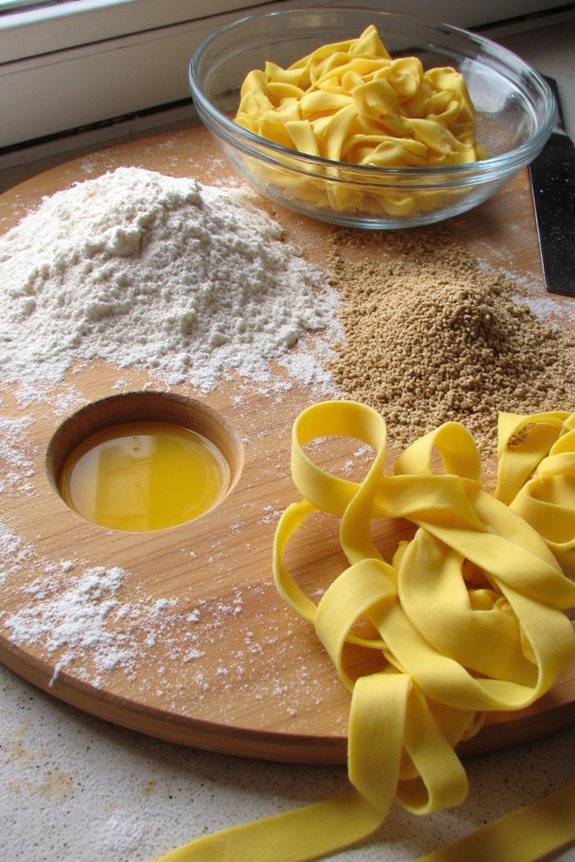
You’re picking flours not just for flavor but for how your pasta holds shape and chews, so think about semolina vs. 00 and what each brings to the party. Semolina adds grip and a hearty bite that’s great for ridged or extruded shapes, while 00 gives you silky sheets for ravioli and tagliatelle, so you’ll often blend them to get snap without turning your noodles into rubber bands. Aim for a balanced protein level by mixing high-protein semolina with lower-protein 00 until the dough feels elastic but not tough, kinda like a firm handshake, not a wrestling match. Choosing the right blend is especially important if you’re using manual pasta makers, since dough texture affects both ease of rolling and the final bite.
Semolina vs. 00
Although both live in the pasta hall of fame, semolina and 00 flour behave like cousins with very different personalities, and choosing between them changes your noodle’s shape and bite. You’ll feel it as soon as dough hits your hands. Semolina brings grip and a sandy snap, with that classic semolina texture and a warm, nutty durum flavor. 00 is silky, almost powdery, giving you smooth sheets that roll thin without drama. Use semolina for ridges and rugged shapes. Reach for 00 when you want tender ribbons that still hold.
- Sun-yellow semolina grains catching light like tiny pebbles
- A satin sheet of 00 pasta draped over your rolling pin
- Bronze-die ridges grabbing sauce like velcro
- A glossy tagliatelle twirl, clean and elegant
Protein Content Balance
If shape and bite are your goal, protein is the dial you twist to get there, because gluten strength is what decides whether your pasta snaps, springs, or sighs. You’re aiming for protein balance, not max bragging rights. Semolina brings higher protein and grit for structure, while 00 adds silk. Blend them to tune the gluten network.
Try 60 percent semolina to 40 percent 00 for sturdy shapes like rigatoni. Want silkier tagliatelle that still chews? Flip it to 40 semolina, 60 00. Eggs bump protein too, so reduce semolina a touch if your dough fights back. Hydrate well, rest 30 minutes, then test-roll a tiny batch. Adjust a spoonful at a time. Tiny tweaks, big wins. No stress, just good noodles.
Protein Percentages and How They Change the Math
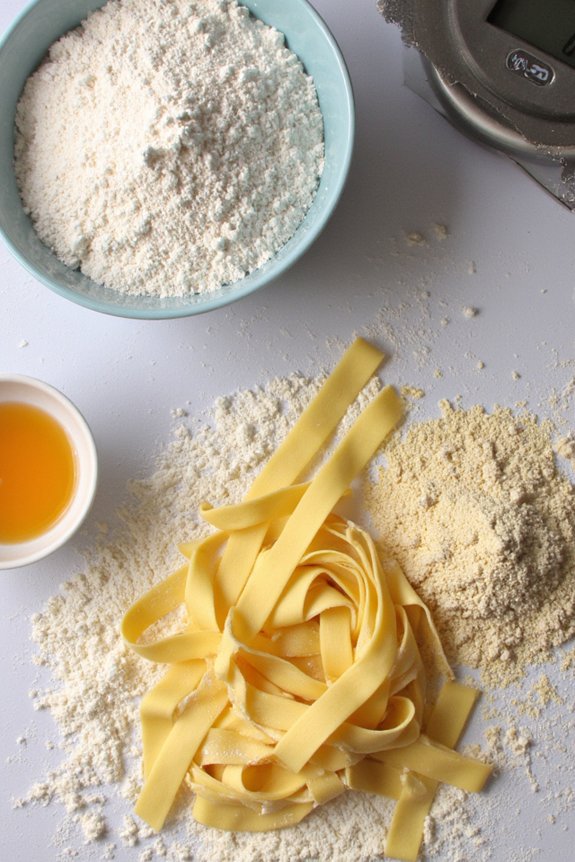
You’re about to juggle protein percentage targets, because higher protein flours build stronger gluten and change how your dough behaves. That means you’ll tweak water: more protein usually needs a touch more hydration, while softer, lower-protein blends sip less, not glug. Keep notes as you go, since a 12% flour can drink differently than a 10% one, and you’ll nail that sweet spot fast—no soggy noodles, no brick pasta, promise. If you’re using cast iron skillets to cook your pasta sauces or fillings, remember their excellent heat retention can subtly impact how quickly your sauce reduces and thickens.
Protein Percentage Targets
Since pasta dough lives or dies by gluten, the flour’s protein percentage is the quiet boss telling your rollers how the day’s gonna go. You’re aiming for targets, not guesses, so think in ranges. For delicate sheets and quick cooking, 10–11% protein keeps things tender. For resilience and bite, 11.5–12.5% hits the sweet spot. If you want serious chew or stuffed shapes that won’t blow out, look at 13–14%. Use gluten optimization mindset and do a little protein mapping with your blends, so each batch behaves on cue.
- A silky ribbon draping over your hand, not tearing
- Clean, confident cuts, no frayed edges
- Sheets that spring back but still listen to you
- Ravioli that seal tight and stay chill in the boil
Track results, tweak targets, smile. For reliable results, use a 1-gram precision scale to weigh your flour, as small measurement errors can have an outsized effect on protein percentages and pasta texture.
Adjusting Hydration Accordingly
Protein targets set the vibe, but the water sets the mood. You’ve got to match your flour hydration to the protein you’re using, because thirsty flours drink more, and low-protein ones sip politely. Higher protein needs extra water to bloom gluten and boost dough elasticity, but too much and you’ll chase stickiness like a cat after a laser pointer.
Start conservative. For 00 flour, try 48–52% hydration, then add teaspoons of water till it kneads smooth. With bread flour, bump closer to 55–58%, feeling for a soft, springy bounce. Semolina acts stubborn, so give it time and a touch more water, or rest it longer.
When in doubt, rest the dough 15 minutes, reassess, and adjust. Your hands are the best scale, really.
If you’re mixing dough in a high-power blender, remember that extra motor strength (like 700 watts or more) can slightly warm and hydrate the dough faster, so adjust water in small increments and monitor texture as you go.
Adjusting Ratios for Hand-Crank vs. Electric Rollers
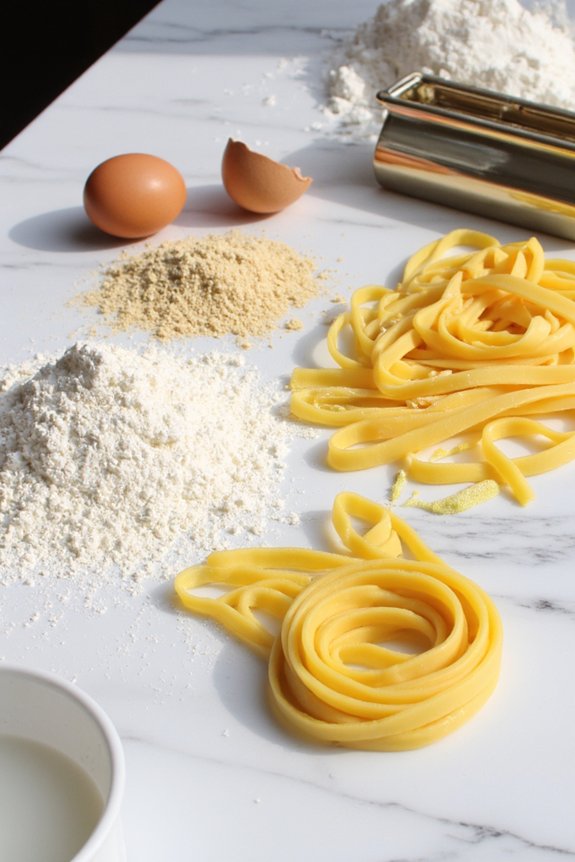
Although both machines aim for silky sheets, hand-crank rollers and electric rollers treat dough a bit differently, so your flour-to-egg ratio may need a tweak. With a hand crank, you feel gear tension, so slightly drier dough grips better and won’t smear. Add a teaspoon more flour per egg if the sheet feels sticky. Electric rollers use steady pressure and speed control, so you can run a touch wetter, which helps with elasticity and clean edges.
- A slow, steady crank, your shoulder guiding the dough like a tiny pasta parade.
- A glossy sheet catching light as it thins, smooth and obedient.
- A motor’s hum, the rollers sipping dough in rhythm.
- A dusting of flour snow, just enough, not a blizzard.
If it tears, add flour. If it crumbles, add a splash of egg.
When deciding on adjustments, consider how durability and construction matter for machines just as it does for outdoor gear, since sturdier rollers can handle slightly stiffer doughs without flexing or jamming.
Humidity, Altitude, and Environmental Tweaks
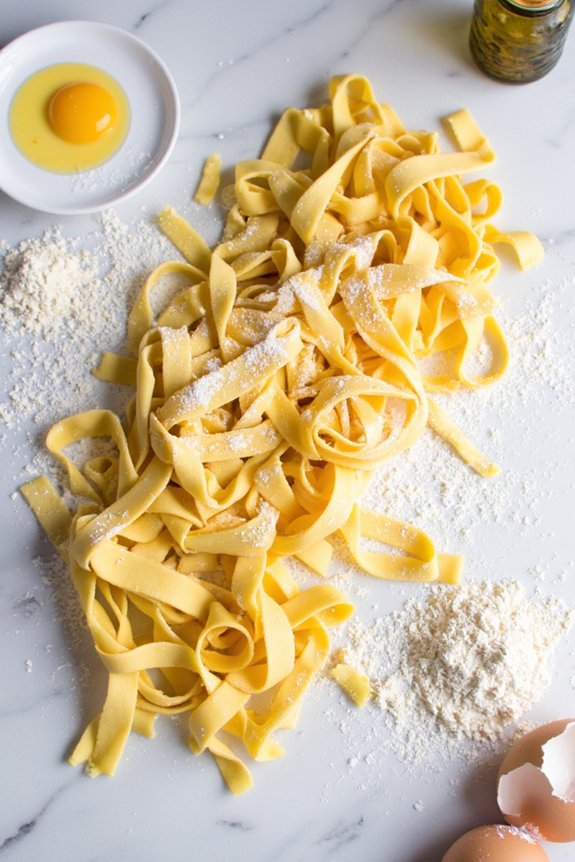
Hand-crank or electric, your rollers only tell half the story; the room you’re in tells the rest. Humidity sneaks into your flour, so watch ambient moisture. If your dough feels sticky, sprinkle in a teaspoon of flour, knead, then reassess. Dry air? Drizzle a few drops of water. Tiny moves, big results.
Plan climate adjustments before mixing. Warm rooms speed gluten, cool rooms slow it, so tweak knead time. Use dough resting as a pressure valve: if it’s tight, rest longer; if slack, rest shorter and fold once. High kitchens need altitude tweaks, since evaporation ramps up and dough dries fast. Add a touch more water up front, then keep it covered. Low altitude? Go steady. And breathe. You’ve got this, noodle boss.
Egg-Only, Yolk-Rich, and Water-Based Doughs Compared
If you’ve ever wondered why some pasta feels silky and rich while other noodles bite back a little, it mostly comes down to what liquid you mix with the flour. With egg pasta, you’re balancing fat, protein, and water, so the dough kneads smooth and cooks tender with a tiny snap. Switch to yolk pasta and you’ll feel a richness focus, deeper color, and more elasticity, perfect when you want luxury on a Tuesday. Water-based doughs are lean, cheaper, and springy, great for rustic cuts and chewy slurpability. That texture contrast? It’s your liquid choice talking.
- Golden ribbons glistening in butter
- Rugged strands holding chunky sauce
- Sunny sheets stretching like velvet
- Clean, glassy noodles with attitude
Pick the feel you crave, then match your flour.
Troubleshooting Gummy, Crumbly, or Fragile Sheets
Silky or springy, your liquid choice sets the vibe, but the wrong flour ratio or handling can still trip you up with gummy, crumbly, or fragile sheets. If it’s gummy, you’ve likely got too much hydration or underworked gluten. Sprinkle in fine flour, knead longer, and rest the dough so dough elasticity evens out. Crumbly? That’s dry mix territory. Mist with water or beaten egg, fold, and give it a short rest; you’ll see the crumb structure smooth out.
Fragile sheets and sheet tearing often come from rushing the machine. Check roller calibration, start thicker, and step down gradually. Lightly dust, but don’t snowstorm it. If edges crack, the dough needs more moisture or kneading. And hey, slow your roll, literally. Patience pays in pasta.
Field-Tested Ratios for Popular Shapes and Uses
Though every nonna swears by her own mix, there are some ratios that just plain work for common shapes and jobs. For silky tagliatelle, go 70% 00 flour, 30% semolina, plus 1 egg per 100 g flour. Need grip for sauce? Flip it to 50/50 and add a teaspoon of water. Stuffed pasta likes structure: 60% 00, 40% semolina, one egg per 100 g, plus a yolk if fillings are wet. Extruded shapes thrive on 100% semolina with water, especially during double extrusion for tougher walls.
- A bright sheet sliding through rollers, smooth as glass
- Short tubes tumbling out of a die, rough and thirsty
- Ravioli seams crimped with fluted cutters, neat and proud
- A dusting of flour falling like quiet snow
Test, taste, tweak. You’ve got this.
Frequently Asked Questions
Do Different Resting Times Change Flour Absorption Over Multiple Batches?
Yes—resting time changes absorption, and you’ll see batch variability. Longer rests let gluten relax and water migrate, causing absorption drift. Track hydration per batch, adjust kneading and added water, and standardize rest windows to stabilize texture and yield.
How Does Flour Age Affect Dough Elasticity Over Months?
It stiffens gradually: as flour ages, oxidation strengthens gluten and boosts protein crosslinking, improving elasticity. You’ll notice reduced enzyme activity, slower dough relaxation, and slightly higher water demand. Store cool and dry; rotate stock to keep predictable stretch and bite.
Can Mineral Content of Tap Water Alter Ideal Flour Ratios?
Yes. Mineral content and tap hardness shift hydration needs. Hard water tightens gluten, so you’ll increase liquid or reduce high-protein flour. Soft water weakens structure, so you’ll add salt or semolina, or lower hydration to maintain ideal ratios.
What Impact Do Flavored Additions Have on Hydration Calculations?
They change water needs. Herb powders are dry and hygroscopic, so you’ll add extra hydration. Cheese blends add fat and salt, reducing gluten development; you’ll compensate with slightly more water and kneading, adjusting until dough feels supple.
Does Milling Temperature of Flour Influence Dough’s Rolling Tolerance?
Yes—milling temperature affects dough’s rolling tolerance. Cooler milling preserves starch integrity and supports steady gluten formation, yielding smoother passes. Overheated flour weakens proteins, increases damaged starch, spikes absorption, and makes sheets tear, stick, and require more rests. Store flour cool.
Conclusion
You’ve got this. Start conservative with water, rest the dough, then tweak a gram at a time. Blend 00 for silk, semolina for grip, and let eggs steer protein so you need less semolina. Watch your rollers, adjust for speed and temp, and don’t panic at crumbs or gum—both are fixable. Keep notes, trust your hands, and aim for smooth, elastic sheets. Tiny changes add up, which is annoying, sure, but also kinda fun. Pasta Jedi in training? Yep, that’s you.


