Did you know that pre-ground coffee loses up to 60% of its aromatic compounds within 15 minutes of grinding? Yeah, you read that right. Your favorite bag’s probably been sitting there getting stale while you’re wondering why your morning cup tastes kinda flat. But here’s the thing—grinding fresh beans right before brewing is like revealing a completely different coffee experience, and we’re about to explore exactly why.
Key Takeaways
- Fresh grinding releases hundreds of volatile aromatic compounds lost by pre-ground coffee within minutes of grinding.
- Grind size matching your brewing method ensures proper extraction, preventing bitter over-extraction or weak under-extraction.
- Sealed, airtight storage of whole beans prevents oxidative rancidity and preserves oils responsible for vibrant flavor.
- Burr grinders deliver consistent particle size for uniform water contact, while blade grinders create uneven extraction.
- Grinding shortly before brewing captures peak freshness and flavor complexity that dissipates rapidly in pre-ground coffee.
How Oxygen Degrades Coffee Quality Over Time
Once those coffee beans hit the air, oxygen becomes their worst enemy—and you’d better believe it’s working overtime to wreck your morning cup. The moment you open that bag, oxidative rancidity kicks in fast. Your beans start breaking down, losing those delicious oils and flavors you’re craving. It’s like watching a beautiful painting fade in the sun.
Here’s the thing: packaging permeability matters way more than you’d think. Even sealed bags aren’t perfect. Oxygen sneaks through, especially if you’re storing beans in regular containers or those flimsy bags. Within days, you’ll notice staleness creeping in. The bright, vibrant notes? Gone. Replaced by that flat, cardboard-y taste nobody wants. Fresh grinding only works if your beans haven’t already surrendered to oxidation’s slow attack. Keep ’em sealed tight.
Some coffee makers, like those with removable water tanks, also help preserve freshness by making it easier to clean and reduce buildup that can add off-flavors to your brew.
The Science Behind Aromatic Compounds in Fresh-Ground Beans
When you grind those beans, you’re basically unsealing a flavor treasure chest that’s been sealed tight. Inside? Hundreds of aromatic compounds just waiting to escape into the air. These volatile compounds—the ones responsible for that intoxicating smell—are super fragile. They’re like coffee’s way of showing off, honestly.
Here’s where sensory chemistry gets intresting. The moment those beans crack open, aromatic molecules start evaporating. You’re literally losing flavor potential with every second that passes. Fresh-ground coffee hits different because you’re capturing those compounds at their peak potency. The sensory experience your nose and taste buds recieve is incomparably richer than what stale, pre-ground coffee offers. It’s not just about smell either—those volatile preservation matters for actual taste too. Ground fresh means maximum flavor impact.
In fact, the grinding mechanism type you use—whether a burr grinder or a blade grinder—can dramatically affect aroma retention and the quality of your fresh-ground coffee.
Optimizing Grind Size for Your Brewing Method
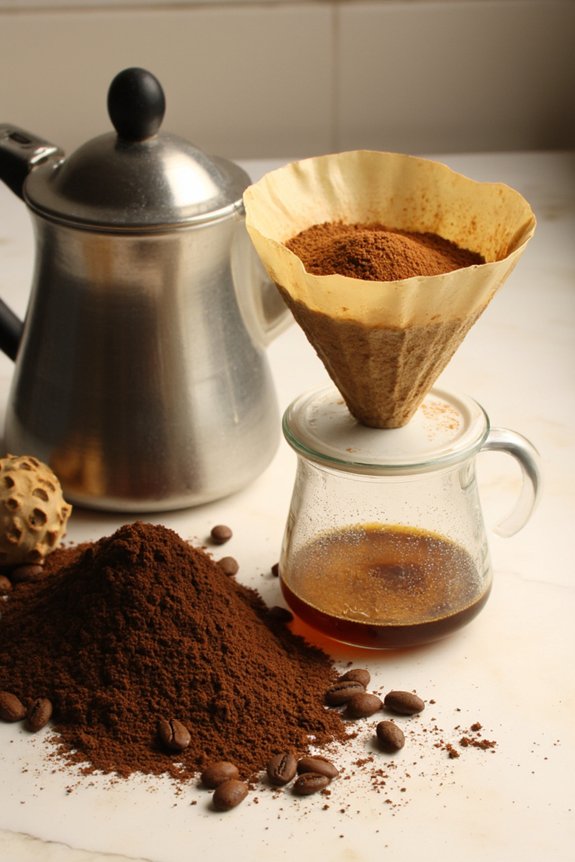
Now that you’ve released all those aromatic treasures by grinding your beans, here’s the thing—grind size is basically your secret weapon for actually getting those flavors into your cup. Think of grind calibration as the bridge between your beans and your brewing method. You’ve got espresso demanding super-fine particles, pour-overs wanting medium grounds, and French presses craving chunky bits. Get it wrong? You’ll either over-extract bitter sludge or under-extract weak disappointment. Particle distribution matters hugely here—uneven sizes mean some grounds brew faster than others, creating flavor chaos. The right grind size guarantees water contacts your coffee consistantly, pulling out exactly what you want. It’s honestly the difference between meh and magnificant. Your brewing method isn’t just a suggestion; it’s your roadmap to coffee greatness. For example, the French press method specifically calls for a coarse grind, as using finer grounds leads to a gritty, over-extracted, and bitter cup.
Achieving Better Extraction With Freshly Ground Coffee
When you grind your beans fresh, you’re basically creating a ton of new surface area for water to interact with, and that’s where the real magic happens. Consistency matters just as much though—if your grounds are all over the place, some’ll extract too fast while others lag behind, leaving you with an unbalanced cup that tastes like it can’t make up its mind. Get those two elements right, and you’ll finally taste what your coffee’s actually capable of delivering.
Surface Area Matters Most
Grinding your coffee beans exposes way more surface area than whole beans ever could, and that’s where the real magic happens. When you grind, you’re basically creating thousands of tiny particles just waiting to meet hot water. Each speck has its own little surface ready for extraction—think of it like opening up millions of tiny doors simultaneously.
Here’s the thing: particle size matters enormously. Finer grounds mean even more surface area, which pulls out flavors faster and more efficiently. Your grinding temperature also plays a role, since heat can slightly affect how those particles behave. You’re not just making coffee smaller; you’re fundamentally transforming how water interacts with your beans. It’s honestly pretty cool when you think about the science behind your morning cup. If you want to see this principle in action for other foods and drinks, consider how blade quality and design in kitchen blenders also dramatically affect extraction and texture.
Consistency Unlocks Optimal Flavor
If you’ve ever wondered why your homemade coffee tastes wildly different from cup to cup, inconsistent grind size is probably your culprit. Here’s the thing: when your grind uniformity is all over the place, you’re basically playing coffee roulette. Some particles extract too fast, others lag behind, and your brew becomes a chaotic mess of over and under-extracted flavors.
Fresh grinding gives you control. A quality grinder produces consistent particle distribution, meaning every bean breaks down into roughly the same size. This uniformity? It’s absolutley magic. Your water contacts each particle evenly, extraction happens at the perfect pace, and suddenly your coffee tastes like it actually knows what it’s doing. You’ll notice the difference immediately. Better flavor, smoother finish, no weird bitter notes crashing the party. That’s consistency doing its job right.
If you pair fresh grinding with the right brewing method and speed, you can maximize both extraction and flavor—unlocking the true potential of your beans whether you’re camping or at home.
Comparing Flavor Profiles: Fresh-Ground vs. Pre-Ground
When you grind your beans fresh, you’re releasing a burst of aromatic compounds that simply can’t survive the wait—pre-ground coffee loses those volatile oils and fragrant molecules pretty quick, like a party that peaks early and fades fast. Your taste buds’ll notice a real difference too, because freshly ground beans deliver layer after layer of flavor complexity, from bright citrus notes to subtle chocolate undertones, while pre-ground stuff tends to taste kinda flat and one-dimensional after sitting around. It’s honestly wild how much personality your cup gains when you skip the pre-ground shortcut and take thirty seconds to grind it yourself.
Aroma & Volatile Compounds
The magic really happens the moment you crack open a bag of freshly ground beans, and that’s where the whole aroma thing becomes absolutely impossible to ignore. You’re literally releasing hundreds of aromatic compounds that’ve been locked away in those whole beans. Pre-ground coffee? It’s already lost the battle. Those volatile compounds start escaping the second that grinder does its thing, which is why aroma preservation matters so much. Fresh grinding gives you exceptional volatile retention that pre-ground coffee can’t touch. You’ll notice the difference immediately—that intoxicating fragrance that makes your kitchen smell like a fancy café. It’s not just pleasant; it’s your nose telling you that you’re about to experience something genuinely delicious.
Taste Complexity Over Time
You’ve probably noticed that coffee tastes wildly different depending on how fresh those grounds actually are, and that’s not your imagination playing tricks on you. When you grind beans fresh, you’re capturing a symphony of flavors that’ll evolve throughout your brew. That first sip? Pure magic. But here’s the thing: pre-ground coffee loses its complexity fast. Your sensory memory remembers how vibrant and nuanced fresh coffee tastes, right? The flavor evolution happens instantly with fresh grounds. Within minutes, those volatile compounds start escaping into the air instead of your cup. With pre-ground beans sitting around, you’re basically drinking the ghost of what coffee could’ve been. It’s like comparing a live concert to a recording from 1987. Fresh-ground coffee dances on your palate. Pre-ground? It just kinda sits there.
Essential Equipment for Grinding Beans at Home
Transforming whole beans into grounds that’ll actually make your coffee taste amazing requires just the right tools—and honestly, you don’t need to break the bank to get started. You’ve got two main options to ponder. Manual mills are budget-friendly and give you that meditative, hands-on experience, though they’re definitely a workout. Electric grinders? They’re the speed demons of the coffee world, grinding your beans in seconds flat. Burr grinders—whether manual or electric—crush beans evenly, which matters way more than you’d think. Blade grinders are cheaper but way less consistent, creating those annoying dust particles mixed with chunks. So pick what fits your lifestyle. Patient and zen? Go manual. Running late every morning? Electric’s your friend.
Building a Fresh-Grinding Routine Into Your Daily Ritual
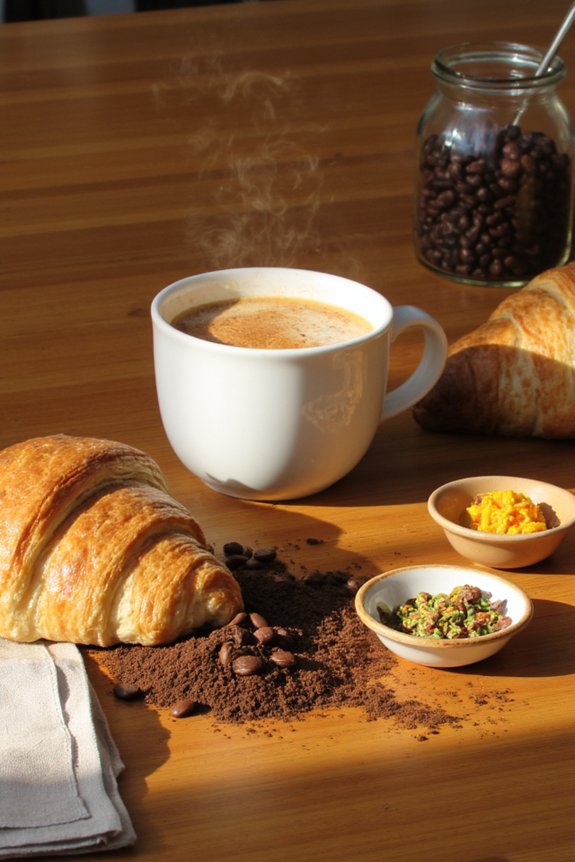
Once you’ve got your grinder sitting on the counter, it’s time to actually make fresh grinding part of your morning—or whenever you’re brewing. Here’s the thing: consistency matters. You’ll want to establish a grind schedule that fits naturally into your morning ritual, whether that’s five minutes before coffee or right when you wake up.
| Time | Action | Benefit |
|---|---|---|
| 6:30 AM | Grind beans | Peak freshness |
| Evening | Storage strategy | Beans stay fresher |
| Weekly | Grind cleaning routine | Better flavor |
| Daily | Same time | Habit building |
Keep your beans in an airtight container away from light. Set a phone reminder if you’re forgetful. Once grinding becomes automatic, you won’t think twice about it. Your taste buds will definitely thank you, though.
Frequently Asked Questions
How Long Do Whole Beans Stay Fresh Compared to Pre-Ground Coffee?
You’ll find whole beans stay fresh for 2-4 weeks, while pre-ground coffee lasts only 1-2 weeks. Shorter roast duration and better packaging reduce oxygenation, keeping your beans fresher longer than ground alternatives.
What’s the Ideal Temperature for Storing Whole Coffee Beans at Home?
You’ll want to store your whole beans at room temperature, ideally between 60-70°F. Keep them in an airtight container away from direct sunlight and heat. Humidity control is essential—aim for 50-60% relative humidity to prevent moisture damage.
Does Grinding Coffee Release Caffeine or Affect Its Caffeine Content?
Grinding doesn’t release caffeine itself—you’re actually increasing particle distribution for better caffeine extraction during brewing. Studies show that 95% of caffeine extracts within the first minute of contact with hot water.
Can You Over-Grind Coffee Beans, and What Happens if You Do?
Yes, you can over-grind your beans. When you do, you’ll create uneven particle uniformity, causing excessive bitter extraction. Your coffee becomes unpleasantly harsh and loses its balanced flavor profile entirely.
How Much Money Can You Save by Grinding Beans Yourself Annually?
You’ll save $200-400 yearly by grinding beans yourself. Studies show you’re paying 30% more for pre-ground coffee. Buying bulk reduces costs further, and minimal grinder maintenance keeps your investment worthwhile long-term.
Conclusion
You’ve basically unleashed coffee’s secret superpower. Those freshly ground beans? They’re like a flavor time capsule that starts ticking the moment you grind ’em. Skip the pre-ground stuff—it’s yesterday’s news in a bag. Your daily ritual of grinding, brewing, and sipping becomes this tiny rebellion against stale mediocrity. It’s honestly the simplest upgrade you can make. Fresh grounds aren’t just better; they’re transformative.


