So your electric smoker’s cranking out heat but not the billowing clouds you’re craving? Yeah, that’s frustrating. You’ve got the meat prepped, the rubs mixed, and expectations high—but something’s off with the smoke production. Before you start tweaking everything, let’s figure out what’s actually happening inside that box. There’s usually a simple culprit hiding somewhere, and once you nail it, you’ll be back to producing that gorgeous smoke ring.
Key Takeaways
- Maintain smoker temperature between 225–275°F for consistent, quality smoke production and flavor.
- Use properly seasoned wood with moisture content around 20% or less for optimal smoke.
- Pat meats and vegetables dry before smoking to help smoke adhere better to food.
- Replenish wood chips every 30–45 minutes using a dedicated tray to maintain steady smoke.
- Inspect and clean intake/exhaust vents monthly to ensure proper airflow and smoke circulation.

Check Your Wood Chip Placement and Quantity
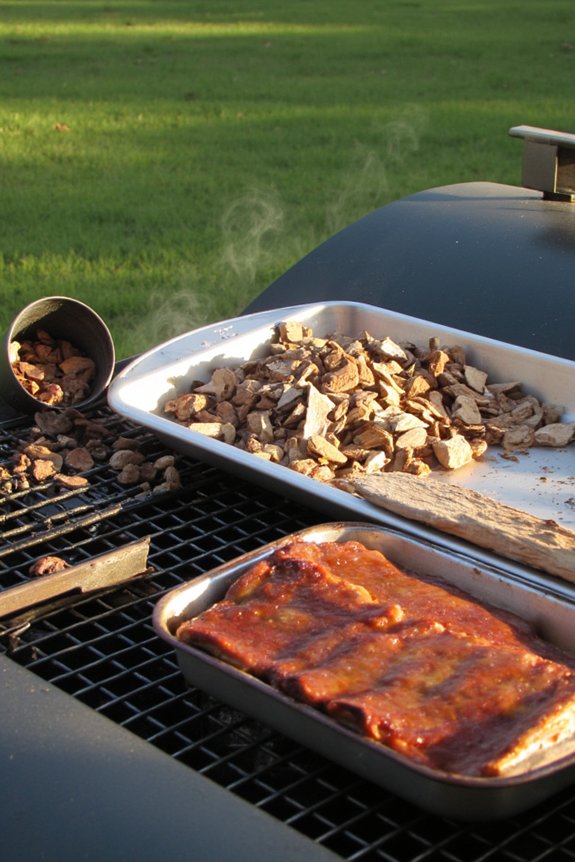
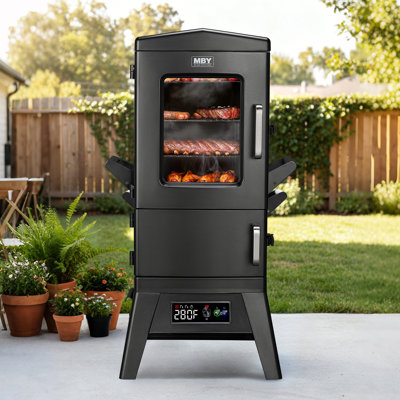
One of the most common culprits behind a lackluster smoke show? Your wood chips aren’t getting the love they deserve. You’ve gotta pay attention to your wood chippage patterns and where you’re placing those babies in your smoker. Are they sitting directly on the heating element? That’s your first mistake. They’ll burn up faster than a cheap firework. Instead, position them in a dedicated chip tray or box—something that lets heat circulate around ’em without incinerating everything immediately. Now here’s the thing about chip replenishment timing: you can’t just toss in a fresh batch whenever you feel like it. Space out your additions every thirty to forty-five minutes for steady, consistent smoke production. Too many at once? You’ll snuff out your heat. Too few? You’re basically smoking with wishful thinking. If your smoker has a side chip loader, like the EAST OAK model, you can add wood chips without opening the door and losing heat or smoke.
Verify Your Temperature Settings Are Optimal
Now that you’ve got your wood chips dialed in, here’s where a lot of folks really drop the ball: they’re running their smoker at the wrong temperature. Temperature control is absolutely critical for smoke production. Too hot? Your chips’ll burn up faster than your patience at a family reunion. Too cold and they’ll just smolder without giving you that beautiful smoke.
| Temperature Range | Smoke Output | Result |
|---|---|---|
| Below 225°F | Weak | Barely visible smoke |
| 225-275°F | ideal | Beautiful, consistent smoke |
| Above 275°F | Excessive | Bitter, acrid taste |
Your probe placement matters too. Keep that thermometer away from direct heat sources, positioning it near the food level. This gives you accurate readings so you’re not guessing like some kinda amateur. Get this right, and you’ll nail it.
When troubleshooting smoke production, consider how heat distribution and performance in your smoker can impact both smoke quality and food results.
Assess Moisture Levels in Your Smoker
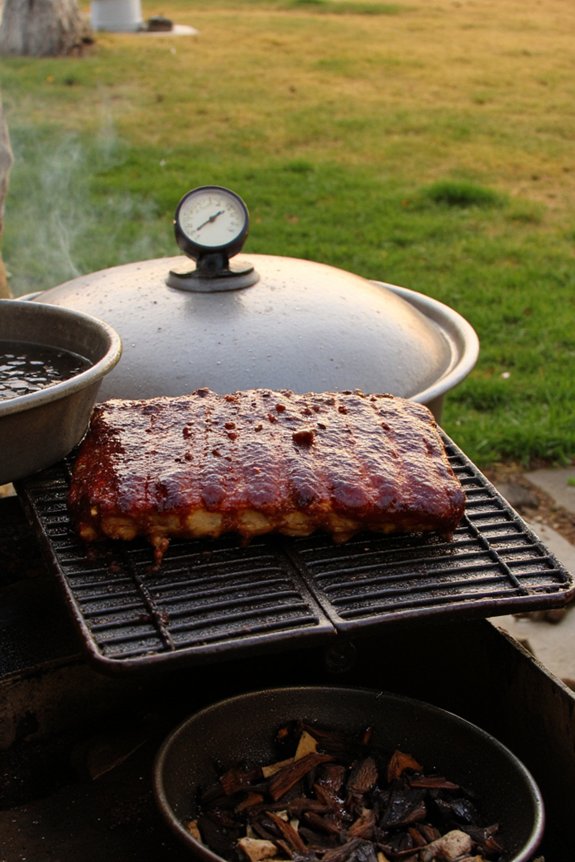
While you’ve nailed your temperature sweet spot, there’s another sneaky culprit that’ll sabotage your smoke game: moisture. Your wood moisture content is absolutely critical here. If your wood’s too wet, it’ll struggle to produce that beautiful smoke you’re craving. Aim for wood that’s been properly seasoned, sitting around 20 percent moisture or less. But here’s the thing—it’s not just about what you’re burning. Food humidity matters too. If your meat or veggies are dripping wet when they hit the grates, they’ll create steam instead of letting that smoke stick. Pat everything down with paper towels first. This simple move transforms your results dramatically. Think of it like this: dry wood plus dry food equals smoke heaven. It’s that straightforward, really. To keep your smoker running at its best, remember that regular cleaning and seasoning the cooking surface will also improve smoke production and extend the lifespan of your equipment.
Inspect Ventilation and Air Flow
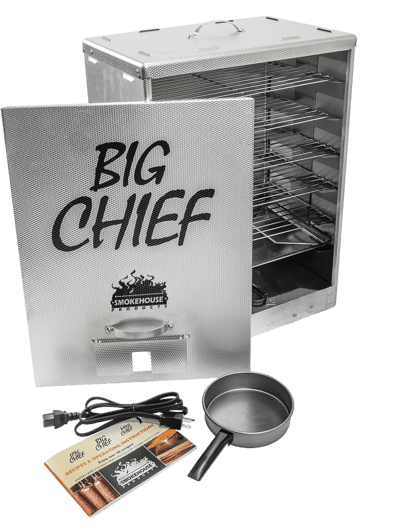
Your smoker’s got plenty of dry wood and moisture-free meat ready to go, so what’s the holdup? Check your vents. Seriously, this is where most folks drop the ball. Your smoker needs proper smoke flow to do its thing, and that means inspecting those air vents like they’re made of gold. Look for blockages, debris, or buildup that’s cramping your smoker’s style. Vent balance is absolutely essential here—you can’t just crack one open and call it a day. Make sure your intake and exhaust vents are working together like a well-oiled machine. Too much restriction? Your smoke’ll just sit there, sulking. Too little? It’ll whoosh right out without doing any flavorful work. Get that balance dialed in, and you’ll be amazed at the difference it makes. For even better results, consider how digital or smart controllers can help you precisely manage airflow and temperature in modern pellet grills for optimal smoke production.
Maintain Your Heating Element and Components
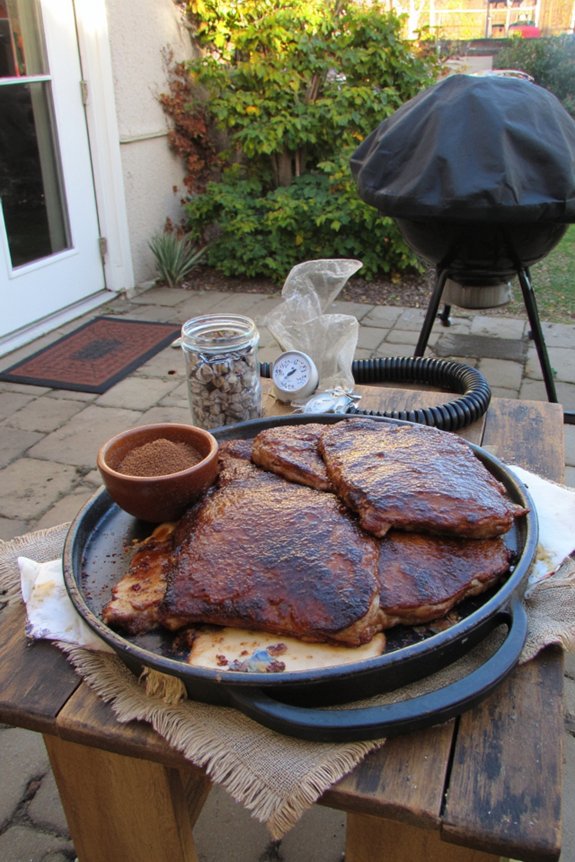
Once you’ve got your vents dialed in, it’s time to turn your attention to the heart of the operation—your heating element and all the stuff that keeps it running smooth. Think of this as preventive maintenance that’ll save you headaches down the road.
Your element care routine should include:
- Cleaning the heating element monthly to remove ash and buildup
- Checking all wiring inspection points for corrosion or damage
- Testing temperature accuracy with a reliable thermometer
- Replacing worn gaskets that let heat escape
- Inspecting the power cord for fraying or cracks
A well-maintained element produces consistent heat, which means better smoke generation. Don’t ignore those little warning signs—a flickering light or unusual sounds ain’t your smoker’s idea of a joke. Stay on top of these tasks, and you’ll keep that smoke flowing strong. For an extra edge, consider regular cleaning cycles as recommended for appliances like countertop ice makers, since routine upkeep helps prevent buildup and maintains performance.
Frequently Asked Questions
What Type of Wood Chips Produce the Most Smoke in Electric Smokers?
You’ll get the most smoke from hardwood chunks like oak and hickory. Fruit woods such as apple and cherry produce excellent smoke too, though they’re slightly milder. Avoid softwoods entirely.
How Does Outdoor Weather Affect Smoke Production in Electric Smokers?
Wind direction affects how you’ll see smoke dispersing around your smoker. High ambient humidity can reduce visible smoke production since moisture-laden air doesn’t show smoke as prominently as drier conditions do.
Can I Use Wet Wood Chips Versus Dry Chips for Smoking?
You can use wet woodchips, though soaked chips produce less smoke initially since they’ll steam before burning. Dry chips ignite faster and generate more consistent smoke, making them your better choice for ideal smoking results.
Does the Age of My Smoker Impact Its Smoke Output Capacity?
Yes, your smoker’s age matters like a worn engine losing power. Older units suffer material degradation, compromised seal integrity, and deteriorating heating elements, all reducing smoke output. Regular smoker maintenance helps restore performance capacity.
What’s the Ideal Smoke Color I Should Be Seeing During Cooking?
You’re aiming for thin blue smoke, which indicates clean, efficient burning. Pale gray smoke means you’ve got too much fuel or incomplete combustion. Avoid white, thick smoke—that’ll make your food taste bitter and acrid.
Conclusion
You’ve probably figured out by now that your smoker’s smoke drought isn’t some mystical problem—it’s just neglect wearing a disguise. Follow these steps, and you’ll be billowing clouds like a pro. Here’s the thing though: most folks assume they’re doing everything right when really they’re just impatient. Give your adjustments time to work. Stick with it, and you’ll nail that perfect smoke ring.