Your morning brew’s hitting different out in the wilderness, isn’t it? You’ve got your camping setup dialed in, the views are spectacular, but that coffee tastes like hot disappointment. Here’s the thing: it’s probably not the beans’ fault. Water temperature, timing, ratios, altitude—they’re all conspiring against you, and once you understand why, you’ll open what’s actually sabotaging your caffeine fix.
Key Takeaways
- Portable camping brewers lack temperature regulation, causing rapid heat loss and incomplete extraction of coffee flavors.
- Inconsistent water temperature below 195°F prevents proper flavor release from grounds, resulting in weak, under-extracted coffee.
- Incorrect coffee-to-water ratios and coarse grinding compromise extraction; camping conditions require careful measurement and grind consistency.
- Stale coffee beans and improper filter quality allow sediment passage while degrading flavor compounds over time.
- High altitude reduces boiling points and atmospheric pressure, weakening extraction efficiency and shortening effective brew time significantly.
Water Temperature and Its Impact on Extraction
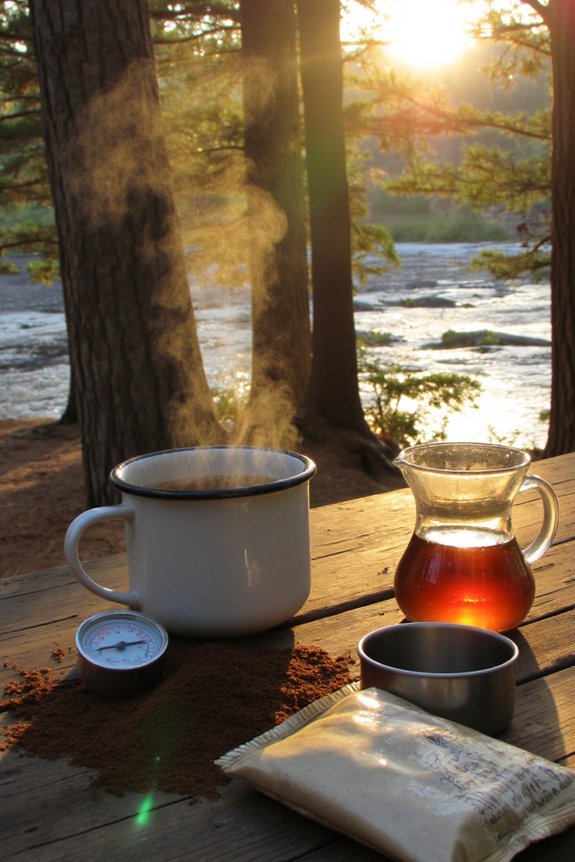
While your camping setup might look like something cobbled together by someone who’d rather be sleeping, water temperature is actually the silent hero that separates a decent cup from one that tastes like you’re drinking liquid disappointment. Here’s the deal: ideal temps hover between 195 and 205 degrees Fahrenheit. Too cold? Your coffee grounds won’t release their flavor properly. Too hot? You’ll scorch them and end up with bitter sludge.
The trick is gradual heating. Don’t just dump boiling water on your grounds like you’re angry at them. Instead, let that water cool slightly after boiling, then pour slowly. Your camping coffee maker’s performance depends on this balance. Get the temperature right, and suddenly that instant coffee doesn’t seem so appealing anymore. Choosing a model with heat retention capability can also help maintain the ideal brewing temperature, giving you a better cup even in unpredictable outdoor conditions.
The Coffee-to-Water Ratio Problem
You’ve nailed the temperature game, but here’s where most camping coffee enthusiasts trip up: they’re flying blind when it comes to the ratio of grounds to water. You’re probably just eyeballing it, right? That’s your first mistake. The standard rule is one to two tablespoons per six ounces of water, but your serving size matters big time. If you’re making coffee for two people versus six, those measurements shift dramatically. And don’t forget about grind consistency—finer grounds extract faster, so you might actually need less of them. Coarser grounds? You’ll want more. Most campers underestimate how much coffee they really need, then wonder why their morning brew tastes like weak sadness in a cup. Get your ratio right, and you’ll transform that camping experience completely. The grind consistency of your coffee grounds plays a huge role in extraction, and using a blade grinder instead of a burr grinder can lead to uneven particles and a weaker brew.
Brew Time: Finding the Sweet Spot
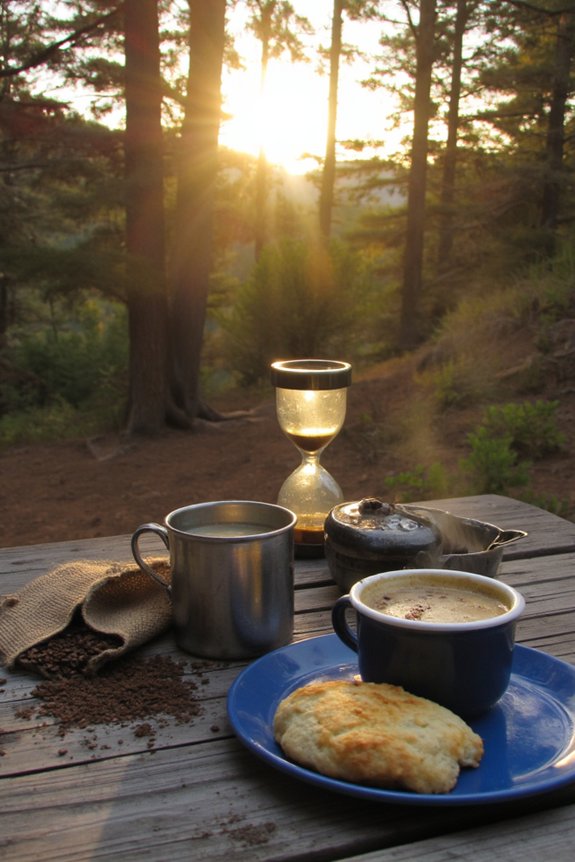
Brew time is where the magic really happens, and it’s often the most overlooked part of the whole camping coffee ritual. You’re probably steeping your grounds way too long or not long enough. Here’s the thing: it’s not just about timing. Your grind consistency matters tremendously because finer grounds extract faster, while coarser ones need more time to release their flavor. Then there’s your pour technique. A slow, steady pour lets water contact the grounds evenly, creating balanced extraction instead of weak, watery disappointment. Most camping brewers need about four to six minutes, depending on your setup. Don’t just guess. Pay attention. Experiment. You’ll find that sweet spot where your coffee tastes rich and satisfying, not like you’re drinking hot bean water. Trust me, the effort’s totally worth it. If you’re used to the fast boiling performance of top electric kettles at home, remember that camping setups can have slower, less consistent heating—so adjusting your brewing time and technique is key.
Bean Quality and Freshness Matter
All that technique you’ve perfected? It won’t matter if you’re starting with stale beans. Your coffee’s only as good as what goes in the filter, and honestly, most people don’t realize how vital freshness is. Grab beans with a roast date awareness mindset—check that label! Coffee peaks around two weeks after roasting, then it’s all downhill from there. Oxygen becomes your enemy, breaking down those flavorful oils that make camping mornings worth living.
Consider investing in single origin freshness options. These beans offer distinct flavor profiles that shine when they’re actually fresh. Skip those giant cans sitting on shelves for months. Instead, find local roasters who roast small batches regularly. Yeah, it costs a bit more, but weak coffee tastes worse than sticker shock feels. Your camping trip deserves better. For even richer flavor, brew strength control lets you dial in your preferred taste if your equipment allows it.
High Altitude Brewing Challenges
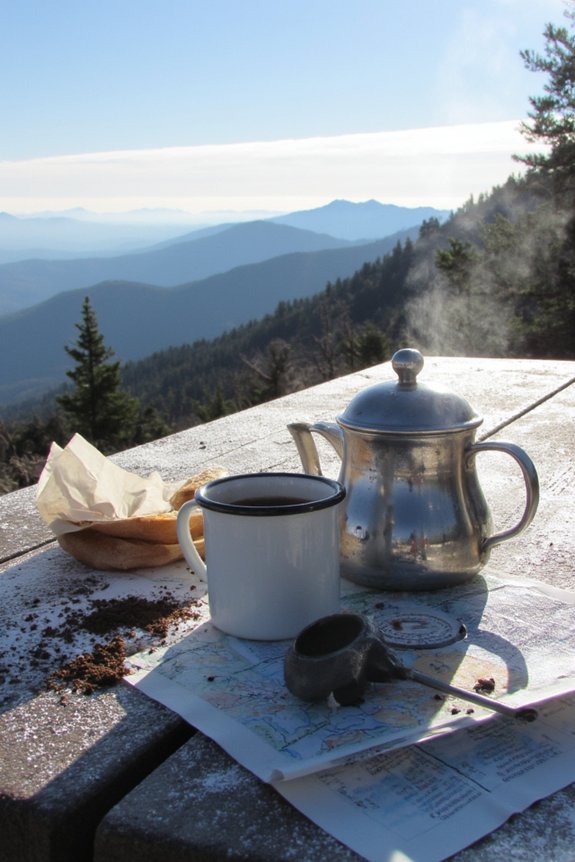
your water’s already boiling at a lower temperature, which means you’ve got way less time to actually extract all that good stuff from your grounds before it’s done. Add in the pressure changes messing with how the water interacts with the beans, and you’ve got a perfect storm for weak, disappointing coffee when you’re trying to enjoy the mountains. It’s like your favorite drink’s been playing a prank on you the whole time you’ve been camping up there. Using a coarse grind size can help reduce over-extraction and improve your brew even in these tricky high-altitude conditions.
Water Boils at Lower Temperatures
When you’re camping up in the mountains, Mother Nature decides to play a trick on your coffee game. Here’s the thing: water doesn’t boil at 212°F anymore. At higher elevations, you’re dealing with lower boiling points due to decreased atmospheric pressure. This vapor pressure situation means your water’s reaching its boiling stage faster, but it’s actually cooler than what you’d get at sea level.
| Altitude | Boiling Point | Heat Loss |
|---|---|---|
| Sea Level | 212°F | Minimal |
| 5,000 ft | 203°F | Moderate |
| 10,000 ft | 194°F | Significant |
Your coffee grounds aren’t extracting properly because the water’s not hot enough. Lower boiling temperatures mean weaker extraction, resulting in that disappointingly bland cup you’re holding. Altitude effects are real, folks.
Extraction Time Becomes Critically Short
Since water’s already struggling to reach proper brewing temperatures at altitude, you’ve got another problem stacked right on top of it—time’s working against you. Your coffee grounds don’t have much time to extract all those delicious flavors before everything cools down. It’s like a race you’re definitely losing.
Here’s the kicker: rapid cooling means your water loses heat super fast in thin mountain air. You’re basically brewing in fast-forward mode. Add grind inconsistency into the mix—maybe your grounds are uneven or too coarse—and extraction becomes even more rushed and unpredictable.
Your coffee finishes brewing before it really gets started, honestly. The whole process feels hurried, leaving you with weak, underwhelming coffee when you desperately need caffeine. It’s frustrating, but understanding this helps you adapt your brewing method.
Pressure Changes Affect Brewing
Beyond the temperature troubles, there’s an invisible force messing with your brewing game at altitude—atmospheric pressure. Here’s the thing: barometric variation plays a huge role in how your coffee extracts, and you’re probably not even thinking about it.
- Lower pressure means water boils at lower temperatures, around 190°F instead of 212°F
- Your altitude pressure directly affects how fast water moves through grounds
- Reduced atmospheric pressure weakens the brewing process overall
- Coffee extraction suffers because water doesn’t have enough oomph to pull flavors properly
When you’re camping at elevation, that pressure drop isn’t just some physics textbook nonsense—it’s actively sabotaging your morning cup. The lower barometric variation at high altitudes basically tells your coffee maker to take it easy, and unfortunately, weak coffee is the result of this atmospheric conspiracy working against you.
Water Mineral Content and Hardness
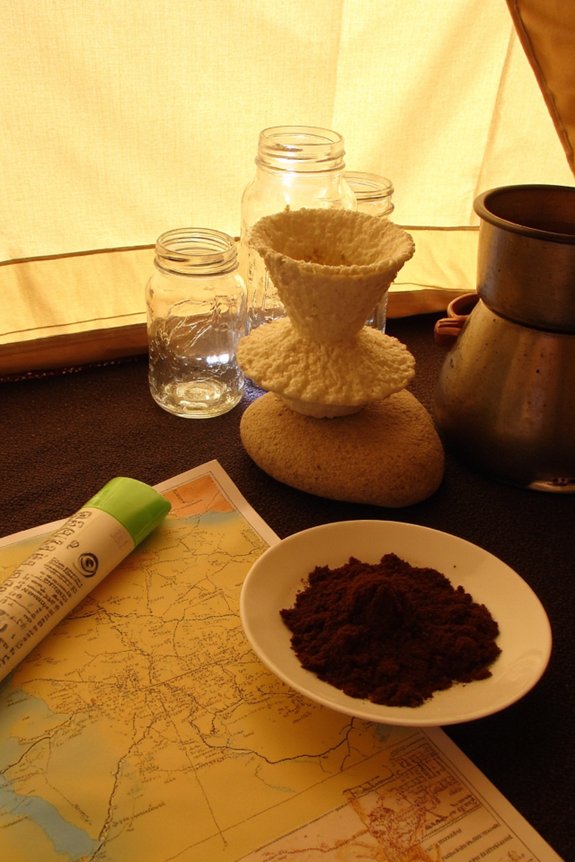
If you’ve ever wondered why your camping coffee tastes like it came from a tire shop, the culprit might be lurking in your water supply. Hard water—loaded with calcium and magnesium—wreaks havoc on your brewing process. You see, that mineral balance is essential for extracting coffee’s best flavors, but when your water’s too mineral-heavy, it actually blocks proper extraction. That’s ironic, right?
Here’s where things get gnarly: scale buildup accumulates inside your coffee maker over time, coating heating elements and clogging brew paths. This nasty residue insulates components, making your machine work harder while producing weaker coffee. It’s like trying to brew through a straw that’s already mostly plugged.
Soft water, meanwhile, extracts too quickly, leaving you with bitter, over-extracted results. The sweet spot? Moderately soft water that lets your grounds shine. Camp smart.
Equipment Limitations in Portable Brewers
water temperature’s all over the place in these cramped little contraptions, and the filters? They’re often so flimsy that they let fine grounds slip through like they’re at some kind of coffee particle beach party, while simultaneously blocking the good stuff that actually makes your cup taste rich and satisfying. When you’re stuck with equipment that can’t hold steady heat or keep sediment where it belongs, you’re basically fighting an uphill battle against mediocre joe.
Water Temperature Control Issues
One of the biggest headaches you’ll face with portable camping coffee makers is nailing that perfect brew temperature, and honestly, it’s way harder than it sounds. Your camping brewer just doesn’t have the sophisticated temperature regulation that your kitchen machine enjoys. Here’s why you’re struggling:
- No thermostat calibration means water heats inconsistently
- Heat loss happens fast in outdoor conditions
- Altitude changes mess with boiling points
- Cheap materials don’t retain warmth effectively
You’re basically playing guessing games with temperature, which explains why your coffee tastes weak and underwhelming. The water cools too quickly before it can properly extract those rich coffee flavors. Without proper heat management, you’re fighting a losing battle. It’s frustrating, sure, but understanding this limitation helps you work around it creatively when you’re out there brewing in the wilderness.
Filter Quality and Design
Because your camping coffee maker’s filter is basically the gatekeeper between you and a decent cup, it’s worth understanding why portable brewers so often drop the ball here. Here’s the thing: cheap paper filters let sediment slip through, and metal mesh filters? They’re basically like straining coffee through a chain-link fence. Your grounds slip right past. Plus, those flimsy filters deteriorate fast in humid camping conditions. You’re dealing with poor construction that wasn’t designed to last beyond a few trips. The mesh gets clogged or develops tiny holes. Paper filters tear easier than you’d expect when you’re fumbling around at dawn in the cold. Honestly, most camping brewers cut corners on filtration, and that’s precisely why your coffee tastes like dirt water instead of the good stuff you deserve.
Common Mistakes Campers Make When Brewing
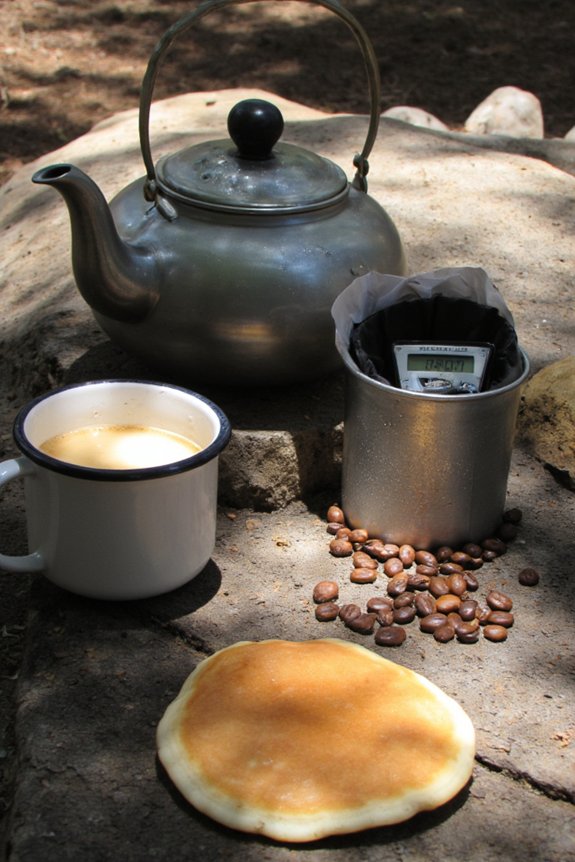
Most camping coffee disasters stem from overlooking the little things that actually matter. You’re probably making some classic blunders that’d make any coffee enthusiast weep into their thermos.
Here’s what you’re likely doing wrong:
- Using water that’s way too hot or not hot enough
- Grinding beans too fine, creating a bitter, muddy mess
- Skipping proper fire starting techniques to maintain consistent heat
- Neglecting food storage methods that keep grounds fresh and protected
You’re probably rushing the brew process like you’re late for work. Coffee demands patience, my friend. Don’t just toss grounds in and hope for magic. Your camping setup’s not some backyard barbecue—it requires finesse. Get the fundamentals down, and you’ll actually enjoy those morning cups instead of choking down weak, disappointing liquid.
Frequently Asked Questions
What Type of Camping Coffee Maker Produces the Strongest Coffee Possible?
You’ll get the strongest camping coffee with an AeroPress Max or a portable espresso maker. Both devices create high pressure extraction, which pulls maximum flavor and caffeine from your grounds efficiently.
How Does Wind and Outdoor Temperature Affect Coffee Brewing Quality?
Wind chill’s a thief stealing your brew’s heat. You’ll find temperature fluctuations dramatically slow extraction rates, weakening flavor. Outdoor cold forces you to insulate your maker and shield it from wind to maintain ideal brewing conditions.
Can You Use Pre-Ground Coffee Instead of Whole Beans While Camping?
You can use pre-ground coffee while camping, but you’ll sacrifice grind freshness since it oxidizes quickly. Pre-ground coffee also risks filter clogging in portable makers, potentially ruining your brew.
Does the Material of the Coffee Maker Affect Taste or Strength?
Yes, material matters. You’ll find ceramic vs metal affects taste differently—metal conducts heat faster, while ceramic’s thermal insulation effects keep your coffee hotter longer, potentially strengthening flavor extraction during brewing.
How Should You Store Coffee Beans Properly During Camping Trips?
You’re a guardian protecting treasure from decay. Store your beans in airtight containers within thermal storage to shield them from moisture, heat, and oxygen. This fortress preserves freshness and flavor throughout your camping adventure.
Conclusion
Look, you’ve got all the pieces of the puzzle now. Don’t put all your eggs in one basket by blaming just your equipment—it’s really about nailing that temperature, ratio, and grind combo. You’re so close to coffee gold out there. Get your water hot enough, use fresh beans, and stop rushing the brew. Your next camping trip’s gonna taste way better, and you’ll finally understand why everyone raves about that morning cup.