So your cold brew tastes like you’re chewing on a bitter boot? Yeah, that’s probably over-extraction messing with you. Maybe you’ve left it steeping too long, or your grind’s too fine, or you’re just throwing in way too much coffee. The good news? It’s actually pretty fixable once you understand what’s going wrong and why your brewing method’s working against you instead of for you.
Key Takeaways
- Over-extraction from prolonged steeping pulls harsh compounds; reduce brew time to 12–16 hours for balanced flavor.
- Use coarse, uniform grounds from a burr grinder to slow extraction and minimize bitterness development.
- Start with a 1:4 coffee-to-water ratio using precise measurements; adjust gradually to prevent over-concentration.
- Use filtered water in borosilicate glass containers to maintain temperature stability and avoid off-flavors.
- Buy whole beans roasted within two weeks and store in airtight containers away from light.
Over-Extraction: The Primary Culprit Behind Bitter Cold Brew
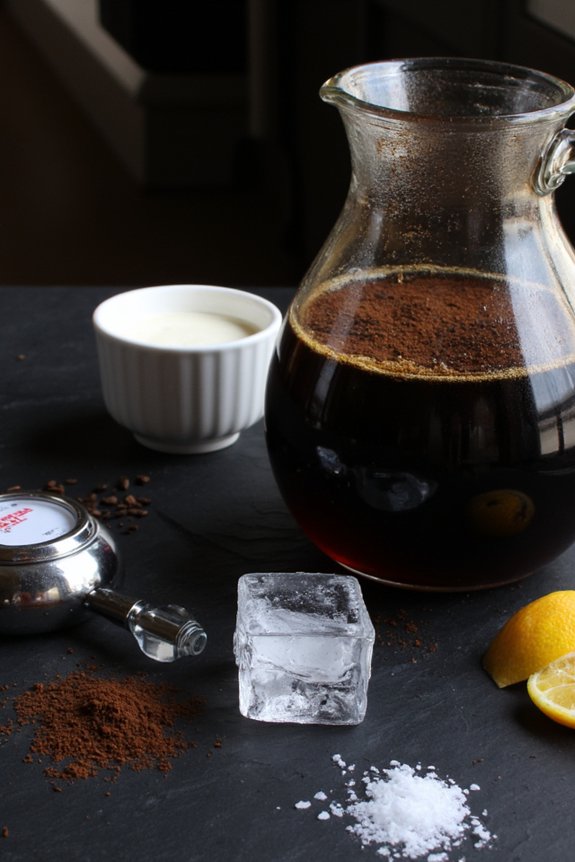
Imagine this: you’ve waited overnight for your cold brew, you’re excited to finally taste it, and then—blech. That bitter punch you’re experiencing? Over-extraction’s probably to blame. Here’s what’s happening: when water sits with grounds too long, the extraction kinetics go haywire. Your solvent selectivity gets thrown off, pulling out not just the good flavors but also the harsh, unpleasant compounds hiding in those beans.
Think of it like steeping tea way too long. At first you get great flavor, but keep going and you’re basically drinking bitter leaf water. Cold brew’s the same deal. Those grounds keep releasing stuff into your water, and eventually you’ve extracted everything including the kitchen sink.
The fix? Dial back your brewing time. Most cold brews only need twelve to sixteen hours, not twenty-four.
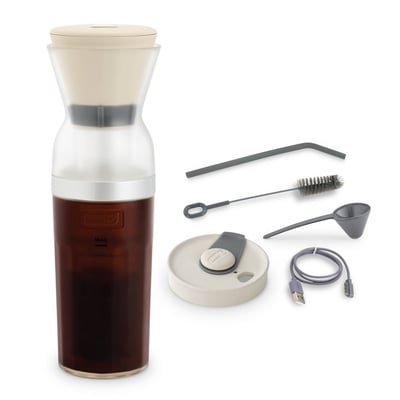
Choosing a removable fine-mesh filter can also help prevent over-extraction by making it easier to separate grounds from your brew at exactly the right time.
Grind Size Matters: Why Fine Particles Ruin Your Batch
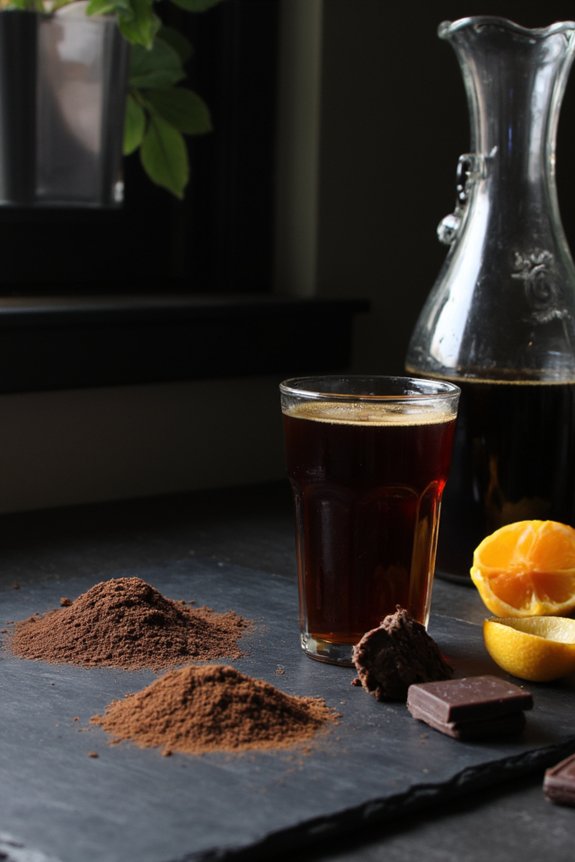
your grind size is basically the MVP of cold brew, and if you’re using particles that’re too fine, you’re basically asking for trouble. Those tiny grounds expose way more surface area to the water, which means faster extraction and, you guessed it, a cup that tastes like you’re chewing on a bitter pine cone. The good news is that dialing in your grinding technique, whether that’s adjusting your grinder settings or switching to a coarser burr grinder instead of a blade grinder, can totally turn things around and get you sipping smooth, balanced cold brew instead of grimacing through every sip. If you want the most consistent results, using a burr grinder will give you evenly-sized grounds and help prevent over-extraction that leads to bitterness.
Particle Size Impact
Grind size might seem like a minor detail, but it’s actually the sneaky culprit behind a lot of bitter cold brew disasters. When your grind distribution isn’t consistent, you’re basically asking for trouble. Fine particles extract way too quickly, releasing harsh compounds that’ll make your coffee taste like burnt rubber. Think of it like sieving flour—you want uniformity, not a chaotic mix of dust and chunks. Coarse grounds steep slowly and gently, giving you that smooth, balanced flavor you’re after. Too many fines? They’ll over-extract and wreck your batch. The trick is using a burr grinder that actually does particle sieving properly, not some sad blade grinder that smashes beans into powder. Consistency wins every time. Using coarse grounds is recommended for French press and cold brew, as they allow proper steeping without over-extraction and help prevent bitterness.

Grinding Technique Solutions
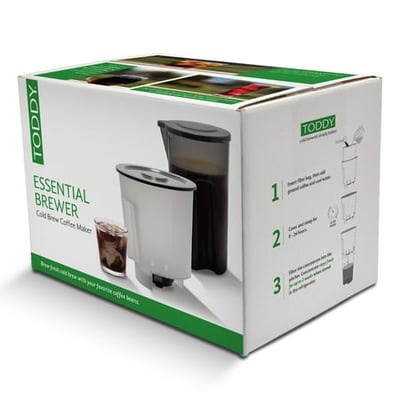
Getting the grinding technique down is where you’ll actually fix those bitter batches once and for all. Your grind consistency matters way more than you’d think. When your burr maintenance is neglected, you’re basically asking for uneven particles that over-extract and taste terrible. Here’s the thing: invest in a quality burr grinder, not a blade one. Burr grinders give you that uniform texture you’re after, while blade grinders create a chaotic mess of sizes. Clean your grinder regularly, too. Buildup affects how evenly your beans get ground. Aim for a coarse, consistent grind resembling sea salt. Take your time with this step, and you’ll notice your cold brew transforms from aggressively bitter to smooth and enjoyable. It’s honestly that simple. For an even smoother result, consider how blade material quality in your grinder can impact grind consistency and overall flavor extraction.
Steeping Time: Finding the Sweet Spot for Your Brew
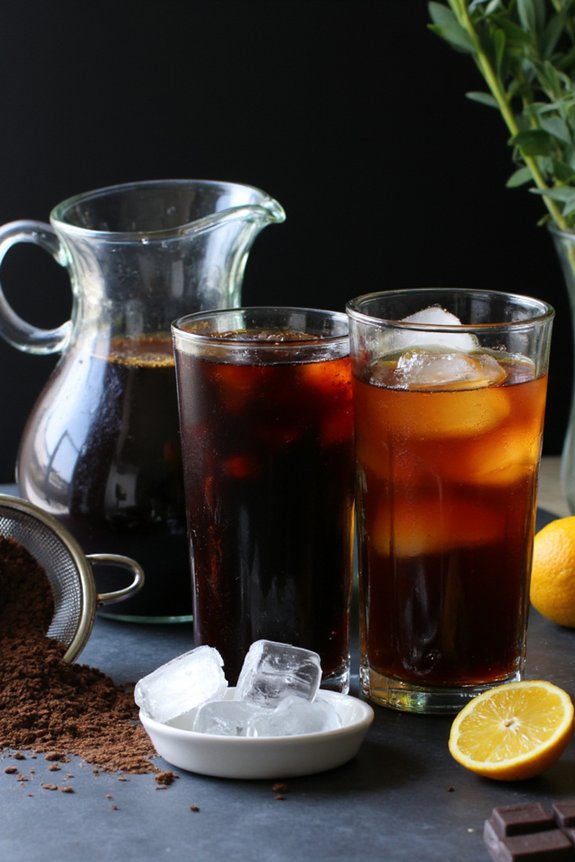
Since steeping time is basically the make-or-break moment for cold brew, getting it right’ll save you from a cup that tastes like bitter regret. The ideal duration typically ranges from 12 to 24 hours, depending on your setup and preferences. Here’s what you need to know:
- 12-hour steep: Quick and lighter, perfect for impatient mornings
- 16-hour steep: The goldilocks zone for most people
- 20-hour steep: Richer flavor, more body and complexity
- 24-hour steep: Maximum extraction, but watch for over-steeping
- Ambient steeping: Room temperature brews faster than fridge steeping
Your ambient steeping method matters too. Room temperature speeds up extraction, while fridge steeping takes longer but tastes smoother. Start at 16 hours and adjust based on your taste preferences.
Water Quality and Temperature: Often Overlooked Variables
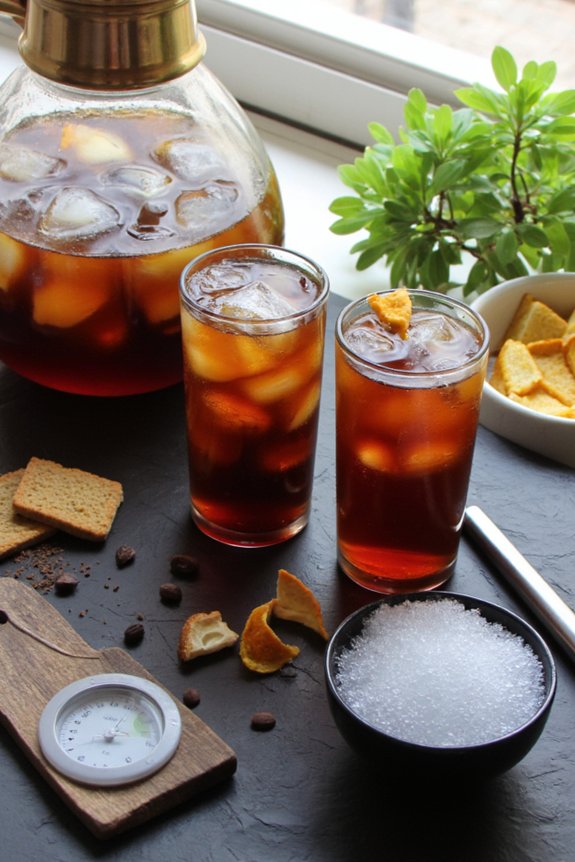
While you’ve nailed your steeping time, there’s a sneaky culprit lurking in your brewing setup that might be tanking your cold brew: water quality. Seriously, it matters way more than most folks realize. Your tap water’s mineral content can totally throw off your flavor profile, making everything taste harsher than it should. Consider using filtered water or investing in a basic tap filtration system. Temperature stability matters too—keep your brew in consistent chilled storage away from temperature fluctuations. Cold spots and warm spots create uneven extraction, which basically guarantees bitterness. Even small changes in your water source can shift your taste. So don’t sleep on this stuff. Better water means better coffee, plain and simple. If you want to take it a step further, using a borosilicate glass pitcher for brewing can help ensure there’s no plastic taste or chemical interference, just like the top electric kettles designed for pure water heating.
Coffee-to-Water Ratio: Getting the Balance Right
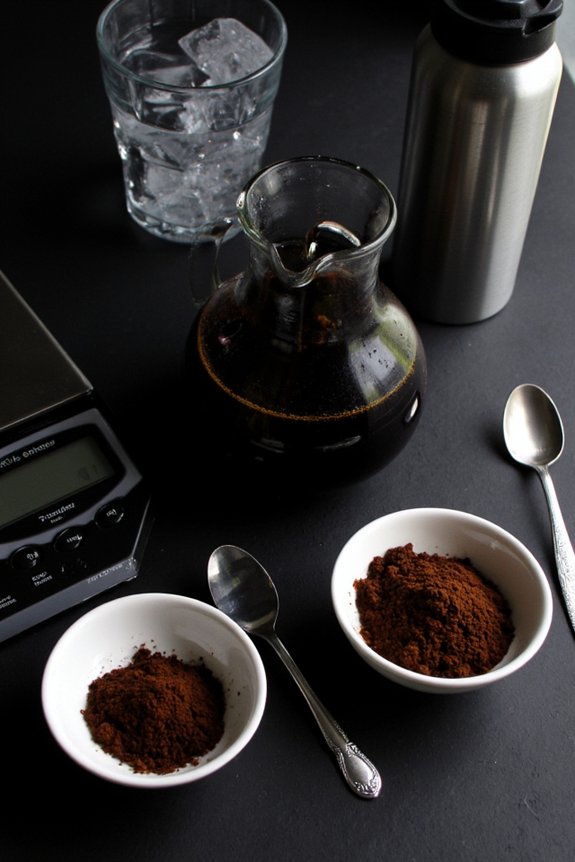
One of the biggest culprits behind that harsh, over-extracted taste is simply using too much coffee grounds, which basically turns your brew into a bitter soup. You’ll want to nail down your water measurement first—most folks find that a 1:4 or 1:5 coffee-to-water ratio works like a charm, though you might need to tweak it depending on how strong you like things. Start with these guidelines, taste your results, and adjust from there, because honestly, getting this balance right is where the magic happens and your cold brew goes from “ugh” to “yes please.”
Too Much Coffee Grounds
Dial back on the coffee grounds and you’ll likely solve half your bitter cold brew problems right there. Seriously, this is where most people go wrong. Your measuring accuracy directly impacts brew consistency, and too much coffee just screams bitterness into your cup.
Here’s what you should know:
- Start with a 1:4 coffee-to-water ratio instead of 1:3
- Use a kitchen scale for precise measurements, not just eyeballing it
- Remember that cold brew extracts slower, so you need less coffee than hot brew
- Experiment by reducing grounds gradually until you find your sweet spot
- Keep notes on what works, because consistency is key
You don’t need a mountain of grounds to get that smooth, rich flavor you’re after. Less coffee means less extraction, which means less bitterness. It’s that simple.

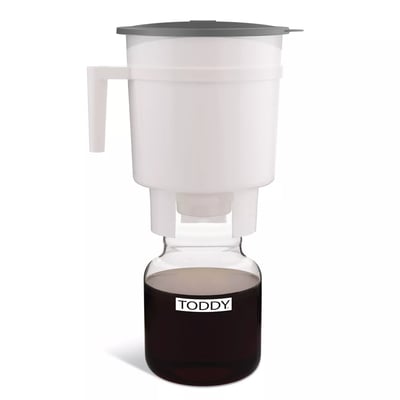
Water Measurement Best Practices
Getting your water measurement right is just as essential as nailing the coffee grounds, maybe even more so. You’ll want to use precise dosing every single time you brew. A standard ratio is one part coffee to four parts water, though you can adjust based on preference. Here’s the thing: container calibration matters big time. Use measuring cups or a kitchen scale for accuracy. Don’t eyeball it. When you’re consistent with your measurements, you eliminate variables that cause bitterness. Too much water dilutes flavor and creates weak coffee. Too little intensifies everything, making that bitter taste punch way harder. Grab a scale if you’re serious about this. Grams don’t lie.
Bean Freshness and Quality: Starting With Better Ingredients
Before you even think about brewing technique, the quality of your beans matters way more than you’d expect. Stale beans are basically the enemy of great cold brew, and they’re probably the sneaky culprit behind that unpleasant bitterness you’re tasting.
Here’s what you should focus on:
- Buy whole beans roasted within the past two weeks
- Choose single origin beans for cleaner, more balanced flavor profiles
- Store your beans in an airtight container away from light and heat
- Grind just before brewing to preserve freshness and aromatic oils
- Buy from reputable roasters who list roast dates clearly
When you’re starting with fresher, higher-quality beans, your cold brew naturally tastes smoother and less harsh. It’s honestly one of the easiest fixes. Fresh beans make all the difference.
Practical Fixes: Step-by-Step Solutions to Perfect Your Cold Brew
Once you’ve got quality beans in your arsenal, it’s time to dial in your technique—and honestly, this is where most people mess up their cold brew without even realizing it. Start by getting your ratio right: use one part coffee to four parts water. Grind coarser than you’d think, creating a brew bed that’s loose and forgiving. Steep for twelve to twenty-four hours depending on your taste preference. Here’s the thing—patience matters, but so does filtration. When you strain through a fine mesh or cheesecloth, you’re protecting that flavor clarity you’ve worked hard to achieve. Don’t rush it. Temperature control helps too, so keep everything cool. Small adjustments make huge differences, and you’ll find your sweet spot quicker than you expect.
Frequently Asked Questions
Can I Fix Bitter Cold Brew That’s Already Been Made?
Yes, you can fix bitter cold brew that’s already made. Try adjusting syrup ratios by adding sweeteners or cream to mask bitterness. Temperature tweaks like serving it over ice or warming it slightly can also help balance the flavor profile.
Does the Type of Filter I Use Affect the Bitterness Level?
Yes, your filter choice matters. Paper filters remove more oils and sediment, giving you a cleaner, less bitter taste. Metal mesh filters let more oils through, which can increase bitterness in your cold brew.
How Long Does Cold Brew Stay Fresh Before It Tastes Bitter?
Your cold brew typically maintains flavor stability for 10-14 days when stored in an airtight container in the refrigerator. Beyond this storage time, you’ll notice increased bitterness as oxidation occurs and flavors degrade.
Should I Use Filtered or Tap Water for Cold Brewing?
You should use filtered water for cold brewing. Tap water’s mineral content can negatively affect your brew’s flavor profile. Filtered water guarantees better water quality, reducing unwanted tastes and bitterness in your final cold brew.
Can Adding Milk or Cream Eliminate the Bitter Taste Completely?
You can’t completely eliminate bitterness with milk or cream—you’re mainly masking the flavor rather than fixing it. Dairy balance helps soften harsh notes, but addressing your brewing method will give you better long-term results.
Conclusion
So you’ve got the roadmap now. Your bitter cold brew doesn’t have to stay that way. Start with a burr grinder, nail that ratio, and don’t let it steep forever. Fresh beans, cool temps, and quick filtering? That’s your winning combo. You’ll be sipping smooth, delicious cold brew before you know it, and honestly, it’s pretty satisfying when you nail it.