You’ve probably noticed it: one side of your griddle’s practically a skillet volcano while the other’s barely warm enough for toast. Frustrating, right? Here’s the thing—those hot and cold spots aren’t random bad luck. They’re actually pretty predictable consequences of how griddles are built, where their heating elements sit, and honestly, some shortcuts manufacturers take to keep costs down. The good news? Understanding why it happens means you can actually fix it.
Key Takeaways
- Heating element placement beneath the cooking surface creates hot spots where coils cluster and cold zones between them.
- Material thickness and quality affect heat distribution—thinner budget plates heat unevenly while thicker plates spread warmth more consistently.
- Thermostat accuracy and voltage distribution issues cause temperature inconsistencies across different areas of the griddle surface.
- Kitchen airflow from vents and fans cools certain sections faster, disrupting uniform temperature maintenance during cooking.
- Longer preheating, lower heat settings, and rotating food through zones help compensate for inherent hot and cold spots.
How Electric Griddle Heating Elements Work
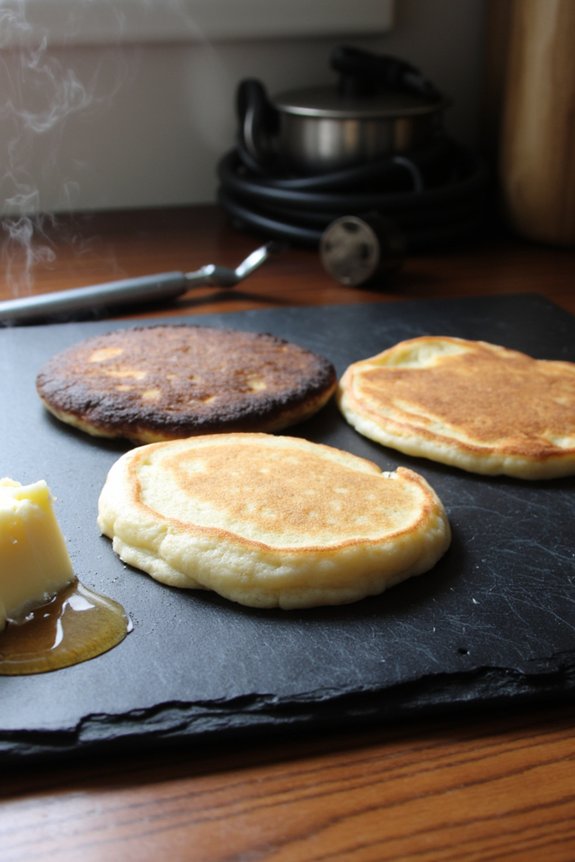
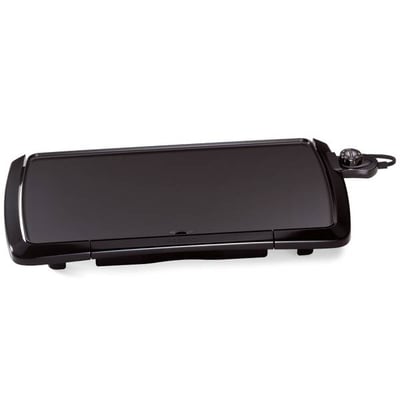
Picture your electric griddle as a pretty straightforward machine—it’s got heating elements lurking underneath that surface, and they’re basically just wires that get really hot when you plug the thing in. The way these elements work depends on their coil placement and serpentine layout underneath your cooking surface. You’ve got wires arranged in specific patterns, right? They’re designed to distribute heat as evenly as possible across the whole griddle. When electricity flows through them, they resist that flow and generate heat, kinda like how a lightbulb works. The serpentine layout tries to snake heat around everywhere, but here’s the thing—it doesn’t always work perfectly. Some spots get more heating wire running beneath them than others. That’s where your hot and cold spots come from, my friend. Higher wattage models, such as those with 1500-watt power consumption, tend to heat up faster and more evenly, helping to minimize those frustrating temperature inconsistencies.
The Role of Heating Element Placement in Temperature Variation
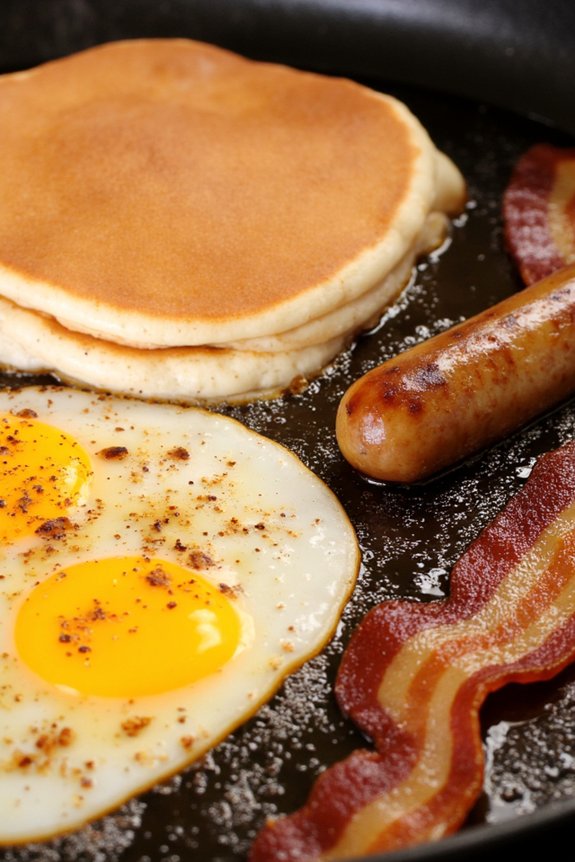
The uneven heat distribution we talked about earlier? A lot of it comes down to where your heating elements actually sit. Here’s the thing: element spacing really matters, and where manufacturers position those heating coils directly affects your cooking results.
- Elements positioned too far apart leave cold zones in between, forcing you to shuffle food around constantly
- Uneven contact pressure between the griddle surface and heating elements creates inconsistent heat transfer across the cooking area
- Element clustering in certain zones creates those frustrating hot spots you’re probably already familiar with
When your griddle’s elements aren’t evenly distributed, you’re basically working with multiple mini cooking zones instead of one unified surface. The contact pressure issue gets tricky too, since manufacturing tolerances mean some elements press tighter against the plate than others. That’s why you’ll notice your eggs cook faster on one side. Modern induction cooktops, for example, offer precise heat control through advanced control settings and more evenly spaced elements, which helps minimize the hot and cold spots often found in traditional electric griddles.
Thermal Conductivity and Surface Material Limitations
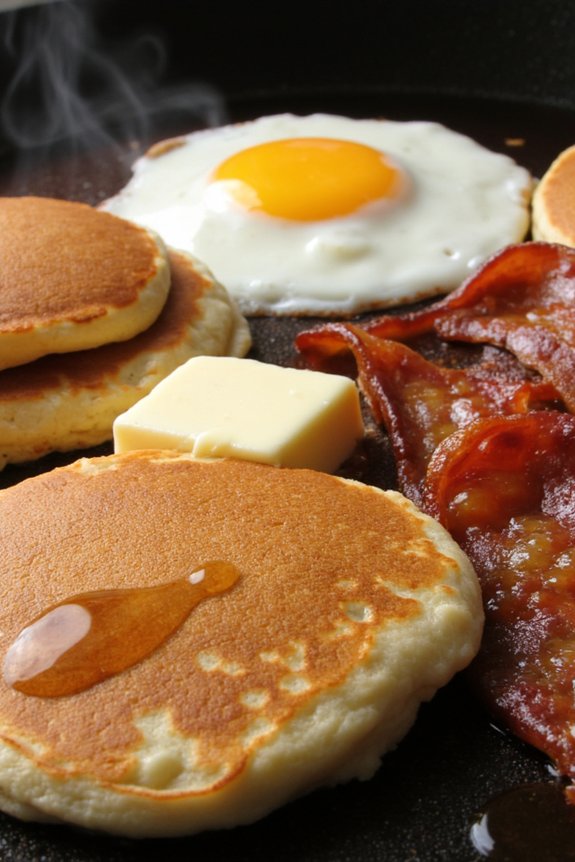
not all griddle surfaces are created equal, and the material you’re cooking on plays a huge role in how heat gets distributed across that cooking space. You’ve got aluminum that conducts heat like a dream but can create those pesky hot spots, while cast iron holds heat more evenly yet takes forever to warm up, and stainless steel sits somewhere in the middle looking all fancy but struggling to spread temperature consistently. The real kicker is that even the best material’s got limits, because thickness, surface texture, and how well it’s attached to the heating element beneath all gang up to create those cold zones and scorching patches that make your pancakes look like a topographic map. Some electric grills, especially those with removable, dishwasher-safe parts, also show variations in heat distribution because the connection between the plate and the heating element can affect how evenly the surface gets hot.

Material Composition Affects Heat
Since your electric griddle’s cooking surface is made of specific materials, those choices directly determine how heat spreads across the plate. Not all metals are created equal when it comes to cooking, and that’s where things get interesting.
Your griddle’s performance depends on several factors:
- Alloy selection – The blend of metals affects heat distribution and durability, with some combinations conducting heat way better than others
- Coating adhesion – A poorly bonded non-stick surface creates dead zones where heat doesn’t transfer properly to your food
- Material thickness – Thinner plates heat unevenly, while thicker ones distribute warmth more consistently
Cheaper griddles often cut corners on material quality. You’re basically getting what you pay for, so don’t be shocked when budget models show temperature inconsistencies across the cooking surface. For comparison, cast iron skillets have a reputation for exceptional heat retention and even distribution due to their dense material and thickness, which is why many chefs prefer them for consistent cooking performance.
Uneven Heat Distribution Issues
Even when you’ve picked out a griddle with decent materials, you’re still battling against the laws of physics. See, heat doesn’t distribute itself perfectly across that cooking surface, no matter how hard the manufacturer tries. Your griddle’s platen—that’s the actual cooking plate—can warp slightly from repeated heating and cooling cycles. This warping creates valleys and peaks where heat pools unevenly. Plus, edge insulation often falls short, leaving the perimeter noticeably cooler than the center. The reality? Your griddle’s got hot zones near the heating elements and chilly zones where heat escapes. Different surface materials conduct heat at different rates too, which compounds the problem. It’s frustrating, but understanding these thermal limitations helps you work smarter when cooking. Some outdoor griddles use Omnivore Plate Technology to promote more even heat distribution and reduce hot spots, but even these improvements can’t fully eliminate temperature inconsistencies.
Surface Design Limitations Impact
When you’re shopping for an electric griddle, the material choice seems straightforward enough—cast iron, aluminum, stainless steel—but here’s where things get tricky. Different materials conduct heat at wildly different rates, and that’s your main culprit for those frustrating cold spots.
Here’s what’s happening under the surface:
- Aluminum conducts heat quickly but unevenly, creating hot zones near the heating element
- Cast iron holds heat better overall, yet poor surface patterning can trap cold pockets
- Stainless steel looks fancy but conducts heat slower than you’d like
The real problem? Most griddles skimp on edge insulation, leaving the outer edges noticeably cooler. Manufacturers cut corners on materials to keep prices down, and you’re left fighting uneven cooking. It’s frustrating, honestly.
Power Distribution Across the Cooking Surface
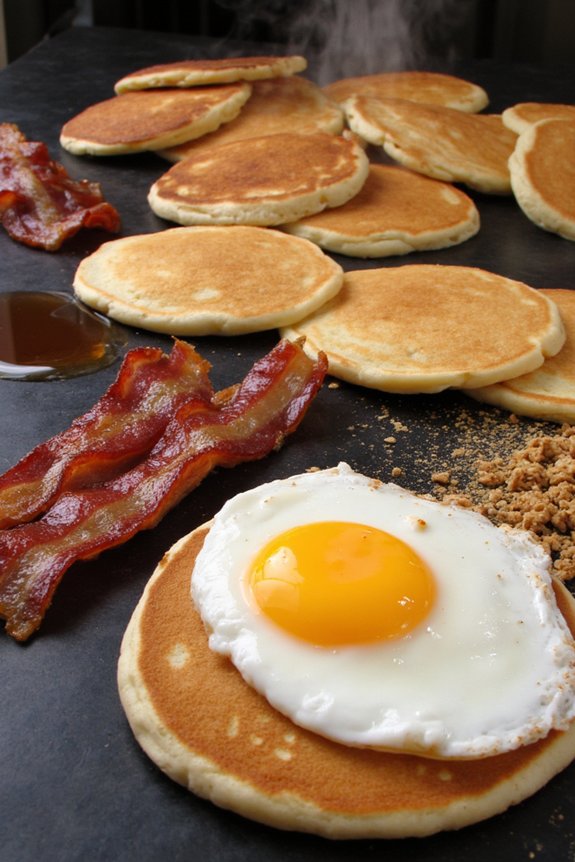
Most electric griddles don’t heat up perfectly evenly across the entire cooking surface, and that’s actually pretty normal. Here’s what’s happening behind the scenes: your griddle’s heating elements are wired in a specific way, and the voltage distribution isn’t always uniform across every inch. Think of it like this—electricity flows through trace geometry patterns beneath the surface, and some areas get more current flowing through them than others.
The way manufacturers design these heating circuits, they’re trying to balance cost with performance. Sometimes corners of your griddle end up farther from the main power source, so they’re naturally cooler. It’s kind of like how water pressure varies depending on how far you are from the main line. Understanding this helps you work with your griddle instead of fighting against it.
Common Design Flaws in Budget and Mid-Range Models
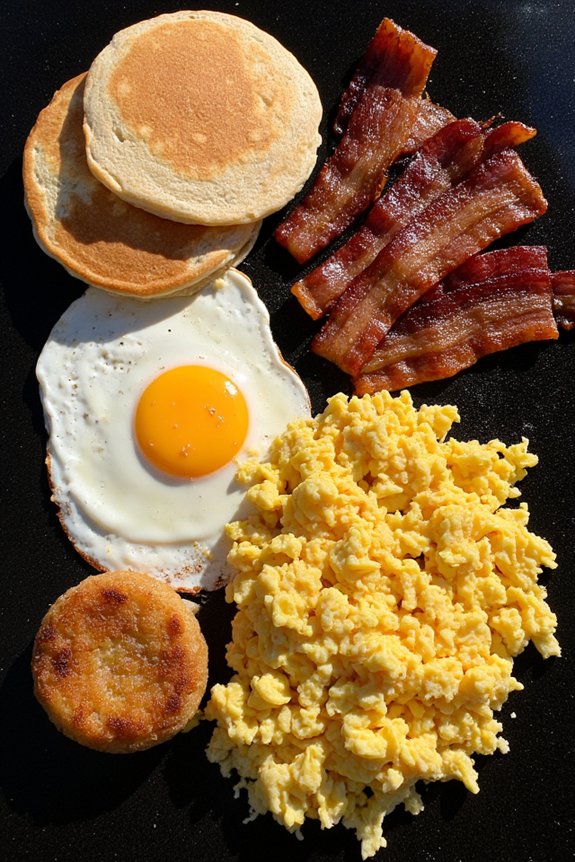
Budget and mid-range griddles tend to cut corners in ways that make hot and cold spots even worse than you’d expect. Here’s what you’re really dealing with:
- Poor coil spacing that leaves gaps where heat barely reaches, creating dead zones across your cooking surface
- Thermostat accuracy issues that don’t properly regulate temperature, so your griddle overshoots and undershoots constantly
- Cheap heating elements that wear out quickly and lose their effectiveness
You’re basically getting a device that can’t distribute heat evenly, then compounds the problem by not monitoring temperature right. The coil spacing on budget models is often uneven, and the thermostat accuracy? Let’s just say it’s about as reliable as a weather forecast. Your pancakes’ll cook unevenly, and honestly, that’s just frustrating when you’re hungry.

How Griddle Size Affects Heat Distribution
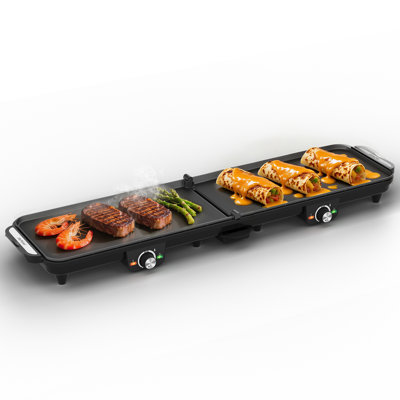
As your griddle gets bigger, heat distribution becomes exponentially trickier. You’re basically asking one heating element to do way more work than it’s designed for. With larger surfaces, you’ll notice the center stays toasty while edges cool down markedly. That’s where griddle thickness comes into play, honestly. Thicker cooking surfaces hold and spread heat more evenly across the whole platform. Budget models often skimp here, using thin materials that can’t manage the distance. Edge insulation also matters because heat naturally escapes from the perimeter. Without proper insulation around those borders, you’re fighting an uphill battle against temperature loss. So when shopping, remember that bigger isn’t always better unless your griddle’s built to handle it.
The Impact of Ambient Temperature and Ventilation
You might not realize it, but the room temperature around your griddle actually plays a bigger role than you’d think in creating those frustrating hot and cold spots. When you’re cooking in a chilly kitchen versus a warm one, your griddle’s heating elements have to work differently to maintain consistent temps, and that’s where things can get a bit wonky. Add in some air circulation from a nearby vent or fan, and you’ve got a recipe for uneven cooking since airflow can cool down certain areas of the cooking surface faster than others.
Room Temperature Variations
When your kitchen feels like a sauna one minute and a walk-in freezer the next, your electric griddle’s got to deal with the consequences, and that’s where things get tricky. Your griddle doesn’t exist in a vacuum, so ambient gradients throughout your space seriously affect how it performs. Those draft patterns from open windows or AC vents? They’re basically invisible enemies messing with your cooking surface’s temperature consistency.
Here’s what’s really happening:
- Uneven airflow creates hot and cold zones on your griddle’s surface
- Temperature swings in your kitchen throw off the griddle’s heating system
- Ventilation placement directly impacts which areas stay hot longest
You’ll notice these problems most when you’re cooking multiple items. One side might be blazing while the other struggles, leaving you frustrated and your food unevenly cooked. It’s annoying, but totally fixable with awareness.
Airflow and Ventilation Effects
Direct airflow from vents and fans is probably the biggest culprit behind those frustrating hot and cold spots on your griddle, and it’s way more influential than most people realize. You might not think about it, but drafts from kitchen ventilation systems can seriously mess with your cooking surface’s temperature consistency. If you’re positioned near a vent stack or have draft control issues, you’re basically fighting an invisible enemy while trying to cook. Cold air blowing across your griddle cools certain sections faster than others, creating those annoying uneven temperatures. Even a ceiling fan spinning overhead can wreak havoc on your heat distribution. The solution? Reposition your griddle away from direct airflow when possible, or adjust your draft control settings to minimize disruption and get more consistent, predictable cooking results.
Practical Techniques to Minimize Hot and Cold Spots
Tackling those pesky hot and cold spots doesn’t require fancy equipment or a culinary degree, just a little know-how and some strategic adjustments. You’ve got more control than you think.
Here’s what actually works:
- Preheat your griddle longer than you’d expect, allowing heat to distribute evenly across the surface
- Rotate your food through different zones using pan flipping techniques to make certain even cooking
- Clean off seasoning buildup regularly, since crusty accumulation blocks heat transfer and creates dead zones
Beyond that, try lowering your heat slightly and giving the cooking surface time to stabilize before you start cooking. Move your food around more frequently too. It sounds simple, but constant repositioning prevents any single spot from getting hammered. You’ll notice a real difference once you stop fighting your griddle and work with it instead.
Maintenance Tips to Improve Even Heating Performance
Since your griddle’s performance depends heavily on how well you maintain it, keeping up with regular care is honestly one of the best investments you can make. Start with seasonal cleaning to remove buildup that causes uneven heat distribution. Wipe down the surface thoroughly and check the heating elements for debris or damage. Next, perform calibration checks to make sure your temperature settings are accurate—a miscalibrated griddle will create those frustrating hot and cold zones. You’d be surprised how often this simple step fixes everything. Don’t forget to inspect the power cord and connections too. When you stay on top of maintenance, your griddle heats evenly and performs like it’s supposed to, making cooking way more enjoyable and reliable.
Frequently Asked Questions
Can I Use an Electric Griddle on Uneven Countertops Without Affecting Heat Distribution?
You shouldn’t use your electric griddle on uneven countertops. Poor counter stability compromises surface tolerance, causing uneven contact that’ll create hot and cold spots throughout your cooking surface.
Are Certain Foods Better Suited for Griddles With Uneven Heating Patterns?
Yes, you’ll find that heartier foods like burgers and steaks work better with uneven heating. Avoid thin pancakes and delicate fish, which you’re more likely to burn or undercook on hot spots.
Does Griddle Age or Wear Cause Increased Hot and Cold Spots Over Time?
Yes, your griddle’s age worsens hot and cold spots. Elemental degradation of heating elements combined with thermal cycling effects from repeated heating and cooling cycles gradually compromise your griddle’s temperature distribution capability.
Should I Preheat My Griddle Differently to Compensate for Temperature Variations?
You should preheat your griddle using staggered heating by turning it on gradually rather than to full temperature immediately. This lets you identify preheat zones and distribute heat more evenly across the surface.
Can Adding an External Temperature Control Device Fix Existing Hot and Cold Spots?
You can’t fully eliminate hot and cold spots with an external thermostat or power regulator, but they’ll help you manage temperatures better. You’ll still need strategic cooking zone placement to work around your griddle’s uneven heating patterns.
Conclusion
So here’s the thing—hot and cold spots aren’t really your fault. Your griddle’s fighting an uphill battle with uneven heating elements, wonky power distribution, and material limitations. But you’re not helpless. Regular maintenance, strategic preheating, and rotating your food around problem zones’ll help. And hey, sometimes that one hot spot? Perfect for searing. Work with what you’ve got.