Your spice grinder’s struggling because moisture’s probably sneaking in, your burrs are worn down, or you’re just not grinding long enough. Overstuffing the chamber reduces efficiency, and heat buildup from grinding too fast actually damages those delicate flavors you’re after. Don’t forget to clean between batches—old oil residue from cumin or sesame coats everything and ruins texture. If your grinder’s making weird noises or just choking out, it might be time for a replacement. There’s definitely more going on under the hood worth exploring.
Key Takeaways
- Moisture and oil residues cause clumping; clean thoroughly and store spices in airtight containers.
- Worn or misaligned burrs produce coarse, uneven powder; inspect regularly and replace as needed.
- Overfilled grinder reduces efficiency; fill only three-quarters full and grind in smaller batches.
- Insufficient grind time or low RPM yield coarse results; increase duration to 10–20 seconds.
- Static electricity and heat buildup cause clumping; use short bursts with cooling breaks between.

Moisture Content in Your Spices

One of the sneakiest culprits behind disappointing spice grinding is moisture lurking in your spices. Here’s the thing: damp spices clump together instead of breaking down into that fine powder you’re after. This happens because moisture makes particles stick, basically gumming up the works.
Your storage seals matter way more than you’d think. If your containers aren’t airtight, air humidity sneaks in and ruins everything. Even your kitchen’s natural moisture can wreck havoc on freshly ground spices. Keep your jars sealed tight and store them away from steam and humidity.
You’ll notice the difference immediately once you’ve got proper storage down. Your grinder’ll produce silky powder instead of chunky disappointment. It’s honestly one of those simple fixes that actually works. If you’re still not getting the texture you want, consider checking your blade quality since dull or corroded blades can also lead to poor grinding results.
Dull or Damaged Grinding Burrs

Over time, your grinder’s burrs can get dull or damaged, and that’s usually the culprit behind coarse, inconsistent powder. You’ll notice the difference pretty quick—if your spices aren’t grinding as fine as they used to, or if you’re getting uneven chunks mixed with powder, your burrs probably need some attention or replacement. The good news is that with regular cleaning, careful storage, and knowing when it’s time to swap out worn burrs, you can keep your grinder working like it’s brand new. Regularly maintaining your grinder is especially important for burr grinder performance, since dull or worn burrs can significantly impact grind consistency and flavor extraction.
Signs of Burr Wear
When your spice grinder starts acting like it’s given up on life, worn-out burrs are often the culprit. You’ll notice the grinding sound becomes noticeably louder or takes on a weird grinding-then-slipping quality. Your spices aren’t getting pulverized anymore, they’re just kinda bouncing around in there.
Check for material fatigue by looking inside the grinder bowl. If the burrs look scratched, pitted, or uneven, that’s your answer. Sometimes burr alignment gets thrown off too, which makes everything grind unevenly. You might also notice inconsistent particle sizes, where some spice turns to powder while other bits stay chunky.
If you’re getting fine powder on one side but not the other, misalignment’s definitely happening. These’re all red flags that your burrs have seen better days and probably need replacing soon. When replacing burrs, it’s a good idea to look for models with warranty length that covers parts and labor, so you’re protected from extra repair costs if something goes wrong.


Replacement and Maintenance Tips
Since your burrs are already showing their age, replacement is pretty much inevitable if you want your grinder working like it should again. You’ve got two solid options: grab replacement burr sets from the manufacturer or swap out the whole grinder entirely.
Before you decide, schedule routine inspections every few months to catch wear early. This simple habit saves you from grinding disasters later. Stock up on spare parts like burr assemblies so you’re never caught without a working grinder when you need one most.
Maintenance matters too. After each use, wipe down the chamber and brush out stubborn particles. Store your grinder in a dry spot away from moisture, which can gunk things up faster than you’d think. Keep those burrs happy, and they’ll keep your spices happy too.
When choosing replacement parts, pay attention to motor power and performance since this directly affects how efficiently your grinder will process spices into fine powder.
Overloading Your Grinder

One of the easiest mistakes you can make is cramming way too much into your grinder at once, thinking you’ll save time. Here’s the thing: your grinder’s got capacity limits for a reason, and when you overload it, the motor can’t move the spices around properly, so you’re left with chunks instead of that silky powder you wanted. Grinding efficiency takes a nosedive when you’re pushing past what the machine was designed to handle, so stick to smaller batches and you’ll get way better results. Similar to kitchen tools like electric knives, motor performance is a key factor—overloading can strain the motor, reduce efficiency, and shorten the appliance’s lifespan.
Capacity Limits Matter
Most people don’t realize that stuffing your spice grinder to the brim is basically asking for trouble. When you overload it, you’re actually working against yourself. Here’s the thing: capacity testing shows that grinders perform best when they’re only about three-quarters full. Why? Because your blades need room to move and do their job properly.
Think of it like load balancing. When you distribute spices evenly instead of cramming them in, the blades can circulate everything uniformly. Packed-to-capacity batches? They just get chunky and uneven. You’ll end up with some powder-fine bits mixed with larger particles that didn’t get proper processing time.
Start smaller. Grind in batches if you need to. Your grinder—and your spices—will thank you with that silky, consistent powder you’re after.
Grinding Efficiency Decreases
Push too many spices into your grinder at once, and you’re basically asking it to work twice as hard for half the results. When you overload the chamber, your blades can’t move freely, which messes with blade alignment and reduces grinding efficiency dramatically. The motor strains, the blades barely catch the spices properly, and you end up with uneven chunks instead of that silky powder you wanted.
There’s also particle agglomeration happening, where spice pieces clump together instead of breaking down individually. The crowded conditions create friction and heat, making particles stick to each other and the chamber walls. Your grinder simply can’t process everything evenly when it’s stuffed. Fill it only halfway or three-quarters full, give your blades room to dance around, and you’ll get noticeably better results every single time.
Incorrect Grind Time and Speed
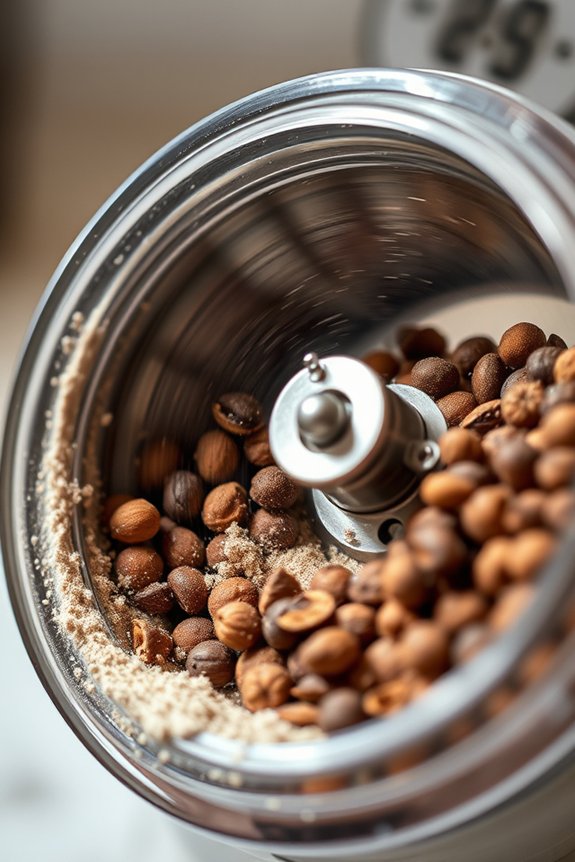
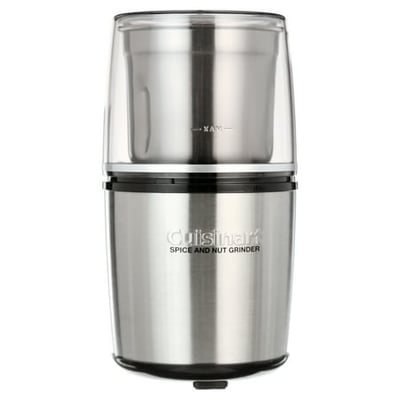
When your spice grinder’s producing powder that’s more coarse than fine, you’ve probably got a timing or speed problem on your hands. Here’s the thing: grind duration matters way more than most folks realize. If you’re only grinding for five seconds, don’t expect espresso-fine results. You’ll probably need ten to twenty seconds, depending on your spice and grinder model. Then there’s motor RPM to take into account. A slower-speed grinder needs more time to pulverize those seeds and bark into submission. Conversely, high-powered machines work faster but can generate heat that damages flavor compounds. Finding your sweet spot takes a bit of experimentation. Start with longer durations on lower speeds, then adjust accordingly. It’s like cooking—you’ll figure out what works best for your particular machine.
Temperature Buildup During Grinding

Grinding spices builds up heat faster than you’d think, and that’s actually a problem worth paying attention to. When your grinder’s blades spin rapidly, blade friction generates serious heat that can actually damage delicate spice flavors and aromatic oils. You know how spices smell amazing? That’s the good stuff evaporating away when temperatures climb too high.
Here’s the thing: heat generation isn’t just about losing flavor, it can also affect your powder’s texture. Hot spices tend to clump together instead of staying fine and separated. The moisture content changes, making everything stick.
Try grinding in shorter bursts instead of one long session. Give your grinder breaks between pulses so it cools down. This simple trick keeps those valuable flavors intact while producing that perfect, powdery consistency you’re after.
Spice Density and Hardness Variations
Beyond temperature concerns, you’ve got another layer of complexity working against you: not all spices are created equal when it comes to grinding. Some spices are naturally softer and break down easily, while others are dense and stubborn. Nutmeg, for instance, grinds like butter compared to hard cinnamon sticks or cloves. This particle hardness variation means your grinder struggles inconsistently. You might get powder from softer spices, then hit a batch of cardamom pods and suddenly you’re looking at chunks. Grit variation happens because of these hardness differences. Denser spices need more aggressive grinding action or longer processing times. It’s not your grinder being lazy, it’s just fighting an uphill battle with inconsistent material.
Improper Cleaning Between Batches
You’d be surprised how much last week’s cumin can wreck this week’s cinnamon, and it’s probably happening in your grinder right now. Residue buildup clogs the blades and reduces their grinding power, while oily spice particles stick around and mess with your texture, making everything feel gritty instead of silky smooth. A proper wash between batches, using warm water and a dry cloth to get into those tight spots, keeps your grinder running like it’s supposed to and your powders actually fine.
Residue Buildup Reduces Performance
Neglect between batches is basically the silent performance killer nobody thinks about until their grinder starts acting like it’s tired of life. When you don’t clean properly, old spice particles stick around and harden inside your machine. This residue chemistry creates a nasty layer that coats your grinder’s burrs and chamber walls. Over time, you’re dealing with surface corrosion that makes grinding feel like pushing through mud. Your grinder’s blades can’t grip fresh spices the same way when they’re battling crusty buildup. The result? You get uneven, chunky powder instead of that silky fine texture you’re after. A quick brush-out between uses, followed by occasional deep cleaning with rice or bread, keeps your grinder performing like it’s brand new.
Oil Contamination Affects Texture
While residue buildup clogs up your grinder’s mechanical parts, there’s another sneaky culprit that messes with your powder’s texture in a totally different way: oil. When you don’t clean between batches properly, oily residues from spices like cumin or sesame cling to your grinder’s blades and chamber. These sticky granules won’t break down the same way dry particles do, so your next batch gets compromised before you even start grinding.
The oil creates a slick coating that prevents spices from grinding fine. Instead, you’ll get clumpy, uneven powder that’s frustrating to work with. It’s like trying to grind sand when it’s damp, honestly. A quick wipe with a dry cloth between uses prevents this mess entirely. Your texture’ll stay consistent, and you’ll actually get that powdery goodness you’re after.
Proper Washing Methods Matter
If you’re serious about getting fine powder instead of gritty disappointment, your cleaning routine between batches matters way more than you’d think. Here’s the thing: leftover oils and spice residue build up inside your grinder, affecting texture more than most people realize.
Start by letting your grinder soak duration of about five to ten minutes in warm, soapy water. This loosens stubborn particles that simple rinsing misses. If your model’s dishwasher safe (check the manual first—caution: not all are), that works too. Just avoid the heated dry cycle since it can damage seals.
Dry everything thoroughly before grinding again. Moisture plus old spice bits equals clumping, not powder. Your next batch’ll thank you.
Grinder Size Mismatch for Your Needs
One overlooked culprit behind your powdery disappointments might be that your grinder’s simply the wrong size for what you’re trying to accomplish. If you’re using a tiny grinder meant for single teaspoons, you’re fighting an uphill battle with portion consistency. Those miniature models lack the bowl ergonomics needed for larger batches, forcing you to work in frustratingly small amounts. Conversely, cramming just a pinch of cardamom into a massive industrial grinder? That’s equally problematic. Your spices bounce around instead of grinding properly. The sweet spot exists somewhere in between, where your grinder’s capacity matches your typical cooking needs. Getting the size right transforms everything, turning those frustrating sessions into smooth, efficient grinding that actually produces the fine powder you’re after.
Static Electricity and Powder Clumping
Static electricity’s sneaky role in your grinding woes often goes completely unnoticed until you’re staring at a clumpy mess that refuses to cooperate. Here’s the thing: when you’re grinding spices, friction creates static cling that makes those fine particles want to stick together instead of flowing freely. The charge buildup happens fast, especially with dry spices, and suddenly your beautiful powder transforms into frustrating little clumps.
You can fight back though. Try grinding in shorter bursts rather than one long session, which reduces the friction and charge buildup markedly. Lightly misting your spices with a tiny bit of water before grinding helps too. Some folks even wipe their grinder’s interior with a dryer sheet to neutralize static before use. It sounds odd, but it actually works wonders for preventing that annoying clumping problem.
When It’s Time to Replace Your Machine
Your grinder’s got limits, and even all those clever tricks can’t fix a machine that’s reached the end of its road. If you’re dealing with motor failure, it’s basically game over. The thing just won’t spin anymore, no matter how hard you coax it. Check your warranty status too—sometimes you’ve got options you didn’t know about. A newer grinder runs smoother and grinds faster, honestly. Sure, replacing it costs money, but a broken machine costs you time and frustration. If your grinder’s been limping along for years, constantly choking on spices or making weird sounds, replacement might just be the smartest move. New models are way more efficient anyway.
Frequently Asked Questions
Can I Use a Coffee Grinder for Spices Without Affecting My Coffee’s Taste?
You shouldn’t use the same grinder for both. Flavor ghosting means spice residue lingers, tainting your coffee. Grinder seasoning with oils from spices permanently affects taste. Dedicate separate grinders for each.
What’s the Best Way to Store Spices Before Grinding for Optimal Results?
You’ll get best results by storing your spices in cool storage away from heat and light. Maintain humidity control by using airtight containers, keeping them dry and fresh until you’re ready to grind.
How Often Should I Replace My Grinder’s Burrs for Consistent Powder Fineness?
You should replace your grinder’s burrs every 1-2 years, depending on usage. Track blade wear through a maintenance log and adjust grit calibration regularly. Monitor fineness consistency to determine your replacement schedule.
Does Grinder Material Affect the Quality of Ground Spice Powder Produced?
Yes, grinder material markedly affects your spice powder quality. You’ll find ceramic vs. steel burrs produce different results—steel’s harder but ceramic resists heat better. Surface coatings also matter; they’ll prevent oxidation and flavor contamination.
Are There Natural Additives That Prevent Clumping in Ground Spices?
Yes, you can use natural moisture absorbers like rice flour or cornstarch to prevent clumping. Herbal anticaking agents such as dried ginger or turmeric also work effectively, helping your ground spices stay dry and free-flowing longer.
Conclusion
So here’s the thing—fine powder isn’t magic. You’ve probably got one or two culprits messing with your grind. Maybe your spices are too moist, or your burrs are shot. Could be you’re overstuffing that grinder like it’s a tiny suitcase. Give these fixes a try before you toss the whole machine. Sometimes it’s just about dialing in your technique, you know?