So your air fryer’s suddenly putting on a smoke show, and you’re wondering if something’s gone seriously wrong. Here’s the thing: it’s usually not a disaster. Most of the time, you’re dealing with something pretty fixable—whether that’s oil pooling up, crumbs hanging out where they shouldn’t be, or maybe you’ve just crammed too much food in there. The good news? We’ll walk you through exactly what’s causing it and how to stop it.
Key Takeaways
- Excess oil and grease buildup — Reduce oil usage to a light coating; empty drip pan after every use to prevent burning and smoke.
- Overcrowded basket — Leave about half-inch spacing between food pieces to ensure proper hot air circulation and even cooking.
- High temperature settings — Lower temperature by 25°F if smoking occurs; excessively high heat burns exteriors and creates smoke.
- Dirty heating element and filters — Inspect heating element for grease splatter weekly; replace air filters every three to six months.
- Immediate response steps — Pause cooking, unplug unit, remove basket, wipe residue with paper towel, cool unit, then resume at lower temperature.
Buildup of Food Debris and Grease
Letting grease and food particles pile up inside your air fryer is basically an open invitation for smoke. You know that burnt smell? Yeah, that’s your crusty buildup saying hello. Over time, crumb residue accumulates on the heating element and basket, creating carbon spots that’ll catch fire when heated. It’s not pretty.
Here’s the thing: regular cleaning prevents all this drama. After each use, let your air fryer cool down and wipe out loose debris. For stubborn gunk, soak the basket in warm soapy water for a few minutes. A soft brush works wonders on carbon spots without scratching surfaces.
Don’t skip this step. Clean air fryers run cooler and smoke way less. Your kitchen—and your lungs—will thank you. Some air fryers even feature dishwasher-safe parts or nonstick interiors, making cleaning easier and further reducing the risk of smoke caused by leftover grease and debris.
Cooking With Too Much Oil
Now, while keeping your air fryer basket clean is half the battle, there’s another culprit that’ll turn your kitchen into a smoke show: drowning your food in oil. Here’s the thing—air fryers work by circulating hot air, not oil, so you really don’t need much. When you use excess oil, it heats way too fast and starts smoking like a chimney. Plus, that oil splatter creates a mess inside your machine and ruins your food’s crispy texture. The trick? Use just a light coating or a cooking spray instead. Think of it as a gentle kiss of oil, not a full dunk. Your air fryer will thank you, and so will your smoke detector. Many modern air fryer models are designed to use up to 90% less oil than traditional frying methods, which helps keep both your kitchen and your meals healthier.
Overcrowding the Air Fryer Basket
When you cram your air fryer basket like you’re playing Tetris, you’re actually working against the whole point of the machine. Your air fryer needs breathing room to do its job properly. Ignoring capacity limits means hot air can’t circulate evenly around your food, and that’s when smoking happens.
Overcrowding creates airflow restriction, which causes uneven cooking and burnt spots. Think of it this way: your air fryer’s strength comes from rapid air circulation, not cramming everything in at once. You’ll get better results cooking in batches than shoving twice as much food in one go.
Give your food space. Leave about half an inch between pieces. Your meals’ll cook faster, taste better, and you’ll avoid that annoying smoke altogether.
You can avoid many smoke and cooking issues by following even heat distribution guidelines similar to those used for electric griddles, ensuring your air fryer functions at its best.
Using the Wrong Temperature Settings
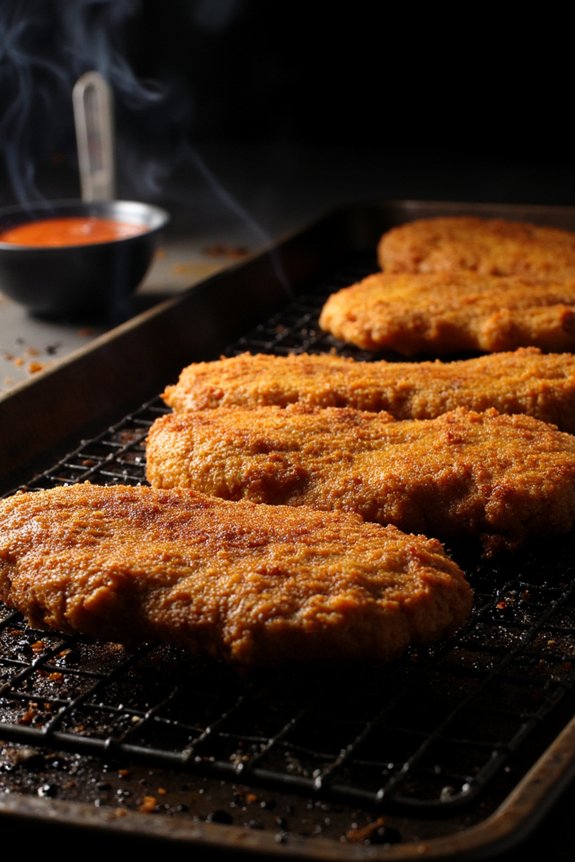
Your air fryer’s temperature settings are like the gas pedal on your car—too much or too little, and you’re headed for trouble. When you crank the heat way too high, your food’s exterior burns before the inside cooks through, creating that annoying smoke you’re trying to avoid. Temperature calibration matters big time here. If your air fryer’s running hotter than it should, you’ll need to dial it back a notch or two. Recipe adjustments are key—not every recipe works at the exact temperature listed. Start lower and work your way up if needed. Most smoking issues from temperature happen when folks set it at 400°F when 375°F would’ve done the job just fine. Trust me, patience pays off. If you want to avoid these problems, look for models with digital thermostats and PID controls for more consistent temperature management.
Cooking Fatty Foods Without Proper Drainage
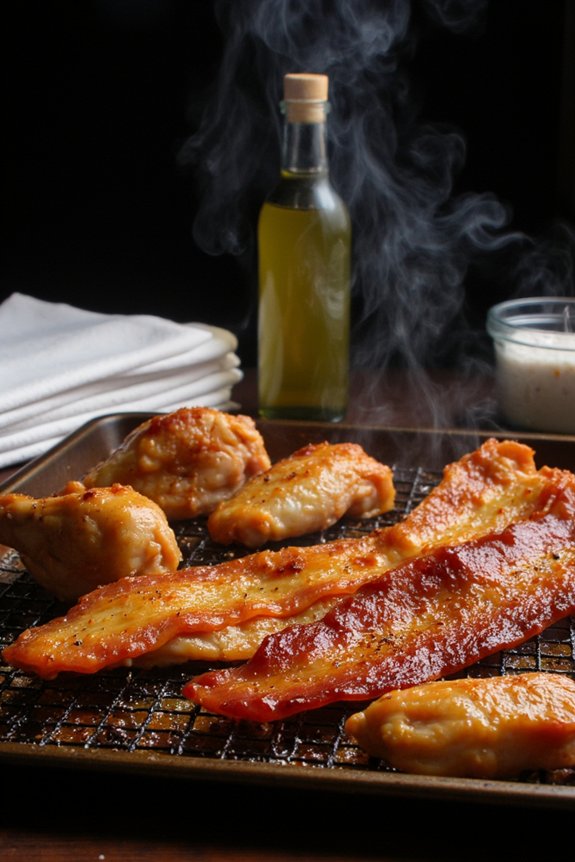
Fatty foods are a whole different beast from the temperature problem we just covered. When you’re cooking bacon, burgers, or salmon, all that rendered fat’s gotta go somewhere. If it doesn’t have proper fat drainage, you’re basically creating a grease fire waiting to happen. The smoke you’re seeing? That’s melted fat accumulating in your basket and heating up way too much. Make sure you’re using your air fryer’s drip tray correctly, and don’t skip cleaning it between batches. Pro tip: grease channeling happens when fat pools instead of draining away. Line your basket with foil or parchment paper with small holes poked through for better fat drainage. Your air fryer will thank you, and your kitchen won’t smell like a smoky barbecue. Some electric steamers feature drip trays and easy-clean surfaces, which are great for catching spills and making cleanup after fatty foods much simpler.
Cleaning and Maintenance Issues
if you’re not keeping up with cleaning and maintenance, your air fryer’s gonna start smoking like it’s auditioning for a barbecue. Grease buildup sneaks up on you, filters get clogged faster than you’d think, and that non-stick basket coating degrades over time, all of which can turn your cooking sessions into a smoky mess that’ll have your smoke detector wondering what’s going on. Regular cleaning, swapping out filters on schedule, and checking that basket coating will save you from these headaches and keep your air fryer running smooth.
Grease Buildup Prevention
Regular cleaning builds up your air fryer’s defense against smoking problems, and it’s honestly one of the easiest ways to keep things running smoothly. Here’s the thing: grease accumulates fast, and it’s your main culprit behind that annoying smoke.
Empty your drip pan after every use. Seriously, don’t skip this step. Built-up grease in that pan will literally burn and create smoke the next time you cook.
Wipe down the basket and interior weekly with a damp cloth. You’re basically preventing future problems by doing this simple task.
Think of regular seasoning as maintenance, not just cooking technique. It keeps your air fryer in better shape overall.
Deep clean monthly for best results. Your smoke-free cooking sessions depend on it.
Filter Replacement Schedule
Most air fryers have filters that’ll need your attention, and honestly, they’re just as important as that drip pan you’re emptying religiously. Your filter’s lifespan typically runs between three to six months, depending on how often you’re using the thing. If you’re cooking daily, you’re looking at the shorter end of that range. Check your manual for specific replacement reminders since different models vary. When your filter gets clogged with grease and debris, it can’t do its job properly, and that’s when smoking happens. Don’t wait until problems start appearing. Mark your calendar or set phone reminders so you’re not caught off guard. Swapping it out regularly keeps everything running smooth and smoke-free.
Basket Coating Degradation
Your air fryer’s basket coating takes a real beating over time, and that nonstick surface that you fell in love with gradually wears down. When you’re scrubbing daily and using metal utensils, you’re basically asking for trouble. The problem? Nonstick flaking and coating oxidation happen faster than you’d think.
| Issue | Cause | Solution |
|---|---|---|
| Flaking coating | Metal utensils, harsh scrubbing | Use silicone or wood tools |
| Discoloration | Heat exposure, oxidation | Normal aging process |
| Peeling spots | Manufacturing defects | Contact manufacturer |
| Rough texture | Coating breakdown | Replace basket if severe |
| Food sticking | Degraded nonstick layer | Season with oil spray |
The real kicker? Once that coating starts deteriorating, your food’ll stick like nobody’s business. You’re looking at replacing the basket eventually, but you can extend its life by treating it gently and using proper utensils.
Frequently Asked Questions
Is It Safe to Use an Air Fryer That’s Producing Smoke?
No, you shouldn’t use a smoking air fryer. It’s not safe for clean operation or your indoor air quality. Stop using it immediately and identify the cause—likely food debris or oil buildup—before resuming use.
Can Air Fryer Smoke Damage My Kitchen or Appliances?
Yes, your air fryer’s smoke can damage your kitchen. Continuous smoke exposure risks appliance corrosion and buildup on surfaces. You’ll want to address the smoking problem quickly to prevent long-term damage to your cooking environment.
How Often Should I Replace My Air Fryer’s Heating Element?
Your air fryer’s heating element typically lasts 3-5 years with proper use. Check your warranty coverage for replacement details. Monitor for filament corrosion, which indicates you’ll need a replacement soon. Follow manufacturer’s replacement schedule recommendations.
Does the Brand of Air Fryer Affect Smoking Problems?
Yes, brand reputation markedly impacts smoking problems. You’ll find that reputable brands use superior component quality, resulting in better heat distribution and fewer smoking issues. Budget models often have inferior heating elements and construction.
What’s the Difference Between Normal Steam and Dangerous Smoke?
You’ll see white vapor dissipate quickly—that’s normal steam. Dangerous smoke appears as thick, dark oil haze that lingers and smells acrid. If you’re noticing heavy smoke, you’ve got a real problem needing immediate attention.
Conclusion
So there you have it—your air fryer’s smoking problem’s probably fixable. Whether it’s grease buildup, too much oil, or you’re cramming food in there like it’s a tiny oven, you’ve got solutions. Regular cleaning helps big time. Keep temperatures reasonable, don’t overload the basket, and trim fatty bits. Your air fryer’ll thank you, and you’ll get back to crispy, delicious results without the smoke show.