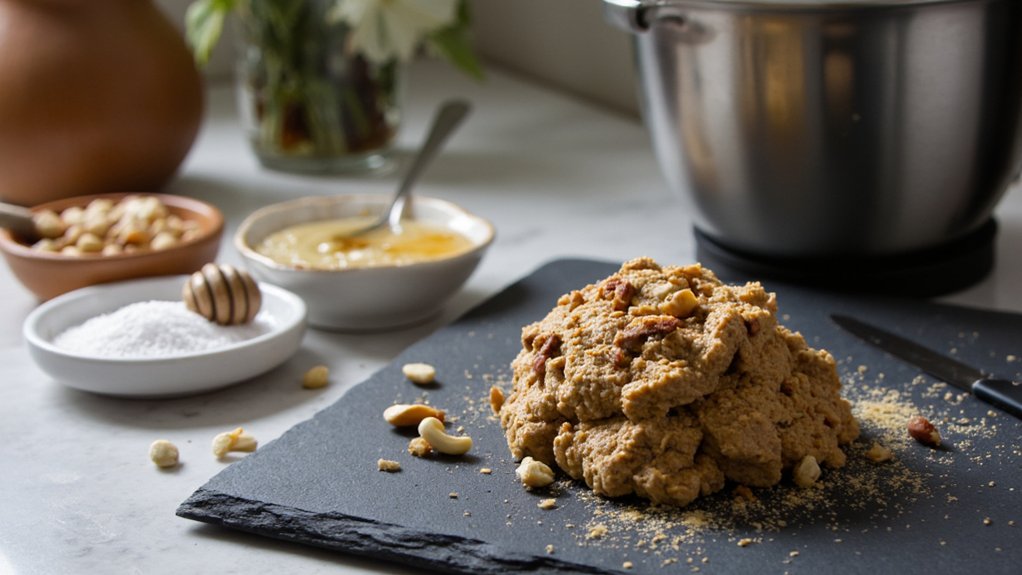
You’re standing there staring at your nut butter maker, waiting for that smooth, creamy magic to happen, and instead you’re getting… well, basically a coarse paste. It’s frustrating, right? The good news? You’re probably dealing with one of a handful fixable issues. Your nuts might be the culprit, or maybe it’s your machine. Could even be how you’re processing them.
Key Takeaways
- Insufficient moisture in nuts causes crumbly, sandy results; lightly roast nuts and add coconut oil or water before processing.
- Overheating scorches nut butter; use machines with cooling cycles or take rest breaks every 5–15 minutes during processing.
- Underpowered motors struggle with dense nuts; choose nut butter makers with at least 600 watts of motor power.
- Stale or low-quality nuts produce grainy texture; use fresh nuts stored in cool, dry conditions before roasting.
- Under-roasted nuts resist smooth breakdown; roast nuts to medium-dark level using cast iron skillets to release natural oils.
Insufficient Moisture Content in Your Nuts
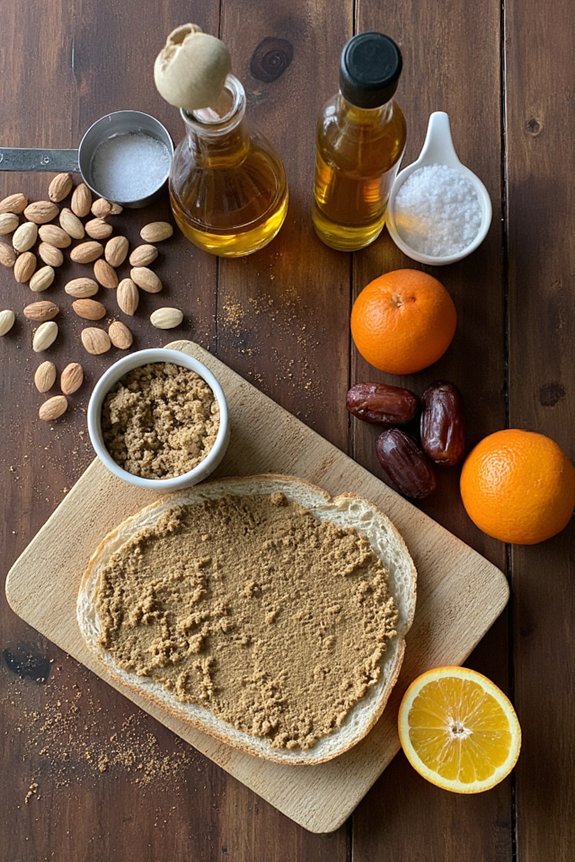
When your nut butter’s coming out looking more like sand than spread, you’ve probably got a moisture problem on your hands. Here’s the thing: nuts naturally contain oils, but they also need some water content to achieve that creamy texture you’re after. If your nuts are too dry, the oil extraction process gets stuck, and you’ll end up with a crumbly mess instead of smooth butter.
The fix is pretty straightforward. Try roasting your nuts lightly before processing, which can help activate their natural moisture. You could also add a tiny splash of coconut oil or even a few drops of water to restore that moisture balance. Start small though, because adding too much liquid turns everything into nut soup, and nobody wants that. For the creamiest results, make sure you’re using a blender with at least 1000 watts of power, as lower-wattage models may struggle to extract the necessary oils and achieve a smooth consistency.
Processing Time and Temperature Problems
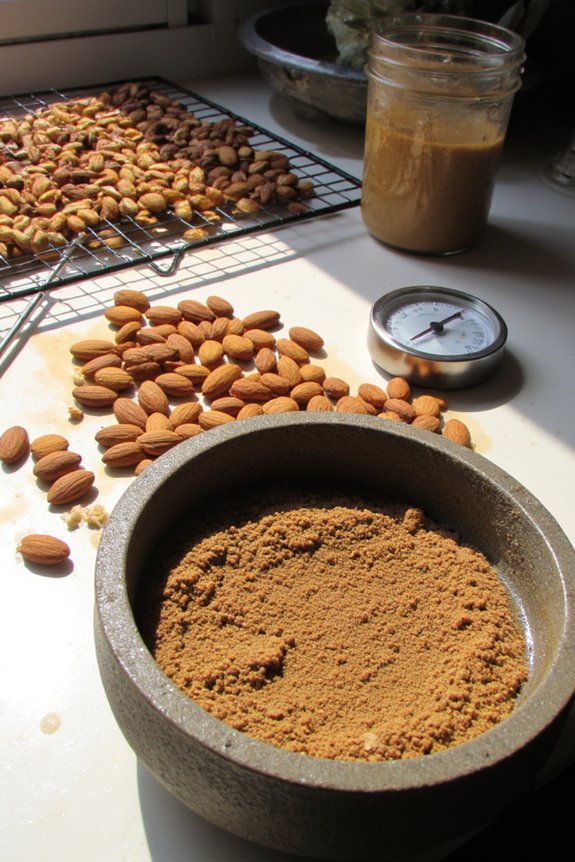
Once you’ve sorted out your moisture situation, it’s time to look at what’s happening inside the machine itself, because processing time and temperature are the real unsung heroes of nut butter magic. You might think longer processing equals creamier results, but that’s not always true. Most machines need between 5 to 15 minutes, depending on your nut type. Here’s the thing though: overheating risks are real. If your machine gets too hot, you’ll end up with scorched, bitter butter instead of that smooth dream you’re chasing.
Check if your maker has cooling cycles built in. If it doesn’t, give it breaks during processing. Let it rest, cool down, then fire it back up. This simple trick prevents overheating and keeps your nut butter tasting delicious. You can also look for machines with automatic shut-off features, which help prevent overheating and protect your appliance for longer use.
Choosing the Wrong Nut Butter Maker
Picking the wrong machine is like buying a blender when you really needed a food processor—it’ll technically blend stuff, but you’re gonna be frustrated pretty quick. Not all nut butter makers are created equal, and that’s where most folks go wrong. You might grab a basic food processor thinking it’ll do the job, but here’s the thing: motor design matters way more than you’d think. A underpowered motor will struggle with dense nuts and overheat before reaching that creamy consistency you want. Blade geometry plays a huge role too. The right shaped blades actually push nuts around efficiently, grinding them down rather than just spinning uselessly. Before buying, check the wattage and read reviews about how well it actually handles nuts. Getting the right tool from the start saves you headaches and wasted ingredients. Always look for a nut butter maker with sufficient motor power (at least 600 watts is recommended for tough jobs like nut grinding), as this directly impacts how smooth and creamy your butter will turn out.

The Type and Quality of Nuts You’re Using
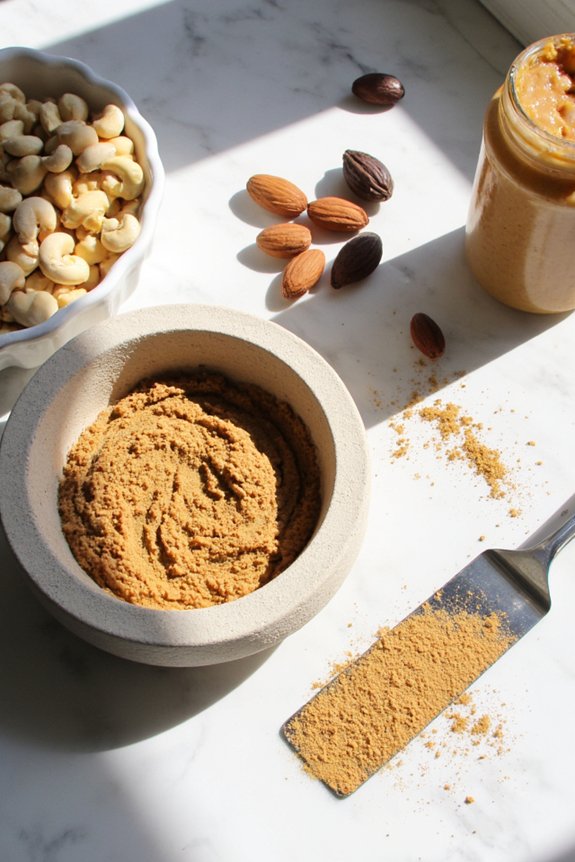
Your nuts are basically the foundation of the whole operation, and yeah, they matter way more than you’d probably guess. Not all nuts are created equal, and using stale or low-quality ones’ll leave you with a grainy mess instead of creamy goodness.
Fresh nuts make all the difference. You’ll want to check expiration dates and store yours in cool, dry places. Roasting profiles matter too—different nuts need different temperatures to release their natural oils properly. Under-roasted nuts won’t cooperate, while over-roasted ones become bitter and harder to blend smooth.
Oil extraction happens naturally during processing, but you’re fighting an uphill battle if your nuts started out mediocre. Invest in quality stuff from reputable sources, and you’ll notice the improvement immediately. For the smoothest results, consider using cast iron skillets to roast your nuts evenly and bring out their natural oils before blending.
How to Troubleshoot and Achieve Creamy Results
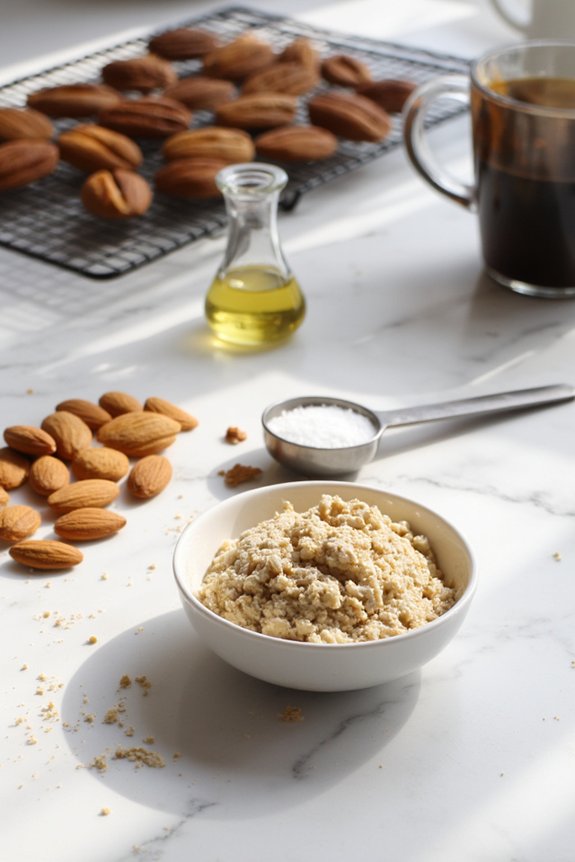
If your nut butter’s coming out more like chunky sand than silky spread, don’t panic—there’s usually a pretty straightforward fix. Start by checking your roasting levels, since under-roasted nuts won’t break down as smoothly. You’ll also want to examine your storage conditions because moisture and temperature really matter here.
| Issue | Cause | Solution |
|---|---|---|
| Too thick | Low roasting temperature | Roast longer, aim for medium-dark |
| Grainy texture | Stale nuts | Use fresh nuts, check storage |
| Separation | Humidity | Store in cool, dry place |
If you’re still struggling, try running the machine longer and scraping down the sides occasionally. Sometimes patience wins the day. Your butter’s usually just minutes away from that creamy dream state you’re after.
When troubleshooting, don’t forget that blade quality in your electric grinder can also affect the smoothness of your nut butter, so using a model with sharp, durable blades may help you achieve better results.
Frequently Asked Questions
Can I Add Oil to My Nut Butter Maker to Speed up the Creaming Process?
Yes, you can add oil to speed up creaming, but avoid extra oiling to prevent machine maintenance issues. A small amount of neutral oil helps, though it’ll thin your butter slightly.
Why Does My Nut Butter Separate After I’ve Made It?
Your nut butter separates because you’re experiencing oil migration and protein settling. The natural oils rise to the top while heavier proteins sink, which is normal. Just stir it back together before use.


How Long Does Homemade Nut Butter Typically Last in Storage?
Your homemade nut butter typically lasts 2-3 weeks at room temperature or up to a month refrigerated in airtight storage containers. Watch for spoilage signs like mold or off odors. You’ll notice flavor changes as it ages, indicating you’ve reached its shelf life limit.
Can I Mix Different Types of Nuts Together for Creamier Results?
Yes, you can mix different nuts together for creamier results. Combining almond cashew or walnut pecan creates smoother textures since cashews and pecans contain more natural oils than other varieties, enhancing creaminess considerably.
What’s the Ideal Room Temperature for Making Nut Butter at Home?
You’ll want your room temperature between 68-72°F for ideal nut butter making. Lower ambient humidity works best—aim for 30-50%—since moisture can prevent your nuts from reaching that creamy consistency you’re after.
Conclusion
So here’s the thing: you’ve got this. Your creamy nut butter dreams aren’t dead. Check your nuts first—they should be fresh and properly roasted, not stale. Make sure you’re giving your machine enough time and that it’s powerful enough to actually do the job, around 600–1000W minimum. Keep scraping down those sides, and you’ll get there. It’s usually just one small fix that makes all the difference.