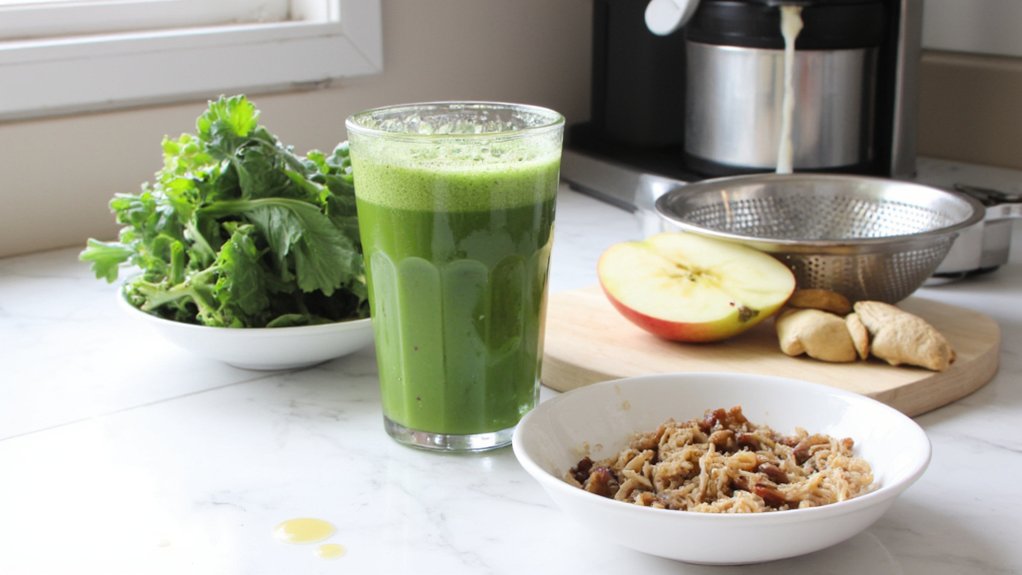
So your slow juicer’s jammed again, huh? You’re probably wondering why that bunch of celery turned into a tangled mess around the auger, or why your leafy greens decided to compress into some kind of pulpy concrete. The truth is, it’s not your juicer being stubborn—it’s usually about what you’re feeding it and how you’re doing it. Let’s figure out what’s really going on under that lid.
Key Takeaways
- Fibrous produce like celery and leafy greens wrap around the auger, causing jams that require proper preparation and removal of stems.
- Dense vegetables with high fiber content and low moisture produce thicker pulp that clogs more readily than soft, juicy produce.
- Alternate feeding hard and soft ingredients in sequence, starting with dense items like carrots to act as natural pushers.
- Cut produce into uniform, pinky-sized pieces and avoid overstuffing the feed chute to maintain consistent material flow through the auger.
- Disassemble and rinse all parts immediately after use to prevent pulp from drying and hardening on the screen and auger.


Understanding How Slow Juicers Work
If you’ve ever wondered why your slow juicer sometimes sounds like it’s working harder than usual, understanding how these machines actually operate is pretty much the first step to keeping them running smoothly. Here’s the deal: slow juicers use an auger design—basically a screw-like mechanism that rotates slowly and crushes produce against a screen. This cold extraction method preserves nutrients and enzymes by avoiding the heat that regular centrifugal juicers generate. The auger pushes fruit and veggies through gradually, squeezing out every last drop of juice. But that slow, methodical process? It’s exactly what can lead to clogging if you’re not careful. Knowing how your machine works helps you feed it the right stuff and prevent frustrating jams down the line. Many models use a dual-stage filter system or dual strainers to reduce clogging and improve juice yield, making a big difference in how smoothly your juicer runs.
The Most Common Culprits Behind Clogs
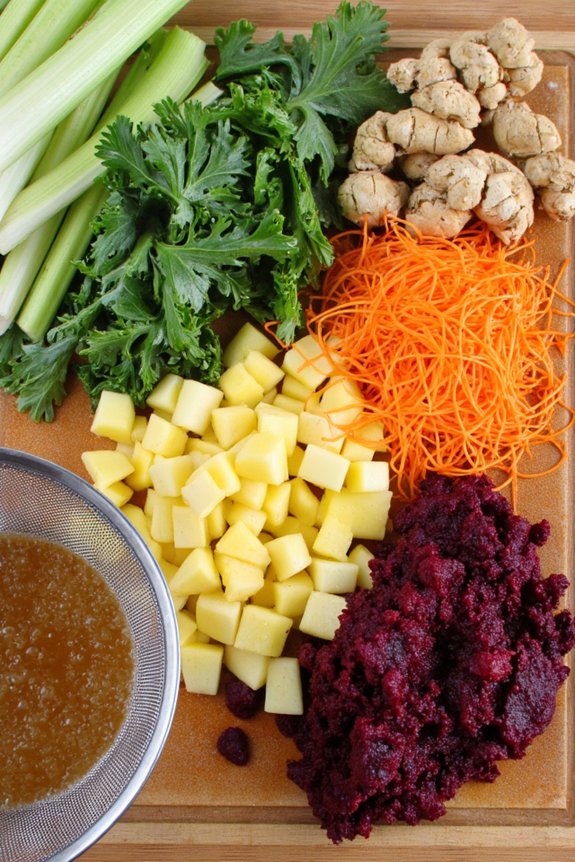
Now that you know your juicer’s auger is basically a slow-motion crusher, you’re probably wondering why it sometimes decides to stage a protest and jam up completely. Well, there’s several sneaky culprits lurking behind those clogs. Fibrous produce like celery and leafy greens are notorious offenders, wrapping around your auger like they’re auditioning for a magic trick. Blade wear gradually reduces crushing efficiency, making jams more likely. Screen distortion happens over time too, restricting juice flow and causing backups. Motor overheating can actually contribute to performance issues, making the auger sluggish. Plus, noise vibration often signals something’s wrong before a full clog happens. Understanding these common troublemakers helps you stay one step ahead and keeps your juicer running smooth. Many slow juicer models use dual-layer mesh strainers and wide feed chutes to help reduce clogs and improve overall juicing efficiency.
Why Fibrous Vegetables Cause the Most Problems
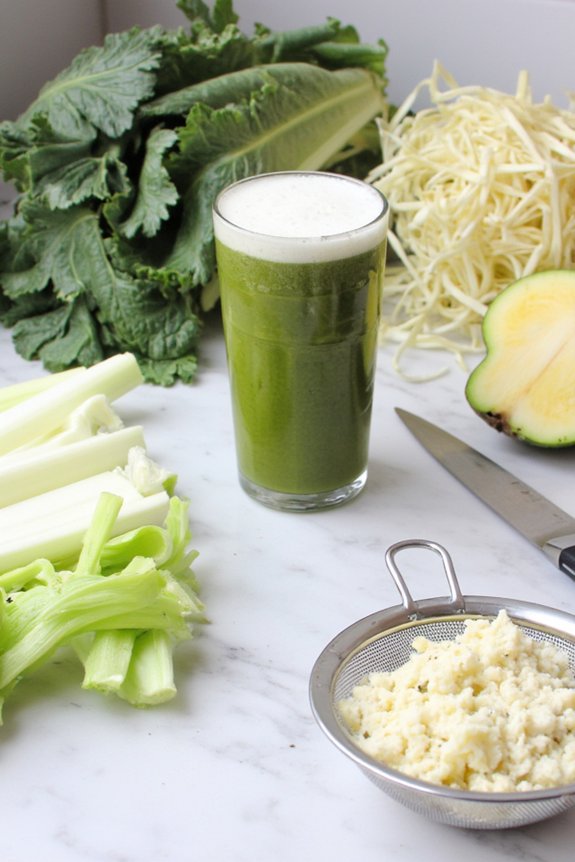
You’ve probably noticed that fibrous vegetables like celery, kale, and carrots tend to jam up your slow juicer way more than softer produce, and there’s a solid reason for that. These veggies pack dense fiber structures and generate a ton of pulp, which means your juicer’s auger gets overwhelmed faster and starts grinding against itself instead of doing its job. Leafy greens add their own headache to the mix since they like to wrap around the spinning parts, creating tangles that bring everything to a frustrating halt. If you’ve ever used a meat grinder with reverse function, you’ll know how helpful it can be to quickly clear jams—a feature some slow juicers could definitely benefit from.


Fiber Density and Pulp
When you’re pushing leafy greens and root vegetables through your slow juicer, you’re basically asking it to process nature’s version of a fiber obstacle course. Here’s the thing: fiber density varies wildly between produce types, and that’s where your clogging troubles start.
Dense vegetables like carrots and beets pack serious fiber content that resists breaking down easily. When you juice them, that fiber clumping happens fast, creating blockages in your machine’s narrow chutes. The real culprit is pulp compression—all that dense material gets squeezed together, forming stubborn clogs that slow everything down and can even damage your juicer’s motor.
The key’s understanding that softer produce moves through smoothly, while high-density stuff needs strategic feeding and preparation to prevent frustrating backups. Just as with multi-tier food steamers, knowing the capacity and limitations of your juicer can help avoid jams and ensure smoother, more efficient operation.
Leafy Greens Jamming Issues
Leafy greens are basically the troublemakers of the juicer world, and they’re almost always responsible when your machine decides to stage a protest. Unlike denser produce, spinach and kale wrap around the auger like they’re auditioning for a cirque show. You’ll find they don’t break down smoothly, instead forming tangled clumps that jam everything up.
The problem gets worse when you’re trying to make green smoothies or dealing with leafy composting materials. These greens need special handling. Bundle them loosely and alternate with harder fruits or vegetables. Never feed handfuls directly into your juicer. Take your time, feed gradually, and watch the chute carefully. Your slow juicer will thank you for the patience, and you’ll actually get juice instead of frustration. If you’re looking for a kitchen appliance that is designed to handle large capacities and minimize clogging with fibrous foods, consider models with features like powerful motors and easy-clean designs as found in top-rated slow cookers.
The Impact of Produce Moisture Content on Performance
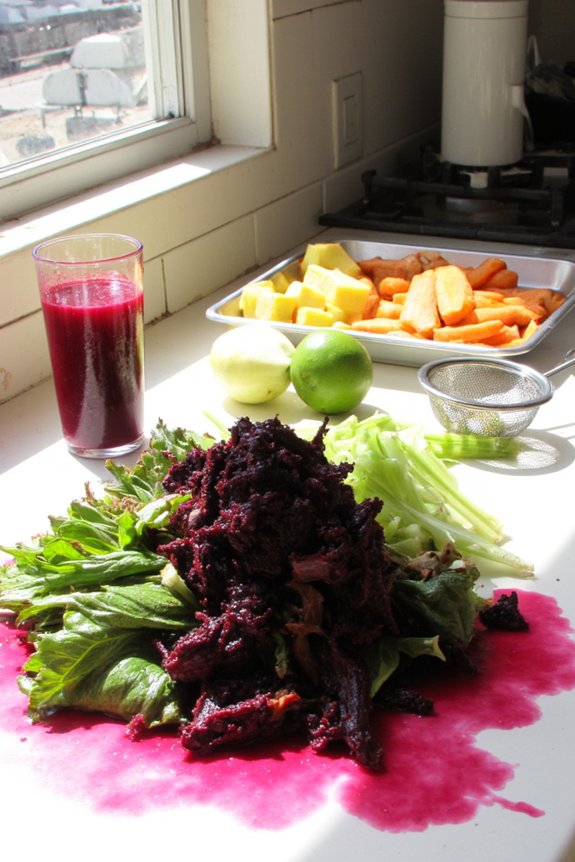
The moisture content of your produce plays a surprisingly huge role in whether your slow juicer runs like a dream or grinds to a halt like it’s processing rubber. Here’s the thing: fruits and veggies with high water content tend to juice smoother and faster. They flow through your machine without throwing a fit. But drier produce? That’s where trouble starts brewing. Lower water content means thicker pulp that gets stuck easier. Your juicer has to work harder, and clogs become your new best friend. Sugar levels matter too since they affect how thick the juice becomes. Produce that’s too dry combined with high sugar density creates this paste-like consistency that just loves jamming up your auger. Pro tip: let your produce reach room temperature before juicing for better results.
Essential Preparation Techniques to Prevent Jamming
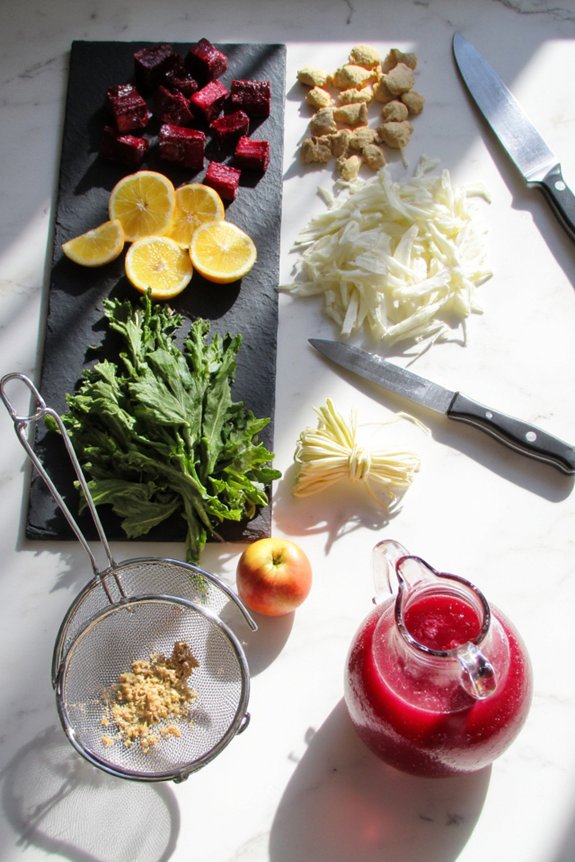
Here’s where prep work really pays off, because your slow juicer’s gonna thank you for taking a few extra minutes upfront. You’ll want to cut your produce into manageable pieces, remove those fibrous stems that love to wrap around the auger like they own the place, and alternate between hard and soft ingredients as you feed ’em through, which basically keeps things moving smoothly instead of creating a traffic jam in your machine. Think of it as setting yourself up for juicing success rather than spending half your morning unclogging.
Cut Produce Into Pieces
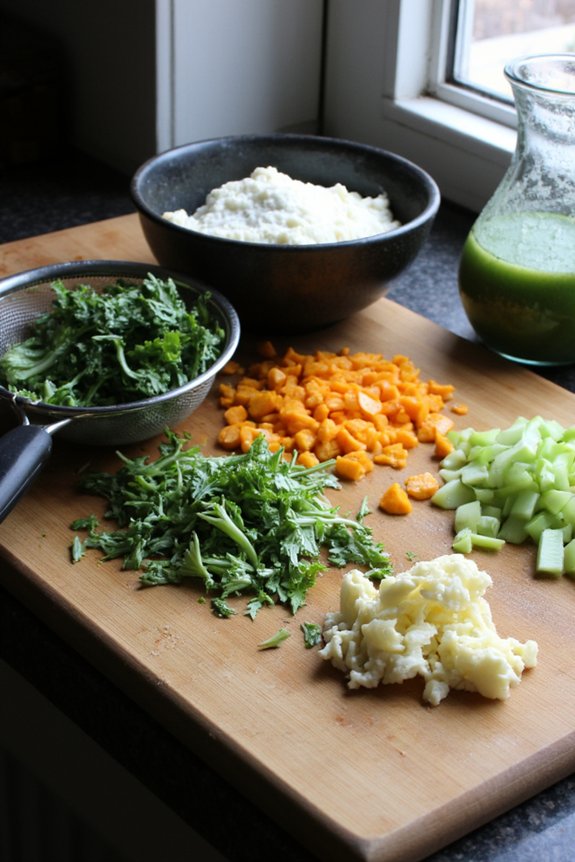
Chop your produce into smaller pieces before feeding it into your slow juicer, and you’ll dramatically reduce the chances of jamming. Think of it like giving your machine bite-sized snacks instead of whole meals. Here’s what you need to know:
- Create uniform chunks so everything feeds through at the same pace
- Aim for pieces roughly the size of your pinky finger or smaller
- Practice balanced slicing to avoid stuffing too much at once
- Remove seeds and pits beforehand, seriously
You don’t need fancy knife skills here. Just cut things down to manageable sizes. This simple step makes a huge difference in how smoothly your juicer operates. Your machine will thank you, and you’ll spend way less time unclogging frustration.

Remove Fibrous Stems First
While smaller pieces keep things moving smoothly, there’s another sneaky culprit that’ll jam up your juicer faster than you’d expect: fibrous stems. Those stringy stalks from leafy greens, celery, and herbs are basically jam factories waiting to happen. Before you even think about feeding anything into your machine, do some serious stalk removal. Strip those fibers right off. String stripping might seem tedious, but trust me, it’s way easier than unclogging your juicer later. Grab your produce and pull those stems away cleanly. For tougher stalks, use a knife to separate them from the leafy parts. Yeah, it takes an extra minute, but you’re preventing a whole headache down the road. Your juicer’ll thank you with smooth, consistent operation.
Alternate Hard and Soft
Once you’ve stripped away those fibrous troublemakers, you’ll want to think strategically about the order you’re feeding stuff into your juicer, because the sequence actually matters way more than most people realize. The trick? Alternate between hard fruits and soft berries to keep things flowing smoothly.
Here’s why this works:
- Hard fruits act like natural pushers, moving softer produce through the system
- Soft berries can get stuck when they’re alone, creating blockages
- The combination creates rhythm and prevents jamming
- You’ll maximize juice extraction with less effort
Start with an apple or carrot, then add some berries. Keep switching back and forth. This alternating pattern prevents that dreaded clog where everything just sits there, refusing to cooperate. You’re basically creating a little conveyor system that keeps your juicer happy and productive.
Optimal Feeding Order and Sequencing Strategies
The order in which you feed produce into your slow juicer can make a huge difference in whether you’re enjoying fresh juice or staring at a jammed machine. Your feed rhythm matters way more than you’d think. Start with harder items like carrots or beets, then shift to softer produce like apples or oranges. This sequence mapping keeps everything moving smoothly through the auger.
Think of it like a workflow. Dense stuff first creates momentum, building pressure that helps softer items slide through without getting stuck. If you reverse it? Soft produce gets compressed into pulp, blocking the harder stuff behind it. It’s honestly that simple.
Pro tip: alternate between hard and soft occasionally, but prioritize getting those dense vegetables in first. Your juicer’ll thank you.
Maintenance and Cleaning Tips for Long-Term Performance
Getting your feed sequence right keeps the juice flowing, but what really keeps your slow juicer running strong for years is what you do after you’re done juicing. Think of maintenance like brushing your teeth—skip it and you’ll regret it. Here’s what’ll keep your machine humming:
- Disassemble and rinse parts immediately after use to prevent pulp from drying and clogging
- Perform routine lubrication on the motor shaft according to your manual’s recommendations
- Conduct regular gasket inspection for cracks or wear that could cause leaks
- Deep clean the screen mesh weekly using a soft brush to remove stubborn residue
You’re basically protecting your investment. Clean juicers last longer, perform better, and honestly, they just feel nicer to use. Don’t be lazy about it.
Frequently Asked Questions
Can I Use a Slow Juicer for Wheatgrass and Other Extremely Fibrous Ingredients?
You can use your slow juicer for wheatgrass, but you’ll need proper fibrous techniques and consistent wheatgrass maintenance. Feed it slowly, alternate with softer produce, and clean between batches to prevent clogging issues effectively.
What’s the Warranty Coverage if My Juicer Clogs From Normal Use?
Your warranty typically covers manufacturing defects, not clogging from normal use. You’ll want to review your specific warranty limits and follow the claim process outlined in your manual to understand what’s actually covered.
Are Aftermarket Replacement Parts Compatible With My Slow Juicer Model?
You’ll need to check your model number against the compatibility checklist before purchasing aftermarket parts. Third-party warranties may not cover them, so verify manufacturer approval first to avoid voiding your coverage.
How Often Should I Replace the Juicer’s Strainer Basket or Mesh?
You should replace your juicer’s strainer basket or mesh every 12-18 months, depending on usage frequency. Regular replacement guarantees peak mesh longevity and maintains your juicer’s efficiency. Monitor for wear signs like reduced juice yield or visible damage for replacement frequency adjustments.
Can Frozen Fruits and Vegetables Be Used in a Slow Juicer?
You shouldn’t use frozen fruits and vegetables in your slow juicer. They’ll create frozen pulp buildup and cause icy extraction problems that damage your machine and reduce juice yield considerably.
Conclusion
You’ve got this. Keep your produce