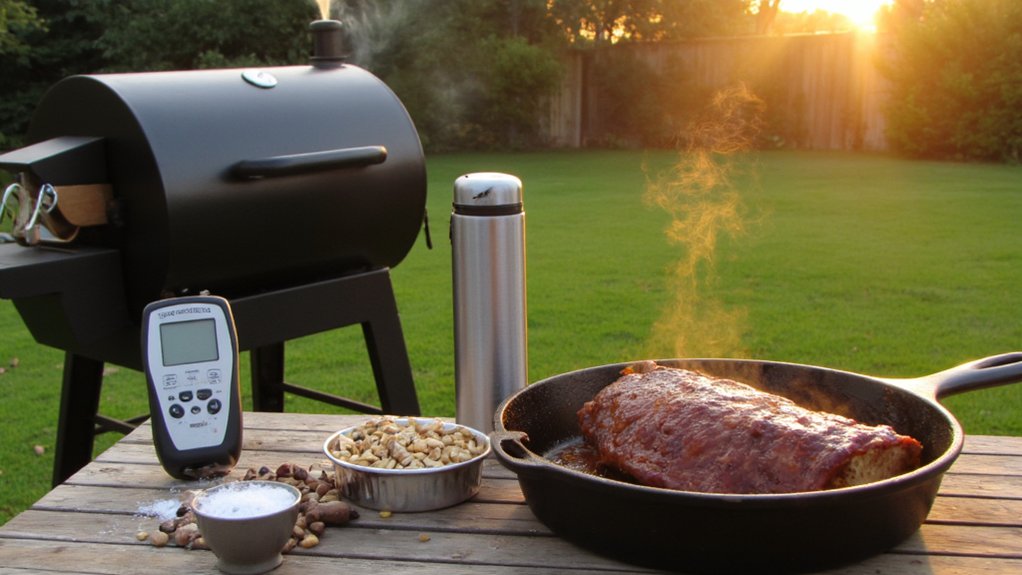
Getting your pellet grill to hold a steady temperature sounds simple, but it’s honestly the difference between great barbecue and, well, inconsistent disappointment. You’ve probably noticed your temps swing wildly or refuse to cooperate, right? Here’s the thing: your grill’s got the tools to nail precision cooking, but most folks don’t know how to actually use them. Let’s fix that and unleash what your smoker’s really capable of.
Key Takeaways
- Position your thermocouple accurately and use PID tuning to maintain consistent pellet feed and fan speed adjustments.
- Keep your auger and fan clean and well-maintained to prevent jams, blockages, and temperature instability during cooking.
- Seal probe ports properly, use quality pellets, and make small fan adjustments while allowing 5–10 minutes for stabilization.
- Create temperature zones by adjusting flame intensity and repositioning heat deflectors to enable simultaneous searing and slower cooking.
- Document pellet type, ambient conditions, and probe placement in a cook log; perform calibration runs before each session.


Understanding Your Pellet Grill’s Thermostat System
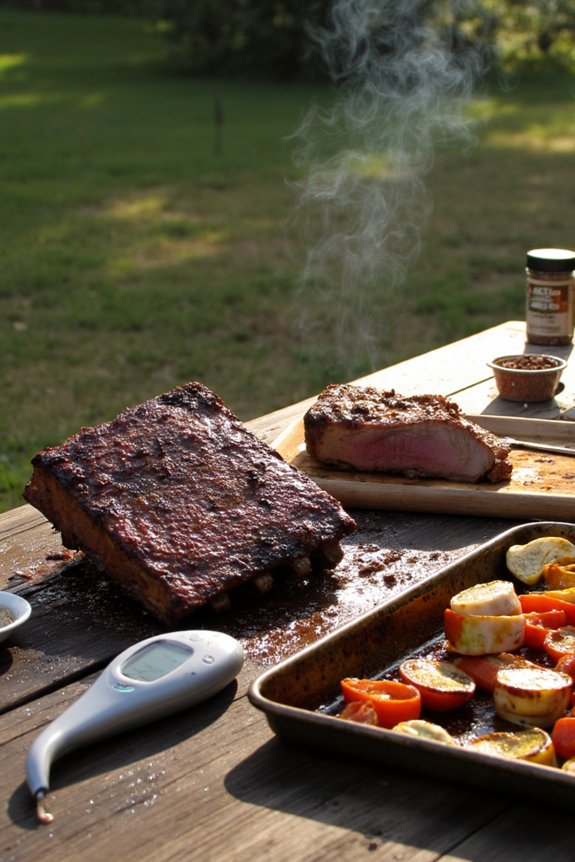
Since you’ve probably noticed that your pellet grill isn’t just some magical fire box that cooks everything to perfection, let’s talk about what’s actually making the temperature magic happen. Your grill’s thermostat system is the brain of the operation. At its heart sits a thermocouple placement that reads your grill’s internal temperature, sending signals to the controller. This little sensor’s positioning matters more than you’d think—it’s gotta be in the sweet spot to give accurate readings. Your controller then uses something called PID tuning, which adjusts pellet feed rates and fan speed to maintain your target temperature. Think of it as your grill’s internal thermostat constantly fine-tuning itself. When everything’s calibrated right, you’re golden. When it’s not? Well, that’s when things get frustrating. Some pellet grills even include multiple meat probe ports to let you independently monitor the internal temperature of your food as well as the ambient grill temperature, giving you even greater control over the cooking process.
Managing the Auger and Fan for Optimal Heat Output
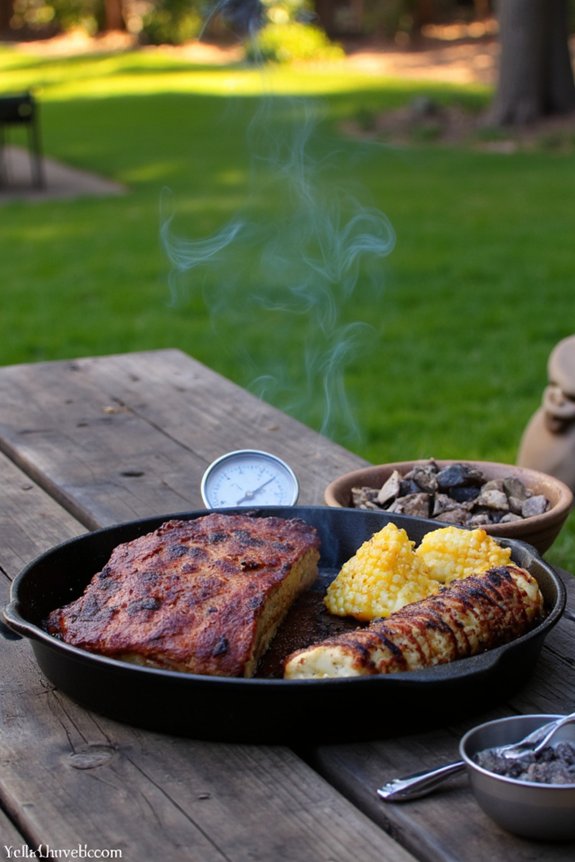
Now that you understand how your thermostat’s reading the temperature, it’s time to look at what’s actually creating that heat—and that’s where your auger and fan come into play. These two components work together like a tag team, controlling how much pellet fuel gets fed into the firebox and how much air flows through to ignite them.
Your auger maintenance keeps pellets moving smoothly without jamming or creating blockages. A clean auger means consistent fuel delivery. Meanwhile, fan calibration guarantees you’re getting the right airflow for combustion. Too little air and you’ll get weak heat. Too much and you’re wasting pellets.
When these parts work harmoniously, you’ll nail those temperature targets every single time. It’s really the backbone of solid temperature control on your grill. For truly reliable digital thermostats, pairing well-maintained auger and fan systems with accurate temperature control technology ensures you minimize fluctuations and get the most consistent cooking results possible.
Recognizing and Correcting Temperature Fluctuations
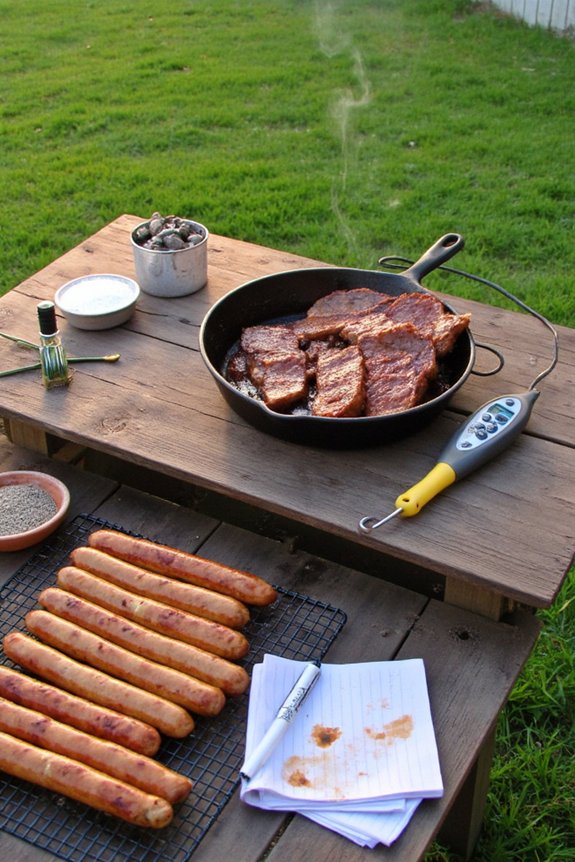
Even with your auger and fan running like a well-oiled machine, you’ll still notice that your grill’s temperature can swing around like a pendulum sometimes. Temperature swings happen for a few reasons. Check your probe seals first, because air leaks mess with your temperature readings big time. If those look good, your pellets might be inconsistent, or maybe moisture’s gotten into your hopper. You can dampen smoke output by adjusting your fan speed slightly, which actually helps stabilize temperature too. Keep an eye on the weather outside, since wind and cold definitely affect things. Make small adjustments rather than drastic ones. Let changes settle for five to ten minutes before tweaking again. Patience pays off when you’re chasing that perfect temperature sweet spot. For outdoor griddles, wind and cold-weather use can also cause temperature fluctuations, so always allow extra preheating time and consider using a lid or hood to help retain heat.


Creating and Using Different Temperature Zones
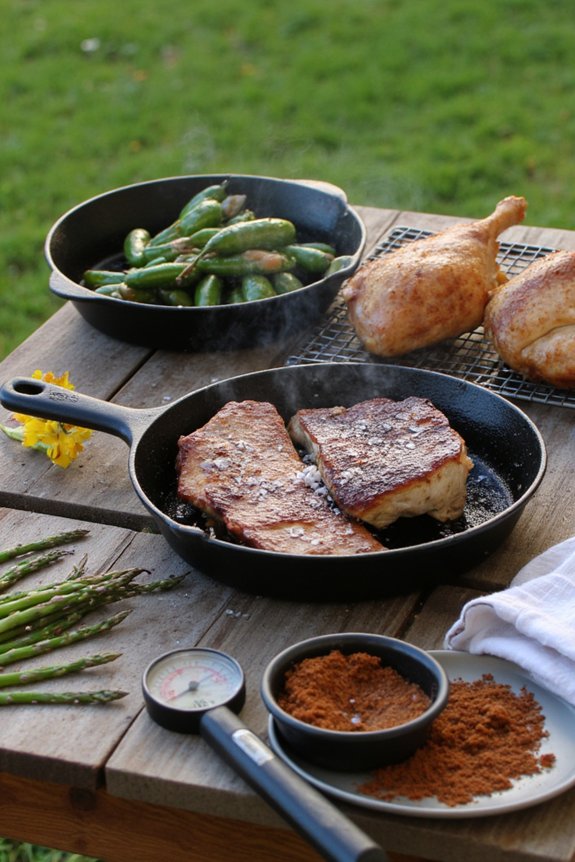
Once you’ve got your temperature dialed in and those fluctuations under control, you’re ready to level up your grilling game by creating different temperature zones on your pellet grill.
The trick is positioning. By adjusting your direct flame intensity and probe placement, you’ll create hot and cooler areas on your cooking surface. Position your heat deflector closer to one side, which’ll give you a searing zone for steaks while keeping the opposite end perfect for slow cooking. Your probe placement matters too—don’t just stick it anywhere. Position it in your medium-heat zone so you’re reading the actual temperature where you’ll cook most of your food.
This setup lets you sear, smoke, and warm simultaneously. Pretty handy, right? When setting up your grill, remember that multi-level cooking capability—like using racks or baskets to maximize space—is a key feature in many top rotisserie ovens and can help you manage different temperature zones more effectively.
Advanced Techniques for Consistent Results Across Multiple Cooks
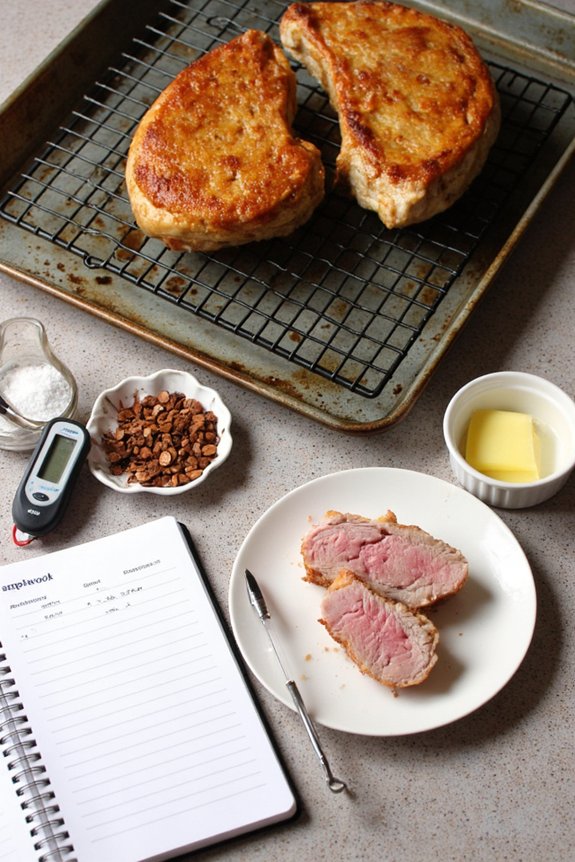
If you’ve nailed the temperature zone thing, you’re probably wondering how to keep your results consistent from cook to cook without constantly fiddling with settings. Here’s the secret: start with pellet quality. Switching between brands or types throws everything off balance, so stick with one you trust. Next, dial in your probe placement. Mount it at grate level where your food actually sits, not floating in empty space. Keep a detailed log of your cooks, noting pellet type, ambient temperature, and how your grill performed. This data becomes your personal playbook. Before each session, do a quick calibration run at your target temp. You’ll spot drift early and make minor adjustments before they become problems. For even more reliable outcomes, pay close attention to temperature control settings, since a few degrees’ difference can impact flavor, moisture retention, and final texture.
Frequently Asked Questions
What Pellet Quality Impacts Temperature Control and Grill Performance?
You’ll find that pellet quality markedly affects your grill’s performance. Wood species determines burn temperature and flavor, while pellet density influences burn rate and heat consistency, directly impacting your temperature control precision.
How Often Should I Clean the Grill for Accurate Temperature Readings?
You should clean your grill after cooks to remove ash buildup that affects temperature accuracy. Perform seasonal deep cleaning for peak sensor performance and reliable temperature readings throughout the year.


Can I Use My Pellet Grill in Cold or Wet Weather?
Yes, you can use your pellet grill in cold weather cooking, but you’ll need wet weather precautions. Cover your grill, protect it from moisture, and allow extra time for temperature stabilization in harsh conditions.
What’s the Ideal Pellet Grill Placement for Consistent Temperature Management?
You’ll want to place your grill on a level surface to guarantee even heat distribution and prevent temperature fluctuations. Maintain adequate airflow clearance around it for consistent performance and proper ventilation throughout operation.
How Do I Troubleshoot When My Grill Won’t Reach Desired Temperatures?
You’ll want to check your faulty auger first—it may not be feeding pellets properly. Inspect your damaged gasket next, as heat loss prevents temperature rises. Clean your firepot and verify your thermometer’s accuracy too.
Conclusion
You’ve got this. Once you nail your probe placement and keep those pellets dry, your grill’ll practically dial itself in. Track what works in a cook log, tweak things gradually, and you’ll nail consistent temps like a pro. Sure, there’s a learning curve, but stick with it and you’ll be smoking perfect briskets and ribs without stressing about temperature swings anymore.


