So you’re getting wonky slices from your mandoline? That’s frustrating. Whether it’s thick-then-thin pieces or squashed vegetables that look like they’ve been through a fight, something’s definitely off. The culprit could be anything from a dull blade to sloppy technique, and honestly, it’s usually a combination. The good news? Most of these issues are fixable. Let’s figure out what’s actually happening with your slicer.
Key Takeaways
- Dull blades push vegetables rather than slice them cleanly, causing uneven cuts and squished edges from repeated use.
- Misaligned blades tilted away from the cutting surface create inconsistent slicing; check for gaps and adjust positioning gradually.
- Loose or moving guards shift during strokes, producing alternating thick and paper-thin slices with variable thickness.
- Soft, wet, or overripe produce compresses unevenly; pat vegetables dry and select firm, crisp items for consistency.
- Mechanical dials can slip or accumulate debris, preventing accurate thickness settings; clean and recalibrate before each use.
Blade Dullness and Wear
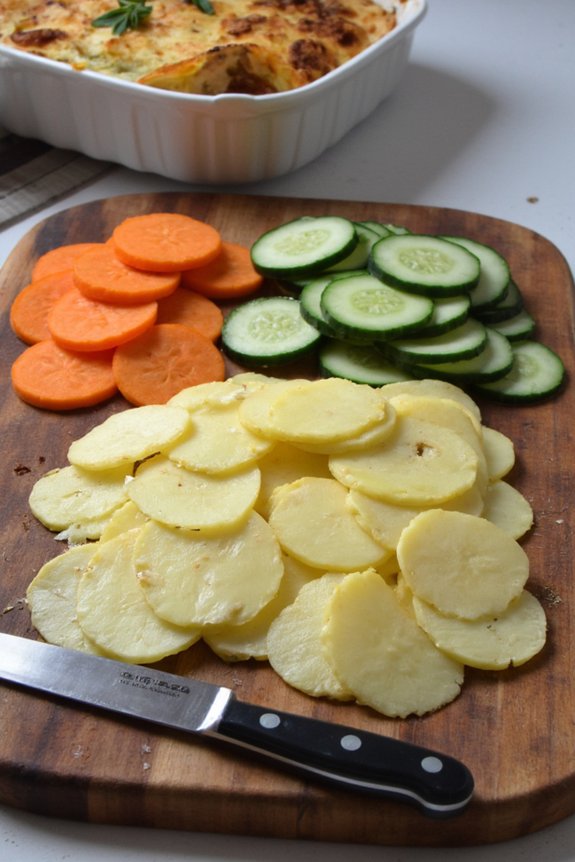
One of the most common culprits behind those frustratingly uneven cuts? A dull blade. Your mandoline’s sharpness directly affects how cleanly it slices through vegetables, and over time, the blade inevitably wears down from repeated use and contact with produce. You’ll notice abrasion patterns developing on the blade’s surface, where friction gradually dulls the edge. Different metallurgy differences in blade materials mean some hold their sharpness longer than others, but eventually, they all succumb to wear. When your blade gets dull, you’re basically pushing vegetables rather than cleanly slicing them, which creates those annoying uneven cuts and squished edges. The fix? Regularly sharpen or replace your blade, and you’ll be back to producing picture-perfect slices in no time. Choosing a mandoline with stainless steel blades can help delay dullness and maintain slicing precision for longer periods.
Improper Blade Alignment
If your mandolin’s producing those frustrating uneven slices, improper blade alignment might be the sneaky culprit lurking beneath the surface. You’ll want to check your blade position carefully, make sure it’s not sitting crooked or tilted, and then work on correcting any misalignment while also calibrating the blade depth to match what you’re actually trying to slice. Getting these three things right usually means the difference between those nice, uniform cuts and raggedy results that’ll make you question your kitchen skills. For consistently precise slices, it’s also important to use stainless steel blades, which are known for their durability and sharpness in food prep tools.
Checking Blade Position
Improper blade alignment can throw off your entire slicing game, so it’s worth taking a moment to track down whether your blade’s actually sitting where it should be. When your blade isn’t positioned correctly, you’re basically fighting gravity and physics to get even cuts.
Here’s what you should check:
- Inspect the blade spacing against your manual’s specifications
- Look for gaps between the blade and its mounting bracket
- Test if the safety guard sits flush against the blade
- Run your finger gently along the blade edge to feel for tilting
Start by examining the blade from multiple angles. Does it look parallel to your cutting surface? Sometimes dust buildup or minor misalignment happens gradually, so you don’t notice until your tomatoes look like abstract art. A quick visual inspection often reveals the culprit, and most times you can adjust it yourself without needing professional help. Maintaining blade edge precision is key for achieving consistent, professional-quality slices with any slicer.
Correcting Misaligned Blades
Once you’ve spotted that your blade’s sitting crooked, fixing it is usually pretty straightforward. Most mandolines have adjustment screws or knobs that let you tweak the blade alignment without much fuss. You’ll want to loosen these slightly, then carefully reposition your blade so it’s running parallel to the food guard and base plate.
Check your blade spacing too, making sure it’s even across the entire width. If you’ve got edge chamfering on your blade, that should sit flush without wobbling. Tighten everything back up gradually, testing the alignment as you go. Sometimes it takes a couple tries to nail it perfectly, but you’ll know when it’s right because your cuts’ll come out consistent and smooth every single time. For both mandolines and other kitchen tools like rice cookers, ease of cleaning and maintenance is important after you make adjustments, so be sure to wipe down any parts you handle before use.
Calibrating Blade Depth
Now that your blade’s sitting nice and parallel, there’s another piece of the puzzle that’ll make or break your results: blade depth.
Think of depth calibration as fine-tuning your slicer’s personality. Here’s what you need to know:
- Check your safety checks first – Always make sure the guard’s properly positioned before adjusting anything
- Use calibration tools like depth gauges – These handy devices measure exactly how far your blade protrudes
- Start shallow and test frequently – You can always go deeper, but you can’t undo over-slicing your knuckles
- Mark your sweet spot – Once you’ve found the right depth, note it so you don’t lose your settings
Getting this right means consistent thickness across all your produce. Your mandoline’ll reward you with beautifully even slices every single time you use it. For even greater accuracy, consider how precise temperature control in other kitchen tools—like sous vide immersion circulators—sets the standard for meticulous calibration and consistency.
Incorrect Pressure and Technique
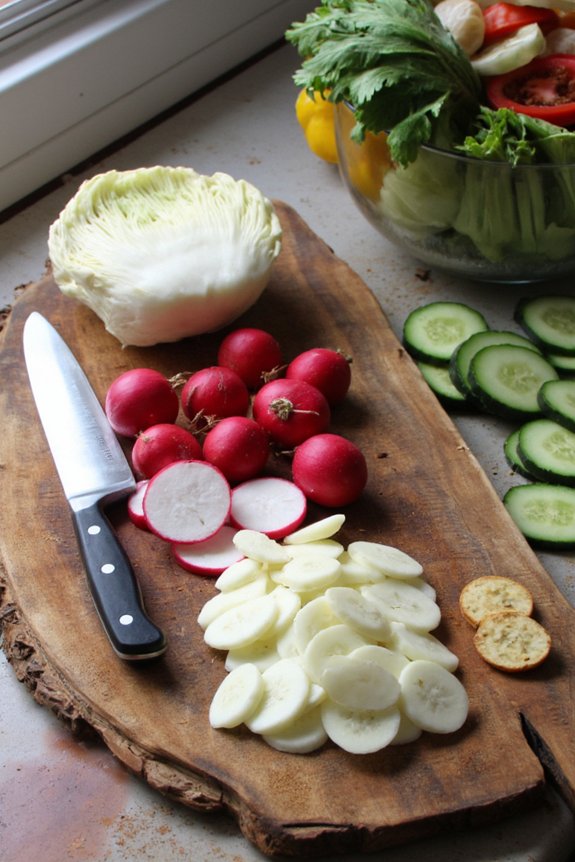
When you’re gliding that mandoline across vegetables, how you hold it and press down matters way more than you might think. Your hand placement is vital—keep your guide hand steady and consistent. Don’t grip too tight or you’ll lose control.
Your cutting rhythm’s equally important. Move smoothly instead of jabbing frantically. Erratic movements create those frustrating thick and thin slices nobody wants. You’re basically asking for trouble when you rush through it.
Apply even pressure throughout each stroke. Too much force on one end? Boom, uneven cuts. Too little? You’ll get mangled produce instead of clean slices. Think of it like playing a musical instrument—consistency and controlled movements get you the best results every time.
Food Preparation Issues
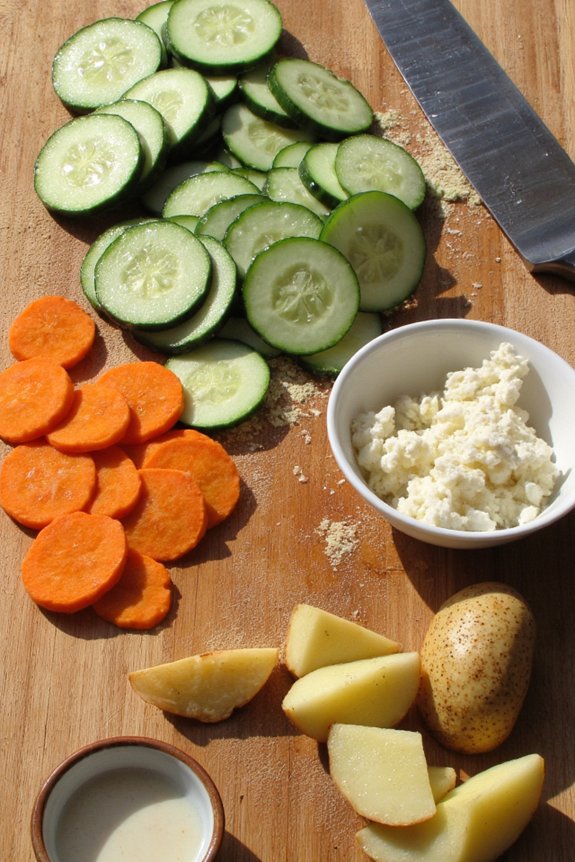
Before you even touch that mandoline to your veggies, you’ll want to make sure the blade’s sitting perfectly straight and secure, because even a tiny misalignment can throw off your entire cutting game. Here’s the thing: the moisture and texture of what you’re slicing matters way more than you’d think, since a soggy tomato’s gonna behave totally different than a crisp cucumber, and that inconsistency can lead to those frustrating uneven cuts that make you wonder if somethings actually wrong with your tool.
Blade Alignment and Positioning
A misaligned blade is basically the culprit behind most of your uneven slicing disasters, and honestly, it’s easier to fix than you might think. Your mandoline’s blade geometry directly impacts how evenly it cuts, so paying attention to alignment really matters. Here’s what you should check:
- Make sure the blade sits perfectly perpendicular to the food guide
- Look for any visible gaps between the blade and its mounting bracket
- Check that edge polishing hasn’t worn one side more than the other
- Verify the blade isn’t twisted or bent from storage
Start by inspecting your blade’s positioning closely. Sometimes just a slight adjustment makes all the difference. If the blade’s already damaged or worn unevenly, edge polishing won’t solve deeper issues. You might need a replacement blade instead. Regular maintenance keeps everything running smoothly.
Vegetable Moisture and Texture
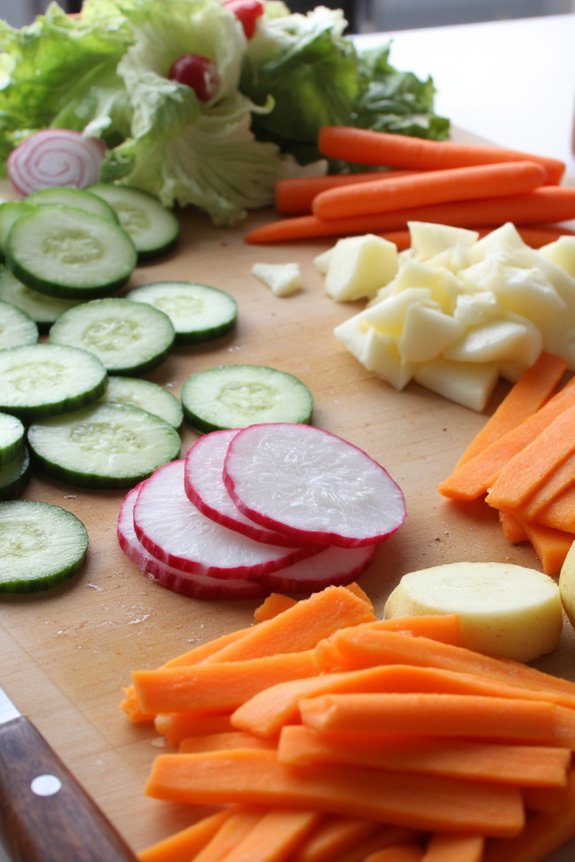
Your blade might be perfectly aligned now, but here’s the thing—what you’re slicing matters just as much as how your mandoline’s cutting. Different vegetables have completely different cellular structures, and that affects how they behave under your blade. A tomato loaded with water content will compress differently than a firm cucumber, creating uneven slices without you realizing what’s happening. Wet produce tends to squish and slide around, while drier vegetables cut more cleanly and consistently. Try this: pat your vegetables dry before slicing them. Seriously, it makes a huge difference. You’ll notice immediately how moisture impacts your results. Softer produce also needs a lighter touch, so don’t press down as hard. Understanding your ingredient’s unique properties means better cuts every single time.
Guard Positioning Problems
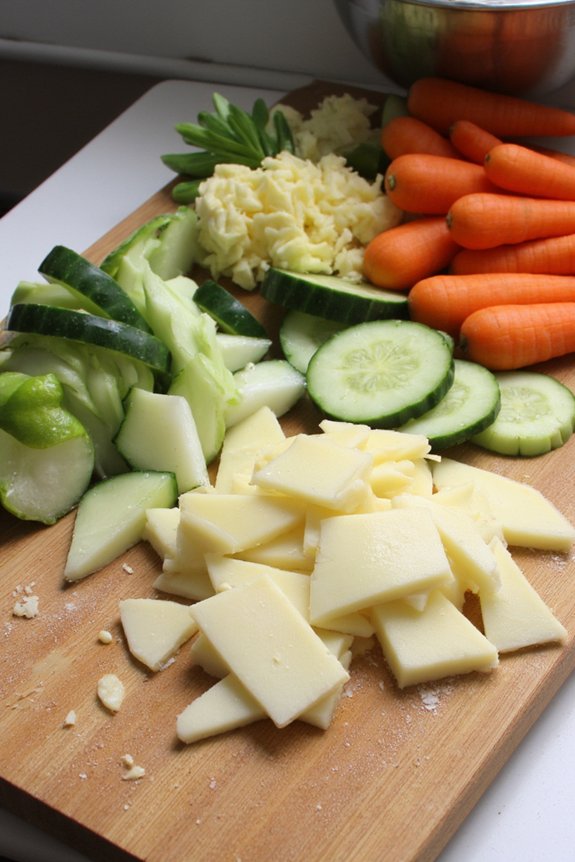
Positioning that guard correctly is where most mandoline disasters actually start, and honestly, it’s easier to mess up than you’d think. Your safety guards aren’t just there to look pretty, they’re literally keeping your fingertips intact.
Here’s what typically goes wrong:
- You’re holding the guard too loose, letting it shift during each stroke
- Your grip positioning is way too far back, creating inconsistent blade contact
- The guard’s angled wrong for the vegetable size you’re slicing
- You’re not maintaining steady pressure against the guard itself
When that guard moves even slightly, your blade catches vegetables at different angles. Suddenly you’ve got thick slices next to paper-thin ones. Keep your grip firm and close. Position that guard snug against whatever you’re cutting, and you’ll nail consistent results every single time.
Thickness Setting Malfunctions
Once you’ve got the guard situation handled, the thickness dial becomes your next potential headache. Your dial gauge might look fine, but sometimes it’s just not cooperating with reality. When your mandoline’s producing slices that vary wildly in thickness, the culprit often lies here.
Here’s the thing: mechanical dials can slip or wear down over time, throwing off your measurements. You’ll think you’re set to three millimeters, but you’re actually getting two-point-five in some spots. Electronic calibration systems can drift too, especially if your slicer’s seen heavy use or gotten knocked around.
Check if your dial’s clicking properly into position. Try adjusting it back and forth a few times. Sometimes debris gets stuck in there, messing with precision. If electronic calibration’s available on your model, recalibrate it according to your manual’s instructions.
Blade Angle Inconsistencies
The blade’s angle of attack might be the real problem lurking beneath those inconsistent cuts.
Here’s what you should know about blade angle inconsistencies:
- Angle variance develops when your blade shifts slightly during use, creating thicker and thinner slices unpredictably
- Bevel inconsistency happens if the blade’s edge isn’t perfectly aligned with the food guide, throwing off your cuts
- Manufacturing defects can cause the blade to sit at a wonky angle right out of the box
- Wear and tear gradually shifts the blade’s position over time, making cuts progressively messier
Your mandoline’s blade needs to maintain a consistent angle to slice properly. Even tiny shifts mess everything up. If you’ve ruled out thickness settings, check whether the blade sits flush and parallel to your food guide. Sometimes you’ll just need to adjust or replace the blade entirely.
Vegetable Firmness and Selection
The firmness of your veggies makes a huge difference when you’re trying to get those perfect, even slices, so you’ll want to grab produce that’s nice and crisp rather than soft or mushy. Ripeness plays a sneaky role here too—overly ripe tomatoes or avocados are basically asking to get squished unevenly through your mandoline, while underripe ones tend to hold their shape way better and give you cleaner cuts. Pick vegetables that feel solid and have a little resistance when you squeeze ’em lightly, and you’ll notice your slicing game improves instantly.
Choosing Firm Vegetables
Selecting the right vegetables makes all the difference when you’re trying to avoid those frustrating uneven cuts on your mandoline. Your firm selection and texture testing skills matter more than you’d think. Here’s what you need to know:
- Choose vegetables that feel solid and dense to the touch
- Avoid anything that’s got soft spots or bruises
- Pick produce that’s fresh, not wilted or overly ripe
- Test firmness by gently pressing with your thumb
When you’re shopping, grab vegetables that have some weight to them. A good rule of thumb? If it feels squishy, skip it. Softer produce tends to compress unevenly under the blade, creating those annoying thick and thin slices that ruin your meal prep. Firm veggies glide through smoothly every time.
Ripeness Affects Slicing
Ripeness is basically the invisible villain behind most mandoline mishaps, and here’s why it matters so much. An overripe vegetable’s got too much water content and breaks apart under the blade’s pressure. Underripe ones? They’re too hard and resist cutting evenly, creating jagged, inconsistent slices.
You’ll want to master ripeness testing before you even grab your mandoline. Give your veggies a gentle squeeze, then check for that perfect firmness, not mushy or rock-hard. Sugar content increases as vegetables ripen, which actually affects how they hold together during slicing. A tomato at peak ripeness with higher sugar content will slice smoother than one that’s still too firm or starting to deteriorate. Your mandoline’s blade isn’t the problem here.
Regular Maintenance and Cleaning
Keeping your mandoline in tip-top shape is honestly one of the easiest ways to prevent those frustrating uneven cuts you’ve been dealing with. Here’s what’ll keep your slicer performing like it’s brand new:
- Daily lubrication of the blade mechanism prevents rust and keeps everything gliding smoothly
- Wipe down your blade immediately after use to avoid buildup that causes wonky slices
- Store it in a dry place, away from moisture and humidity that’ll mess with performance
- Check your storage habits regularly, making sure nothing’s pressing against or damaging the blade
You don’t need fancy cleaning products either. Just warm soapy water and a soft brush work great. When you actually maintain your tool instead of ignoring it, you’ll notice those uneven cuts disappear faster than you’d expect.
When to Replace Your Mandoline
Even the best maintenance routine has its limits, and sometimes your mandoline just won’t bounce back to its former glory no matter how much love you give it. Eventually, you’ll need to weigh replacement timing to keep your kitchen running smoothly.
| Sign | What It Means | Action |
|---|---|---|
| Persistent blade damage | Dullness won’t improve | Replace soon |
| Rust or corrosion | Metal breakdown | Time to upgrade |
| Warped surface | Uneven cuts continue | Get a new one |
Before tossing your old slicer, check your warranty checks first. You might still have coverage that could save you money. If your mandoline’s seen better days and keeps producing those frustrating uneven cuts despite everything you’ve tried, it’s probably time for a fresh start. A new mandoline’ll restore your confidence in the kitchen.
Frequently Asked Questions
How Do I Safely Store My Mandoline Slicer to Prevent Blade Damage?
You’ll want to always use the blade cover when storing your mandoline slicer. Keep it on a hanging rack in a dry, cool place away from moisture. This protects the blade from damage and keeps you safe.
Can Temperature Affect How My Mandoline Performs During Slicing?
Yes, temperature notably affects your mandoline’s performance. Heat causes thermal expansion of the metal blade and frame, compromising blade alignment. You’ll notice uneven cuts when temperature fluctuates, so store and use your mandoline in consistent conditions.
What Type of Mandoline Blade Works Best for Different Vegetables?
You’ll want a wavy blade for softer vegetables like cucumbers and tomatoes, while a julienne blade works best for harder produce like carrots and potatoes. Straight blades handle most vegetables efficiently too.
How Do I Know if My Mandoline Needs Professional Sharpening?
You’ll need professional sharpening when you’re noticing ragged edges, torn vegetables, or uneven thickness despite proper blade alignment and edge polish. If your mandoline requires excessive pressure, it’s definitely time.
Are There Specific Cutting Boards That Work Better With Mandolines?
You’ll find that silicone mats work best with mandolines since they’re non-slip and protect your blade. Wooden boards aren’t ideal—they’re too soft and can dull your blade faster than other surfaces.
Conclusion
So you’ve got uneven slices flying everywhere? Here’s the thing—it’s probably one of three culprits: a dull blade, wonky alignment, or your technique needs tweaking. Take five minutes to sharpen up, check that blade’s sitting straight, and keep steady pressure while you’re slicing. You’ll go from frustration city to perfectly uniform pieces real quick. Sometimes the smallest fix makes all the difference.