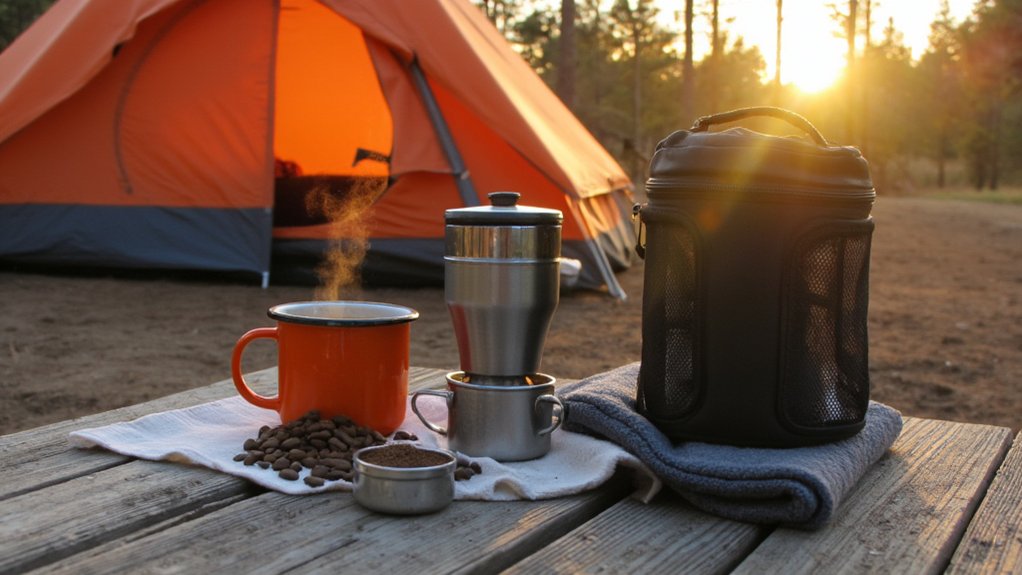
You want camp coffee that’s hot, simple, and not a total mess, right? Pack your French press like a fragile buddy: wrap glass in a beanie or sleeve, lock the plunger, and stash it upright near your pack’s back panel. Cushion gaps with socks, keep it away from fuel and sharp cookware, and stash grounds in sealed containers. Do a quick shake test. Tiny towel, tiny trash bag. Now, about brewing clean cups without grit—let’s make that easy.
Key Takeaways
- Choose a durable, insulated stainless-steel press with a tight mesh filter and well-sealing lid to prevent grit and breakage.
- Pack the press upright near your pack’s back panel, cushioned in a sleeve or cloth, and fill gaps with socks to stop rattling.
- Keep it away from fuel and sharp cookware; lock the plunger, lid on, and do a shake test to confirm no internal movement.
- Pre-portion coffee in airtight, opaque bags, bring a compact kettle and mug, and use a cozy to retain brew heat.
- Carry a micro towel and silicone mat for cleanups, and bag out spent grounds to follow Leave No Trace.
Choose a Trail‑Ready French Press
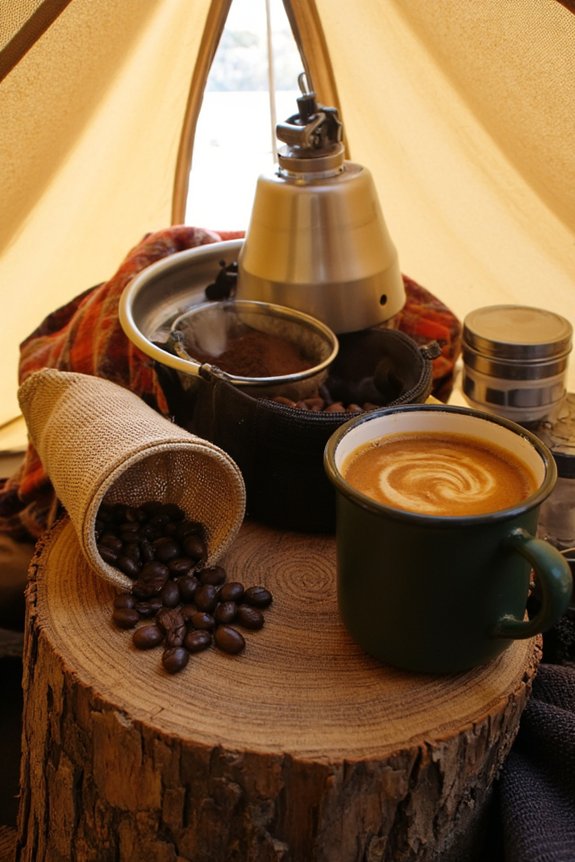
Start smart by picking a French press that can handle life on the trail, not just look cute on your kitchen counter. You want rugged, not delicate. Look for insulated stainlesssteel bodies that shrug off bumps and keep coffee hot while you watch the sunrise. A compact ceramic coated option can be great too, since it resists sticking and cleans up easier when water’s limited.
Check the plunger and filter. Tight mesh, sturdy rod, no wobbly parts. Lids should seal well, or you’ll be sipping grit, yikes. Keep weight in mind, but don’t chase ultralight if it dents on day one. Think reliable. Grippy handles help when your hands are cold. Finally, pick a size you’ll actually finish, because lukewarm leftovers aren’t fun.
For trail coffee, you might also consider compact electric kettles that boil water quickly and safely, as many models offer rapid heating and auto shut-off for added convenience outdoors.
Pack the Essential Coffee Kit
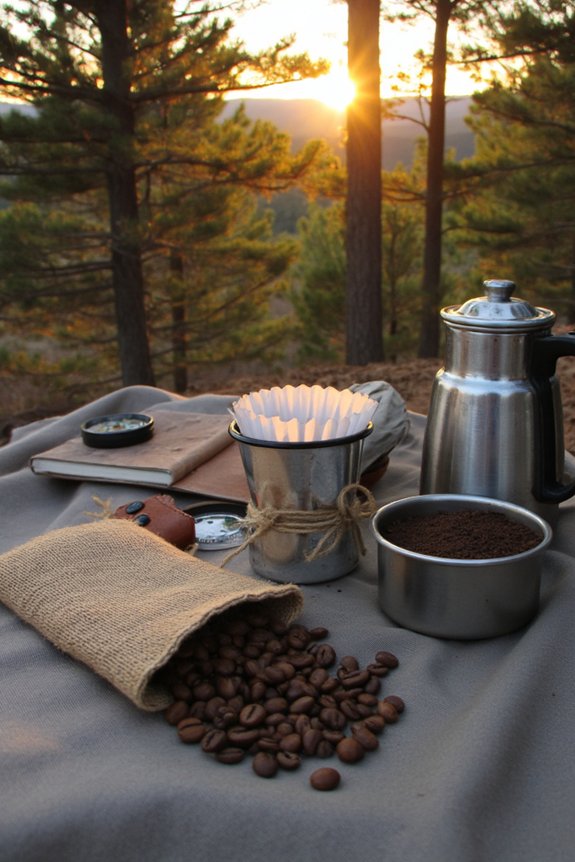
You’ll want a compact brewing setup that actually fits in your pack, so think small kettle, sturdy mug, and a tiny scoop that doesn’t vanish into the abyss. Keep your beans fresh by stashing them in a sealable, opaque container, and grind just before brewing if you’re packing a mini grinder, otherwise pre‑grind at home and portion them. Little tip: squeeze the air out before you close the bag or jar, good flavor in, camp smells out. Consider the heat retention capability of your chosen coffee maker to ensure your brew stays hot while you enjoy your campsite morning.
Compact Brewing Gear
Usually, the trick to great campsite coffee is carrying a tiny kit that does a lot without weighing you down. Keep your French press simple, aim for a minimalist design, and slip on an insulated cozy so your brew stays hot while the wind plays games. You want gear that nests, stacks, and disappears into your pack. No clanky circus.
| Item | Why it earns a spot | Pack tip |
|---|---|---|
| Compact press | Steady flavor, easy clean | Choose shatterproof walls |
| Slim kettle | Fast boil, precise pour | Go with fold-out handle |
| Tiny scale | Consistent strength | Slip in a zip bag |
| Multi-spoon | Scoop and stir | Clip to your mug |
Stash a micro towel for quick wipe-downs, because grit happens. A small silicone mat helps, too, catching drips so your camp table doesn’t look like a coffee crime scene.
When picking a slim kettle, consider options with double-wall insulation for safer handling and better heat retention in unpredictable campsite weather.
Fresh Beans Storage
Often, great camp coffee starts with how you stash your beans, not just how you brew. Treat those little nuggets like food for your morning brain. Pack whole beans, not pre-ground, and keep them vacuum sealed so air can’t steal the flavor. A small, opaque container helps too. Light is sneaky. Moisture’s worse.
Go for a temperature controlled spot in your pack, away from hot car trunks and sunny windows. Cool and steady beats cold and sweaty. If you’re hiking, bury the container mid-pack, wrapped in a sock. Classy? No. Effective? Yep.
Portion beans for each day so you only open what you need. Bring a tiny hand grinder. Grind right before brewing. Smell that? That’s victory, and also coffee.
For the best results with your French press, always use coarse grounds to avoid grit in your cup and ensure a smooth extraction.
Protect Your Press in the Backpack
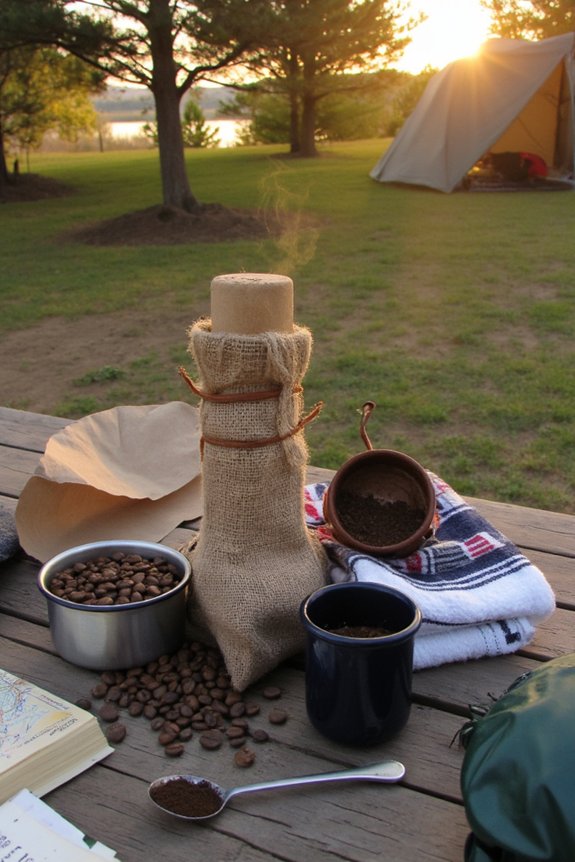
Sometimes the campsite feels like a washing machine, so treat your French press like fragile cargo. Start by slipping it into an insulated sleeve to cushion bumps and keep temps steady. If your press is glass, double up with a soft cloth or a beanie, cheap and cheerful. Hard case? Even better.
Pack it upright near the back panel, tight against your spine, so it doesn’t sway. Fill empty space with socks or a bandana. No rattles, no cracks. Use a suspension harness inside your pack if you’ve got one, clipping the press so it hangs centered and doesn’t slam around when you scramble.
Keep it away from fuel bottles and sharp cookware. Lid on, plunger locked. Quick shake test. If it jiggles, fix it.
When packing fragile gear, consider noise level performance to ensure your setup is quiet and stable on the trail.
Smart Grinding and Measuring Options

You’ll get better camp coffee when you pick the right grind size for a French press, think coarse and even, not dust. To keep mornings easy, pack pre-measured dose packets so you just pour, bloom, and press—no guessing, no math before caffeine. If you want max freshness, bring a small portable grinder, and choose one that’s light, sturdy, and clicks to consistent settings so your brew doesn’t go weird on you.
Choosing Grind Size
Even if you pack the nicest French press on the planet, the grind size makes or breaks your camp coffee. Aim for medium coarse, about like sea salt. Too fine and you’ll get mud in your mug, plus bitter flavors. Too chunky and it’ll taste weak, like you rinsed beans and called it a day. Start medium coarse at home, then test it with your press.
Water at altitude can under-extract, so go slightly finer if you’re brewing on a mountain morning. If your plunger feels hard to push, your grind’s too fine, back it off. If it sails down too easily, go a notch finer. Taste and tweak. Simple. Bring a small hand grinder with clear clicks, practice your settings, and you’ll dial it in fast, even before sunrise.
Pre-Measured Dose Packets
Usually the easiest way to win camp coffee is to pre-pack your doses at home, so every brew’s a grab-and-dump situation with zero math before sunrise. Make single serve packets sized for your French press, matching your usual coffee-to-water ratio. Label them by size and roast so you don’t guess in the dark.
For flavor preservation, use airtight zip pouches or tiny mason jars, squeeze out air, and stash them in a cool spot. Whole beans keep best, but if you’ve pre-ground, grind close to departure and seal fast. Add a pinch of extra grounds to cold mornings, since water cools quicker. Pack a lightweight scoop as backup, and keep a spare packet or two. Future you will say thanks, loudly.
Portable Grinder Options
Grab a hand grinder that fits your trip, not just your pack. If you like simple and sturdy, a manual burr grinder’s your best buddy. It’s quiet, consistent, and doesn’t care if your batteries bail. Prefer convenience? A compact battery grinder can save time on cold mornings, especially when everyone’s waiting on coffee. Aim for adjustable grind settings, a catch cup that seals, and a body that won’t crack in a drop.
- Fresh grounds at sunrise, you grin like a campsite hero.
- Smooth cranks, no squeaks, no drama, just coffee.
- Push-button buzz, and boom, grounds ready, even with gloves.
- Clicky grind steps so you don’t guess, you know.
- Light, tough, and easy to clean, because dirt happens.
Weigh beans; sip happy.
Brewing Steps for Clean, Grit‑Free Cups
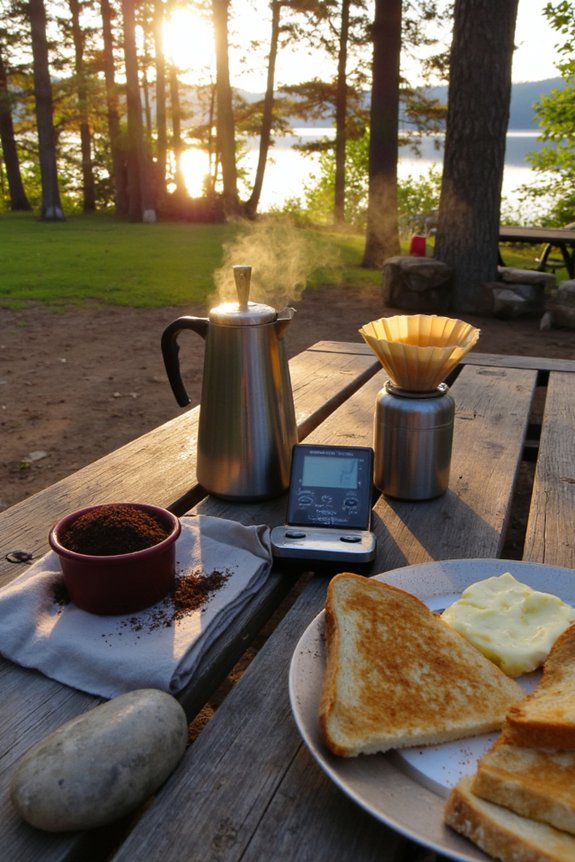
Start by treating your French press like a little science experiment, because clean, grit‑free cups come from small, easy habits done right. Use a medium‑coarse grind, shake the grounds level, then add just enough water to wet everything and wait. Give it a gentle stir to break up clumps. Not a whirlpool. Let it steep calmly.
At the 3–4 minute mark, skim the foam with a spoon. That’s your first cleanup move. Now press slowly, stopping before you hit the sludge. Try turbulence decanting: pour in short pulses so the stream clears, then pause. If you want super clean, pack a metal or paper disk for dual filtration, catching the tiny stuff. Finally, leave the last muddy sip. You’re not missing much, promise.
Heat Sources and Water Management
Even if you’ve nailed your brew routine, the coffee’s only as good as your heat and water. Pack a compact stove for control, but if you’re using flames, mind campfire safety and keep a pot lifter handy. Bring a windscreen, because gusts steal heat fast. Aim for water just off boil, then let it rest thirty seconds so you don’t scorch flavors. If your source is sketchy, use gravity filtration first, then boil.
- The hiss of a kettle at dawn, promising warmth.
- Steam on cold fingers, like a tiny high-five.
- A steady blue flame, calm as a lake.
- Clear water turning rich and toasty, oh yes.
- That first sip, and suddenly the day’s brighter.
Measure fuel, stash extra matches, and don’t rush the heat.
Cleanup and No‑Trace Ground Disposal
While the last sip’s still warming your hands, it’s time to think cleanup, because great coffee’s only half the story and good camps leave no trace. Knock the spent grounds into a trash bag and pack out grounds every time. Don’t toss them in bushes. They don’t vanish like magic. Swish a little hot water in the press, scrub with a tiny drop of biodegradable soap, then rinse 200 feet from streams. Strain rinse water through a bandana, pack the bits, and scatter the clean water wide.
| Step | Tool | Why it matters |
|---|---|---|
| Scrape grounds | Spoon | Keeps mesh from clogging |
| Hot rinse | Cup | Lifts oils fast |
| Tiny soap | Biodegradable soap | Protects waterways |
| Strain bits | Bandana | Zero floaters left |
| Dry gear | Air | No funky smells tomorrow |
Tips for Car Camping vs. Ultralight Trips
Dial in your setup to match the trip, because car camping and ultralight don’t play by the same rules. If you’ve got a trunk, bring the sturdy press, extra mugs, and a cozy kettle. Vehicle logistics help you stash beans, water, and a backup filter without stress. When you’re counting ounces, though, every piece has to earn its ride.
- Love bold coffee? Car camp and pack the full kit, you’ll grin at sunrise.
- Backpacking far? Embrace weight tradeoffs, choose a tiny press or micro-filter.
- Water’s heavy, so plan refills or pre-measure, no guesswork on trail.
- Protect glass with a towel or switch to stainless, your call.
- Keep grounds tidy, bag ’em out, campsite stays fresh and happy.
Frequently Asked Questions
Can I Legally Forage Wild Water Sources for Coffee While Backpacking?
You can sometimes, but you’ve got legal risks. Check local regulations, permits, and land ownership. Avoid protected areas. Don’t trespass. Collect minimal wild water responsibly, leave no trace, and always purify or boil it before brewing coffee.
How Do Altitude Changes Affect French Press Extraction Time?
Altitude extraction slows because water boils at lower temperatures, reducing brew heat. You’ll compensate for pressure variance by grinding finer, extending steep time to 5–6 minutes, insulating the press, and preheating gear. Taste, adjust grind and time incrementally.
What’s the Best Way to Prevent Bears Smelling Coffee?
Store grounds and trash in bear resistant containers, double-bag with odor masking sprays, and cook far from camp. Keep coffee sealed, skip scented soaps, hang smelly items 200 feet away, and pack out everything promptly after brewing.
Are Silicone or Metal Mugs Better for Heat Retention in Winter?
Metal mugs retain heat better in winter; you’ll benefit from metal conductivity paired with double-wall vacuum insulation. Silicone insulation helps grip and reduces heat loss slightly, but it’s inferior alone. Choose insulated stainless steel; keep lids sealed and preheat first.
Can I Pre‑Dose Coffee With Oxygen Absorbers for Freshness?
Yes, but it’s overkill. You’re better off pre‑dosing into vacuum sealed pouches with a strong moisture barrier packaging. Use freshly roasted, grind right before brewing, store cool. Oxygen absorbers help whole beans; avoid with ground coffee’s faster staling.
Conclusion
You’ve got this. Pick a tough press, pack the kit smart, and stash it snug so nothing rattles. Grind ahead or bring a tiny grinder, measure right, and brew slow for clean cups. Keep fuel separate, lock the plunger, and do a quick shake test. Manage water, wipe spills, and pack out grounds like a champ. Car camping or ultralight, adjust the load and keep it simple. Then sip, smile, and hey—coffee tastes better with pine trees anyway.