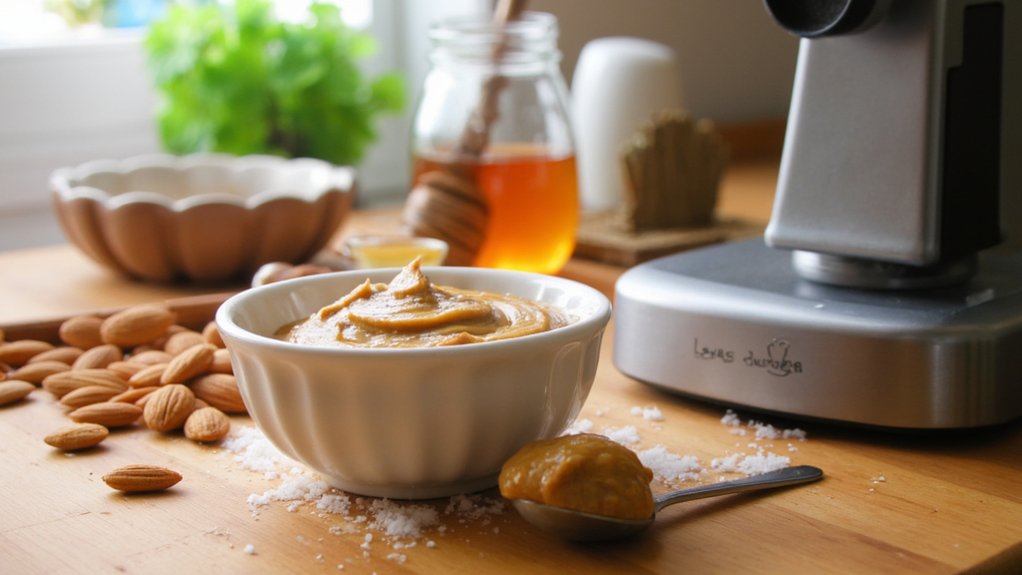
You want silky nut butter without roasting your motor, right? Think short pulses, little breaks, and a watchful ear for that pitch change that screams “I’m hot.” Start with quick dry chops, then stretch runs as the bits shrink, scraping sides each pause. Keep batches under 70% full, and don’t be shy about a tiny oil splash if it stalls. Smell anything bitter or smoky? Stop. Now, here’s where timing really saves your stash…
Key Takeaways
- Use short cycles: 45–60 seconds blending, then 2–4 minutes rest, adjusting based on jar warmth and motor sound.
- Keep temperature under 140°F; stop immediately if aroma turns sharp, steam appears, or texture gets runny.
- Start with quick pulses to chop, then switch to brief continuous runs, scraping sides between rounds.
- Reduce batch size to 60–70% jar fill; smaller loads heat less and flow better.
- Pause at any motor pitch increase or blade whine; open the lid to vent heat and stir before resuming.
Understanding Friction Heat and Oil Stability
Even if you’re not a science nerd, it helps to know that nut butter gets warm because grinding creates friction, and that heat nudges the oils inside your nuts to loosen up and flow. You’re basically turning solid bits into a creamy river. That warmth isn’t magic, it’s friction dynamics doing the heavy lifting.
Here’s the catch. Too much heat can push oil degradation, which means flavors fade, aromas flatten, and the texture can get a little sad. You want the oils fluid, not fried. So you watch how the paste thickens, listen to the motor, and feel the temperature with a quick touch test, clean hands please. If it’s a little hot, pause. Let the mixture relax, then continue. Your taste buds will thank you, promise.
For the smoothest results, it’s essential to use a blender with at least 1000 watts of motor power, as lower wattage models may overheat or struggle with dense nut blends.
Ideal Run Times for Common Nuts
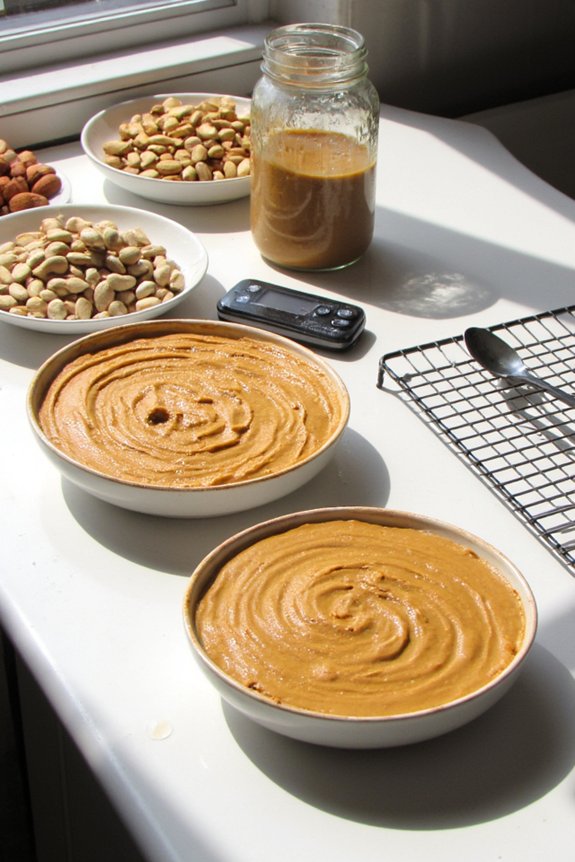
You’ll want to time your runs based on the nut, because almonds like quick, controlled pulses that keep heat low and texture smooth. Peanuts handle slightly longer, moderate cycles, letting their natural oil work while you keep an eye out for warm spots and that shiny, spreadable finish. Think short bursts for almonds, steady medium runs for peanuts, and you’re golden—no stopwatch panic, just good butter, fast. For best results, choose a blender with stronger motors to ensure smooth blending and to prevent overheating during longer nut butter cycles.
Almonds: Short Bursts
While almonds can absolutely turn into dreamy butter, they’re a bit stubborn, so short bursts are your friend. You’ll get smoother results and avoid overheating. Think 15 to 25 seconds on, then pause for 20 to 30 seconds. Repeat, scrape the sides, and check the texture. Keep it patient.
Start with dry roasting to wake up the oils and deepen flavor. If you’re going for super silky, consider skin removal after roasting, though it’s optional if you like a little rustic vibe. Cool the almonds fully before blending, because warm nuts can fool you, turning pasty fast.
If the blades start to whine or the bowl feels hot, stop. Let it rest. A tiny splash of neutral oil helps, but don’t overdo it.
For best results, use equipment with exceptional heat retention to prevent temperature spikes during the nut butter-making process.
Peanuts: Moderate Cycles
Almonds can be a bit high-maintenance, but peanuts are more chill, so you can run longer cycles without stressing the machine. You’ll get smooth results with moderate runs: try 2 to 3 minutes on, a short 30–45 second rest, then another 1–2 minutes if needed. Peanuts release oils fast, so the paste loosens nicely without cooking the batch. Aim for warm, not hot; if the chute feels toasty, pause.
- Start with slightly warm peanuts for a creamy, roasted texture.
- Add a teaspoon of neutral oil only if it stalls, don’t overdo it.
- Watch nut allergenicity risks, clean the grinder thoroughly between batches.
- Taste mid-cycle, adjust salt or honey while it’s still blending.
Stop when it ribbons smoothly off the spoon, silky and spreadable. For the best results and machine longevity, pay attention to motor power and performance as this ensures your grinder won’t overheat during longer nut butter sessions.
Pulse vs. Continuous Processing
Even if it sounds fancy, “pulse vs. continuous” is just about how you run the machine: in short bursts or in one steady go. When you pulse, you give the nuts quick spins, check texture, scrape the bowl, then hit it again. It’s great for noise control and for tricky batches that like to clump. You also reduce motor wear because you’re not forcing constant load.
Continuous processing is smoother for big volumes and predictable textures, since the grind stays moving and heat spreads more evenly. You’ll get faster creaminess with fewer stalls, which feels pretty sweet. But you gotta watch consistency and listen for strain. Try a hybrid: begin with pulsing to chop, switch to continuous to finish. Your taste buds will vote yes.
For both methods, using energy-saving modes and automatic shut-off can help prevent overheating and increase the lifespan of your nut butter maker.
Rest Cycles and Cool-Down Intervals
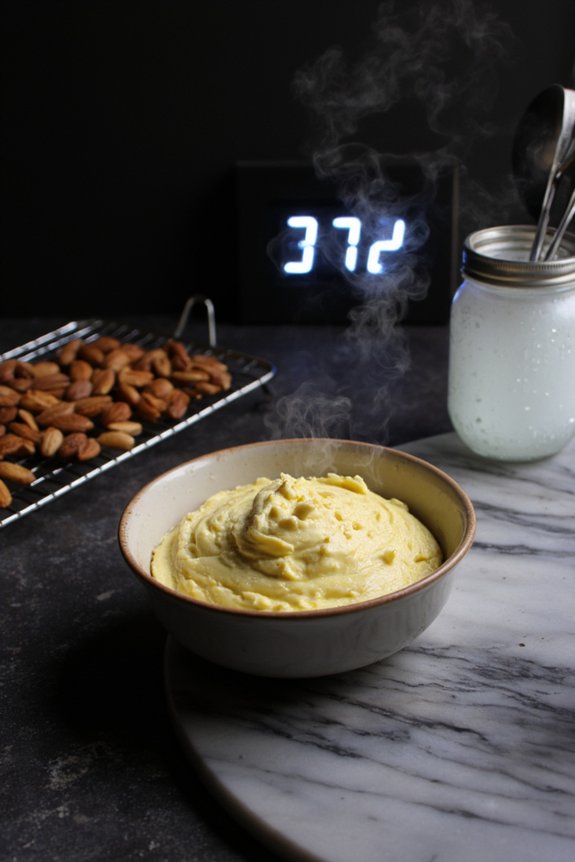
You’ll get smoother results if you plan short breaks, aiming for an ideal rest duration of about 2–5 minutes between batches so the motor can catch its breath, same as you. Watch heat cues like a warm housing, a sharper, hot smell, or a change in pitch that sounds a bit stressed. If it feels too hot to touch for more than a couple seconds, stop, pop the lid for airflow, and let it cool before you crank it again—no hero moves needed.
Optimal Rest Duration
While the blades cool and the motor catches its breath, your nut butter actually gets better too. Ideal rest duration isn’t a fancy formula, it’s a feel. Start with short bursts of blending, then pause. You’re letting heat drift off, oils settle, and texture even out. Use sensory testing to guide you. Listen, sniff, stir, taste. Yep, old-school works.
- Pause 2–4 minutes between 45–60 second blend cycles; adjust rest duration if the jar feels hot.
- Stir during rests to release steam pockets and smooth out gritty spots.
- Taste a tiny bit each pause; if it’s bitter or harsh, rest longer.
- Check looseness with a spoon trail; if it holds shape too firmly, give it more time.
You’ll find your sweet spot. Not perfect science, but pretty darn close.
Heat Monitoring Cues
Catching heat early keeps your nut butter smooth and your machine happy. Watch the bowl and lid for surface condensation, since tiny droplets can hint the chamber’s warmer than it should be. Listen, too. If the motor’s pitch climbs, it’s working harder. Pause. Let it breathe.
Use the clock: run 2–3 minutes, rest 1–2. Short bursts beat marathon grinds. If you’ve got thermal sensors, glance at the readout and set a soft cap, then cool down when it nudges the line. No sensors? Touch test. The housing should feel warm, not hot-hot.
Lift the lid between cycles, give the paste a stir, and spread it up the sides so heat can leave. If steam puffs when you open, you waited too long, friend.
Batch Size and Jar Fill Level Guidelines
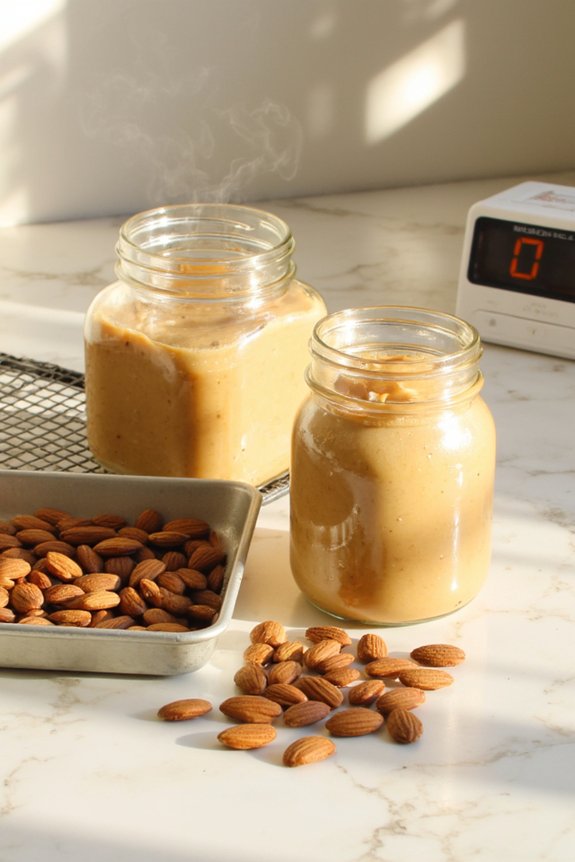
From the first scoop to the last swirl, getting batch size and jar fill level right keeps your nut butter smooth, safe, and easy to use. Start by matching your batch to your jar capacity, then aim for a sensible fill ratio so you don’t trap heat or wreck texture. You’ll keep the spread silky, not steamy.
- Use 60–70% of jar capacity as your default fill ratio, leaving headspace for cooling and stir-ins.
- Run smaller batches when nuts are warm-roasted, since they’ll heat faster and thicken quicker.
- Stop blending when flow slows or the sides look dry; that’s your signal the batch is getting hot.
- Portion into two jars instead of one tall fill to cool evenly and avoid sweaty lids.
Keep it calm, keep it creamy. Your spoon will thank you.
Machine Types and Their Heat Profiles
Even if the nuts and recipes stay the same, the machine you use changes the heat game in a big way. Blade blenders spin fast, create friction, and warm your mix quickly. Stone grinders move slower, but they grind longer, so heat creeps up over time. Food processors sit in the middle, not too wild, not too chill.
| Machine Type | Heat Profile |
|---|---|
| Blade Blender | Fast heat from friction; watch for thermal throttling |
| Stone Grinder | Slow rise; steady warmth, low noise profiles |
| Food Processor | Moderate spikes; manageable with short rests |
You’ll feel differences in motor efficiency, which decides how much power becomes torque vs heat. Louder machines often signal stress. Bearing wear also adds drag, sneaky heat. Short bursts help, and if it smells hot, pause, let it breathe.
Staged Processing: From Chop to Cream
Heat’s only half the story; the way you run the nuts through the machine matters just as much. You’ll get better results by moving in stages, from a rough chop to a smooth cream. Each pass changes texture evolution, so don’t rush it. Short bursts first, then longer runs as oils release and things loosen up.
- Start dry: quick pulses to set particle distribution without smearing.
- Mid stage: add a touch of oil if needed, keep it moving, scrape sides.
- Final refine: longer spins for gloss and emulsion stability.
- Rest between rounds to avoid gumming and phase separation.
Listen to the sound. It goes from gravelly to silky. If it clumps, pause, scrape, and stir. You’re nudging the grind, not wrestling it. Patience wins, buddy.
Temperature Targets and Signs of Overheating
While you’re chasing that silky spread, keep an eye on heat because nuts don’t love getting roasted twice. You’re aiming for gentle warmth, not a sauna. Most nuts stay happy under 140°F, with a soft ceiling around 150°F, so treat those as your thermal thresholds. Pistachios and cashews prefer cooler temps, almonds handle a bit more. Use a quick-read thermometer, or just pause the machine and feel the jar. Warm is fine, hot is not.
Watch for early warning signs. The aroma shifts from toasty to sharp. Oils look runnier, then darken. The grind stalls, the motor whines, and steam puffs, uh-oh. If you flirt with smoke points, you’ll taste bitter, burnt notes and lose sweetness. Stop, scrape, and let it cool before continuing.
Add-ins, Oils, and Timing Adjustments
If your butter’s close but not quite there, this is where add-ins and a splash of oil can save the day. You’ll tweak texture, cool friction, and dial in flavor pairing without pushing the motor too hard. Pause the machine, let it rest 30–60 seconds, then stir in small amounts and pulse.
- Add neutral oils as texture enhancers: 1–2 teaspoons at a time, checking flow.
- Flavor pairing ideas: cinnamon with almond, cocoa with hazelnut, maple with pecan, lemon zest with cashew.
- Sweetness and salt: sprinkle, pulse, taste, repeat. Don’t dump a mountain.
- Crunch control: fold in chopped nuts at the very end to avoid heat spikes.
Use short bursts, 10–15 seconds, then rest. If it thickens, add a touch more oil. If it warms, stop. You’re guiding, not racing.
Frequently Asked Questions
How Does Altitude Affect Nut Butter Maker Timing and Performance?
Altitude changes air density and heat transfer, so you’ll notice longer run times and slight texture shifts. Use altitude calibration to tweak cycle length. Pressure effects reduce cooling efficiency; pause more often, monitor motor strain, and adjust batch sizes.
Can Pre-Roasting Times Alter Optimal Processing Duration?
Yes. Pre-roasting times change ideal processing duration. Higher roasting intensity accelerates oil migration, so you’ll finish sooner. Light roasts retain structure, needing longer runs. Adjust by texture: stop earlier for flowing butter, extend for thicker, grit-reducing finishes.
Do Different Electrical Voltages Change Recommended Run Times?
Yes—voltage variation can change recommended run times. At lower voltage, you’ll need longer cycles; at higher voltage, shorten runs to protect Motor lifespan. Monitor temperature and torque, and adjust duty cycles per regional mains specifications and manufacturer guidance.
How Does Ambient Humidity Influence Processing Time and Texture?
High humidity lengthens processing time and alters texture. You’ll see more particle agglomeration, reduced flow, and weaker emulsion stability. Dry conditions speed grinding, yielding finer, smoother spreads. Adjust run time and add incremental oil to counter humidity-driven viscosity changes.
Are There Timing Differences Using Frozen Versus Room-Temperature Nuts?
Yes. Frozen nuts need longer initial runs to break down ice crystals and reach workable viscosity. You’ll pause more for heat management. Room‑temperature nuts process faster, yielding smoother flow. Thawed consistency improves stability; frozen texture can stay slightly gritty.
Conclusion
You’ve got this. Start with quick dry pulses, keep the jar around two-thirds full, and listen for that motor pitch like it’s your blender’s heartbeat. Rest often, scrape, then go longer when it’s looking smooth. If it smells bitter or you see smoke, stop. Add tiny oil bursts only if it stalls. Different nuts, different timing, no stress. Stay patient, keep things cool, and you’ll land silky butter without frying your gear. High-five your spoon, then snack.


