If your rotisserie chicken keeps turning out dry, it’s not bad luck—it’s a few small slips adding up. You might be starting with cold meat, skipping a proper brine, or salting unevenly. Maybe the bird’s trussed wonky, spinning too fast, or your thermometer’s lying to you. Pulling it late and wrapping it tight? Steam bath, not rest. Want juicy, shimmery slices instead of sad shreds? Here’s where the fix starts…
Key Takeaways
- Starting too cold or with wet skin causes uneven cooking; let chicken rest 30–45 minutes at room temp and pat dry before roasting.
- Skipping proper salting or brining reduces moisture retention; use 1/4 cup kosher salt per quart brine or 3/4–1 tsp salt per pound dry.
- Poor trussing or off-center spit placement creates hot spots and wobble, drying some areas while leaving others undercooked.
- Overcooking from incorrect temperature targets or bad probe placement dries breast meat; pull breasts at 158–160°F, thighs around 170–175°F.
- Cutting too soon purges juices; rest 10–15 minutes without trapping steam to keep meat moist and skin crisp.

Starting With the Wrong Chicken Temperature

Even if you’ve nailed your seasoning and your rotisserie setup looks pro, starting with the wrong chicken temperature can sabotage the whole bird. A cold start is the sneaky culprit. When you go straight from fridge temp to the spit, the outside cooks fast while the center lags behind, so you keep it spinning longer and dry out the skin and breast. Let the chicken rest on the counter 30 to 45 minutes, just to take the chill off. You’re not cooking it, you’re evening it out. Pat it dry again if it sweated. Truss it snug so heat hits evenly, then preheat the oven fully before mounting. You’ll get steadier browning, juicier meat, and fewer “why’s this dry?” complaints from the peanut gallery. For best results, make sure your oven is equipped with precise temperature controls to avoid overheating and uneven cooking.
Skipping or Mishandling the Brine

While brining sounds fussy, skipping it is one of the fastest ways to end up with a dry, shrug-worthy bird. Brine chemistry isn’t magic, but it’s close. Salt moves into the meat, helps proteins hold onto water, and encourages muscle relaxation so fibers don’t squeeze out juice as they heat. No brine, less cushion.
If you do brine, don’t wing it. Use the right ratio, about 1/4 cup kosher salt per quart of water, and keep the bird fully submerged. Time matters, too. Go 6 to 12 hours for a whole chicken, then pat it dry. Too long and it can get spongy. Too short and, well, meh. Also, chill it while brining, because food safety isn’t optional, promise. Then roast and smile.
For best results, make sure your chicken is fully submerged throughout the entire brine time, similar to how heat retention is crucial for the quality of coffee in a French press.
Underseasoned Skin and Unbalanced Salt

Brine handled? Great, but dry birds still happen when the skin’s shy on seasoning and the salt balance is off. You want seasoned skin that tastes good and actually helps moisture stay put. Too little salt and the meat cooks bland and parches. Too much and it purges juice. Goldilocks time.
1) Pat dry, then salt evenly. Aim for about 3/4 to 1 teaspoon kosher salt per pound, hitting every surface, including the back. That’s your salt balance baseline.
2) Give it time. Salt at least 45 minutes ahead, ideally overnight uncovered in the fridge so the skin dries and crisps, and the seasoning sinks in.
3) Layer flavor, not just salt. Add pepper, garlic powder, paprika, or lemon zest. Keep rubs light so the skin can breathe.
For best results, consider roasting your chicken in a cast iron skillet, which provides exceptional heat retention and even cooking for juicier results.

Poor Trussing That Twists or Tears the Meat
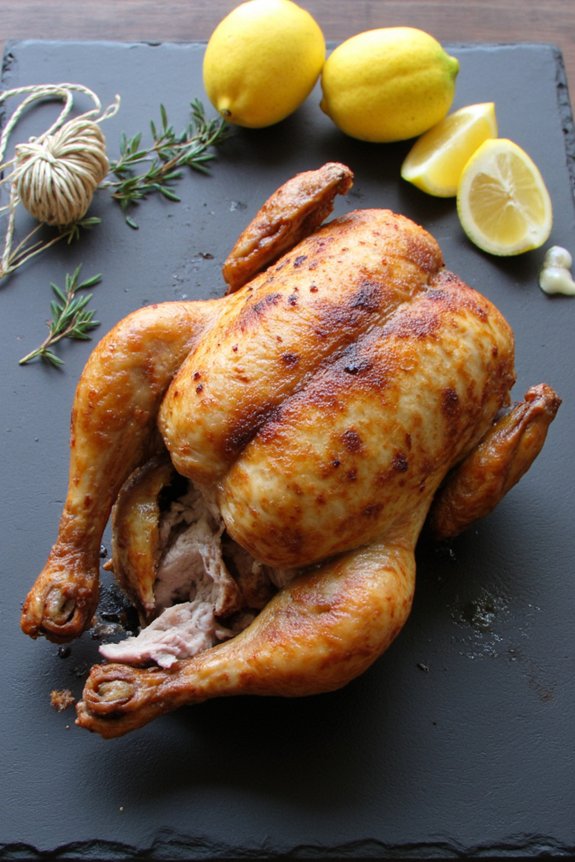
Tie it right, or the bird fights back. When you truss poorly, the chicken twists, legs flop out, and the breast gets exposed to more heat than it should. That’s how you end up with dry slices and sad faces. Loose knots create uneven tension, so some parts squeeze tight while others hang loose. Tight spots can bruise or cause torn muscles, which leak juices as they cook. Not great.
Keep it snug, not strangled. Tuck the wings, cross the legs, and tie at the ankles, then loop around the tail and back over the breasts. You’re aiming for a compact, football-ish shape. Check that the twine sits flat, no cutting into the skin. If it looks lumpy, retie it. Quick fix, juicy payoff.
Just like choosing the right bowl size for your stand mixer, getting the truss right ensures even results and prevents disappointment at the table.
Incorrect Rotisserie Speed and Placement

If the spit spins too fast, you’re basically using a chicken centrifuge, flinging juices outward so the skin dries and the meat follows. Slow it a touch so the surface can baste itself, because that gentle drip-and-sizzle is your built-in moisturizer. Placement matters too, since sitting off-center puts one side in the hot seat while the other chills, so keep the bird balanced on the spit and square with the heat. Just like with precise temperature control in deep fryers, maintaining steady and even rotation in your rotisserie ensures consistent cooking and keeps your chicken juicy throughout.
Too-Fast Spin Dries
Crank the rotisserie too fast and you’ll basically turn your chicken into a tiny wind tunnel, flinging juices outward instead of letting them baste the meat. At high RPMs, centrifugal force beats gravity, so surface fat and juices fly off, not back on. That spray party leaves dry patches, and yeah, sad bites.
Here’s how the too-fast spin dries things out:
1) High speed abrasion scuffs the skin, roughening it so it loses moisture faster, while the meat doesn’t get time to reabsorb drips.
2) Moisture atomization kicks in, turning surface juices into fine droplets that evaporate quickly, like mist vanishing on a hot day.
3) Rapid rotation limits caramelization, so you miss that sealing effect, and the bird keeps leaking instead of self-basting.
Slow the spin. Let gravity help, not fight.
Off-Center Heat Exposure
Too-fast spinning isn’t the only way to dry out a bird; skewering it off-center or parking it in a weird spot by the burners messes things up just as fast. When the chicken sits crooked on the spit, one side hogs the heat while the other chills. That creates uneven airflow, so you get patches of parched breast and stubbornly underdone thighs. Not fun.
Check your trussing. If the legs flop, the balance shifts, and you’ll see drum imbalance that makes the roast wobble, which means hot spots kiss the same area again and again. Slide the bird dead-center, tighten the forks, and keep it the same distance from the burners. Give it room so air circulates. Rotate once, eyeball alignment, then relax. You’ve got this, chef-ish.
Overcooking From Carryover Heat and Timing
You pull the chicken at temp, but residual heat keeps cooking it, so it sneaks past juicy into dry before you even carve. To counter that, adjust your resting time so the carryover finishes the job gently, and don’t tent it like a sauna unless you actually want soggy skin. Use a thermometer early and often, pulling at 160–162°F in the breast and letting it coast to 165°F as it rests, easy win, chef’s kiss.


Residual Heat Overshoots Doneness
Even if you pull the rotisserie chicken at the “perfect” temp, it can still cruise right past juicy into dry thanks to carryover heat. The hot exterior keeps pumping heat toward the center, so the internal temp climbs a few degrees after you stop the spin. That’s the sneaky overshoot.
Here’s how to think about it, without jumping ahead:
- Know your bird’s momentum. Big chickens and tightly trussed ones hold heat longer, so plan carryover management with a lower target temp.
- Consider heat buffering. Foil tents and roasting pans act like sweaters, trapping warmth that pushes the meat past done. Sometimes naked is better, chicken-wise.
- Track tempo, not just temp. High-heat roasting builds more residual energy, while moderate heat gives you control and smoother finishing, reducing those “oops, too dry” moments.
Resting Time Adjustments
That sneaky overshoot is exactly why resting matters, because the moment you pull the bird, the clock and the carryover start doing their little tango. You’ve still got heat marching inward, so juices are sprinting around like shoppers on a sale day. Give the chicken a longer rest to calm things down. Room temperature resting works well for smaller birds, but bigger ones like a gentle pause plus some loose foil tenting. Not tight, or you’ll steam the skin. Set it on a raised rack so air can circulate and the bottom doesn’t get soggy or keep cooking. Fifteen minutes is decent; twenty to twenty-five helps a hefty chicken. If it’s tiny, ten might do. Be patient. Slice too early and, whoosh, moisture’s gone.
Thermometer Timing Strategy
While the skin’s crackling and the kitchen smells like victory, the thermometer is your traffic cop, telling you when to slow down and pull off the heat before carryover blows past perfect. You’re not cooking to a number, you’re cooking to a moment. That moment comes a little early.
- Nail probe placement: slide the tip into the deepest breast, just off center, avoiding bone and the cavity. Check the thigh too. If one’s lagging, you wait on that one.
- Account for carryover: with rotisserie heat, pull at 158 to 160°F breast, 170°F thigh. It’ll climb 5 to 7°F while resting. Magic, not luck.
- Watch probe lag: digital probes trail the actual temp. Give readings 10 to 20 seconds, then confirm in a second spot.
Inaccurate Thermometer Use and Target Temps
Because rotisserie chicken can go from juicy to jerky in a hurry, a lot of the blame lands on how you’re using your thermometer and what temp you’re aiming for. You want the thickest part of the breast at 160 to 165°F, and thighs can ride to about 175°F for tender bites. Stick the probe sideways into the breast’s center, avoiding bone and the hot cavity. Move it if the number jumps around.
Probe accuracy matters, so do quick calibration checks in ice water and boiling water before the cook. If your tool lies, your chicken dries. Don’t trust surface browning. Spot check a few places, then go with the lowest reliable reading. And stop chasing 180°F. That’s the fast lane to sawdust chicken, friend.
Resting Mistakes That Drain Juices Instead of Keeping Them
Even if you nail the cook, a bad rest can wring your bird out like a sponge. Resting isn’t a coffee break, it’s when juices settle back into the meat. Rush it or overdo it, and you’ll lose moisture you worked hard to keep. Think of it like letting traffic clear before you pull out.
1) Don’t carve too soon: Wait 10 to 15 minutes. If you slice right away, juices flood the board, not your plate, and you’ll swear the chicken shrank.
2) Avoid improper tenting: Lightly tent with foil, don’t wrap it tight. Trapping steam turns skin soggy and pushes moisture out.
3) Skip over resting juices: Pooling liquid means you waited too long. Aim for warm, not hot, not cold. Then carve and serve, hero mode.
Frequently Asked Questions
Can Supermarket Pre-Brined Chickens Still Turn Out Dry on a Rotisserie?
Yes—pre-brined chickens can still dry out. You might overcook, misread packaging labels, or rinse away brine chemistry. Spin too hot, truss too tight, or skip resting, and moisture escapes. Monitor temp, aim 160–165°F, and let juices redistribute.
Does Chicken Size Affect Juiciness on Small Countertop Rotisseries?
Yes. On small countertop rotisseries, larger birds overhang heat zones, cook unevenly, and dry out. Choose smaller portion size, truss tightly, monitor internal temps, and adjust cooking time; rotate heat shields or pause to prevent breast overcooking while thighs finish.
How Do Marinades With Sugar Impact Skin Crispness Versus Moisture?
They promote crisp skin but can risk dryness. Sugar caramelization accelerates browning, boosting crunch, while skin dehydration intensifies if heat’s high or time’s long. Balance with salt, modest sugar, and oil; baste late to preserve moisture without sacrificing crispness.
Will Stuffing the Cavity With Aromatics Make the Meat Drier?
It can, slightly. You’re slowing internal heat transfer. Optimize aromatics placement for herb infusion without overstuffing, practice loose cavity trussing, and preserve the skin barrier. Add moisture via brining and cook to 160–165°F, resting before carving.
Do Different Wood Chips or Smoke Levels Change Perceived Juiciness?
Yes—smoke intensity and wood variety can change perceived juiciness. Heavier smoke can taste drier or bitter, masking moisture. Lighter smoke and sweeter woods (apple, cherry) enhance succulence. Balance smoke intensity, maintain humidity, and pull at proper temperature.
Conclusion
So now you know why that bird dries out. Start the chicken close to room temp, brine right, and salt evenly. Truss snug, center the spit, and keep the spin moderate so juices stay put. Use a good probe, aim for 157–160°F in the breast, and pull early for carryover. Let it rest, loosely tented, not suffocated. Pat the skin dry before cooking. Do these small things, and boom—juicy rotisserie magic. Your future self will high-five you.