Like Icarus flying too close to the sun, your deep fryer’s oil’s reaching a breaking point—and that foamy mess on top? It’s screaming for help. You’re probably wondering what’s actually causing all those bubbles to pile up like a science experiment gone wrong. Well, here’s the thing: it’s not just one culprit. Water, burned bits, degraded oil, and sneaky little proteins are all throwing a party on your oil’s surface, and we’re gonna crash it.
Key Takeaways
- Water from food vaporizes instantly in hot oil, creating steam that forms pathways carrying oil droplets to the surface as foam.
- Food particles, breading residue, and burnt specks lower surface tension and stabilize foam formation, requiring regular filtration to prevent buildup.
- Degraded oil from repeated heating develops polymerization byproducts and oxidative rancidity, significantly increasing foaming tendency and reducing performance.
- Low smoke point oils break down faster than refined oils with 400°F+ smoke points, causing excessive foaming during frying.
- Replace oil when uncontrollable foaming occurs, color darkens to brown/black, rancid smells appear, or after 40–60 frying cycles.
Understanding the Science Behind Oil Foaming

When you’re standing over a deep fryer and suddenly see your oil start bubbling up like it’s possessed, you’re actually witnessing some pretty fascinating chemistry in action. Water droplets from your food are the culprits here. They hit that hot oil and instantly turn to steam, creating all that chaotic foaming. But here’s where it gets interesting. Your oil’s got tiny food particles and moisture hanging around, and they’re messing with something called emulsion dynamics. These particles act like little bridges, trapping water and air together. Add in surfactant interactions from breading residue, and boom—you’ve got a foaming mess. It’s basically your oil becoming a bubble factory. Understanding this helps you fix it fast. Using a proper oil filtration system can help reduce food particles and extend the life of your oil, minimizing the chance of foaming.
How Moisture Content Causes Excessive Bubbling
You’d think your fryer oil would stay put, but here’s the thing—water’s sneaking in there like an uninvited guest at a party, and it’s about to cause some serious chaos. When moisture gets absorbed into that hot oil, it doesn’t just hang around; it transforms into steam, which desperately tries to escape upward through all that bubbling liquid, creating those volcanic foams that make your fryer look like it’s brewing a science experiment gone wrong. The hotter your oil gets, the more aggressive this steam-release process becomes, turning what should be a calm frying session into a bubbly spectacle that’ll have you reaching for the fire extinguisher. Using cookware with excellent heat retention like cast iron can help stabilize the oil temperature and minimize sudden bubbling caused by moisture.
Water Absorption in Oil
Absorbing moisture like a deep fryer’s worst enemy, water sneaks into your oil through several different routes, and here’s the thing—it doesn’t take much to cause serious problems. Your oil’s got this annoying tendency called hygroscopy, which basically means it’s a moisture magnet. Every time you fry something damp or let steam escape from wet food, you’re introducing water molecules. Even humidity in the air contributes. Here’s where it gets gnarly: water and oil don’t mix, so those liquid droplets get trapped. When they heat up to frying temps, they literally boil and transform into steam. Boom—that’s your foam. Oil absorption of water compounds the issue, creating more bubbles and degrading your oil faster than you’d expect. If your fryer lacks proper safety features, the risk of dangerous boil-overs and flare-ups from excess moisture increases significantly.


Steam Release Mechanisms
At the heart of all that annoying foam is a surprisingly simple physics problem: trapped water molecules desperate to escape.
When moisture heats up in your oil, it’s got one mission: get out. Here’s what’s actually happening:
- Water converts to steam around 212°F, creating pressure vents throughout your oil
- Steam bubbles form steam pathways, racing upward toward the surface
- Each bubble carries tiny oil droplets along for the ride, creating that frothy mess
- Pressure builds as more steam tries finding escape routes simultaneously
- The foam intensifies when you’ve got fresh food adding even more moisture
Think of it like a microscopic traffic jam where steam’s honking to get through. Your oil’s basically a pressure cooker gone rogue. The more water hiding in there, the more chaotic those steam pathways become. That’s why you’re seeing such aggressive foaming—it’s literally your oil having a breakdown. Using steam release mechanisms in electric steamers helps manage excess moisture, which is a key reason these appliances prevent excessive bubbling during cooking.
The Role of Food Particles and Debris
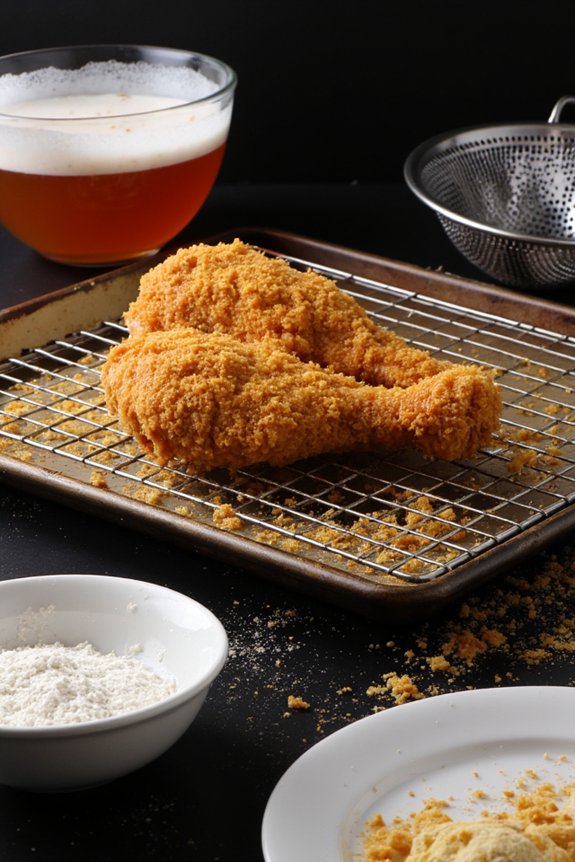
when you’re frying up batch after batch, all those crispy bits and burnt specks don’t just vanish—they sink to the bottom and throw a party, creating a foam fest that’ll drive you crazy. That accumulation of food particles is basically your oil’s worst enemy, breaking down the oil’s structure and trapping air pockets that bubble up like a science experiment gone wrong. You’ve gotta stay on top of filtration, catching those nasty debris bits before they turn your fryer into a foaming machine that looks like it’s plotting world domination. Regular cleaning of your fryer, similar to the routine maintenance recommended for removable, dishwasher-safe nonstick plates, can help prevent residue buildup and keep your oil clear and foam-free.
Accumulation Causes Excessive Foam
Imagine this: you’re halfway through the lunch rush, your fryer’s bubbling away like a caffeinated volcano, and suddenly you notice the oil’s looking foamier than a bubble bath.
When food particles and debris stick around in your oil, they’re basically throwing a party that nobody wants. Here’s what’s happening under the surface:
- Tiny food fragments lower surface tension
- Moisture from fried foods intensifies the problem
- Proteins and starches create foam-friendly conditions
- Burnt residue acts like a foam magnet
- Accumulated gunk resists foam inhibitors effectiveness
The trouble is, all that buildup disrupts your oil’s natural balance. You’re essentially attempting to fry in a science experiment gone wrong. Those particles don’t just sit there innocently, they’re actively working against you, breaking down the oil’s integrity and creating more foam than necessary. Your fryer can’t perform its best when it’s clogged with junk.
Filtration Prevents Particle Buildup
Through regular filtration, you’re basically giving your oil a spa day—one that actually pays for itself. When you skip filter maintenance, tiny food particles stick around like uninvited guests at a party. They break down, oxidize, and create that annoying foam you’re battling. Here’s the thing: particle sieving removes these troublemakers before they become problems. You’ll want to filter your oil daily, especially if you’re frying frequently. A simple fine-mesh strainer works wonders, catching crumbs and debris that would otherwise accumulate and ruin everything. Think of it as preventative medicine for your fryer. Regular filtering keeps your oil cleaner longer, reduces foaming dramatically, and honestly? Your food tastes better too. It’s a win across the board.
Oil Degradation From Repeated Heating and Use
As you keep dropping food into that fryer day after day, your oil’s got a silent enemy working against it—heat. Every time you crank up the temperature, your oil breaks down bit by bit. Here’s what’s happening inside that golden liquid:
- Oxidative rancidity turns your fresh oil stale and bitter
- Polymerization byproducts create sticky, gummy residue
- Heat causes the oil’s molecular bonds to snap apart
- Free radicals form and attack the oil’s structure
- Your oil darkens, thickens, and yeah, starts foaming like crazy
This degradation isn’t pretty. The more you reuse that oil without replacing it, the faster it deteriorates. That foam you’re seeing? It’s basically your oil waving a white flag, screaming for retirement. Fresh oil keeps things crispy. Exhausted oil makes everything soggy and tastes kinda funky too.
Choosing the Right Oil for Your Deep Fryer

Now here’s where things get intresting—not all oils are created equal when it comes to your deep fryer, and picking the right one can seriously reduce that annoying foam problem you’ve been dealing with. You’ll want to take into account smoke points, because oils with higher smoke points (like refined vegetable or peanut oil) can handle the heat without breaking down and creating all that bubbly mess, whereas unrefined oils tend to foam up faster and won’t last as long before they’re toast. The real sweet spot? Choosing refined oils that offer rock-solid stability and longevity, so you’re not constantly replacing your fryer oil and wondering why your fries taste like disappointment.
Oil Smoke Points Matter
Smoke point—it’s basically the temperature at which your oil starts breaking down and, well, smoking like a chimney. Here’s why you should actually care about this number:
- High smoke points (like 400°F+) mean better frying performance
- Low smoke point oils burn faster and create nasty foaming
- Oil aging reduces smoke point over time, making old oil foam more
- Vegetable and canola oils work great for most deep frying
- Flavor transfer happens when you reuse oil past its prime
You’re probably wondering why this matters so much. When you choose an oil with a proper smoke point, you’re basically giving your fryer permission to do its thing without creating a bubbly mess. Low smoke point oils? They’ll start breaking down before your food’s even golden brown, triggering that frustrating foam. It’s like asking a rookie to handle a professional job—things get messy fast.
Refined vs. Unrefined Oils
Pick the wrong oil and you’re basically sabotaging your fryer before you even plug it in. Here’s the deal: refined versus unrefined oils make a huge difference in how your fryer performs. Refined oils? They’re processed to remove impurities, giving them higher smoke points and better stability. That means less foaming and more consistent frying. Unrefined oils keep their natural stuff intact, which sounds healthy, but it’s a foaming nightmare in deep fryers. Plus, the flavor differences matter too. Unrefined oils bring strong tastes that might overpower your food, while refined options stay neutral and let your crispy creations shine. Stick with refined oils for deep frying—your fryer and your taste buds’ll thank you.
Oil Stability and Longevity
When you’re serious about keeping your fryer running smoothly, oil stability isn’t just some technical buzzword—it’s literally the difference between a deep fryer that lasts years and one that turns into a greasy, smoking mess.
Here’s what you need to know about keeping your oil in fighting shape:
- High-heat oils resist breakdown better than their fragile cousins
- Antioxidant preservation keeps your oil fresher longer, reducing foaming
- Container rotation prevents sediment buildup that causes problems
- Temperature control extends your oil’s lifespan markedly
- Regular filtering removes particles that accelerate degradation
You’ve gotta treat your oil right. Quality oils with better stability cost more upfront, sure, but they’ll save you cash by lasting longer and performing better. Think of it as an investment in fryer peace of mind. Your future self will thank you.
Signs That Your Oil Needs Immediate Attention

Your deep fryer’s oil is basically screaming for help when it starts showing certain telltale signs, and honestly, ignoring them is like ignoring your car’s check engine light—things’ll only get worse. Watch for excessive foaming. That’s your first red flag. When surface tension breaks down, you’re dealing with serious oil contaminants that shouldn’t be there. Dark, murky oil? Yeah, that’s bad. Really bad. Your food’ll taste like disappointment.
Notice a burnt smell? That’s the oil deteriorating right before your nose. If it’s smoking more than usual or splattering everywhere, don’t wait around. Your oil’s lost its mojo. Taste-testing your fries shouldn’t involve any weird flavors either—that’s another warning sign you can’t ignore. Time to change that oil before disaster strikes your kitchen.
Step-by-Step Guide to Cleaning Your Fryer Oil
Before you toss out that oil and start from scratch, let’s talk about stretching its lifespan a bit longer—because deep fryer oil isn’t cheap, and neither are you. Cleaning your oil regularly keeps your fryer humming along nicely.
Here’s what you’ll need to do:
- Let the oil cool completely to a safe temperature
- Strain out those crispy bits using a fine mesh filter
- Wipe down your fryer’s interior with paper towels
- Monitor your oil temperature during storage
- Store the cleaned oil in a cool, dark place
Once you’ve filtered out all those gunky particles, you’re golden. Maintaining proper oil temperature prevents premature breakdown. With these simple steps, you’ll notice your fryer lifespan extending markedly, and that foam problem? It’ll practically disappear. Your wallet will thank you.
Proper Storage and Maintenance Techniques

Keeping that oil in tip-top shape doesn’t end the moment you pour it back into its container. You’ve gotta establish smart storage and maintenance routines that’ll keep your oil fresh longer. Here’s the thing: proper label storage is your best friend. Mark those containers with the date you started using that oil, what type it is, and when you filtered it. Seriously, it saves you from mysterious old batches lurking in your cabinet.
Set up a rotation schedule too. Use your oldest oil first, just like rotating your pantry stock. Store everything in a cool, dark place away from direct sunlight because heat and light break down oil faster than you’d expect. Keep those lids sealed tight. These simple steps? They’ll dramatically reduce foaming and extend your oil’s lifespan considerably.
When to Replace Your Oil Completely
Even with the best storage habits and filtering routines, there comes a time when your oil’s gotta retire—and knowing when that moment arrives is crucial if you want to avoid a foaming disaster on your hands.
Think of oil turnover like dating: eventually, things get old and tired. Here’s when to say goodbye:
- Oil turns dark brown or black instead of golden
- You notice a burnt, rancid smell during sensory testing
- Foaming becomes impossible to control, no matter what you do
- Your food tastes off or absorbs too much grease
- Oil’s been in use for 40-60 frying cycles
Don’t wait until your fryer throws a tantrum. Fresh oil fries better, tastes better, and keeps your equipment happier. Trust us on this one.
Best Practices for Preventing Future Foaming Issues
Since you’ve now learned what causes that annoying foam and when to bail on your oil completely, it’s time to get proactive. You’ll want to master temperature control, which is honestly your best defense against foaming disasters. Keep that thermometer handy and stay within your oil’s ideal range—not too hot, not too cold.
Regular batch testing prevents problems before they start. Check your oil’s condition weekly using simple tests, and you’ll catch degradation early.
| Prevention Strategy | Why It Matters |
|---|---|
| Maintain 325-375°F | Prevents moisture breakdown |
| Pat food dry | Eliminates excess water |
| Filter daily | Removes food particles |
| Use quality oil | Reduces impurities |
| Store properly | Slows oxidation |
You’ve got this. Stay vigilant, and your fryer will reward you with perfect, foam-free batches every single time.
Frequently Asked Questions
Can I Use the Same Oil for Frying Different Types of Food Without Issues?
You can reuse oil for different foods, but you’ll face cross contamination concerns and flavor transfer risks. Fish oils’ll linger on chicken, and spice residues affect delicate items. Strain thoroughly between uses to minimize these issues.
Is Foaming Oil Still Safe to Use for Cooking, or Must I Discard It?
Your foaming oil’s a ticking time bomb—you shouldn’t use it. Microbial growth thrives in degraded oil, risking contamination. Dispose of it properly following recycle guidelines for cooking oil in your area.
How Does Water Temperature Affect Oil Foaming During the Frying Process?
When you introduce cold water into your hot oil, it causes rapid evaporation and foaming. Hot water intensifies this reaction. You’ll notice more foam when water temperature differences are greater, so minimize moisture in your food before frying.
What Equipment Tools Help Remove Foam From Oil Without Stopping Frying Operations?
You’ve got to keep your eye on the ball. A foam skimmer, skimmer basket, or oil skimmer lets you remove foam continuously. For deeper cleaning, you’ll want a filtration pump running simultaneously to maintain oil quality without halting operations.
Does Oil Foaming Affect the Taste or Quality of Fried Foods Negatively?
Yes, it’ll negatively affect your fried foods. You’ll experience flavor alteration and texture degradation when your oil foams excessively. The foam introduces moisture and particles that compromise your food’s quality, creating soggy, off-tasting results.
Conclusion
So here’s the thing—you’ve probably wondered if that foaming oil’s actually dangerous. Spoiler alert: it totally is. But don’t panic. You’re not stuck with a ruined fryer. By staying ontop of temperature, straining debris, and swapping oil when it gets dark and gnarly, you’ll kiss that foam goodbye. Your food’ll taste better, and your fryer’ll thank you. Simple maintenance. Huge payoff.